The best garden plants for a backyard depend on whether you want easy color, fragrant blooms, or herbs to harvest. I rank PlantMe American Meadow Magic Wildflower Seed Mix as the best overall for its mix of annual and perennial flowers, while the HOME GROWN Herb Seed Variety Kit stands out for edible variety and Lavender Live Plants for fragrant, ready-to-plant color. The main tradeoffs are seeds versus established plants, seasonal display versus repeat interest, and a broad mix versus a specific garden purpose. Sunflowers and hollyhocks can make a taller statement, while gardenia and azalea offer a more defined shrub presence. Read on for the full breakdown and help matching a pick to your backyard conditions and plans.

Get garden gear delivered free with Prime
- Fast, free delivery on millions of items
- Prime Video, Amazon Music and more included
- Member-only deals all year
Complete the kit


Key Takeaways
- PlantMe Wildflower Seed Mix ranks first because its annual-and-perennial mix offers broader seasonal interest than the single-flower sunflower packs, though a mixed planting may look less uniform.
- The herb kit is the most practical pick for gardeners who want harvests rather than only flowers; its many varieties call for more labeling and attention to differing growing needs.
- Lavender live plants suit buyers who want an established planting start, while seed options generally offer more plants but require germination and patience.
- Sunflower choices solve different design problems: Burpee’s Sunforest Mix offers a mixed sunflower display, while Skyscraper seeds are aimed at height and pink seeds at a distinctive color.
- Gardenia and Encore Azalea bring shrub-scale structure that seed mixes do not, but live shrubs need a suitable site and more planning before purchase.
| PlantMe American Meadow Magic Wildflower Seed Mix, 10,000+ Annual and Perennial Seeds |  | Best for a Pollinator-Friendly Backyard | Seed varieties: 25 | Seed count: 10,000+ | Coverage: Approximately 100 sq. ft. | VIEW LATEST PRICE | See Our Full Breakdown |
| Burpee Sunforest Mix Sunflower Seeds, 100 Seeds |  | Best for a Dramatic Summer Backdrop | Seed quantity: 100 seeds | Varieties: Three sunflower varieties | Plant height: 10–15 ft | VIEW LATEST PRICE | See Our Full Breakdown |
| HOME GROWN 15 Herb Seed Variety Kit, 4,300+ Seeds |  | Best for Edible Backyard Gardening | Seed varieties: 15 | Seed count: 4,300+ | Included varieties: Genovese basil, sweet basil, Italian oregano, rosemary, thyme, cilantro, dill, mint, sage, lavender, chives, garlic chives, parsley, chervil, scallions | VIEW LATEST PRICE | See Our Full Breakdown |
| Jubilation Gardenia Live Plant, 1 Gallon |  | Best for Fragrance and Year-Round Structure | Plant type: Evergreen shrub | Container size: 1 gallon | Mature size: 3–4 ft tall and wide | VIEW LATEST PRICE | See Our Full Breakdown |
| Lavender Live Plants, 2-Pack, Purple Blooms |  | Best for Low-Water Borders | Plant type: Live perennial | Pack size: 2 plants | Bloom color: Purple | VIEW LATEST PRICE | See Our Full Breakdown |
| Hollyhock Seeds, 3,000+ Mixed-Color Alcea rosea |  | Best for a Tall, Pollinator-Friendly Border | Seed count: 3,000+ | Plant: Hollyhock (Alcea rosea) | Plant type: Perennial | VIEW LATEST PRICE | See Our Full Breakdown |
| Night-Blooming Jasmine Starter Plant, 4–7 Inches Tall |  | Best for Evening Fragrance | Plant height on arrival: 4–7 inches | Plant type: Flowering shrub | Flower color: White | VIEW LATEST PRICE | See Our Full Breakdown |
| 60 Pink Sunflower Seeds for Planting |  | Best for Cut-Flower Color | Seed count: 60 | Product type: Heirloom flower seeds | Flower color: Pink | VIEW LATEST PRICE | See Our Full Breakdown |
| 150 Skyscraper Sunflower Seeds, Non-GMO Heirloom |  | Best for Maximum Height | Seed quantity: 150 | Botanical name: Helianthus annuus | Plant type: Annual | VIEW LATEST PRICE | See Our Full Breakdown |
| Perfect Plants Autumn Bonfire Encore Azalea, 1 Gallon Live Plant |  | Best Compact Evergreen Shrub | Plant type: Evergreen shrub | Flower color: Red | Bloom period: Spring to fall | VIEW LATEST PRICE | See Our Full Breakdown |
| garden plants for backyard | Sun exposure | Plant type |
|---|---|---|
| PlantMe American Meadow Magic | Full sun | — |
| Burpee Sunforest Mix Sunflower | — | Annual |
| HOME GROWN 15 Herb Seed Variet | Partial sun | — |
| Jubilation Gardenia Live Plant | Full to partial sun | Evergreen shrub |
| Lavender Live Plants | Full sun | Live perennial |
| Hollyhock Seeds | Full sun to partial shade | Perennial |
| Night-Blooming Jasmine Starter | Full sun | Flowering shrub |
| 60 Pink Sunflower Seeds for Pl | Full sun | — |
| 150 Skyscraper Sunflower Seeds | Full sun; 6–8 hours daily | Annual |
| Perfect Plants Autumn Bonfire | Full sun; prefers 4–6 hours | Evergreen shrub |
More Details on Our Top Picks
PlantMe American Meadow Magic Wildflower Seed Mix, 10,000+ Annual and Perennial Seeds
For gardeners who want broad, colorful coverage rather than a few statement plants, this mix offers 25 annual and perennial wildflower varieties and enough seed for approximately 100 square feet. That makes it a stronger fit for filling a sunny patch or informal meadow than the Burpee Sunforest Mix, which focuses on towering sunflowers in a more defined footprint. The mix is designed to attract bees, butterflies, and hummingbirds, adding wildlife appeal alongside seasonal blooms. Its resealable, moisture-proof pouch and planting instructions make storage and sowing simpler, but this is still a seed project: you need to prepare the soil before scattering, and the outdoor planting site needs full sun. I’d choose it for a naturalized area, not a tidy, instant-looking border.
Pros:- Provides 25 wildflower varieties for a more varied planting than a single-species display.
- Covers approximately 100 square feet, making it useful for larger sunny patches.
- Designed to attract bees, butterflies, and hummingbirds.
- Resealable, moisture-proof pouch includes planting instructions.
Cons:- Requires soil preparation before seeds can be scattered.
- Full-sun outdoor use limits where it can grow.
- Seed-grown coverage takes planning and growing time rather than providing an established shrub or plant.
Best for: Backyard gardeners with a sunny, prepared area who want varied blooms and pollinator activity across a larger patch.
Not ideal for: Gardeners seeking an established live plant, a formal border, or flowers for a shaded backyard; this mix requires outdoor full-sun conditions and prepared soil.
- Seed varieties:25
- Seed count:10,000+
- Coverage:Approximately 100 sq. ft.
- Plant types:Annual and perennial wildflowers
- Sun exposure:Full sun
- Intended use:Outdoor
- Package weight:30 g (over 1 oz)
- Pouch:Resealable, moisture-proof
Our verdict“Choose this mix for a prepared, sunny backyard patch where varied wildflowers and pollinator appeal matter more than a controlled border.”
Burpee Sunforest Mix Sunflower Seeds, 100 Seeds
If the goal is height and oversized blooms, the 10–15-foot stalks and flowers at least 12 inches across give this mix a more dramatic presence than the compact Lavender Live Plants. It includes three sunflower varieties, so it offers some variation while keeping the backyard display focused on tall yellow flowers. The plants are annuals, which suits gardeners who want a bold summer feature without committing to a permanent shrub like the Jubilation Gardenia. That scale comes with real space demands: the listed spread is 36 inches, and tall stalks can dominate a small bed or cast shade on nearby plants. You’ll also need full sun and regular watering, and sowing should wait until frost danger has passed.
Pros:- Three sunflower varieties provide more variation than a single sunflower type.
- Stalks can reach 10–15 feet, creating a strong vertical feature.
- Produces large yellow blooms at least 12 inches across.
- Listed for growing zones 1–11 and described as GMO-free.
Cons:- Tall plants and 36-inch spread require substantial garden space.
- Needs full sun and regular watering.
- As an annual, it does not provide the year-round structure of the Jubilation Gardenia.
Best for: Gardeners with a spacious, sunny backyard bed who want tall summer flowers as a visual backdrop or focal point.
Not ideal for: Small-yard gardeners, shaded sites, or anyone looking for year-round foliage; these tall annuals need room, sun, and regular watering.
- Seed quantity:100 seeds
- Varieties:Three sunflower varieties
- Plant height:10–15 ft
- Plant spread:36 in
- Bloom size:At least 12 in
- Bloom color:Yellow
- Growing zones:1–11
- Plant type:Annual
- Bloom season:Summer
Our verdict“Pick this mix for a roomy, sunny backyard where towering summer blooms are welcome and annual replanting is acceptable.”
HOME GROWN 15 Herb Seed Variety Kit, 4,300+ Seeds
This kit is the most practical choice for gardeners who want a backyard planting they can harvest, rather than a purely ornamental display. Its 15 culinary herb varieties include staples such as basil, oregano, thyme, parsley, and chives, and the seeds can be grown in soil, containers, or hydroponic systems. That flexibility gives it an advantage over the PlantMe American Meadow Magic mix, which is intended for an outdoor, full-sun wildflower patch. The kit also suits smaller yards because herbs can be grown in pots or moved indoors, while the Burpee Sunforest Mix needs room for towering plants. The tradeoff is that a large selection takes ongoing labeling and care, and harvest quality depends on suitable light, soil, and watering. Its listed partial-sun exposure may also limit placement.
Pros:- Includes 15 culinary herbs and more than 4,300 seeds.
- Can be grown indoors or outdoors in soil, containers, or hydroponic systems.
- Heirloom, non-GMO seed selection.
- Includes access to an online growing guide and uses a resealable mylar bag.
Cons:- Growing success depends on appropriate soil, water, and sunlight.
- Managing and identifying 15 varieties can take more effort than growing a single plant type.
- Partial-sun needs may not match a backyard area that receives only deep shade.
Best for: Home cooks and beginner gardeners who want a varied edible garden in backyard beds, containers, or an indoor growing setup.
Not ideal for: Buyers seeking ready-to-plant live specimens or a low-maintenance ornamental display; this kit requires sowing and ongoing care across many varieties.
- Seed varieties:15
- Seed count:4,300+
- Included varieties:Genovese basil, sweet basil, Italian oregano, rosemary, thyme, cilantro, dill, mint, sage, lavender, chives, garlic chives, parsley, chervil, scallions
- Seed type:Heirloom, non-GMO
- Growing methods:Soil, containers, hydroponic systems
- Indoor/outdoor use:Indoor and outdoor
- Sun exposure:Partial sun
- Hardiness zones:4–10
- Packaging:Resealable mylar bag
Our verdict“Choose this kit if you want a flexible, harvestable garden and are willing to sow and care for multiple herb varieties.”
Jubilation Gardenia Live Plant, 1 Gallon
Unlike the seed mixes in this roundup, the Jubilation Gardenia arrives as a live evergreen shrub, giving a backyard border a more established framework and glossy foliage throughout the year. Its fragrant white flowers repeat from spring through fall, offering a longer bloom window than the Lavender Live Plants, which are listed for late spring to summer. At about 3–4 feet tall and wide, it can suit a border or container without the towering footprint of the Burpee Sunforest Mix. This is the more demanding choice, though: it needs well-drained, acidic soil and regular watering, and it is limited to USDA Zones 7–10. Shipping is also unavailable to California and Arizona. I’d favor it when fragrance and evergreen form outweigh the appeal of a drought-tolerant plant.
Pros:- Evergreen foliage provides structure and color beyond the flowering season.
- Fragrant white blooms are described as repeating from spring through fall.
- Compact 3–4-foot size suits borders, containers, and smaller gardens.
- Listed as attracting pollinators and offering deer and disease resistance.
Cons:- Hardiness is limited to USDA Zones 7–10.
- Needs well-drained, acidic soil and regular watering.
- Cannot ship to California or Arizona.
Best for: Gardeners in USDA Zones 7–10 who want a compact evergreen shrub with fragrant, repeating flowers for a border or container.
Not ideal for: Gardeners in colder zones, dry sites, or California and Arizona; the shrub has specific soil and watering needs and cannot ship to those two states.
- Plant type:Evergreen shrub
- Container size:1 gallon
- Mature size:3–4 ft tall and wide
- Bloom color:White
- Bloom period:Spring through fall
- Sun exposure:Full to partial sun
- Hardiness zones:USDA Zones 7–10
- Soil:Well-drained, acidic soil
- Shipping restrictions:Cannot ship to California or Arizona
Our verdict“Choose the gardenia for a warm-climate backyard where evergreen form and long-season fragrance justify its more specific care needs.”
Lavender Live Plants, 2-Pack, Purple Blooms
For a sunny backyard that needs compact color without frequent watering, this two-plant lavender set is a more restrained fit than the Burpee Sunforest Mix, whose stalks can reach 10–15 feet. Lavender grows in a mounded form to about 18–24 inches tall and wide, making it easier to place along a border or in containers. Its purple blooms are fragrant, attract pollinators, and are listed as deterring deer; once established, it needs little water. Compared with the Jubilation Gardenia, lavender is the better match for a lower-moisture site, but it does not offer evergreen foliage or the gardenia’s spring-to-fall bloom period. It needs full sun and well-draining soil, and its USDA Zones 5–9 range rules it out for some climates.
Pros:- Two live plants provide a ready-made start for a small border or paired containers.
- Compact, mounded growth reaches about 18–24 inches tall and wide.
- Fragrant purple blooms attract pollinators and are listed as deterring deer.
- Needs little water once established.
Cons:- Requires full sun and well-draining soil.
- Hardiness is limited to USDA Zones 5–9.
- Late-spring-to-summer blooming does not provide the longer flowering window listed for the Jubilation Gardenia.
Best for: Gardeners in USDA Zones 5–9 with a sunny, well-drained border or containers who want fragrant blooms and lower watering needs after establishment.
Not ideal for: Gardeners with shaded or waterlogged sites, or those seeking an evergreen plant with year-round foliage; lavender needs full sun and sharply draining soil.
- Plant type:Live perennial
- Pack size:2 plants
- Bloom color:Purple
- Bloom period:Late spring to summer
- Mature size:18–24 in tall and wide
- Sun exposure:Full sun
- Soil:Well-draining soil
- Moisture needs:Low once established
- Hardiness zone:USDA Zone 5–9
Our verdict“Pick this lavender set for a sunny, well-drained backyard that needs compact fragrance and lower water use after establishment.”
Hollyhock Seeds, 3,000+ Mixed-Color Alcea rosea
For a backyard that needs height and a long stretch of colorful summer interest, this large hollyhock seed pack offers a different approach from the single-color sunflower choices. The mixed blooms can reach up to 8 feet, adding a vertical backdrop without committing to the extreme height of the Skyscraper Sunflower seeds. Its 3,000-plus open-pollinated seeds suit gardeners filling a broad border or planning several planting areas, and the flowers can attract bees and butterflies. The tradeoff is patience and space: these plants need consistently moist, well-drained soil, and tall stems may be unsuitable for exposed or compact yards. Unlike the live Autumn Bonfire Encore Azalea, this is a seed-grown planting that needs more room and ongoing care, but it offers many more plants and varied color.
Pros:- More than 3,000 seeds can cover extensive garden areas.
- Mixed-color flowers add variety and vertical height.
- Blooms can attract bees and butterflies.
- Open-pollinated seeds can be collected for future planting.
Cons:- Plants may reach 8 feet and need ample vertical space.
- Soil must stay moist without becoming waterlogged.
- Seeds require time and care before producing mature flowers.
Best for: Backyard gardeners with a sunny or partly shaded large border who want tall mixed-color flowers and pollinator activity.
Not ideal for: People with a small, windy yard or anyone seeking an established shrub with immediate structure and less attention to moisture.
- Seed count:3,000+
- Plant:Hollyhock (Alcea rosea)
- Plant type:Perennial
- Colors:Mixed
- Expected height:Up to 8 feet
- Blooming season:Summer to early fall
- Sun exposure:Full sun to partial shade
- USDA hardiness zones:3–9
- Moisture needs:Keep soil moist but not waterlogged
Our verdict“Choose these hollyhocks for a spacious backyard border where seed quantity, mixed color, and tall blooms matter more than instant results.”
Night-Blooming Jasmine Starter Plant, 4–7 Inches Tall
This starter plant is the fragrance-focused choice in a lineup otherwise centered on visible flower displays. Its small white tubular flowers are known for their strong evening scent, making it better suited to a backyard seating area than the pink Sunflower Seeds, which are intended mainly for sunny beds and bouquets. It arrives just 4–7 inches tall, so buyers are starting with a young plant rather than an established shrub; give it time and suitable warm conditions to develop branching growth. Compared with the compact Autumn Bonfire Encore Azalea, it offers a more distinctive nighttime sensory feature, but its growing needs are less forgiving for cool climates. Full sun, bright light, regular watering, and well-draining soil all matter, so this is not a set-and-forget pick.
Pros:- Flowers produce a strong fragrance, especially at night.
- White tubular blooms add a different look from the lineup’s sunflowers.
- Can develop into a branching shrub.
- A live starter plant avoids beginning from seed.
Cons:- Arrives only 4–7 inches tall and needs time to fill out.
- Requires warm conditions and bright light.
- Regular watering and well-draining soil are needed.
Best for: Gardeners in warm climates who want a fragrant plant near a patio, porch, or outdoor seating spot.
Not ideal for: Buyers in cool areas or anyone seeking a larger, established plant that needs less regular watering.
- Plant height on arrival:4–7 inches
- Plant type:Flowering shrub
- Flower color:White
- Fragrance:Strongest at night
- Sun exposure:Full sun
- Growing conditions:Warm temperatures, bright light, well-draining soil, regular watering
- Unit count:1
Our verdict“Pick this jasmine if evening fragrance near a backyard gathering space matters more than immediate size or cold-climate flexibility.”
60 Pink Sunflower Seeds for Planting
These heirloom sunflowers suit gardeners who want a recognizable flower with a softer palette and the option to bring stems indoors. Pink petals with pale edges and dark centers provide a distinct look from the towering Skyscraper Sunflower, whose appeal is its much greater height and bloom size. At about 7 feet, this variety still makes a noticeable backyard feature without aiming for the 12–20-foot scale of its lineup counterpart. The 60-seed pack is a more limited planting than the 3,000-plus Hollyhock Seeds, so it makes more sense for a defined bed or seasonal display than a large border. It needs full sun, well-drained loam, and regular watering, and its spring planting should wait until after the last frost.
Pros:- Pink blooms with pale edges and dark centers add contrast.
- Flowers can serve both garden displays and vase arrangements.
- Seven-foot height creates a visible accent without extreme scale.
- Listed for USDA hardiness zones 2–11.
Cons:- Requires full sun and well-drained soil.
- Regular watering is needed during growth.
- The 60-seed pack is less suited to extensive planting than the Hollyhock Seeds.
Best for: Home gardeners who want distinctive pink flowers for a sunny bed and a supply of stems for simple bouquets.
Not ideal for: People with shaded yards or gardeners seeking a massive quantity of seeds or very tall screening plants.
- Seed count:60
- Product type:Heirloom flower seeds
- Flower color:Pink
- Expected height:7 feet
- Blooming period:Summer to fall
- Sun exposure:Full sun
- USDA hardiness zones:2–11
- Planting period:Spring, after the last frost
- Moisture needs:Regular watering
Our verdict“Choose these pink sunflowers for a sunny backyard bed where cut-flower potential and unusual color outweigh seed quantity.”
150 Skyscraper Sunflower Seeds, Non-GMO Heirloom
When the goal is a dramatic vertical feature or a living screen, these sunflowers go much further than the 7-foot Pink Sunflower Seeds. Under favorable conditions, plants can reach 12–20 feet, with blooms as wide as 8–12 inches; that scale can make a backyard planting feel bold, but it also demands room and reliable sun. The pack contains 150 open-pollinated, non-GMO heirloom seeds, giving gardeners more planting capacity than the pink variety, though not the vast count offered by the Hollyhock Seeds. These are annuals, so the display is seasonal rather than a permanent shrub structure like the Autumn Bonfire Encore Azalea. Full sun, well-drained soil, and regular moisture support the tall growth, but the maximum height depends on favorable growing conditions.
Pros:- Can reach up to 20 feet for striking vertical presence.
- Blooms may grow 8–12 inches across.
- Flowers attract bees, butterflies, and other pollinators.
- Open-pollinated, non-GMO heirloom seed type.
Cons:- Needs 6–8 hours of direct sunlight daily.
- Maximum height depends on fertile soil and regular moisture.
- Annual plants do not provide the year-round structure of the azalea.
Best for: Gardeners with a spacious, sunny backyard who want seasonal height, large flowers, or a tall planting for visual screening.
Not ideal for: Small-yard growers, shaded sites, or anyone wanting year-round foliage and structure from a perennial shrub.
- Seed quantity:150
- Botanical name:Helianthus annuus
- Plant type:Annual
- Expected height:Up to 20 feet
- Bloom size:Up to 8–12 inches across
- Sun exposure:Full sun; 6–8 hours daily
- USDA hardiness zones:3–10
- Soil type:Sandy, well-drained soil
- Seed type:Open-pollinated, non-GMO heirloom
Our verdict“Choose these seeds for a sunny, roomy yard where seasonal height and large blooms matter more than compactness or year-round greenery.”
Perfect Plants Autumn Bonfire Encore Azalea, 1 Gallon Live Plant
Among these options, the Autumn Bonfire Encore Azalea is the clearest choice for a defined planting spot that needs year-round foliage rather than a seasonal seed-grown display. Its compact 3-foot size fits as an accent or in repeated groupings, while red blooms are described as appearing from spring through fall. That makes it a steadier structural choice than the tall Hollyhock Seeds or the annual Skyscraper Sunflower Seeds, both of which take more vertical space and leave a different seasonal footprint. The tradeoff is site specificity: this azalea needs moist, well-drained, slightly acidic soil and regular watering, and it is listed for zones 6–10. The supplied one-gallon live plant offers a head start over seeds, but buyers in California or Arizona cannot order it.
Pros:- Evergreen foliage provides year-round greenery.
- Red blooms are listed from spring through fall.
- Compact mature size suits accents and grouped planting.
- Live one-gallon plant provides more immediate structure than seeds.
Cons:- Requires moist, well-drained, slightly acidic soil and regular watering.
- Listed hardiness range is limited to zones 6–10.
- Unavailable for residents of California and Arizona.
Best for: Gardeners in zones 6–10 who want a compact evergreen accent with extended red flowering for a border or foundation planting.
Not ideal for: Residents of California or Arizona, gardeners outside zones 6–10, or those without slightly acidic soil and time for regular watering.
- Plant type:Evergreen shrub
- Flower color:Red
- Bloom period:Spring to fall
- Mature height:3 feet
- Mature spread:3 feet
- Hardiness zones:6–10
- Sun exposure:Full sun; prefers 4–6 hours
- Soil:Moist, well-drained, slightly acidic loam
- Container size:1 gallon
Our verdict“Choose this azalea for a suitable zone and soil if you want compact, year-round shrub structure instead of a tall seasonal flower display.”
How We Picked
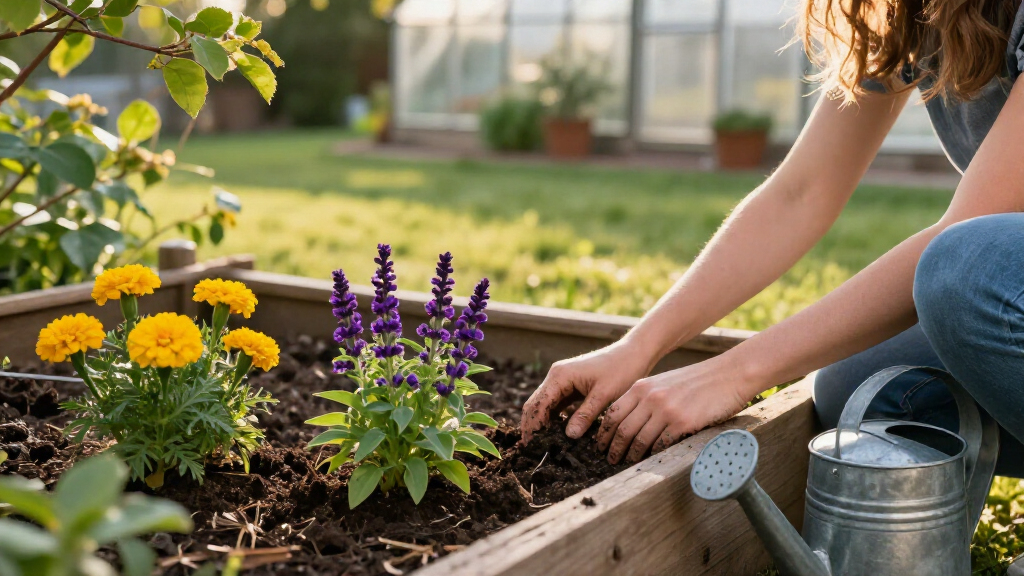
I ranked these options by how well they serve common backyard goals: creating a colorful flower bed, adding height, planting for fragrance, growing edible herbs, or establishing a flowering shrub. I weighed the type and quantity of planting material, the range of uses, the likely effort between purchase and a settled display, and how clearly each option suits a particular garden plan. Since the lineup includes both seed packets and live plants, I treated a quick start and long-term structure as different strengths rather than comparing them as if they were interchangeable.
The top position goes to PlantMe’s wildflower mix because its annual-and-perennial blend offers the broadest fit for a general backyard planting. The herb kit follows for its useful edible purpose, while lavender earns a place near the top for buyers who want fragrance and live plants rather than starting from seed. The remaining picks rank by narrower roles: sunflower and hollyhock seeds for bold seasonal height or color, and gardenia, night-blooming jasmine, and azalea for buyers willing to match a live plant to its site. A larger seed count alone did not determine rank; fit, versatility, and the work involved mattered too.
| garden plants for backyard | Sun exposure | Plant type |
|---|---|---|
| PlantMe American Meadow Magic | Full sun | — |
| Burpee Sunforest Mix Sunflower | — | Annual |
| HOME GROWN 15 Herb Seed Variet | Partial sun | — |
| Jubilation Gardenia Live Plant | Full to partial sun | Evergreen shrub |
| Lavender Live Plants | Full sun | Live perennial |
| Hollyhock Seeds | Full sun to partial shade | Perennial |
| Night-Blooming Jasmine Starter | Full sun | Flowering shrub |
| 60 Pink Sunflower Seeds for Pl | Full sun | — |
| 150 Skyscraper Sunflower Seeds | Full sun; 6–8 hours daily | Annual |
| Perfect Plants Autumn Bonfire | Full sun; prefers 4–6 hours | Evergreen shrub |
Factors to Consider When Choosing Best Garden Plants For Backyard
Choosing backyard plants starts with the conditions and job each planting must handle—not the flower photo or seed count alone. I use these factors to sort out what will suit a real yard, avoid common mismatches, and decide when an established plant is worth choosing over seeds.
Match Plants to Sun, Soil, and Drainage
Before choosing a plant, note how many hours of direct sun the intended spot gets and whether water drains quickly or lingers. A bright bed beside a dry path and a sheltered, damp corner are different growing environments, even in the same backyard. Check the growing directions for each seed or live plant against the actual site rather than relying on a broad label like “garden plant.” A common mistake is planting a sun-loving selection in partial shade and then blaming the seed or plant for weak growth. If the site is challenging, choose for its conditions first and accept a narrower flower or color choice. This can prevent buying a large pack that cannot thrive where you planned to use it.
Choose Seeds or Live Plants for Your Timeline
Seeds give you more flexibility over how many plants to start and where to place them, but germination, thinning, and early care take time. Live plants can shorten the wait for a visible planting, though they still need an appropriate spot and careful establishment. Think about when you want the bed to look settled, not just when you can plant. Starting seeds too late can leave a display smaller than expected during the season, while buying live plants does not remove the need to water and monitor them after planting. For a first garden, mixing one or two live plants with a manageable seed area can spread out the work. Choose based on your available time as much as your preferred flower.
Plan for Height, Spread, and Sightlines
Backyard plants affect how a space feels, so check mature height and spread before placing them beside a path, window, fence, or seating area. Tall sunflowers and hollyhocks can add a strong vertical feature, but may block shorter plants or views if they sit at the front of a bed. Shrubs can provide a more lasting focal point, yet they take up space beyond the day they arrive. Sketch the bed with taller plants behind shorter ones and leave room for access and airflow. A frequent planning error is choosing by bloom color while overlooking eventual size. If your backyard is compact, favor a small, deliberate grouping over planting every seed in one crowded patch.
Decide Whether You Want Color, Fragrance, or Harvests
A planting is easier to choose when you name its main purpose: visual impact, scent, cut flowers, or ingredients for the kitchen. The herb kit serves a different daily use from a flower mix, and fragrant live plants offer a sensory benefit that a sunflower bed may not. Combining too many goals in one small bed can create competing needs for spacing, care, and placement. Put strongly scented plants where people spend time, and keep herbs somewhere convenient to reach and tend. If you want several benefits, divide the yard into simple zones instead of expecting every plant to do everything. This makes it easier to care for each area according to its purpose.
Think Beyond the First Flush of Flowers
Annual flowers, perennials, and shrubs contribute to a yard on different schedules. Annuals can provide a concentrated seasonal show, while perennials and shrubs may return or provide structure over time when their growing needs are met. Mixed seed blends can spread interest across plant types, but they may not flower in a uniform wave or create a tightly controlled design. Before buying, decide whether you are comfortable replanting, want a longer-term feature, or prefer a mix of both. A common mistake is treating a seed mix as a finished landscape plan; it still needs placement, spacing, and sometimes follow-up planting. Pairing seasonal seed areas with a few carefully sited longer-term plants can balance variety and continuity.
Check Care Requirements and Local Suitability
Planting instructions are a starting point, but local climate, winter conditions, and water availability shape how much care a choice will need. Read the product guidance for sowing, spacing, light, and watering, then compare it with your region and how often you can tend the yard. Avoid assuming that a plant described as easy will thrive without the right site. If you garden in a dry area, favor choices whose care directions match the water you can provide; if winters are harsh, verify whether a live plant can stay outdoors year-round. Also check local guidance before sowing a large wildflower area, since suitable species and planting practices vary by location. Spending time on this check can save more effort than choosing by seed quantity alone.
Frequently Asked Questions
Which option makes the most sense if I want a backyard flower bed without choosing just one bloom?
The PlantMe American Meadow Magic Wildflower Seed Mix is the broadest match in this lineup because it combines annual and perennial seeds rather than focusing on one flower type. That variety suits a less formal bed, but it may not create a uniform look or a tightly scheduled bloom display. If you want a more coordinated feature, choose a sunflower option or hollyhock seeds instead. Before sowing a large area, check the packet directions and whether the mix suits your local conditions. A small test patch can show how the mix looks in your yard before you commit the full space.
Should I buy seeds or live plants for a backyard I want to improve this season?
Live plants such as the lavender, gardenia, night-blooming jasmine, and azalea options can give a planting a head start compared with sowing seeds, but they still need time to settle into the site. Seeds are a better fit when you want to cover more ground, try a broader mix, or enjoy starting plants from the beginning. Your timing, local planting season, and willingness to care for seedlings matter as much as the product format. Check the growing directions before ordering, especially for live plants that may have specific light or climate needs. If quick visual structure is your main goal, start with an appropriately sited live plant and add seeds for seasonal coverage.
Which picks are best for a small backyard or a narrow planting strip?
In a small space, focus on how much room a plant will occupy at maturity rather than how compact it looks when purchased. The herb kit can suit a dedicated, accessible growing area, while lavender can work as a defined planting if its site and spacing needs fit. Tall sunflower and hollyhock selections may be useful for vertical interest, but they can shade neighboring plants or obstruct a narrow path. A shrub such as gardenia or azalea needs room to grow and may be a poor choice where the bed is cramped. Review the product’s spacing and mature-size guidance, then plant fewer specimens with room around them.
What should I choose if I want plants that are useful as well as decorative?
The HOME GROWN Herb Seed Variety Kit is the clearest fit for a garden that should produce something to harvest as well as provide greenery. Its many varieties bring flexibility, but different herbs may have different light, spacing, and watering preferences, so avoid treating the whole kit as one uniform planting. Keep herbs near a convenient route to the kitchen if you expect to pick them often. If fragrance is your priority instead of food, lavender or night-blooming jasmine offers a different kind of everyday use. You can also separate herbs from flowering plants so each group gets care suited to its purpose.
Is a sunflower seed pack or a flowering shrub a better choice for a lasting backyard feature?
A sunflower pack is a better fit for a seasonal display that can add height and color without committing to a permanent shrub location. A live shrub such as the gardenia or Encore Azalea is more suitable when you want a lasting structural feature and can meet its site and care needs. These options serve different timelines, so compare the space available, your willingness to replant, and local growing conditions. Sunflowers may need support or careful placement to avoid shading nearby plants, while shrubs need room to mature. If you are unsure about the permanent location, start with seasonal planting before setting a shrub in the ground.
Conclusion
For a general-purpose backyard flower area, I recommend PlantMe American Meadow Magic Wildflower Seed Mix as the best overall; it offers the broadest blend of annual and perennial interest in this lineup. The best value for practical use is the HOME GROWN Herb Seed Variety Kit, especially for gardeners who will use the harvest and can manage several varieties. For beginners who want a simple design direction, a single sunflower or lavender planting is easier to plan than a diverse mix, though the right choice depends on your site and whether you prefer seeds or live plants. My best premium-style choice is Jubilation Gardenia for a buyer seeking a live shrub focal point and able to match it to suitable conditions; choose the Encore Azalea instead if its fit better suits your yard. For a specific need, pick the herb kit for edible plants, lavender or night-blooming jasmine for fragrance, and Skyscraper sunflowers or hollyhocks for height. Choose by the job your backyard needs done, then check the growing and spacing directions before planting.