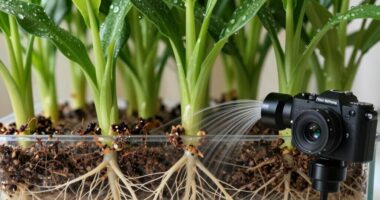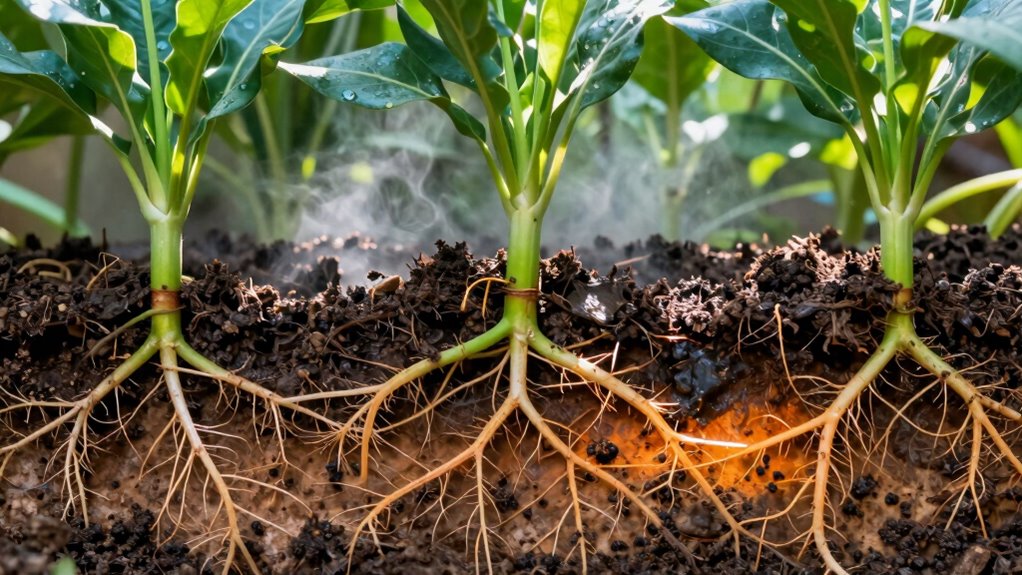

A root-zone heat strategy warms your plant’s roots while keeping the surrounding air cooler, which boosts nutrient absorption, promotes stronger roots, and helps plants resist pests and diseases. Warmer soil encourages root activity and faster growth, while cooler air prevents heat stress and air circulation issues. This balance creates an ideal environment for healthy, vigorous plants. If you want to know how to set up and optimize this system, there’s more to discover below.
Key Takeaways
- Warming soil enhances root activity, nutrient absorption, and plant growth, leading to healthier development.
- Cooler air reduces heat stress, improves air circulation, and prevents overheating around plants.
- Maintaining warm roots with cooler air creates an optimal environment, boosting plant resilience and productivity.
- Active soil heating techniques, like mulching and soil heaters, regulate root-zone temperature effectively.
- Proper monitoring ensures balanced soil warmth and air temperature, maximizing plant health and minimizing stress.
Why Managing Soil and Air Temperatures Is Critical for Plant Growth
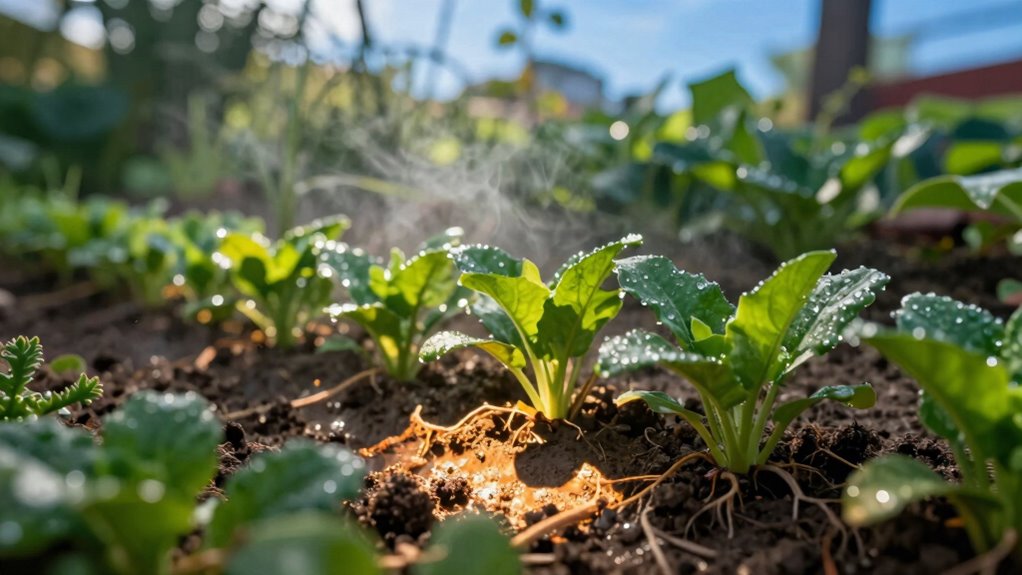
Managing soil and air temperatures is essential because they directly influence plant metabolism and development. When soil moisture levels are ideal, roots absorb nutrients efficiently, promoting healthy growth. Conversely, too much moisture can create a damp environment that fosters pests and diseases, making pest control more challenging. Warmer soil temperatures accelerate root activity, but excessive heat may stress plants or attract pests seeking warm habitats. Proper temperature management helps maintain a balanced environment, reducing pest infestations and ensuring roots stay healthy. Additionally, stable air temperatures prevent stress-related issues like wilting or slowed growth. High-quality projectors and other equipment can assist in monitoring and controlling environmental conditions effectively. By controlling these factors, you create a conducive environment for plants to thrive, boosting productivity and reducing the need for chemical interventions. In turn, this supports sustainable and resilient plant development.
What Is the Root-Zone Heat Strategy and How Does It Work?

The root-zone heat strategy involves actively regulating soil temperatures to maximize plant health and growth. By warming the soil, you encourage root development, enhance nutrient uptake, and improve overall resilience. This method also helps maintain ideal soil moisture levels, reducing stress on plants and preventing overwatering. Additionally, warmer soils can inhibit certain pests and soil-borne diseases, aiding in pest control naturally. Here’s a quick overview:
| Aspect | Benefit | Implementation Tip |
|---|---|---|
| Soil Temperature | Boosts root activity and nutrient absorption | Use soil heaters or mulching |
| Soil Moisture | Maintains consistent moisture levels for roots | Monitor and adjust watering |
| Pest Control | Reduces pest activity in the soil | Warm soil discourages pests |
| Plant Health | Overall improved growth and resilience | Regular soil temperature checks |
Furthermore, understanding the importance of soil health can help optimize the effectiveness of this strategy.
How Warm Roots Boost Plant Development and Resilience

When your plant roots stay warm, they absorb nutrients more efficiently, fueling healthy growth. This warmth also encourages the roots to develop a stronger, more extensive system. As a result, your plants become more resilient and better able to withstand stress. Additionally, maintaining optimal root temperatures can help prevent issues related to free floating pests and diseases that thrive in cooler, damp soil conditions.
Enhanced Nutrient Uptake Efficiency
Warm roots play a essential role in enhancing nutrient uptake, directly influencing plant growth and resilience. When roots are warm, they become more efficient at absorbing root nutrient from the surrounding soil, improving overall soil health. This process helps plants access essential minerals and compounds faster, supporting robust development. Imagine your roots as:
- Open gates, welcoming nutrients with ease.
- Active engines, speeding up absorption.
- Healthy pipes, ensuring smooth transfer of nutrients.
With this increased efficiency, your plants become stronger and more resilient to stress. Warm roots optimize the soil environment, making nutrients more available and reducing deficiencies. This boost in nutrient uptake not only encourages vigorous growth but also fortifies your plants against pests and diseases, leading to healthier, more productive plants overall.
Improved Root System Development
Healthy, warm roots actively promote the development of a stronger and more extensive root system. When roots stay warm, soil aeration improves, allowing oxygen to reach root tissues efficiently. Better oxygen levels encourage healthy root growth and prevent compaction, resulting in a more robust network. Additionally, warmth enhances moisture management by helping roots absorb water more effectively, reducing drought stress. A well-developed root system anchors your plants firmly and increases their resilience against pests and diseases. As roots grow stronger and deeper, they access nutrients more efficiently, fueling overall plant health. By maintaining *ideal* root-zone temperature, you enable your plants to thrive with improved structural stability and better adaptability to environmental stressors. Proper soil aeration further amplifies these benefits by ensuring roots receive the oxygen they need to grow vigorously.
Setting Up Your Root-Zone Heating System: Step-by-Step Guide
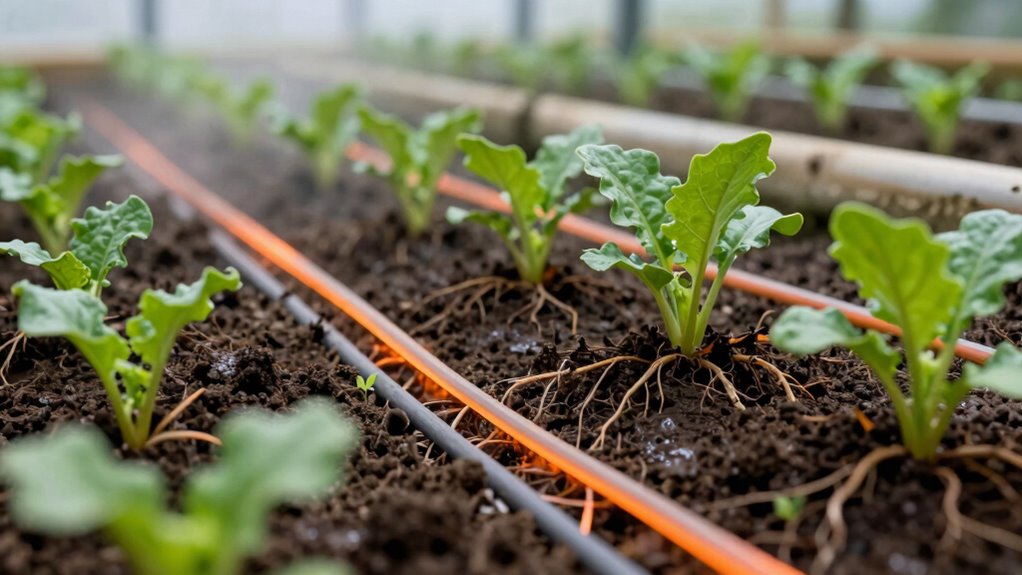
To set up your root-zone heating system effectively, you need to select the right materials that guarantee even heat distribution and durability. Proper installation techniques are essential to prevent issues like leaks or uneven heating. Follow these steps carefully to create a reliable and efficient system that promotes healthy plant growth. Incorporating safe and reliable components is vital for long-term performance and safety in your heating setup.
Choosing the Right Materials
Selecting the right materials is essential for guaranteeing your root-zone heating system works effectively and safely. You need durable options that can withstand moisture and temperature changes, while also providing good soil insulation. Consider these key items:
- Thick, insulating mats or foam boards to keep heat consistent and prevent energy loss.
- Heavy-duty, weather-resistant piping or tubing designed for durability and long-term use.
- Quality, non-toxic soil covers or mulches that protect roots and enhance soil insulation.
- Proper insulation techniques are vital for maintaining consistent soil temperatures and maximizing energy efficiency.
Prioritize material durability to avoid frequent replacements, and focus on soil insulation to maintain excellent root temperatures. Using the right materials ensures your system operates efficiently, reducing energy costs while protecting your plants. Choose wisely to build a reliable, effective root-zone heating setup.
Proper Installation Techniques
Setting up your root-zone heating system correctly is essential for ensuring ideal performance and longevity. Begin by preparing the soil, ensuring proper soil aeration to promote healthy root growth and prevent compaction. When installing heating elements, maintain consistent depth to avoid uneven heating. Use quality materials that facilitate moisture control, preventing waterlogging or drying out the roots. Clear debris and level the soil surface before laying heating cables or mats. After installation, check that the system is functioning properly and that temperature sensors are accurately placed. Regularly monitor soil moisture levels to guarantee optimal conditions and prevent issues like root rot. Proper installation techniques help maintain consistent heat, support healthy plant roots, and extend the system’s lifespan.
How to Keep Air Temperatures Cooler for Optimal Growth
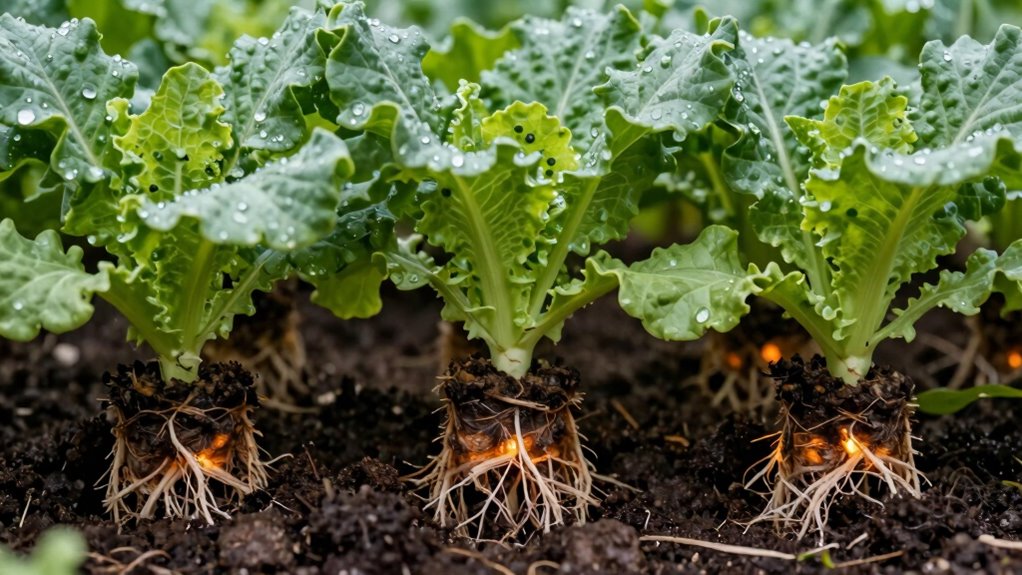
Maintaining cooler air temperatures is crucial for peak root-zone heat management, especially during hot weather. When air stays cooler, your soil cooling efforts become more effective, promoting healthy root growth. To achieve this, focus on improving air circulation around your plants. Here are three ways to help:
- Use fans or natural breezes to create steady airflow, preventing stagnant, overheated air.
- Plant taller companion plants or install shading structures to block direct sunlight and reduce air temperature.
- Space plants appropriately to avoid overcrowding, which can trap heat and limit airflow.
- Understanding media literacy can help you better identify and implement effective cooling strategies based on reliable information.
These strategies help keep the air cooler and enhance soil cooling, ensuring suitable conditions for root development and overall plant health. Consistent air circulation is your best ally against heat stress.
What Materials Are Best for Soil Heating and Why
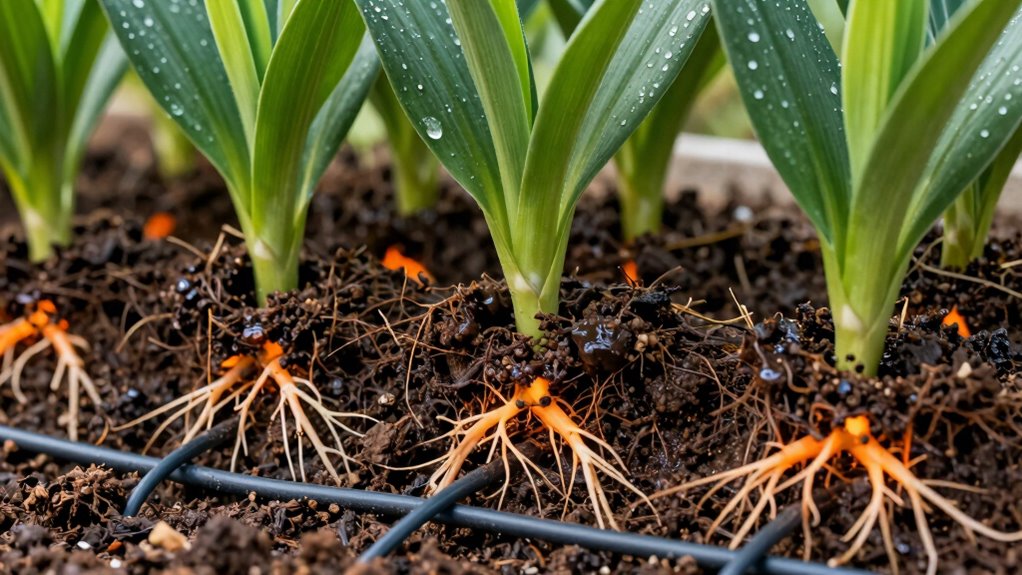
When choosing materials for soil heating, focusing on those that efficiently transfer and retain heat is essential to promote healthy root development. Materials like black plastic or rubber mats work well because they conduct heat effectively, ensuring even warming of the soil. Additionally, incorporating soil insulation such as straw, mulch, or foam helps conserve heat and prevents rapid cooling, maintaining consistent temperatures. Proper moisture regulation is also crucial; materials that help retain moisture, like organic mulch or fabric covers, prevent the soil from drying out and support heat transfer. Avoid porous or insulating materials that trap air or moisture unevenly, as they can hinder heat flow. Using drone insights or aerial imaging can help monitor soil temperature and moisture levels more precisely. The right combination of heat-conductive materials, insulation, and moisture regulation creates an ideal environment for root health and growth.
Troubleshooting Common Root-Zone Heating Problems
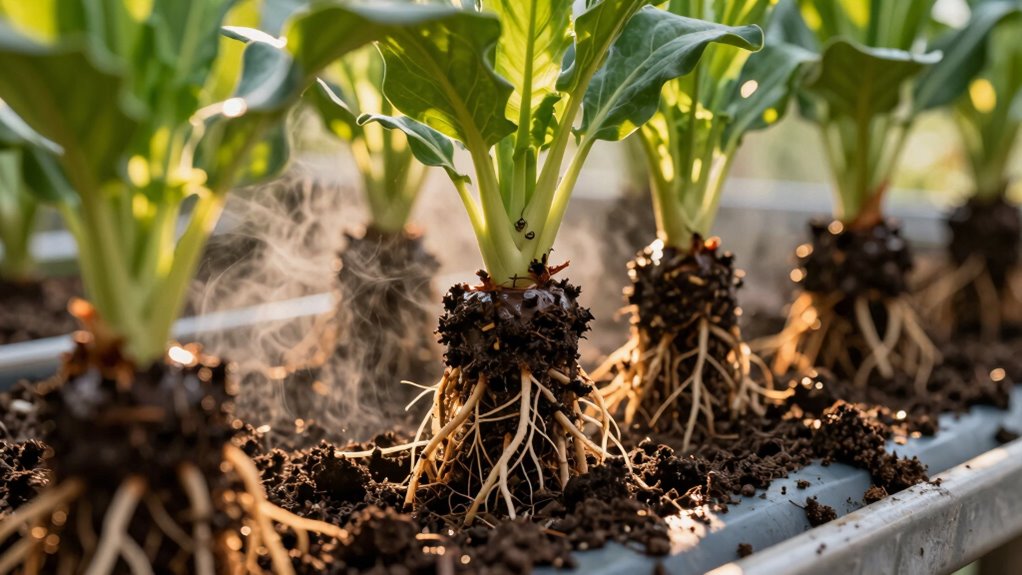
Even with careful planning, root-zone heating systems can encounter issues that hinder plant growth. Poor soil aeration can cause roots to suffocate, while improper moisture control leads to waterlogged or overly dry conditions. To troubleshoot, consider these common problems:
- Compacted soil – Reduce compaction by aerating the soil, allowing air and water to reach roots more easily.
- Uneven heating – Check your heating source for consistent temperature distribution to prevent cold spots.
- Excess moisture or dryness – Adjust moisture levels through controlled watering, avoiding over-saturation or drought stress. Incorporating sound vibrations into soil management practices has been explored for their potential to influence plant health.
Addressing these issues helps maintain ideal soil conditions, ensuring roots stay warm, oxygenated, and properly hydrated for healthy growth. Regular monitoring keeps your root-zone heating system functioning smoothly and effectively.
How Different Plants Benefit From the Root-Zone Heat Strategy
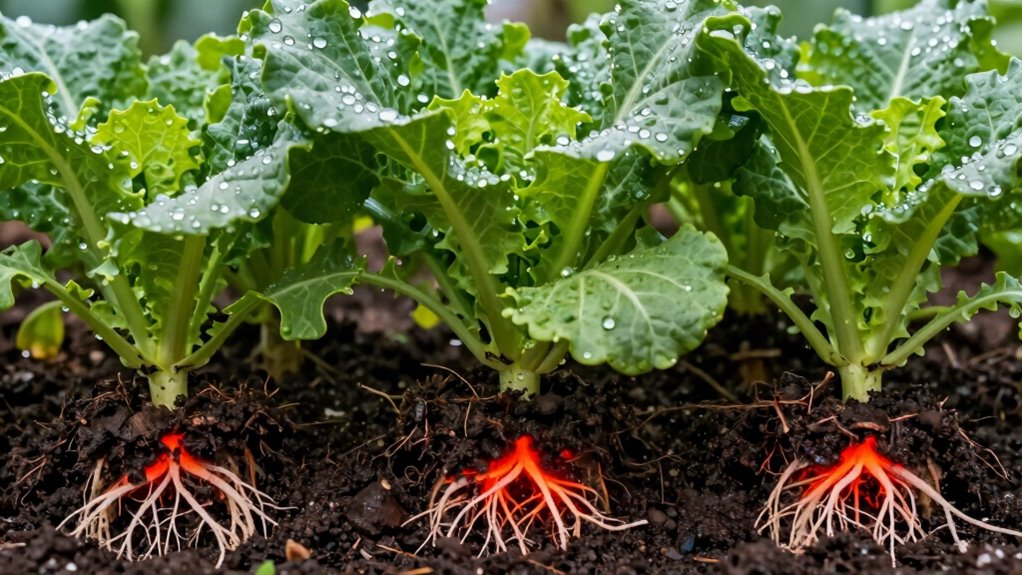
Different plants respond uniquely to the root-zone heat strategy, gaining specific benefits that support their growth and health. Plant diversity means that some species thrive with warmer roots, boosting nutrient uptake and root adaptations. For example, vegetables like tomatoes and peppers benefit from increased root activity, leading to faster growth. Others, like herbs or perennials, develop stronger root systems that improve resilience. Here’s a quick overview:
| Plant Type | Benefit from Root-Zone Heat | Root Adaptation |
|---|---|---|
| Vegetables | Faster maturation, better yields | Enhanced nutrient absorption |
| Herbs | Improved vigor and flavor | Deeper, more extensive roots |
| Perennials | Increased resilience against stress | Stronger, more fibrous roots |
Enhanced root systems also support nutrient cycling, making plants more efficient in resource use.
Monitoring and Adjusting Soil and Air Temperatures for Best Results
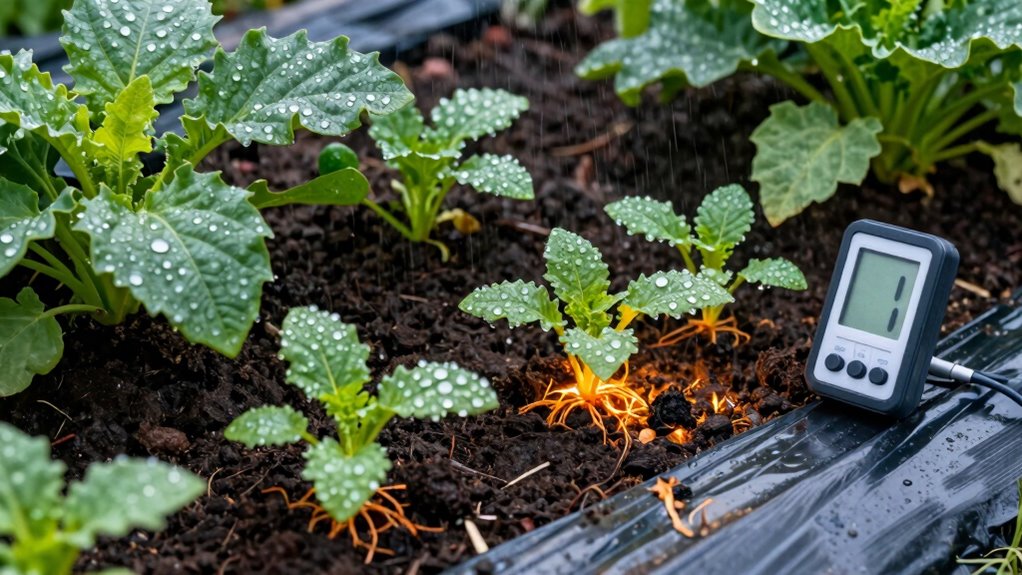
To achieve ideal results with the root-zone heat strategy, you need to carefully monitor and adjust both soil and air temperatures throughout the growing season. Keep a close eye on soil moisture levels, ensuring they stay consistent for optimal root warmth without overwatering. Improve air circulation around plants to prevent heat buildup and promote even temperature distribution. Regularly check soil temperatures with a soil thermometer and adjust your heating system accordingly. Use these techniques to create a vivid image:
- A soil probe slipping easily into warm, moist earth.
- Fans gently moving air, preventing stagnant pockets.
- Thermometers displaying consistent, optimal temperatures for roots and air.
Frequently Asked Questions
Can Root-Zone Heating Be Used for Outdoor Gardening?
Yes, you can use root-zone heating for outdoor gardening. It helps maintain ideal soil temperature, especially during cold weather, which promotes better plant health. By warming the soil directly around the roots, you guarantee your plants stay active and grow strong despite chilly air temperatures. This technique is particularly useful for extending your growing season and protecting sensitive plants from frost damage.
How Energy-Efficient Is the Root-Zone Heat Strategy?
Think of the root-zone heat strategy as a gentle hug for your plants—cost-efficient and environmentally friendly. It uses less energy than traditional heating methods, making it highly cost-efficient. By focusing heat on the roots, you reduce overall energy consumption, gaining environmental benefits. This approach minimizes waste, saves money, and promotes sustainable gardening, proving that warmth at the roots can be both smart and kind to the planet.
Is Root-Zone Heating Suitable for All Plant Species?
Root-zone heating isn’t suitable for all plant species, as plant compatibility varies. You need to think about each species’ adaptability to warmer root conditions before using this strategy. Some plants thrive with warm roots and cooler air, while others may suffer stress or disease. To ensure success, research your specific plants’ needs and avoid applying root-zone heating to species that aren’t compatible, helping your garden stay healthy and productive.
What Safety Precautions Should I Take When Installing Soil Heaters?
When installing soil heaters, you should prioritize soil safety and proper heater placement to prevent accidents. Always guarantee the heater is installed away from water sources to avoid electrical hazards. Use insulated wiring and secure all connections tightly. Keep the heater away from plant roots that might be sensitive to heat. Regularly check for damage or wear, and follow manufacturer instructions for safe installation and operation.
How Does Root-Zone Heating Impact Water Usage?
Root-zone heating can reduce water usage by improving water conservation and increasing irrigation efficiency. When roots stay warm, plants grow healthier and need less frequent watering because their roots absorb moisture more effectively. This minimizes water runoff and evaporation. As a result, you use water more efficiently, saving resources and reducing your overall water bill. Properly managed, root-zone heating supports sustainable watering practices while keeping your plants healthy.
Conclusion
By balancing warm roots with cooler air, you create a cozy haven for your plants to thrive. Think of it as giving them a gentle hug from below while keeping their environment cool above. With the right setup and adjustments, you’ll watch your garden flourish like a well-tuned symphony. Embrace this strategy, and your plants will reward you with vibrant growth and resilience, turning your gardening efforts into a beautiful, thriving masterpiece.