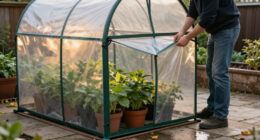
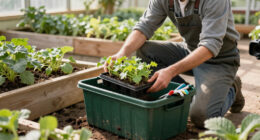
To shift plants without stress, gradually expose them outdoors starting with a few hours in shaded areas, then slowly increase exposure to sunlight, wind, and temperature over days or weeks. Protect them with shade cloths, windbreaks, or covers to prevent damage. Keep soil moist and monitor their response, adjusting your approach as needed. Patience and proper timing are key—it’s a gentle process that ensures healthier, more resilient plants in the long run. If you continue, you’ll discover more tips to perfect your hardening off routine.

Get garden gear delivered free — and shop member deals
- Fast, free delivery on millions of items
- Access to Prime Big Deal Days deals on October 6–7
- Prime Video, Amazon Music and more included
Key Takeaways
- Gradually increase outdoor exposure over days or weeks, starting with short shaded periods.
- Monitor weather conditions and avoid harsh sun, wind, or cold during transition.
- Ensure plants are healthy and well-watered before hardening off begins.
- Use protective coverings like shade cloths and windbreaks to shield plants initially.
- Observe plant responses for signs of stress and adjust the process for a smooth transition.
As an affiliate, we earn on qualifying purchases.
What Is Hardening Off and Why Is It Essential?

Have you ever wondered why your newly grown seedlings sometimes wilt or struggle when moved outdoors? That’s because your plants need time for plant acclimation, which is a natural process during outdoor transition. Hardening off is the deliberate process of gradually exposing your plants to outdoor conditions, helping them adjust safely. Without this step, sudden exposure to wind, sunlight, and fluctuating temperatures can stress or damage your plants. Hardening off reduces shock, builds resilience, and ensures healthier growth. It’s an essential practice that bridges the gap between indoor nurturing and outdoor thriving. By understanding the importance of plant acclimation and the benefits of climate adaptation, you give your seedlings the best chance to adapt smoothly, leading to stronger, more vigorous plants in the long run. Additionally, proper color accuracy in visual displays can help you better monitor plant health during this process.
How to Prepare Your Plants for Hardening Off

Before starting the hardening-off process, you need to prepare your plants by ensuring they’re healthy and ready for outdoor exposure. This involves a few key steps. First, check that your plants are free of pests and diseases. Second, optimize soil preparation by loosening the soil and adding compost to improve drainage and nutrients. Third, refine your watering techniques, ensuring consistent moisture without overwatering, as stressed roots can hinder adaptation. Additionally, choosing the right plant care products can support your plants’ health during this transition. Proper soil preparation and careful watering set the foundation for a smooth progression, minimizing stress during hardening off and helping your plants thrive once fully acclimated. Incorporating plant health monitoring can help you detect early signs of stress or issues, ensuring your plants remain strong throughout the process. Gradually introduce outdoor conditions by placing plants in a shaded, protected area for a few hours daily, increasing exposure over time.
When Is the Best Time to Hardening Off Your Plants?

The best time to harden off your plants depends largely on your local climate and the specific plant types. Seasonal timing is vital; wait until the risk of frost has passed and daytime temperatures are consistently above 50°F (10°C). Climate considerations vary—if you live in a cooler region, you might need to start the process later, while warmer areas allow for earlier hardening off. Monitor weather forecasts to avoid sudden cold snaps or high winds, which can stress your plants. Ideally, begin hardening off when outdoor conditions are stable and mild, gradually exposing your plants to outdoor elements over a week. This approach minimizes shock and guarantees your plants adapt smoothly to their new environment. Understanding the plant properties can help tailor the process to specific species for optimal results, and being aware of the Gold IRA Markets can provide insights into financial planning that supports your gardening investments. Additionally, observing local climate patterns can further refine your timing for a successful transition. Regularly checking plant health indicators can also guide you on whether your plants are ready for full outdoor exposure. Recognizing appropriate sun exposure needs for each plant type can further enhance their acclimation process.
How to Harden Off Your Plants Step by Step

To successfully harden off your plants, start by gradually introducing them to outdoor conditions over several days. This process helps with plant acclimation and guarantees a smooth garden shift without stress. Begin by placing your plants outdoors in a sheltered spot for a few hours each day. Increase exposure gradually, allowing your plants to adapt. Here’s a simple step-by-step:
Gradually introduce plants outdoors to ensure smooth, stress-free garden transition.
- Day 1-2: Set plants outside in a shaded area for 2-3 hours.
- Day 3-4: Extend outdoor time to 4-6 hours, adding some indirect sunlight.
- Day 5 and beyond: Gradually increase outdoor time and exposure to direct sunlight, monitoring their response. Incorporating proper plant acclimation practices can further enhance their resilience to outdoor conditions.
- Keeping a garden journal can help you track your progress and identify the best times for adjustments. Additionally, understanding the importance of environmental factors like wind and temperature can improve your hardening-off process. Being aware of weather forecasts allows you to protect your plants during unexpected changes.
- Incorporating document management practices can help you stay organized through all gardening projects and seasonal changes.
This step-by-step approach guarantees your plants adjust slowly, reducing shock and promoting healthy growth during the garden shift.
How to Protect Your Plants From Sun, Wind, and Cold During Hardening

To safeguard your plants during hardening, you need to shield them from harsh sun, strong wind, and cold temperatures. Using covers or shade cloth can reduce sun stress, while windbreaks help prevent damage from gusts. Insulating materials like row covers or mulch keep cold at bay and ensure your plants adjust smoothly. Additionally, considering the use of air quality measures around your garden can help reduce exposure to urban pollutants that may hinder plant health. Monitoring plant stress signals can also guide you in making timely adjustments to protect your plants effectively. Incorporating at-home gardening tech gadgets, such as soil sensors and weather stations, can further optimize your hardening process by providing real-time data. Implementing seasonal checklists can help you stay on top of essential maintenance tasks to support plant resilience during this transition. Regularly assessing environmental conditions helps tailor your protection strategies to changing weather patterns and ensure successful plant hardening.
Shield Plants From Sun
Have you noticed how sudden exposure to intense sunlight can stress or damage your plants during hardening? To protect them, focus on sun protection and leaf shading. Here are three effective strategies:
- Use shade cloths or mesh screens to diffuse sunlight and prevent leaf scorch.
- Place plants in a sheltered spot, like beside a wall or under taller plants, to reduce direct sun exposure.
- Gradually increase sun exposure each day, allowing plants to adapt without shock.
- Monitoring filtration systems can help you better understand how to shield plants from harsh rays and environmental stressors. Additionally, implementing proper watering techniques supports plant resilience during this transition period. Recognizing the importance of plant resilience can improve your hardening process and reduce stress on your plants. Incorporating shade management practices can further enhance protection and ensure healthy development. These steps help prevent leaf bleaching and stress from harsh rays. Shielding plants from intense sun ensures they harden off properly, developing resilience for outdoor conditions. Remember, well-timed sun protection is key to healthy, stress-free plant transition. Using adaptive shading strategies can also optimize protection levels based on weather conditions, further supporting your plants’ acclimatization process.
Minimize Wind Stress
Are strong winds causing your young plants to sway or become damaged during hardening? Wind stress can hinder plant acclimation, leading to stunted growth or breakage. To minimize this, create wind protection by placing barriers like fences, burlap screens, or planting near structures. These measures help shield plants from harsh gusts, reducing physical stress. Use the table below to identify effective wind protection methods:
| Method | Benefit |
|---|---|
| Windbreaks | Reduce wind velocity |
| Temporary Screens | Easy to install and remove |
| Strategic Placement | Use natural barriers for protection |
Implementing these strategies ensures your plants experience less stress, promoting healthier acclimation and smoother transition during hardening. Additionally, choosing the right protective materials can further enhance your efforts to shield plants from environmental stressors.
Insulate Against Cold
Wondering how to keep your plants safe from the unpredictable weather during hardening? Proper plant insulation is essential to prevent cold damage. Here are three ways to insulate against cold and provide frost protection:
- Cover plants with frost cloths or row covers overnight to trap warmth and shield them from frost.
- Place straw or mulch around the base to insulate roots and retain soil warmth.
- Use cloches or plastic tunnels to create a mini-greenhouse effect, protecting plants from cold winds and temperature drops.
These methods help reduce stress caused by sun, wind, and cold, giving your plants a smoother transition outdoors. Insulating against cold ensures they stay healthy and ready for planting, minimizing setbacks during the hardening process.
How to Know When Your Plants Are Ready to Stay Outside Full-Time

Knowing when your plants are ready to stay outside full-time is essential to guarantee they adapt successfully and avoid damage from unexpected cold snaps or harsh weather. Watch for signs of plant acclimation, where your plants become more resilient to outdoor conditions. Check their response to gradually increased outdoor exposure over several days. Pay attention to temperature thresholds; most plants can handle temperatures above 45°F (7°C) consistently. Use a thermometer to monitor nightly lows, ensuring they stay above this mark.
| Condition | Indicator |
|---|---|
| Consistent daytime temps | Above 60°F (15°C) for a week |
| Nighttime lows | No frost or freezing temperatures |
| Plant response | Healthy growth without wilting or stress signs |
| Acclimation signs | Sturdy stems, open leaves, and no drooping |
Common Mistakes to Avoid When Hardening Off Plants

One common mistake during hardening off is rushing the process, which can shock plants and cause stress or damage. Moving plants outside too quickly exposes them to harsh sunlight, wind, and temperature swings they aren’t ready for. To avoid this, watch out for these pitfalls:
- Watering mistakes – overwatering can lead to root rot, while underwatering causes stress.
- Overexposure hazards – exposing plants to full sun immediately can scorch leaves and weaken them.
- Ignoring gradual acclimation – failing to increase outdoor time gradually leaves plants unprepared for environmental changes.
What To Do If Your Plants Show Stress or Damage During Hardening?

If your plants show signs of stress or damage, start by evaluating the situation carefully to identify the specific issues. Then, consider adjusting your hardening process to reduce exposure or protect vulnerable areas. Making these changes helps your plants recover and prepares them for outdoor conditions more effectively.
Assess Damage Carefully
When your plants show signs of stress or damage during hardening off, it’s important to assess the situation carefully before taking further action. First, check the soil testing results to ensure nutrients and pH levels are appropriate; poor soil conditions can exacerbate stress. Second, review your watering routines—overwatering or underwatering can cause leaf scorch or wilting. Third, examine the damaged areas closely: are the leaves brown and crispy, or are they soft and mushy? This helps determine if the damage is due to environmental stress, pests, or disease. Avoid rushing into remedies without understanding the cause. Taking these steps guarantees you address the real issue and prevent further damage, giving your plants a better chance to recover during the hardening process.
Adjust Hardening Process
Should you notice signs of stress or damage during hardening off, it’s crucial to adjust your approach promptly to prevent further harm. Focus on aiding plant acclimation by gradually modifying environmental conditions. Reduce exposure to direct sunlight, wind, or temperature fluctuations that seem overwhelming. Slow down the environmental adjustment process by extending the hardening period, giving your plants more time to adapt. Check humidity levels and guarantee they’re appropriate for your plant type. If needed, introduce shade cloths or protective coverings to shield your plants from harsh elements. Observe your plants closely and respond to their cues. A gentle, tailored approach helps them develop resilience without undue stress, making the transition smoother and more successful.
Tips for Using Shade and Coverings Effectively During Hardening

Using shade and coverings wisely during hardening helps protect your plants from harsh sunlight and temperature fluctuations. Proper use of shade coverings and plant shields creates a safer progression outdoors. First, position shade coverings so they block the strongest sun during peak hours, reducing leaf scorch. Second, use lightweight, breathable materials to prevent overheating and guarantee airflow. Third, adjust coverings gradually, increasing exposure time daily, so plants adapt without stress. Keep an eye on weather forecasts to remove or add coverings as needed, especially during wind or unexpected storms. These simple steps help your plants build resilience, minimizing shock and securing a successful transition to outdoor conditions. Proper shade management makes all the difference in a stress-free hardening process.
Key Takeaways for Successful Plant Hardening

Achieving successful plant hardening requires careful planning and attentive management throughout the process. Focus on gradual plant acclimation by slowly increasing exposure to outdoor conditions, allowing your plants to adapt without stress. Monitor temperature, sunlight, and wind, adjusting coverings or shade as needed to ease the growth shift. Consistency is key—avoid abrupt changes that can shock plants or hinder their development. Keep an eye on watering needs, ensuring soil remains moist but not waterlogged. Proper timing and patience help your plants build resilience, resulting in healthier, stronger growth. By understanding and respecting the natural acclimation process, you support a smoother growth transition, maximizing your plants’ chances of thriving once fully hardened off.
Frequently Asked Questions
Can Hardening off Be Skipped for Indoor-Grown Plants?
You can skip hardening off for indoor-grown plants if they haven’t been exposed to outdoor conditions. However, for successful indoor acclimation and stress mitigation when moving plants outside, it’s best to gradually introduce them to sunlight and outdoor air. Skipping this step might shock your plants, making them vulnerable to stress and damage. Taking time to harden off guarantees a smoother transition and healthier, more resilient plants.
How Long Should Each Hardening off Session Last?
You should start with short, 1-2 hour sessions, gradually increasing to 4-6 hours over a week. During each session, monitor temperature regulation and wind exposure, ensuring plants don’t experience stress. As you extend the time, allow plants to adapt to outdoor conditions—warm breezes and fluctuating temperatures—building resilience. This steady progression helps plants adjust safely, strengthening their defenses for a successful move outside.
What Signs Indicate My Plants Are Over-Hardening?
If your plants show signs like wilting, browning, or scorch marks, they’re over-hardening. These stress indicators suggest they’re exposed to too much sun or wind, risking sunburn prevention failure. To avoid this, gradually increase outdoor exposure and monitor for these signs. If you notice them early, bring your plants back inside or shield them, and reduce outdoor time. Properly managed, you’ll keep your plants healthy and stress-free during hardening off.
Do Different Plant Species Require Different Hardening Times?
Did you know that some plant species need twice as long to harden off compared to others? Yes, different plant species require different hardening times, depending on their species-specific timing and cultivar considerations. For example, tender annuals might need only a week, while hardy perennials could take two or more. Always research your specific plants to avoid stress, ensuring a smooth progression and healthy growth.
Can Hardening off Damage Be Reversed or Repaired?
Hardening off damage can sometimes be reversed or repaired, but it depends on the severity. If your plant has minor stress, you can support plant recovery by providing ideal conditions, such as proper watering, shade, and gentle handling. Avoid further stress, and give it time to adapt. For more serious damage, focus on promoting healthy growth, but full recovery might not be possible. Patience and attentive care are key.
Conclusion
Just like a delicate butterfly needs gentle wings to take flight, your plants need careful hardening off to thrive outdoors. I once watched my seedlings wilt under a sudden gust, reminded me how abrupt changes can shock even the strongest. With patience and gradual exposure, you’ll nurture resilient plants that flourish. Remember, this process isn’t just about survival—it’s about helping your garden bloom with confidence and strength. Trust the journey; your plants will thank you.
Fall yard work Picks
leaf blowers
As an affiliate, we earn on qualifying purchases.