
To water evenly without overbuilding your drip system, start by planning a layout that groups plants with similar needs and positions emitters close to their root zones. Keep lines parallel with minimal bends, and guarantee uniform pressure with regulators. Regularly check for clogs or leaks, adjust emitter flow rates, and maintain consistent spacing. If you want to master balancing efficiency and coverage, you’ll find helpful tips on optimizing your system next.

Get garden gear delivered free — and shop member deals
- Fast, free delivery on millions of items
- Access to Prime Big Deal Days deals on October 6–7
- Prime Video, Amazon Music and more included
Key Takeaways
- Map your garden zones and group plants with similar water needs for even coverage.
- Use proper spacing, compatible connectors, and minimal bends to promote consistent flow.
- Install pressure regulators and flow restrictors to maintain uniform pressure across the system.
- Regularly inspect and clean emitters, filters, and hoses to prevent clogs and ensure even watering.
- Adjust emitter placement and watering schedules seasonally based on plant growth and soil moisture.
As an affiliate, we earn on qualifying purchases.
Why Proper Drip Line Layout Is Key to Even Watering
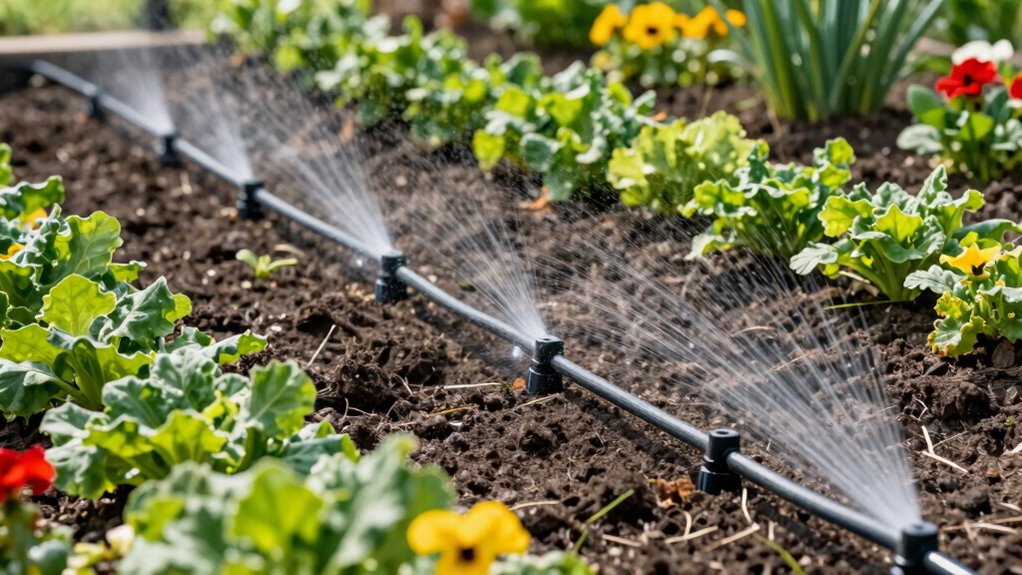
A proper drip line layout is essential because it guarantees plants receive an even and consistent water supply. When planning your system, consider soil aeration, as well-aerated soil allows water to penetrate deeply, reducing runoff and ensuring roots access moisture efficiently. Proper plant placement also plays a pivotal role; grouping plants with similar water needs helps create uniform watering zones, preventing over- or under-watering. If your drip lines are uneven or poorly positioned, some plants may suffer from drought stress, while others become waterlogged. By thoughtfully arranging your drip lines based on plant placement and soil conditions, you promote healthy growth, maximize water efficiency, and avoid unnecessary system adjustments later on. Additionally, understanding drip line spacing ensures even coverage across your garden, preventing dry spots and overwatering. A well-designed layout is the foundation for successful, even watering.
How to Evaluate Your Garden’s Layout and Watering Needs
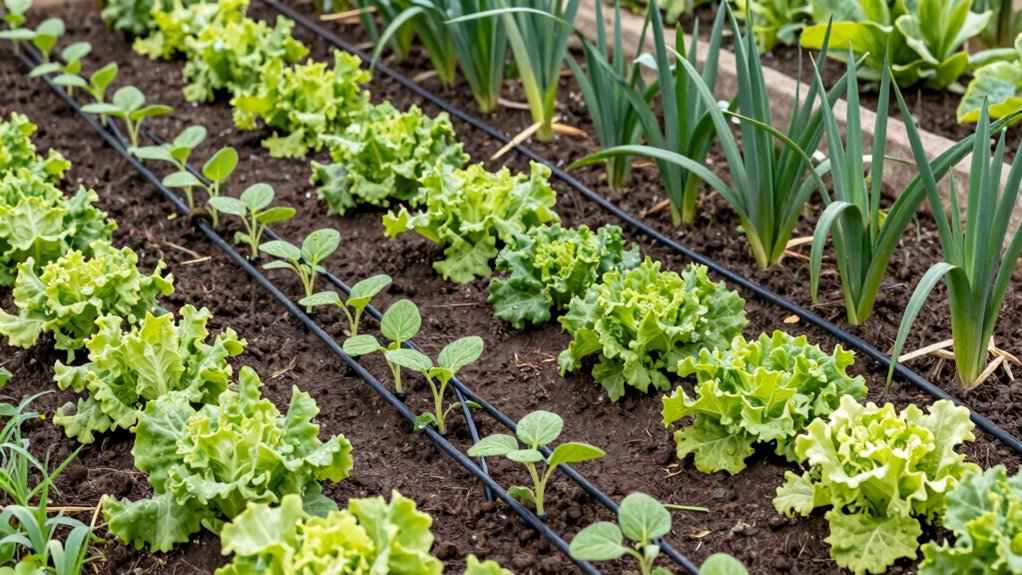
Evaluating your garden’s layout and watering needs starts with understanding how your space is organized and where your plants are located. First, perform soil testing to determine moisture retention and nutrient levels, guiding watering adjustments. Next, observe your plant grouping: grouping similar plants together helps streamline watering since they share similar needs. Then, identify high-traffic or dry areas that may require extra attention. Finally, map out your garden, noting sun exposure and soil type, to tailor your watering plan. Incorporating knowledge about sound vibrations and cellular health can also inform your understanding of soil and plant responses to watering practices. By appraising these factors, you ensure efficient water distribution. This approach helps you avoid overwatering or underwatering, creating a balanced system that meets your garden’s specific requirements while making the most of your drip line layout.
Planning Your Drip System for Complete Coverage
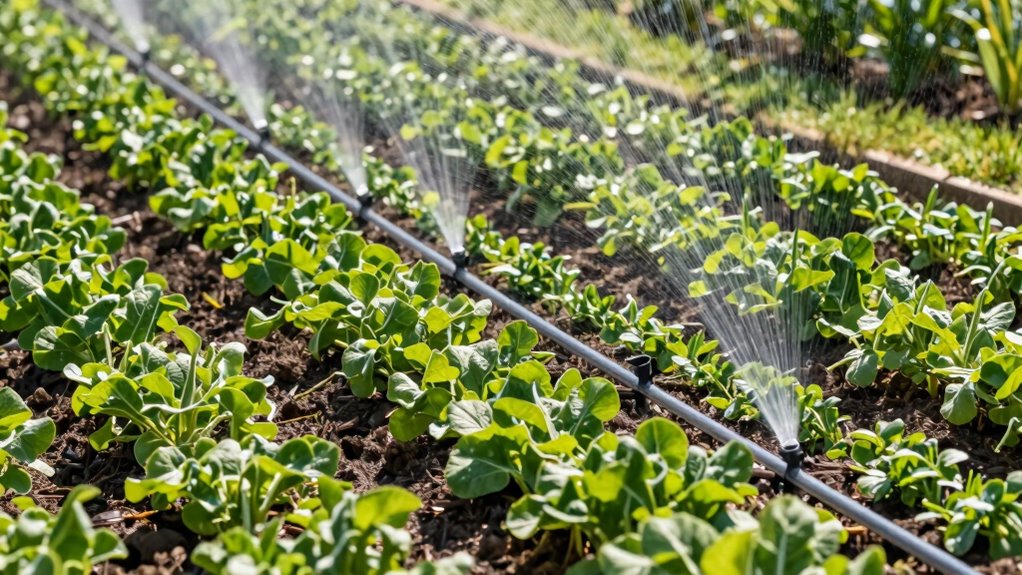
To guarantee your drip system provides complete coverage, start by planning the layout carefully. Map out all plant zones, considering their unique watering needs. Check fertilizer compatibility to ensure your system’s components won’t clog or degrade with different nutrients. Keep in mind seasonal adjustments; plants may require more or less water depending on the time of year. Design your layout to evenly distribute water across all areas, avoiding dry spots or overwatering. Use adjustable emitters or different flow rates where necessary to meet specific plant requirements. Also, plan for easy access to main lines and valves for maintenance. Proper planning now assures your system runs efficiently year-round, delivering consistent moisture while accommodating fertilizer needs and seasonal changes. Incorporating European cloud innovation can help monitor and optimize your watering schedules remotely, ensuring optimal performance of your drip system.
Connecting Drip Lines Effectively Without Overbuilding
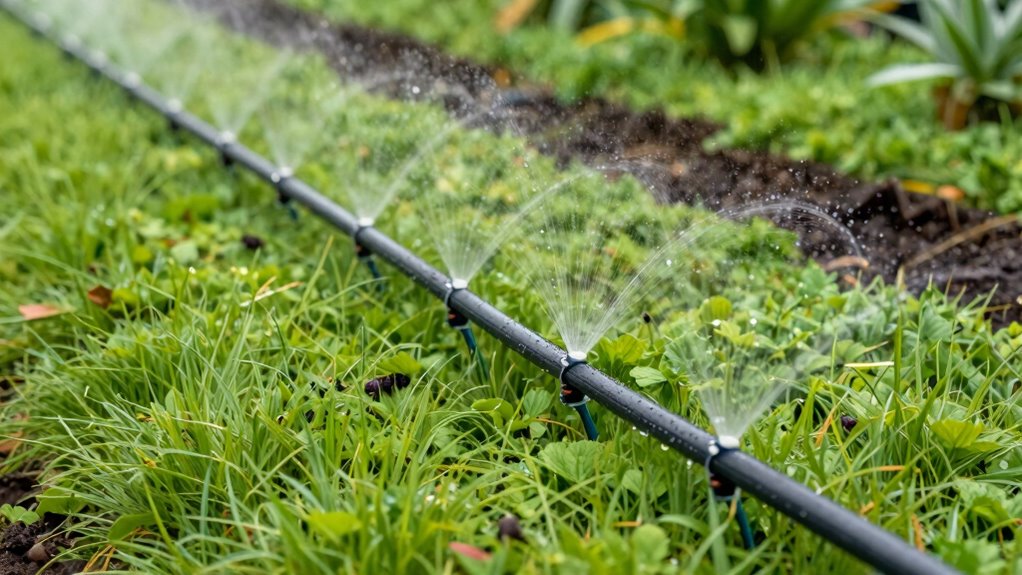
To connect drip lines efficiently without overbuilding, you need to pay attention to proper spacing techniques that guarantee even water distribution. Using the right connectors and valves helps prevent pressure drops and leaks, making the system more reliable. Incorporating pressure regulation strategies keeps the flow consistent, avoiding overwatering and waste. Additionally, understanding modern kitchen technology principles can inform smarter irrigation system designs that optimize water efficiency and system longevity.
Proper Spacing Techniques
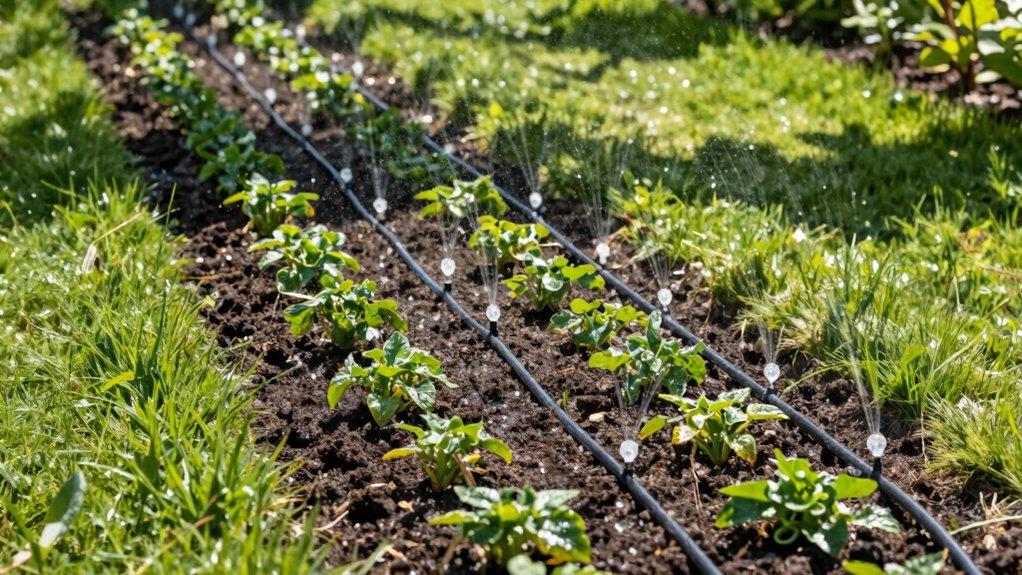
Have you ever wondered how to connect drip lines efficiently without wasting materials or creating unnecessary overlaps? Proper spacing techniques are key. First, plan your drip line spacing based on your plants’ needs, typically 12-24 inches apart. Second, focus on emitter placement to ensure each plant gets adequate water without overwatering. Third, keep lines parallel and avoid tight bends, which can restrict flow. Fourth, use consistent spacing along your layout to prevent gaps or overlaps. This approach minimizes excess tubing and ensures even water distribution. Additionally, maintaining proper drip line flow rate helps to prevent under- or over-watering, further promoting healthy plants. By paying attention to drip line spacing and emitter placement, you’ll create an efficient, reliable watering system that conserves resources and promotes healthy plants.
Use of Connectors and Valves
Using connectors and valves effectively is essential to creating a streamlined drip irrigation system without unnecessary complexity. Guarantee connector compatibility by choosing fittings designed for your tubing diameter to prevent leaks and disconnections. When installing valves, position them at strategic points to control water flow efficiently, reducing pressure issues and overwatering. Proper valve installation allows you to turn sections on or off without disrupting the entire system. Use inline connectors to join multiple drip lines smoothly, avoiding unnecessary overlaps or gaps. Quick-connect fittings can simplify adjustments and maintenance, saving you time and effort. By selecting the right connectors and installing valves correctly, you’ll achieve even watering throughout your landscape while keeping your system simple, reliable, and easy to manage. Incorporating connectivity features from smart irrigation technology can further optimize water distribution and system performance.
Pressure Regulation Strategies
How can you guarantee your drip lines maintain consistent pressure without overbuilding the system? The key is using effective pressure regulation strategies. First, install pressure regulators at the main water source or near the drip emitters to control flow. Second, choose drip emitters designed to operate within a specific pressure range, reducing variability. Third, maintain uniform pipe diameters and lengths to prevent pressure drops. Fourth, use flow restrictors or inline pressure regulators in sections where pressure fluctuations occur. These steps ensure steady water delivery and prevent overwatering or uneven distribution. Additionally, understanding pressure dynamics can help optimize your system for consistent performance. By managing pressure carefully, you’ll optimize your drip line layout and avoid unnecessary overbuilding, saving resources and ensuring your plants receive consistent, efficient watering.
How to Manage Water Pressure for Consistent Moisture

Maintaining consistent water pressure across your drip line is vital to guarantee each plant receives the right amount of moisture. To do this, focus on pressure balancing by installing pressure regulators or pressure-compensating emitters. These tools help guarantee uniform flow, even when water pressure fluctuates in your system. Use flow control devices, such as adjustable emitters or inline flow restrictors, to fine-tune water delivery. Proper pressure management prevents overwatering or underwatering, which can harm your plants. Regularly check for pressure drops and adjust flow control components as needed. Additionally, understanding the Gold IRA markets can be beneficial for investors looking to diversify their retirement portfolios with precious metals. By maintaining even pressure and flow control throughout your system, you’ll promote consistent moisture levels, resulting in healthier plants and a more efficient watering setup.
Troubleshooting Common Drip Line Problems
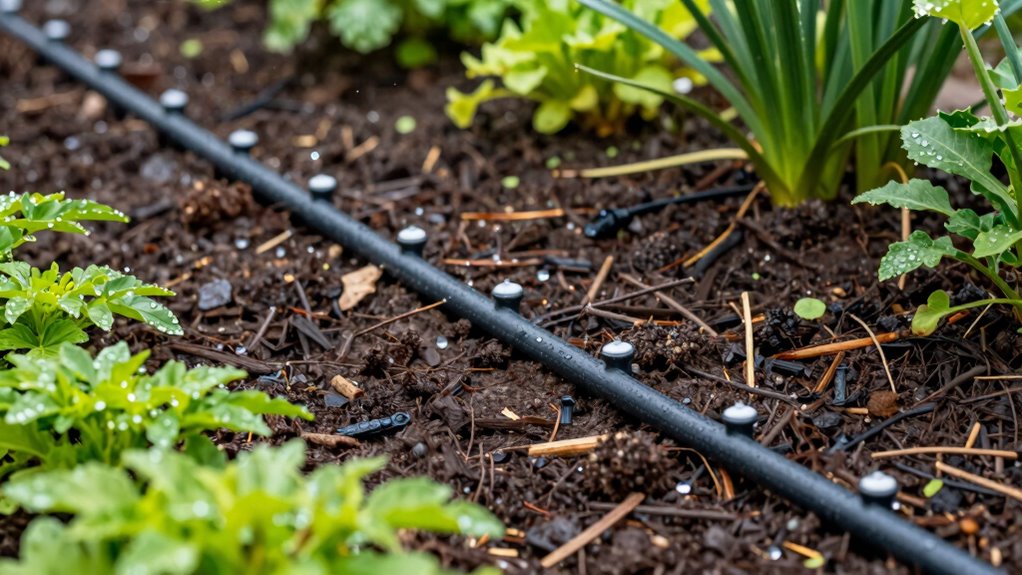
When your drip line isn’t delivering water properly, pinpointing the problem quickly becomes essential to avoid stressed or damaged plants. Common issues include clogging, leaks, uneven pressure, and bad fertilizer compatibility. To troubleshoot:
- Check for clogs in emitters or filters, which can restrict flow. Clean or replace as needed.
- Inspect hoses for leaks or punctures, sealing or replacing damaged sections.
- Ensure uniform pressure across the system to prevent dry or overly saturated spots.
- Confirm fertilizer compatibility; incompatible fertilizers can clog emitters or harm plants. Use appropriate solutions.
- Regularly assess system components for filtration systems to prevent buildup that can impair performance.
Good pest prevention practices also help maintain system integrity, avoiding chewed hoses or blocked outlets. Regular inspection and maintenance keep your drip line functioning efficiently, ensuring even watering and healthy plants.
How to Maintain and Adjust Your Drip System Over Time
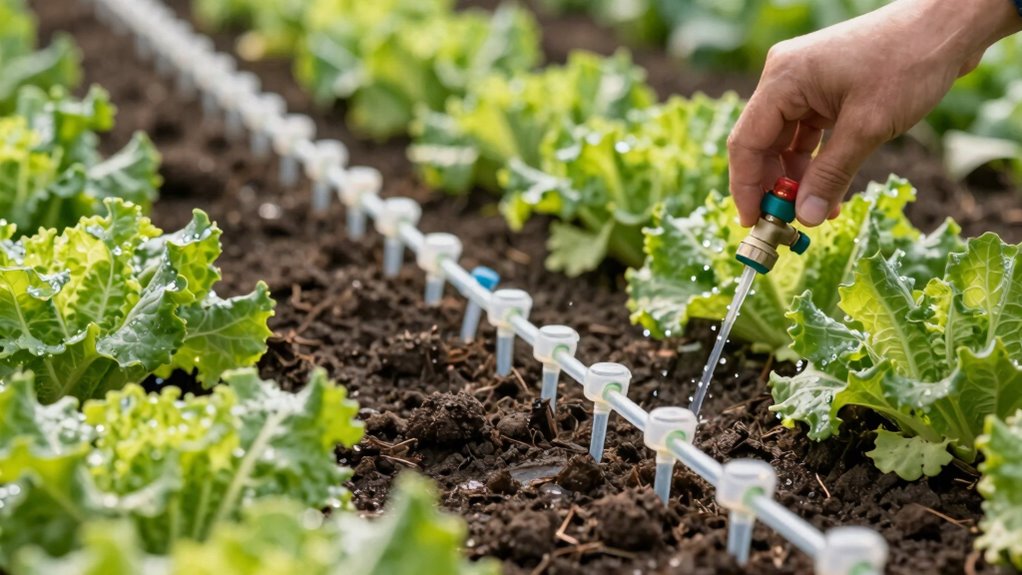
Regularly inspecting your drip system is vital to keep it running smoothly and guarantee your plants receive consistent watering. Check for clogs, leaks, and uneven coverage, adjusting emitters as needed. Seasonal adjustments are essential; reduce watering in cooler months and increase during hot, dry periods. Be mindful of fertilizer compatibility—some fertilizers can clog or damage emitters—so flush your system after fertilizing or use compatible solutions. Keep an eye on plant growth and adjust emitters’ placement or flow rates to match changing root zones. Regular maintenance prevents overwatering and runoff, saving water and promoting healthy plants. Additionally, understanding soil moisture levels can help you optimize watering schedules and avoid overwatering or underwatering. By staying attentive and making timely adjustments, you’ll maintain an efficient drip system that adapts to seasonal changes and fertilizer needs.
Frequently Asked Questions
How Often Should I Check My Drip System for Leaks?
You should check your drip system weekly to catch drip emitter issues early and guarantee even watering. Pay attention to uneven plant growth or dry spots, which can indicate clogs or leaks. Keep an eye on soil absorption rates; if water pools or soaks in too quickly, you might have leaks or clog buildup. Regular inspections help maintain ideal system performance and prevent costly repairs.
Can I Adapt My Drip Layout for Different Plant Types?
Yes, you can adapt your drip layout for different plant types by adjusting plant spacing and creating separate watering zones. For densely planted areas, use smaller emitters to prevent overwatering, while larger plants need more water, so increase emitter flow rate. Segment your system into zones based on plant needs, ensuring each zone receives adequate water without waste. This approach guarantees efficient watering tailored to each plant’s specific requirements.
What Are the Signs of Uneven Watering in My Garden?
You notice some plants look wilted or dry while others stay lush, indicating uneven watering. This affects soil moisture levels, leading to stressed plants and poor growth. For example, if your tomato plant droops while a nearby herb stays vibrant, it signals inconsistent watering. Keep an eye on soil moisture and plant health, adjusting your drip system to guarantee even water distribution and healthy, thriving garden plants.
How Do Seasonal Changes Affect Drip Line Performance?
Seasonal changes, like climate variations, can impact your drip line performance by affecting soil moisture and plant needs. You should modify your watering schedule accordingly, increasing it during hot, dry periods and reducing during cooler, wetter seasons. Regularly inspect your system to guarantee even water distribution, and consider using timers or soil moisture sensors to optimize efficiency and prevent over- or under-watering throughout the year.
Is It Necessary to Flush My Drip Lines Regularly?
You don’t need to flush your drip lines regularly if you follow a proper watering schedule and perform routine drip line maintenance. However, if you notice clogging or uneven watering, flushing can help clear debris and prevent blockages. Regular maintenance guarantees your system works efficiently, saving water and protecting plants. Keep an eye on flow rates and inspect lines periodically to catch issues early, avoiding costly repairs later.
Conclusion
Mastering your drip line layout maximizes moisture and minimizes mishaps. With wise planning, careful connection, and consistent checks, you’ll create a watering wonderland that works efficiently without overbuilding. Remember, a well-designed system saves time, conserves water, and keeps your garden thriving. So, stay savvy, stay simple, and let your drip line do the diligent work. A perfectly planned layout leads to lush, lively landscapes—leisurely, lovely, and lush!
Fall yard work Picks
leaf blowers
As an affiliate, we earn on qualifying purchases.