
Fertigation combines fertilization and irrigation, allowing you to deliver nutrients directly to plant roots with precision. To avoid burning roots, make sure you properly prepare and dilute nutrient solutions, maintaining the right pH balance. Use quality equipment like pumps and emitters, check system calibration regularly, and follow proper application schedules. Careful monitoring and adjustments help prevent overfeeding and root damage. Keep exploring ways to optimize your fertigation practices for healthy, thriving plants.

Get garden gear delivered free with Prime
- Fast, free delivery on millions of items
- Prime Video, Amazon Music and more included
- Member-only deals all year
Key Takeaways
- Use proper dilution techniques and follow recommended nutrient concentrations to prevent root burns.
- Regularly calibrate and maintain equipment for accurate nutrient delivery and consistent watering.
- Monitor soil moisture levels and avoid over-fertilizing during watering cycles.
- Adjust nutrient application based on plant growth stages and environmental conditions.
- Incorporate nutrients gradually, stirring thoroughly, and check pH to ensure optimal nutrient uptake.
As an affiliate, we earn on qualifying purchases.
What Is Fertigation and How Does It Work?

Have you ever wondered how farmers deliver nutrients directly to plants’ roots efficiently? Fertigation combines fertilization and irrigation, allowing nutrients to be added directly through the watering system. This method boosts soil health by maintaining proper nutrient levels and supporting beneficial microbial activity. Fertigation enhances nutrient cycling, ensuring plants receive the right amount at the right time, reducing waste and runoff. By integrating fertilizer with irrigation, you get precise control over nutrient delivery, which promotes healthy growth and maximizes yields. This process also minimizes the risk of root burn or nutrient imbalance, making it a sustainable approach. Overall, fertigation streamlines nutrient management, improves soil conditions, and keeps your plants healthy from the roots upward. Using smart irrigation systems can further optimize this process by providing real-time adjustments based on environmental conditions.
What Equipment Do You Need to Get Started With Fertigation?
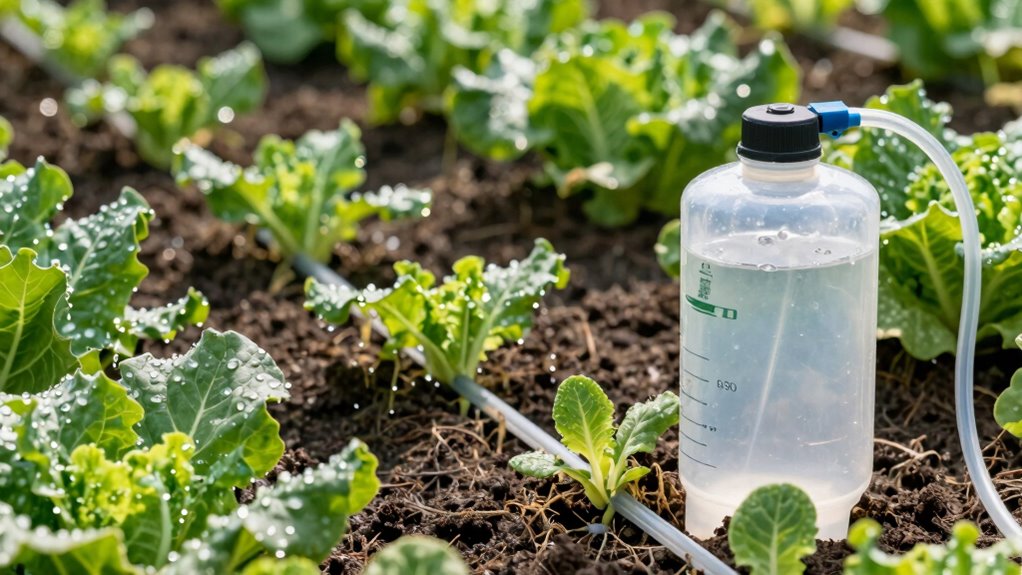
Getting started with fertigation requires the right equipment to guarantee efficient and accurate nutrient delivery. First, you’ll need a fertigation tank to store and mix your nutrient solutions securely. Next, install drip emitters to deliver water and nutrients directly to plant roots, minimizing waste. You’ll also need a pump to pressurize the system and ensure consistent flow. Here’s a visual overview:
| Equipment | Purpose | Key Features |
|---|---|---|
| Fertigation Tank | Store and mix nutrients | Durable, corrosion-resistant |
| Drip Emitters | Deliver nutrients to roots | Adjustable flow rates |
| Pump | Circulate solution throughout system | Reliable, suitable pressure |
This setup guarantees precise nutrient delivery for healthy plant growth.
How to Prepare and Mix Fertigation Solutions Safely?
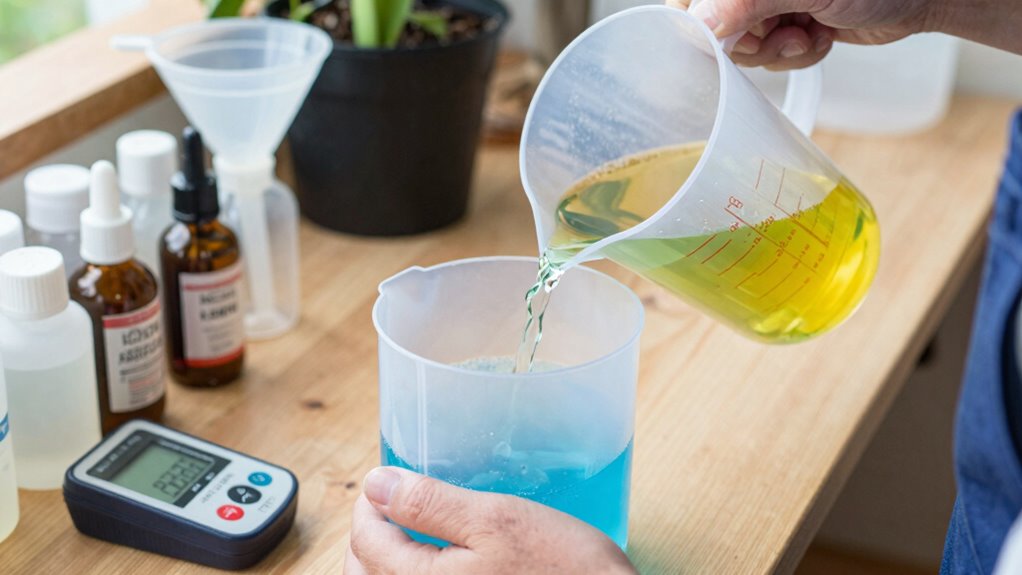
To prepare and mix fertigation solutions safely, you must carefully measure and combine nutrients according to the specific needs of your plants. Start by selecting quality soil amendments that provide a balanced base. Use precise measurements to ensure proper nutrient levels, paying attention to the recommended concentrations. Incorporate nutrients that work in synergy to maximize absorption and minimize the risk of imbalance. Always add concentrated nutrients to water gradually, stirring thoroughly to prevent clumping. Check the pH level of your solution, adjusting it as needed, since pH affects nutrient availability. Label your mixture clearly and store it in a safe, cool place. Proper preparation reduces the risk of overfeeding or burning roots, ensuring your plants receive the nutrients they need safely. Understanding at-home beauty tech can help you better grasp the importance of precise and safe application methods.
How to Apply Fertigation Without Burning Your Plants’ Roots?

To prevent root burns, you need to use proper dilution techniques, ensuring your solution isn’t too concentrated. Timing and frequency also matter; applying fertigation at the right intervals helps avoid overloading plants. By following these guidelines, you can supply nutrients safely without risking damage. Additionally, understanding water chemistry can help you optimize nutrient availability and prevent issues related to pH imbalances.
Proper Dilution Techniques
Applying fertigation solutions at the correct dilution prevents root burn and guarantees your plants absorb nutrients effectively. To do this, always check the pH balance of your solution; a proper pH ensures nutrients are available and not causing stress. Adjust the nutrient concentration to avoid overloading roots—using too high a concentration can lead to damage. Follow recommended guidelines for your specific plants, and measure nutrients carefully with a reliable tester. Always dilute concentrated fertilizers gradually, mixing thoroughly to achieve even distribution. Keep records of your dilutions to maintain consistency. Regularly monitor your plants for signs of over- or under-fertilization, and tweak your solutions accordingly. Proper dilution techniques optimize nutrient uptake while minimizing risks, ensuring healthy, thriving plants. Incorporating energy-efficient technology into your fertigation system can further improve sustainability and cost-effectiveness.
Timing and Frequency
Timing and frequency are key to fertigation success, as applying nutrients too often or at the wrong times can lead to root burn or nutrient imbalances. You should develop a consistent watering schedule that aligns with your plants’ growth stages and environmental conditions. Proper nutrient timing ensures plants absorb what they need without overload. Monitor soil moisture regularly and avoid over-fertilizing between watering cycles. Small, frequent applications often work better than large, infrequent ones, reducing the risk of nutrient buildup. Adjust your fertigation frequency based on plant response and weather patterns. Remember, erring on the side of less is better—overdoing it can harm roots. Consistency and attentiveness to your watering schedules help deliver nutrients effectively while safeguarding plant health. Understanding nutrient uptake can further improve your fertigation practices.
Common Fertigation Mistakes and How to Avoid Them
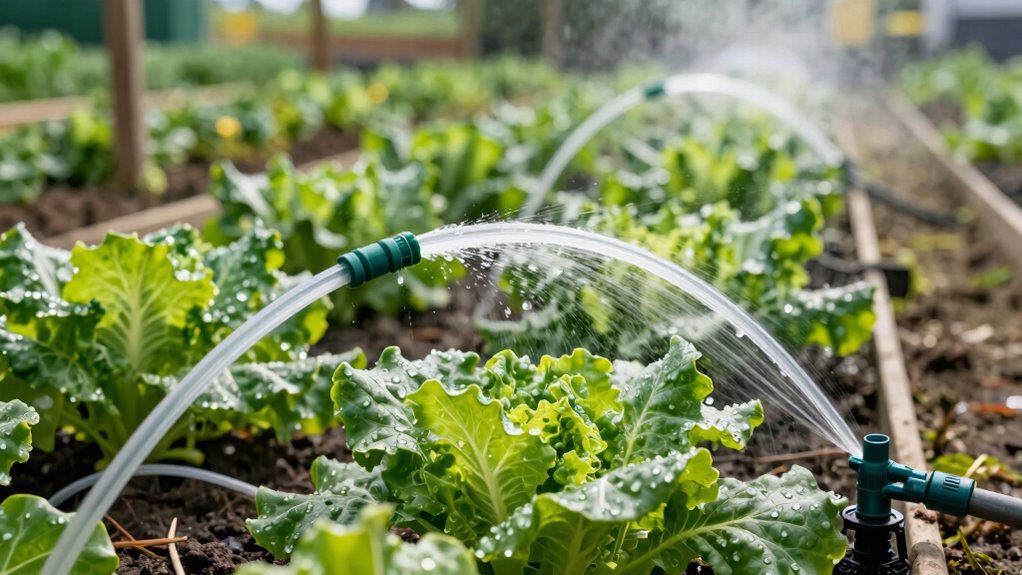
Many common fertigation mistakes stem from a lack of proper planning or monitoring, which can lead to nutrient imbalances, wasted resources, and reduced crop yields. One frequent error is over fertilization issues, where applying too much fertilizer harms plants and wastes nutrients. To prevent this, you must regularly calibrate your equipment to ensure accurate delivery. Incorrect calibration can cause either under- or over-application, risking root damage or nutrient deficiencies. Another mistake is neglecting to check system components like pumps and drip emitters, which can disrupt proper nutrient flow. Consistently monitoring and adjusting your system helps avoid these pitfalls. Additionally, understanding cost‑of‑ownership is crucial for maintaining an efficient fertigation setup and avoiding unnecessary expenses. By focusing on precise equipment calibration and avoiding over fertilization, you safeguard your plants and optimize your fertigation success.
How to Monitor and Adjust Fertigation for the Best Results

To achieve ideal fertigation results, you need to actively monitor your system’s performance and make timely adjustments. Regularly check the pH balancing of your nutrient solution, aiming for the best range for your plants, typically between 5.8 and 6.5. If pH drifts out of this range, adjust with pH up or down to prevent nutrient lockout. Additionally, keep an eye on nutrient levels to ensure proper nutrient balancing; too much can cause root burn, while too little stunts growth. Use testing kits or electronic meters to track these parameters consistently. If you notice deficiencies or excesses, modify your fertilizer mix accordingly. Continuous monitoring and quick adjustments help maintain a healthy, productive system, preventing problems before they harm your plants. Regular feedback can also help you refine your sound therapy techniques, ensuring optimal growth and health of your system.
Frequently Asked Questions
What Are the Signs of Over-Fertilization in Fertigation Systems?
You’ll notice signs of over-fertilization through nutrient imbalance, which causes leaf yellowing or browning, and root damage, leading to stunted growth or wilting. Excess nutrients can also create salt buildup in the soil, damaging roots and inhibiting water uptake. If you see these symptoms, reduce fertilizer concentrations immediately and flush the system to prevent further harm, ensuring your plants stay healthy and balanced.
Can Fertigation Be Used for Organic Gardening Practices?
Yes, fertigation can be used for organic gardening practices, provided you prioritize organic compatibility. You can incorporate compost teas, liquid organic fertilizers, and other certified organic nutrients into your fertigation system. This approach allows you to efficiently distribute nutrients directly to plant roots while maintaining organic integrity. Just verify your inputs are approved for organic use and integrate compost to enhance soil health, promoting sustainable growth without synthetic chemicals.
How Often Should Fertigation Be Performed for Different Crops?
Did you know that proper fertigation scheduling can boost crop yields by up to 20%? You should adjust fertigation frequency based on each crop’s needs, typically watering more often for leafy greens and less for deep-rooted vegetables. For ideal results, follow crop-specific frequency guidelines and monitor plant responses closely. This tailored approach helps prevent overfeeding and ensures your plants stay healthy and productive.
What Are the Environmental Impacts of Fertigation Systems?
You should know that fertigation systems can impact the environment through nutrient runoff, which can pollute nearby water sources. However, they also promote water conservation by delivering nutrients directly to plant roots, reducing waste. When managed properly, fertigation minimizes environmental risks and supports sustainable agriculture. By monitoring application rates and timing, you can effectively reduce nutrient runoff and maximize water efficiency, protecting ecosystems and conserving resources.
How Do You Troubleshoot Common Fertigation System Failures?
Sure, because nothing screams “fun” like clogged emitters or pH imbalance, right? To troubleshoot, first check for clogged emitters—simply clean or replace them. Next, test the pH levels; an imbalance often causes system failure. Adjust the pH accordingly and monitor your system. Regular maintenance prevents these issues, saving you from unnecessary headaches and ensuring your plants get the perfect feed every time.
Conclusion
With the right approach, fertigation becomes a gentle rain nourishing your plants’ roots, not a storm that burns them. Imagine each droplet delivering just enough nutrients, flowing smoothly through your system, leaving lush, vibrant growth in its wake. When you monitor and adjust carefully, you’re crafting a thriving oasis where your plants flourish effortlessly. So, embrace these basics, and watch your garden flourish like a lush paradise, perfectly fed and bursting with life.
Fall yard work Picks
leaf blowers
As an affiliate, we earn on qualifying purchases.