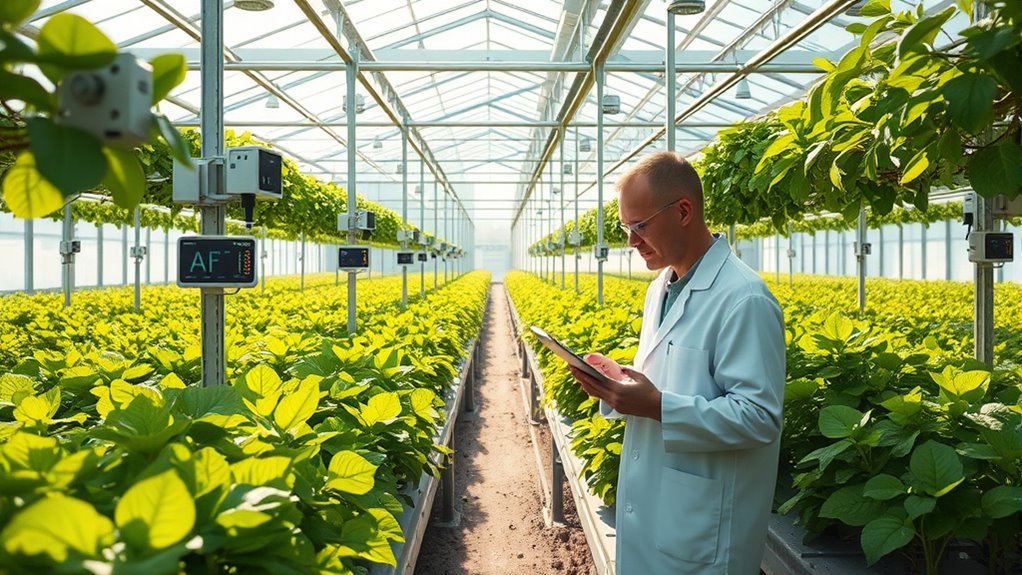

By leveraging sensors and AI, you can optimize greenhouse conditions in real-time. Sensors continuously monitor soil moisture, temperature, humidity, and pest activity, providing valuable data. AI analyzes this information to automate watering, adjust environmental controls, and detect pests early. This approach helps conserve resources, boost crop health, and improve yields. Staying ahead with data-driven strategies guarantees your greenhouse operates efficiently and sustainably—discover how these technologies can transform your setup even further.
Listen free for 30 days with Audible
Thousands of audiobooks and originals — cancel anytime.
As an affiliate, we earn on qualifying purchases.
Key Takeaways
- Integrating sensors and AI enables real-time environmental monitoring for precise adjustments in greenhouse conditions.
- Soil moisture sensors guide automated watering, conserving water and promoting healthy plant growth.
- AI-powered pest detection systems facilitate early intervention, reducing chemical use and pest spread.
- Data-driven insights support automated decision-making, optimizing resource use and crop productivity.
- Continuous data collection and analysis enable ongoing improvements in greenhouse management practices.

Greenhouses are becoming smarter and more efficient thanks to the integration of sensors and artificial intelligence. With these innovations, you can monitor and control critical environmental factors in real time, leading to healthier plants and higher yields. One of the key elements is soil moisture monitoring. Sensors placed in the soil provide continuous data on moisture levels, helping you maintain ideal watering schedules. Instead of relying on guesswork or fixed timers, you can make precise adjustments based on actual soil conditions. This not only conserves water but also prevents overwatering, which can cause root rot and other issues. By automating irrigation based on soil moisture readings, you ensure your plants get exactly what they need, fostering better growth and reducing waste.
In addition, pest detection has become more accurate and proactive with AI-powered sensors. Traditional pest control methods often involve manual inspections, which can miss early signs of infestation. Now, with integrated sensors equipped with AI algorithms, you can detect pest activity early. These sensors analyze patterns such as changes in plant health, leaf damage, or pest movement, alerting you immediately when a problem arises. This rapid detection allows you to target pests swiftly, minimizing the spread and reducing the need for chemical interventions. Early pest detection also helps you better understand pest behavior, enabling you to implement more effective, sustainable control strategies.
Using these sensors and AI tools, you gain an all-encompassing view of your greenhouse environment. Data collected from soil moisture sensors and pest detection devices feeds into AI systems that analyze trends and predict future issues. For example, if the system notices a consistent drop in soil moisture, it can automatically trigger irrigation without your intervention. Similarly, if pest activity is detected early, the system can recommend or even activate targeted treatments. This level of automation not only saves you time and effort but also enhances the overall health of your crops by responding faster than manual methods.
Furthermore, integrating soil moisture and pest detection sensors into your greenhouse management creates a feedback loop that continually refines your practices. As the system learns from ongoing data, it becomes more accurate at predicting needs and potential threats. This intelligent approach helps you optimize resource use, improve crop quality, and increase productivity. By leveraging sensors and AI, you turn a traditional greenhouse into a highly responsive, data-driven operation, giving you better control over your environment and a competitive edge in today’s agricultural landscape.
soil moisture sensors for greenhouse
As an affiliate, we earn on qualifying purchases.
As an affiliate, we earn on qualifying purchases.
Frequently Asked Questions
How Do Sensors Impact Greenhouse Energy Consumption?
Sensors substantially reduce your greenhouse’s energy consumption by providing real-time data on temperature, humidity, and light levels. By ensuring proper sensor calibration, you get accurate readings that help optimize climate control systems. Data integration allows you to analyze this information effectively, enabling precise adjustments that save energy. This targeted approach minimizes waste, improves efficiency, and supports sustainable practices in your greenhouse management.
What Are the Costs Associated With Implementing AI in Greenhouses?
Implementing AI in your greenhouse is like planting a seed that grows into savings. The initial setup costs can range from thousands to tens of thousands of dollars, depending on system complexity. You’ll also face ongoing maintenance expenses for software updates and sensor calibration. While it requires an investment upfront, the long-term benefits of optimized climate control and energy efficiency can make it well worth the cost.
How Secure Is Data Collected From Greenhouse Sensors?
You can trust that data collected from greenhouse sensors is generally secure due to strong data privacy measures and sensor encryption. Manufacturers often implement encryption protocols to protect sensitive information from unauthorized access. However, it is crucial to stay vigilant, regularly update security settings, and choose reputable suppliers to guarantee your data remains private and protected against potential cyber threats.
Can Sensor-Driven AI Systems Adapt to Seasonal Changes?
Like a chameleon changing colors, sensor-driven AI systems adapt to seasonal shifts. They do this through ongoing sensor calibration, which guarantees accurate data collection, and AI adaptability, allowing the system to adjust parameters as conditions change. This dynamic process helps optimize greenhouse environments year-round, ensuring plants thrive regardless of seasons. With proper calibration and adaptive algorithms, your system remains responsive and effective, no matter what season it is.
What Is the Lifespan of Sensors Used in Greenhouse Environments?
Sensor durability in greenhouse environments typically ranges from 1 to 3 years, depending on quality and usage. You should expect to perform maintenance frequently, especially in humid or dusty conditions, which can shorten sensor lifespan. Regular checks and calibrations are essential to guarantee accurate data collection. Investing in high-quality sensors can reduce maintenance frequency and extend their durability, ultimately improving your greenhouse’s overall efficiency.
Conclusion
By harnessing sensors and AI, you can monitor conditions, adjust environments, and boost yields. You can predict problems before they occur, optimize resources efficiently, and enhance plant health consistently. You can make data-driven decisions, automate processes, and improve sustainability. Embrace these technologies to transform your greenhouse into a smart, efficient, and productive space. With sensors and AI, you’re not just growing plants—you’re cultivating innovation, precision, and success every step of the way.
NFL season / tailgating Picks
team gear
As an affiliate, we earn on qualifying purchases.