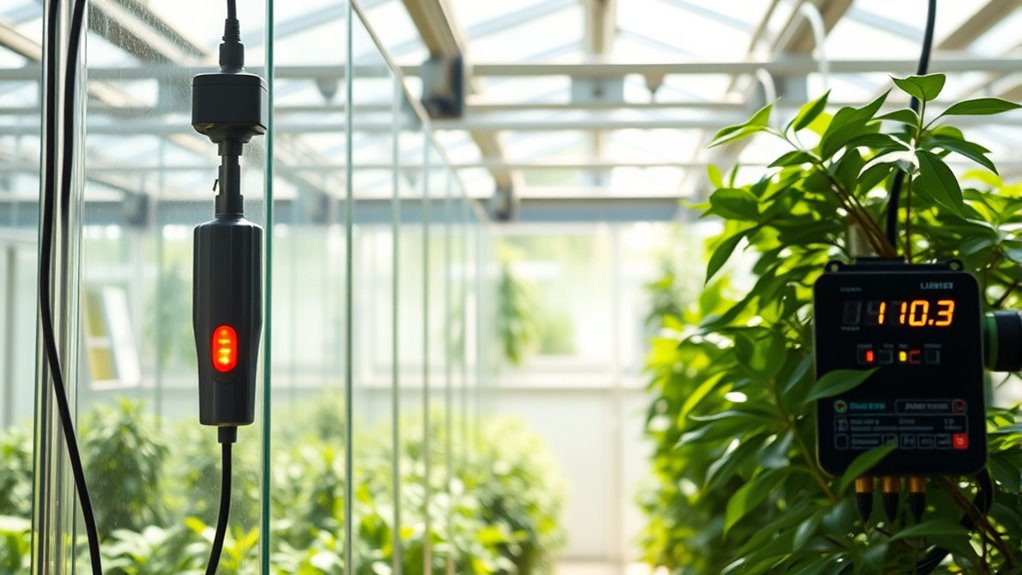

Climate control innovations in greenhouses use advanced sensors and smart technology to create ideal growing conditions. You can now automate watering, humidity, and temperature regulation based on real-time data, reducing water waste and energy use. These systems adjust instantly to external weather changes, helping you maintain perfect environments for your plants. As technology continues to evolve, you’ll discover even smarter ways to make your greenhouse more efficient and sustainable. Keep exploring to see what’s next.

Get garden gear delivered free — and shop member deals
- Fast, free delivery on millions of items
- Access to Prime Big Deal Days deals on October 6–7
- Prime Video, Amazon Music and more included
Key Takeaways
- Advanced sensors monitor environmental variables like temperature, humidity, and soil moisture for precise climate regulation.
- Automated systems adjust heating, cooling, and watering based on real-time sensor data to optimize plant growth.
- Remote control technology allows greenhouse management via apps, enabling quick adjustments and alerts from anywhere.
- Integration of smart technology reduces resource waste, lowers operational costs, and enhances sustainability efforts.
- Continuous innovation in sensor-based climate control promotes healthier plants, higher yields, and more adaptable greenhouses.
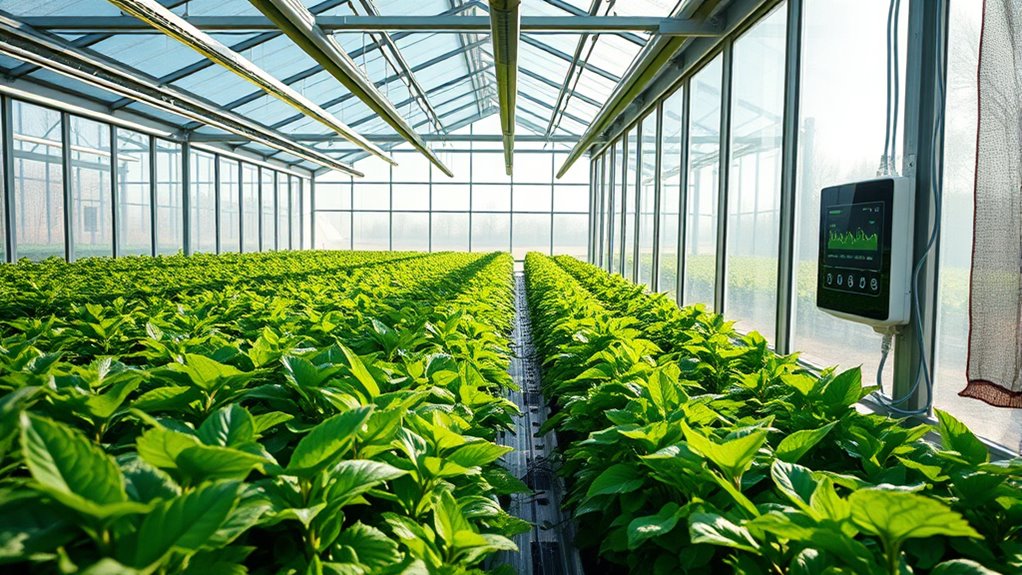
As climate change accelerates, innovative solutions for controlling indoor and outdoor environments are more essential than ever. In greenhouses, this means deploying advanced sensors and smart technology to optimize growing conditions and conserve resources. One of the most impactful innovations is automated irrigation systems. These systems use real-time data from soil moisture sensors to deliver water precisely when plants need it, eliminating guesswork and reducing waste. Instead of manually watering or relying on fixed schedules, you get a tailored approach that guarantees your plants receive ideal hydration without overwatering. Automated irrigation not only improves plant health but also conserves water, which is increasingly critical in a changing climate. Paired with humidity monitoring, these systems become even more effective. Humidity sensors track moisture levels in the air, providing essential data that helps you maintain the perfect environment for different crops. If humidity drops too low, the system can trigger misters or humidifiers to restore balance. Conversely, if humidity rises too high, it can activate ventilation or dehumidifiers to prevent mold and disease. This constant, real-time feedback allows you to fine-tune conditions quickly, avoiding stress on your plants and maximizing growth rates. The integration of sensors with smart tech means you can control everything remotely via apps or automated programs, giving you peace of mind and freeing up your time. You don’t have to be physically present to guarantee your greenhouse stays within the perfect parameters; instead, you receive alerts and can make adjustments from anywhere. These innovations make climate control more precise and responsive, turning what used to be a manual, labor-intensive task into an efficient, hands-off process. They also help you adapt to external weather fluctuations, such as unexpected heatwaves or cold snaps, by adjusting internal conditions automatically. As you adopt these technologies, you’ll notice reduced resource consumption and healthier plants, which translates into better yields and lower operational costs. Furthermore, this smart approach supports sustainability efforts, aligning your greenhouse operations with environmentally friendly practices. The combination of automated irrigation and humidity monitoring exemplifies how modern sensors and intelligent systems can revolutionize agriculture and horticulture. By embracing these innovations, you’re not just improving plant growth; you’re also contributing to a more resilient, efficient, and sustainable future for controlled-environment agriculture. The continued development of sensor-based systems promises even more sophisticated climate management, making greenhouses smarter and more adaptable than ever before.
automated greenhouse irrigation system
As an affiliate, we earn on qualifying purchases.
As an affiliate, we earn on qualifying purchases.
Frequently Asked Questions
How Do Sensor Calibrations Affect Greenhouse Climate Accuracy?
Sensor calibrations directly impact your greenhouse climate accuracy by ensuring sensor precision. If calibrations are not performed regularly, readings can drift, leading to incorrect adjustments of temperature, humidity, or light levels. By maintaining a proper calibration frequency, you guarantee your sensors provide reliable data, allowing your climate control system to respond accurately. This helps optimize plant growth, conserve energy, and prevent issues caused by inaccurate environmental readings.
What Are the Latest Trends in Ai-Driven Climate Management?
You might think AI-driven climate management is complex, but it’s actually transforming greenhouses with real-time monitoring and AI optimization. These trends enable you to adjust conditions instantly, improving crop yields and resource efficiency. Advanced algorithms analyze data continuously, predicting needs before issues arise. As a result, you get smarter, more responsive climate control, making your greenhouse more sustainable and productive without the guesswork.
How Do Weather Forecasts Integrate With Greenhouse Sensors?
Weather prediction integrates with greenhouse sensors through real-time sensor data and forecast updates. You receive weather prediction inputs that automatically adjust your sensor integration system, optimizing climate conditions. This seamless connection helps you maintain ideal temperatures, humidity, and light levels, even when weather shifts unexpectedly. By combining weather forecasts with sensor data, you can proactively manage your greenhouse environment, ensuring healthier plants and improved yield outcomes.
What Are Cost-Effective Options for Small-Scale Greenhouses?
Imagine a lush, thriving greenhouse without breaking the bank. You can achieve this with DIY setups like simple thermostats, basic humidity sensors, and inexpensive timers. Budget solutions such as repurposing household items or using open-source sensor kits help keep costs low while maintaining ideal conditions. These practical, cost-effective options empower you to control your greenhouse environment without expensive equipment, ensuring healthy plants and a thriving garden on a modest budget.
How Is Data Security Maintained in Smart Greenhouse Systems?
You maintain data security in smart greenhouse systems by implementing strong cybersecurity protocols and data encryption. Regularly update your software to patch vulnerabilities, use secure passwords, and enable multi-factor authentication. These steps help protect sensitive information from cyber threats. Staying vigilant and applying these best practices guarantees your system remains secure, allowing you to confidently manage your greenhouse with smart technology without risking data breaches.
Conclusion
Think of these climate control innovations as a symphony conductor guiding a lush garden. Sensors and smart tech are your baton, orchestrating perfect harmony between temperature, humidity, and light. With each precise adjustment, your greenhouse becomes a thriving oasis, where plants flourish like a well-tuned ensemble. Embrace these tools, and you’ll master the melody of ideal growth—turning your greenhouse into a living, breathing masterpiece of sustainable innovation.
Evergreen bestsellers Picks
bestsellers
As an affiliate, we earn on qualifying purchases.