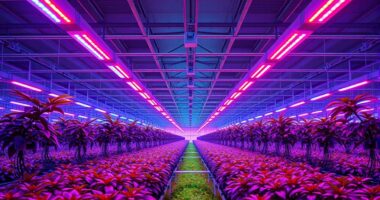

To save power with supplemental lighting, create an hour-by-hour schedule tailored to your plants’ needs. Use tools like timers and smart controllers to precisely control when lights turn on or off, adjusting intensity and spectrum for each growth stage. Regular monitoring helps you fine-tune the setup, avoiding over-illumination and waste. By optimizing light duration and timing, you can boost growth and cut energy costs—discover more strategies to refine your plan below.
Key Takeaways
- Map plant growth stages and natural light patterns to create tailored hour-by-hour lighting schedules.
- Use timers and automation systems for precise ON/OFF control aligned with plant needs.
- Adjust light intensity and spectrum dynamically throughout the day to optimize growth and energy use.
- Monitor plant responses and energy consumption regularly to refine schedules and prevent over-illumination.
- Incorporate seasonal variations and peak photosynthesis hours for maximum power savings and plant health.
Identify Energy Waste and Set Power Savings Goals
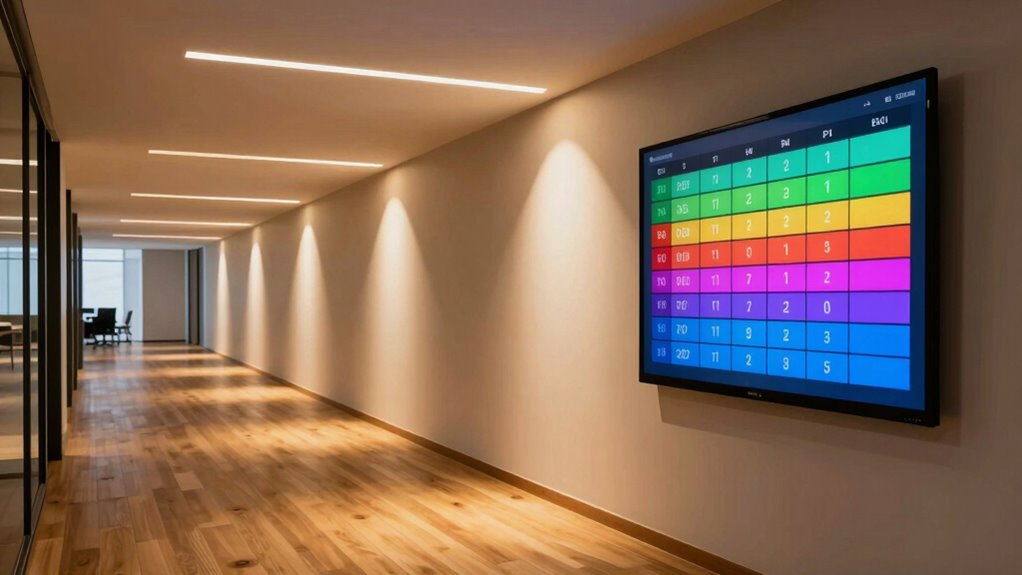
To effectively reduce energy waste in supplemental lighting, you need to first identify where excess power is being used. Conducting an energy audit helps you pinpoint inefficient lighting practices and areas of unnecessary consumption. During this process, review your current lighting setup, noting how much power each light consumes and when. This insight allows you to set realistic power savings goals based on your findings. Focus on improving power efficiency by replacing outdated bulbs, adjusting light intensity, or scheduling lights to run only when necessary. By understanding where your energy is going, you can develop targeted strategies that cut costs and minimize waste. Remember that awareness of sleep environment factors can also influence your overall energy use and comfort. This initial step sets a foundation for smarter lighting management and sustainable energy use.
What Do Your Plants Need Light-Wise and When?

Understanding your plants’ light needs and their essential schedule is crucial for healthy growth. Plants require specific light conditions to maximize photosynthesis efficiency and support development. During their active growth phase, they need bright, full-spectrum light that mimics natural sunlight. To optimize their growth, consider these key points:
- Provide light spectrum optimization to match their growth stage
- Ensure they receive consistent light during their peak photosynthesis hours
- Avoid sudden light changes that can stress plants
- Use intensity adjustments to prevent light stress or deficiency
- Mimic natural day/night cycles to support healthy development
- Incorporating energy-efficient lighting solutions can further enhance sustainability and reduce power consumption.
How to Set Up an Hour-by-Hour Lighting Schedule
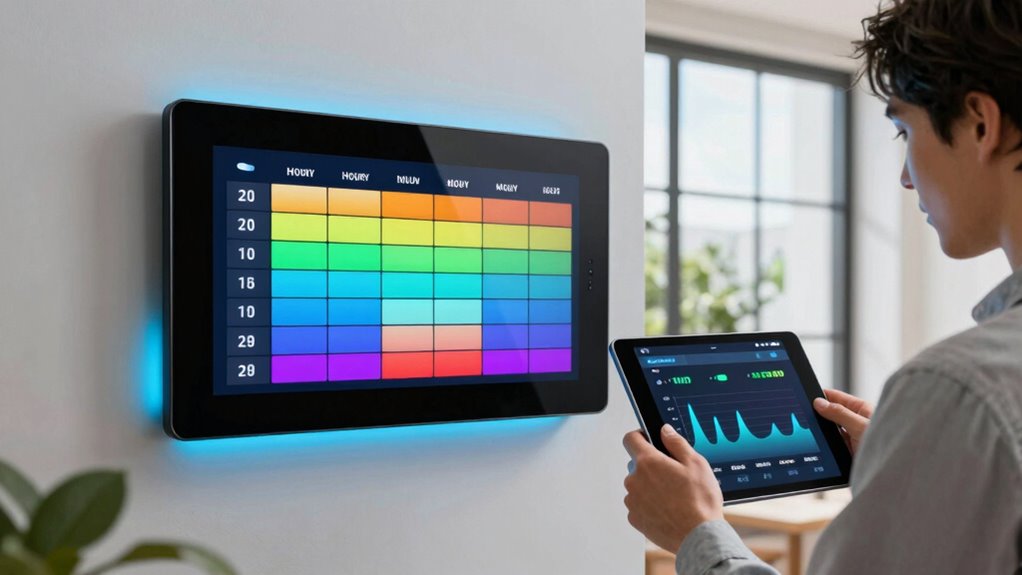
Setting up an hour-by-hour lighting schedule guarantees your plants receive the right amount of light at the right times, promoting healthy growth and minimizing stress. To do this effectively, leverage lighting automation tools that let you program precise ON and OFF times for your lights. Start by mapping out your plant’s ideal light cycle, considering natural sunlight and growth stages. Use timers or smart controllers to automate lighting changes, ensuring consistent delivery and reducing manual effort. This approach enhances energy management by preventing unnecessary power use during off-hours. Regularly review and refine your settings for ideal results. Integrating local automation for your lighting setup can further streamline your schedule and improve efficiency. An organized, automated schedule makes managing your grow easier and more efficient.
Tools for Precise Light Control

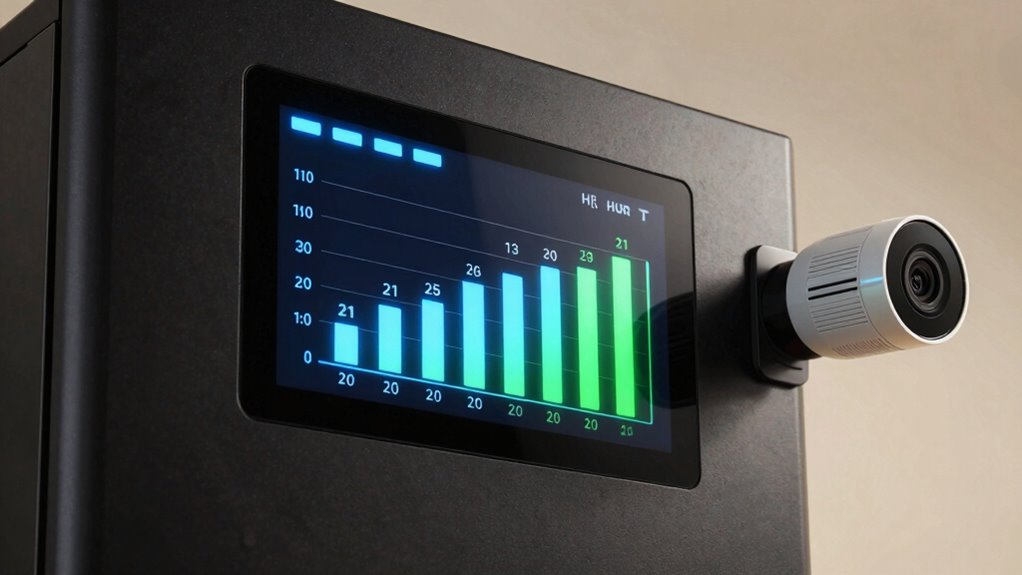
To achieve accurate light control, you’ll want to explore smart timers and schedulers that automate your lighting routines. These tools let you set precise on and off times, ensuring consistency without manual effort. Additionally, light intensity monitoring devices help you fine-tune brightness levels for ideal plant growth. Incorporating automation into your lighting system can further enhance energy savings and operational efficiency.
Smart Timers and Schedulers
Smart timers and schedulers have revolutionized how you control supplemental lighting, allowing for precise and reliable management of light schedules. These tools maximize LED efficiencies and support effective photoperiod strategies, ensuring plants receive consistent light exposure. With automation, you can fine-tune lighting to match growth stages, conserve power, and reduce manual adjustments. Features like programmable on/off cycles, seasonal adjustments, and integration with sensors enhance control. Keep in mind:
- Customizable schedules for different growth phases
- Power-saving automatic shutoff
- Compatibility with various lighting setups
- Remote access via apps or web interfaces
- Precise timing for ideal photoperiod management
Using smart timers, you improve light efficiency and ensure your plants receive the right light at the right time, maximizing growth while saving energy. Additionally, understanding navigation and mapping can help optimize the placement and coverage of your lighting setup for uniform distribution.
Light Intensity Monitoring Tools
How do you guarantee your plants receive the ideal amount of light? Light intensity monitoring tools help you do just that by providing real-time data on your grow lights’ output. These tools often include light meters that measure PAR (photosynthetically active radiation), ensuring your LED spectrum matches your plants’ needs. With accurate readings, you can fine-tune your lights for perfect growth, making precise photoperiod adjustment possible. Monitoring tools also help detect inconsistencies in light distribution, preventing under- or over-illumination. By actively tracking light intensity, you can save power while maintaining plant health. This level of control ensures your supplemental lighting operates efficiently, reducing waste and optimizing growth conditions with minimal effort. Additionally, understanding light distribution patterns can help optimize your setup for uniform coverage and better plant development.
Calculating Hourly Light Duration and Intensity

To optimize your lighting setup, you need to determine how long and how intensely your lights should run each day. You’ll also want to monitor energy use to keep costs in check. By establishing clear light durations and adjusting intensities, you can guarantee healthy plant growth while managing your resources effectively. Additionally, understanding energy-efficient lighting options can help you reduce power consumption without sacrificing performance.
Establishing Light Duration
Calculating the appropriate hourly light duration and intensity is essential for optimizing plant growth. Proper photoperiod management ensures your plants receive the right amount of light at the right times, promoting healthy development. Spectrum optimization also plays a crucial role, as different wavelengths influence growth stages differently. To establish effective light duration, consider these key points:
- Tailor light schedules to specific plant needs and growth phases
- Balance duration with intensity to prevent stress or stretch
- Use timers for precise control over daily light cycles
- Adjust photoperiods to simulate natural conditions or desired flowering triggers
- Monitor plant responses regularly to refine light timing and spectrum
- Understanding light cycle fundamentals helps in aligning the photoperiod with natural or artificial conditions for optimal growth.
Adjusting Intensity Levels
Adjusting intensity levels is crucial for ensuring your plants receive the ideal amount of light without risking stress or damage. You need to fine-tune your light output based on spectral quality and photoperiod adjustments. This involves calculating hourly light duration and adjusting intensity to match your plants’ growth stage. Use the table below to help set these parameters:
| Growth Stage | Light Intensity | Duration (hours) | Spectral Quality |
|---|---|---|---|
| Vegetative | Moderate | 16-18 | Full Spectrum |
| Flowering | High | 12-14 | Red-Blue Mix |
| Transition | Gradual Increase | 14-16 | Balanced Spectrum |
| Recovery | Reduced | 8-10 | Soft Light |
Proper adjustments optimize growth while conserving power, and understanding light spectrum can further enhance your control over plant health.
Monitoring Energy Consumption
Monitoring energy consumption helps you understand how much power your lighting setup uses at different intensities and durations. This insight allows you to fine-tune your lighting customization to meet plant specific needs effectively. By tracking hourly energy use, you can identify periods of unnecessary power draw and adjust your schedule accordingly. Consider these points:
- Use energy meters to measure real-time power consumption
- Log data to identify patterns in lighting usage
- Adjust light duration based on plant growth stages
- Optimize intensity levels to save energy without compromising health
- Make certain your system isn’t running longer than necessary
- High efficiency projectors can further reduce energy consumption in your setup.
This approach ensures you’re providing ideal lighting tailored to your plants while controlling power costs. Monitoring energy consumption empowers you to create a precise, plant-specific lighting schedule that maximizes efficiency.
Adjusting Your Schedule During Different Growth Stages
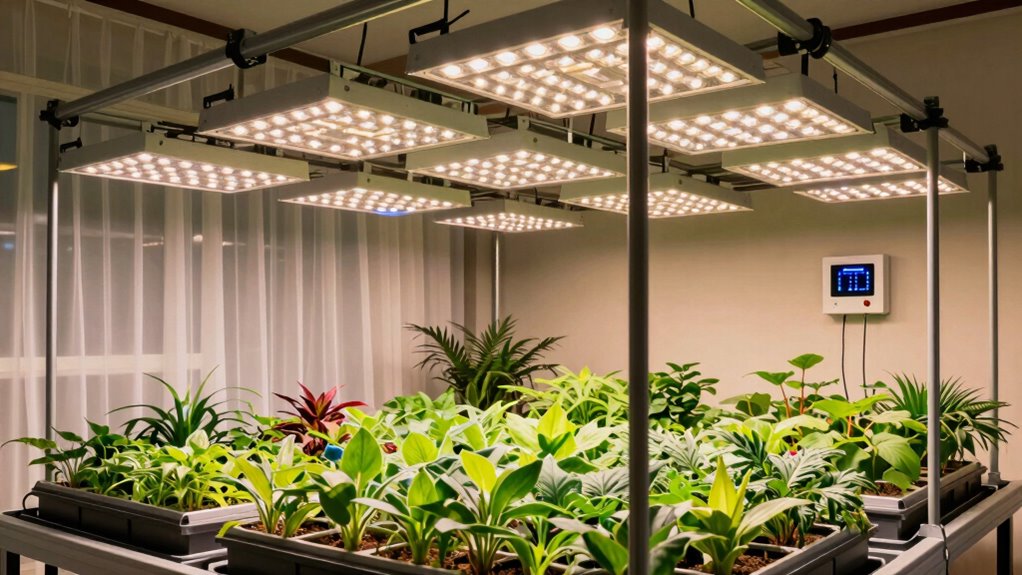
As your plants evolve through different growth stages, you’ll need to modify your supplemental lighting schedule to support their changing needs. Understanding plant genetics helps you anticipate how your plants respond to light, guaranteeing ideal growth. During vegetative stages, focus on a light spectrum rich in blue wavelengths to promote healthy leaf development. As plants transition to flowering, shift to a spectrum with more red light to encourage bud formation. Adjusting your schedule accordingly guarantees your plants receive the right light intensity and duration at each stage, preventing stress and promoting vigorous growth. Staying attentive to these changes allows you to maximize energy use while supporting your plants’ natural development cycles. Tailoring your light schedule based on growth stages maximizes yield and plant health.
Common Mistakes in Light Scheduling and How to Avoid Them
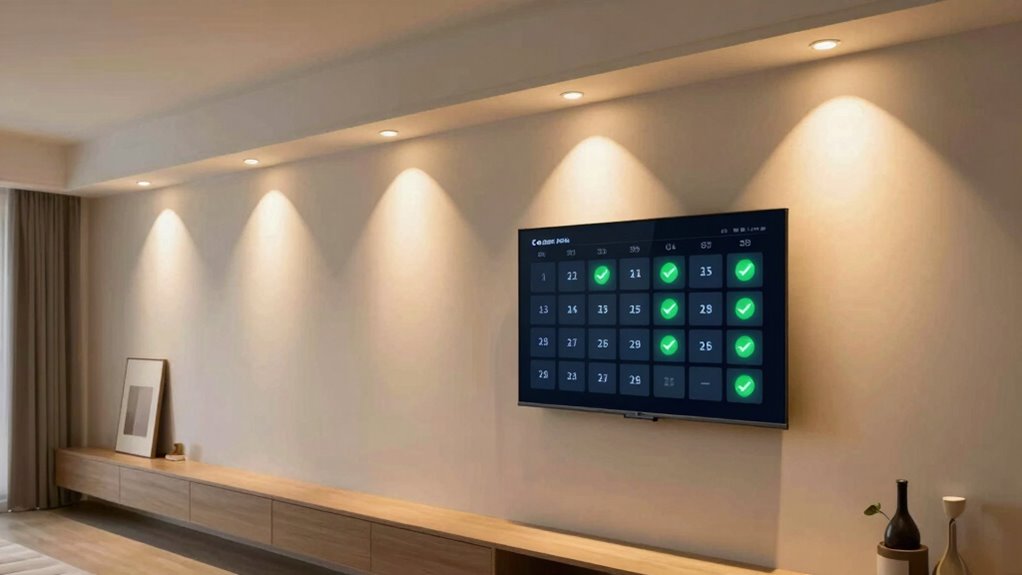
Many growers overlook the importance of light intensity and how it affects plant health. Ignoring seasonal changes can lead to improper light schedules that stress your plants. To avoid these mistakes, stay mindful of both light levels and seasonal shifts throughout the year.
Overlooking Light Intensity Levels
One common mistake in light scheduling is neglecting to contemplate the appropriate light intensity for your plants’ growth stage. Without adjusting light levels, you risk either underexposing or overexposing your plants, which can hinder growth. To maximize results, consider the following:
- Ensure your light spectrum matches the growth phase for better light penetration
- Adjust intensity to promote healthy vegetative or flowering stages
- Avoid sudden changes in light levels that can stress plants
- Use dimmable fixtures to fine-tune light output
- Monitor plant responses and adjust intensity accordingly
Focusing solely on duration ignores how light intensity impacts overall health. Properly balancing light spectrum and intensity ensures optimal light penetration and plant development, saving power while maximizing growth.
Ignoring Seasonal Changes
Ignoring seasonal changes can derail your light schedule and limit your plant’s growth potential. Seasonal light variation affects how much natural light your plants receive throughout the year, making consistent year-round scheduling challenging if you overlook these changes. Without adjusting your supplemental lighting to match seasonal shifts, you risk overexposing or underlighting your plants during different times of the year. This mistake can lead to uneven growth, stress, or poor yields. To avoid this, monitor natural daylight hours and modify your schedule accordingly. Recognizing seasonal variations ensures your plants get the right amount of light year-round, optimizing growth and reducing unnecessary power consumption. Adjusting your schedule for seasonal light variation keeps your system efficient and your plants healthy.
Monitoring and Fine-Tuning Your Lighting Plan

Monitoring your lighting setup regularly is essential to guarantee your plants receive the ideal amount of light. By observing plant responses, you can identify if they’re getting too much or too little light, which impacts plant nutrient absorption and pest control. Fine-tuning your schedule helps optimize growth and health. Keep an eye on these key factors:
- Light intensity and duration adjustments
- Signs of light stress or deficiency
- Consistent measurement of plant health
- Adjustments based on seasonal changes
- Ensuring proper airflow to prevent pest issues
Regular checks allow you to make precise modifications that support healthy growth, prevent nutrient deficiencies, and reduce pest problems. Staying proactive ensures your lighting plan remains effective, saving power while maximizing plant productivity.
Case Studies: Saving Power With Hour-By-Hour Lighting
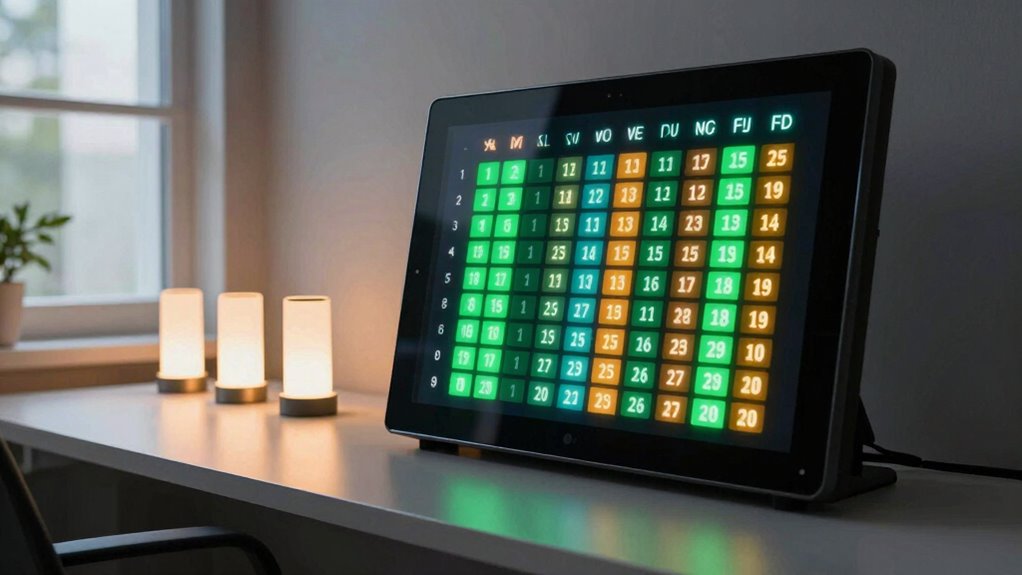
Implementing hour-by-hour lighting schedules can considerably reduce energy consumption while maintaining ideal plant growth. Case studies show that customizing lighting based on plant spectral requirements allows for targeted energy use, avoiding unnecessary light during periods of low need. By adjusting light intensity and spectrum throughout the day, growers can optimize photosynthesis without wasting power. Additionally, this approach minimizes light pollution, which can disrupt not only plant health but also surrounding environments. For example, a commercial greenhouse reduced its energy bills by 30% after adopting precise hourly schedules tailored to plant stages and spectral needs. These real-world examples demonstrate that thoughtful scheduling delivers significant power savings while supporting healthy, productive plants. The key is aligning lighting with natural rhythms and spectral demands.
Tips to Maintain Sustainability and Cut Costs
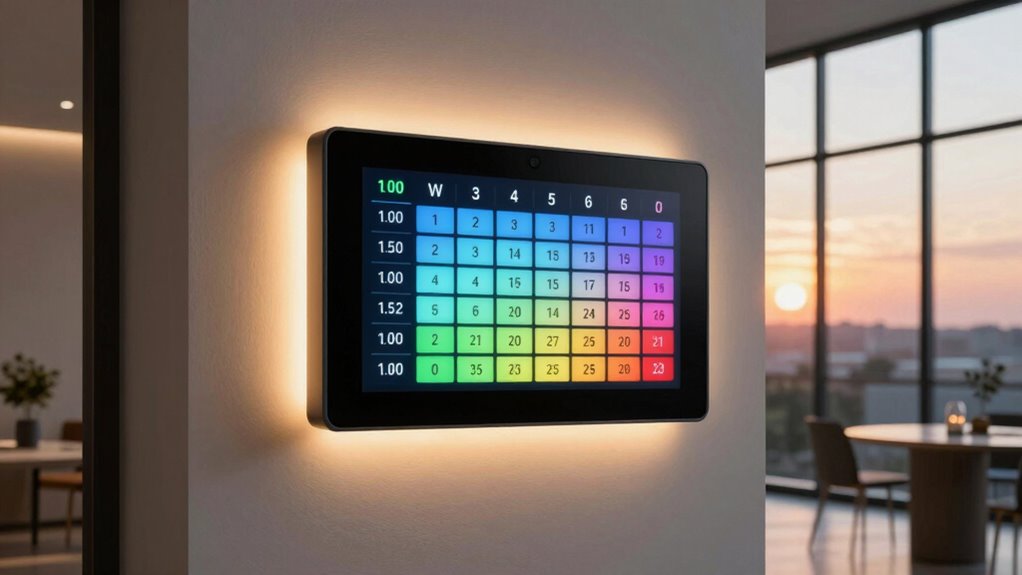
To effectively maintain sustainability and reduce costs, prioritize energy-efficient lighting practices and regular system maintenance. Switching to energy efficient bulbs like LEDs can substantially lower energy consumption and extend bulb lifespan. Additionally, consider integrating renewable energy sources such as solar panels to power your lighting system, further decreasing reliance on grid energy. Regularly check and calibrate your lighting schedule to prevent unnecessary usage, especially during off-peak hours. Implementing motion sensors and timers can also optimize energy savings.
- Use energy efficient bulbs wherever possible
- Invest in renewable energy solutions
- Schedule regular system maintenance
- Incorporate motion sensors and timers
- Continuously monitor and adjust lighting schedules
Frequently Asked Questions
How Does Weather Variability Affect My Lighting Schedule?
Weather variability directly impacts your lighting schedule by causing light fluctuations and unpredictable weather patterns. When days are cloudy or stormy, you need to adjust your lighting to compensate for reduced natural light, possibly increasing supplemental lighting. Conversely, on sunny days, you can reduce or turn off supplemental lights. Monitoring weather forecasts helps you adapt proactively, ensuring your plants or space receive consistent light regardless of changing weather patterns.
Can Automated Systems Adapt to Plant Growth Changes Automatically?
Yes, automated systems can adapt to your plant growth changes through growth monitoring and automated adaptation. They use sensors to track parameters like height, leaf size, and overall health, then adjust lighting schedules accordingly. This guarantees your plants receive ideal light without manual intervention, saving power and promoting healthy growth. With these systems, you can focus on other tasks while your lighting adjusts seamlessly to your plants’ evolving needs.
What Are the Safety Considerations When Installing Advanced Lighting Controls?
When installing advanced lighting controls, prioritize lighting safety by guaranteeing proper wiring and grounding to prevent electrical hazards. Follow manufacturer instructions carefully during control installation, and verify that all components are compatible with your system. Keep emergency shut-offs accessible, and conduct thorough testing before regular use. Regular maintenance checks will help maintain safe operation, and always stay updated on safety standards to avoid accidents and ensure reliable control system performance.
How Do Different Plant Species Respond to Specific Light Schedules?
You’ll notice that different plant species adapt uniquely to specific light schedules based on their photoperiod responses. For example, short-day plants bloom when nights lengthen, while long-day plants thrive with extended daylight. Your understanding of species adaptation helps tailor light timing, ensuring ideal growth. By adjusting schedules to match these responses, you promote healthy development and maximize yield, making your lighting system more efficient and effective.
Is There a Recommended Backup Plan if My Lighting System Fails?
If your lighting system fails, you should have an emergency power backup, like a UPS or generator, ready to keep your plants illuminated. System redundancy is key—consider installing backup lights or dual circuits that activate if the primary system goes down. Regularly test your backup plan to confirm it works when needed, and keep spare parts on hand to quickly restore lighting and prevent stress on your plants.
Conclusion
By adopting an hour-by-hour lighting schedule, you can cut power use by up to 30%, saving money and energy. Tracking your plants’ needs and adjusting accordingly guarantees efficient growth while reducing waste. Remember, small tweaks make a big difference—like avoiding common mistakes that can waste 20% of your energy. Stay vigilant, fine-tune your plan regularly, and watch your savings grow while supporting sustainability. Your smarter lighting approach truly makes a difference.