A two-zone greenhouse allows you to grow cool greens and warm herbs side by side by creating separate climate areas. You can use insulation, partition walls, and adjustable systems to maintain ideal temperatures and humidity for each zone. Proper airflow, shading, and pest control help keep plants healthy year-round. This setup maximizes space, extends growing seasons, and simplifies maintenance. Keep exploring to discover detailed tips for designing, controlling, and managing your dual-zone greenhouse effectively.
Key Takeaways
- A two-zone greenhouse separates cool greens and warm herbs for tailored environmental conditions, optimizing growth year-round.
- Insulated panels and partition walls create distinct microclimates, enabling precise temperature and humidity control for each zone.
- Climate monitoring tools and automation ensure optimal conditions, preventing pests and diseases while enhancing crop quality.
- Proper airflow, shading, and cooling systems maintain ideal temperatures, especially in the cool zone during hot days.
- Regular maintenance and pest management strategies safeguard plant health, maximizing productivity in both zones simultaneously.
Why Use a Two-Zone Greenhouse for Growing

A two-zone greenhouse offers a strategic way to optimize growing conditions by creating separate environments within the same structure. This setup allows you to tailor soil improvement strategies for each zone, ensuring plants thrive with the right nutrients and soil health. It also simplifies pest management by isolating vulnerable crops and reducing the spread of pests and diseases. It is especially effective for crop diversification, as different plants can be cultivated under optimal conditions without interference. When pests are confined to one zone, you can target treatments more effectively without harming other plants. Additionally, having distinct zones helps you control temperature and humidity more precisely, which benefits different crops’ growth needs. Incorporating European cloud innovation into greenhouse management systems can further enhance efficiency and monitoring capabilities. Implementing smart technology allows for real-time adjustments and better overall control. Utilizing climate control systems can help maintain ideal conditions tailored to each zone, leading to healthier plants and increased yields. Moreover, integrating environmental monitoring tools can provide detailed data to optimize growing conditions continuously. Overall, a two-zone greenhouse maximizes productivity, minimizes risks, and provides a flexible environment to grow a variety of plants successfully.
Planning Your Greenhouse: How to Divide It Into Cool and Warm Zones
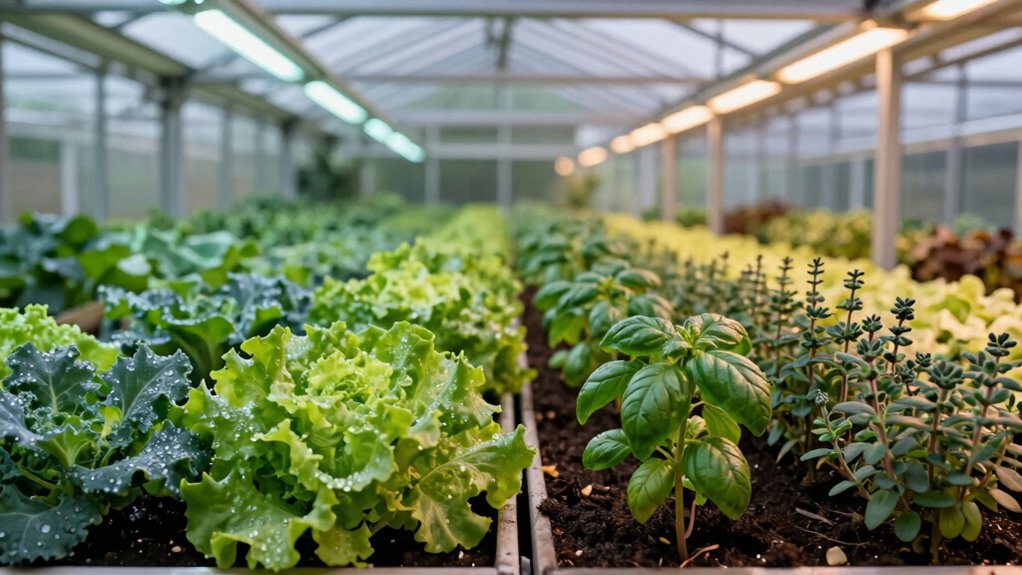
Start by identifying the temperature needs of your plants to create effective zones. Then, design your greenhouse with clear separation to maintain those differences. Proper zoning guarantees each plant thrives in its ideal environment. Additionally, understanding the specific plant requirements can help you tailor the zones more effectively.
Recognize Temperature Needs
Have you considered how different plants thrive at specific temperatures? Recognizing these needs helps you create effective zones. Cool greens, like lettuce and spinach, prefer temperatures between 55-70°F, while warm herbs, such as basil and peppers, thrive at 70-85°F. Proper soil preparation guarantees each zone supports plant health by providing the right nutrients and drainage. Additionally, managing pests early is vital; pests tend to be more active at certain temperatures, so understanding these patterns helps you implement targeted pest management strategies. By matching your plants’ temperature needs with soil conditions and pest control practices, you set the stage for healthy, productive growth. Maintaining Free Floating conditions in your greenhouse can also help balance humidity and airflow, which are essential for optimal plant health. This awareness guides you in shaping distinct zones, microclimate management, and optimizing your greenhouse for both cool and warm crops. Moreover, using advanced climate control systems can further fine-tune temperature zones, ensuring each area stays within ideal ranges for your plants. Incorporating temperature zoning techniques can improve overall plant performance and yield.
Designate Separate Zones
How can you effectively divide your greenhouse into distinct temperature zones? Start by creating physical barriers like partition walls or curtains to separate cool and warm areas. This prevents temperature crossover and makes climate control more efficient. When designing these zones, consider compost management—placing compost bins in one zone avoids heat buildup that could affect sensitive plants. Proper pest control also plays a role; keeping pest-prone plants away from cooler zones minimizes infestations. Use vents, fans, or heating vents strategically to maintain the desired temperatures within each zone. Clearly marking each area helps you monitor conditions and adjust as needed. Additionally, implementing climate zoning techniques ensures precise control over microclimates, further optimizing growth conditions. Incorporating thermal insulation between zones can further prevent temperature fluctuations. To enhance zone separation, you might also consider insulation materials that improve temperature stability. Using zone-specific climate controls allows for more accurate regulation tailored to each area’s needs. Properly designing these zones with microclimate control not only enhances plant health but also reduces energy consumption. By thoughtfully designating separate zones, you optimize growth conditions and simplify maintenance, ensuring both cool greens and warm herbs thrive side by side.
Designing an Effective Cool Zone for Leafy Greens
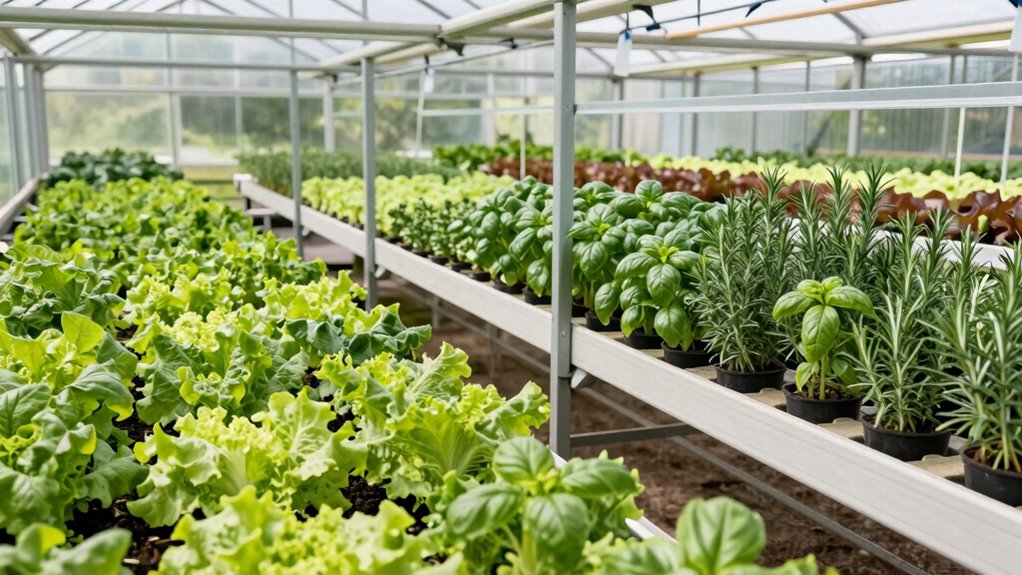
To keep leafy greens thriving, you need to implement ideal cooling techniques like shading and proper ventilation. These methods help maintain the right temperature and prevent overheating during hot days. By carefully designing your cool zone, you ensure your greens stay fresh and healthy. Incorporating proper storage solutions can further protect your greens from environmental stressors, maximizing their freshness and longevity. Additionally, utilizing digital resources like project management tools can assist in planning and optimizing your greenhouse layout for better climate control. Understanding climate control systems and their integration can also significantly enhance the efficiency of your cooling strategies. For example, selecting the right support infrastructure can improve airflow and temperature regulation within your greenhouse.
Optimal Cooling Techniques
Creating an effective cool zone for leafy greens involves carefully managing temperature and airflow to prevent spoilage and maintain freshness. Use hydroponic systems to regulate water temperature precisely, which helps keep greens crisp without excess humidity. Incorporate cooling fans or evaporative cooling pads to reduce heat buildup during hot days. Good airflow prevents stagnant air, lowering the risk of mold and pests, making pest management easier. Consistent, moderate temperatures inhibit bacterial growth and preserve leaf quality. Monitoring sensors can help you adjust cooling methods in real time, ensuring ideal conditions. Additionally, selecting halal-certified materials and components for your cooling systems guarantees compliance with dietary standards. By blending hydroponic systems with strategic airflow, you create a stable environment that keeps leafy greens fresh, minimizes spoilage, and simplifies pest management.
Shade and Ventilation
Have you considered how strategic shading and proper ventilation can transform your leafy greens’ environment? Effective shade management reduces heat stress and prevents leaf scorch, while ventilation strategies help regulate humidity and airflow. To optimize your cool zone, focus on these key points:
- Use shade cloths or movable screens to control sunlight intensity during peak hours.
- Install adjustable vents or exhaust fans to enhance airflow and remove excess heat.
- Incorporate side vents or windows for cross-ventilation, promoting fresh air exchange.
- Monitor temperature and humidity regularly to fine-tune your shade and ventilation setup.
- Incorporating environmental control systems can further optimize conditions for your leafy greens.
Creating a Warm Zone for Herbs Like Basil and Oregano

If you want your basil and oregano to thrive, establishing a warm zone within your greenhouse is essential. Keeping these herbs in a consistent, cozy environment encourages vigorous herb flowering and healthy growth. Use heat mats, supplemental lighting, or space heaters to maintain ideal temperatures. Be mindful of greenhouse pests that target warm zones, like aphids or spider mites—they thrive in these conditions. To better understand the balance, consider this:
| Temperature Range | Pest Activity | Herb Response |
|---|---|---|
| 70-75°F | Low (less pest breeding) | Healthy herb flowering |
| 75-80°F | Moderate | Faster growth, risk of pests |
| 80°F+ | High (pest outbreaks) | Stress, possible pest damage |
Maintaining the proper temperature range is also crucial for herb health management, as it influences both plant vitality and pest proliferation. Proper temperature control can help prevent pest outbreaks, ensuring your herbs grow strong and healthy. Additionally, understanding the temperature thresholds helps in optimizing growth conditions while minimizing pest issues. Recognizing the optimal temperature range for specific herbs can further improve your cultivation success.
Choosing Materials and Equipment for Your Two Zones
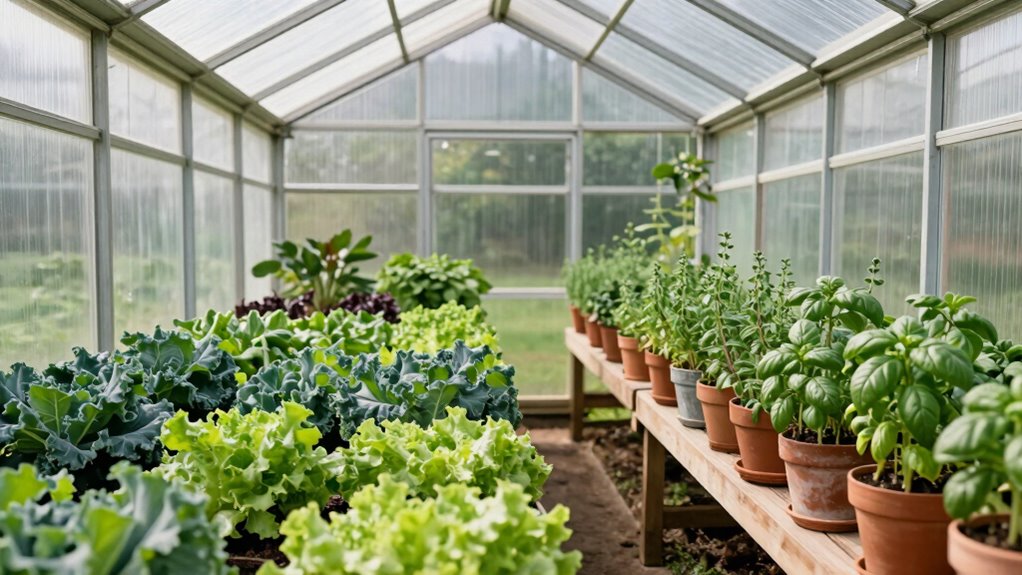
Selecting the right materials and equipment is crucial for effectively establishing your two-zone greenhouse. To optimize each zone, consider these essentials:
Choosing the right materials ensures your two-zone greenhouse thrives with optimal environments.
- Insulated panels or partition walls to separate the warm and cool areas, maintaining distinct environments.
- Adjustable shelving and containers suited for different plant needs, ensuring proper spacing and growth.
- Automated watering systems that allow tailored watering schedules for each zone, preventing over- or under-watering.
- Pest management tools like screens and traps, which help monitor and control pests without cross-contamination.
How to Control Temperature and Humidity in Both Zones
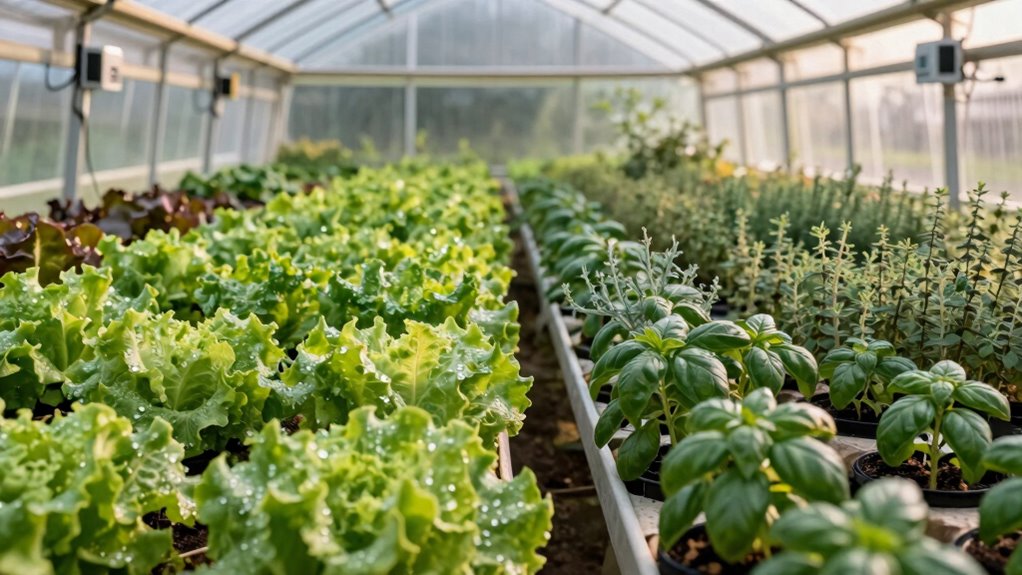
Controlling temperature and humidity in both zones is essential for creating ideal growing conditions, and the right strategies can make a significant difference. To achieve effective humidity control, use vents, dehumidifiers, or humidifiers tailored to each zone’s needs. Proper insulation and shading help with temperature regulation by maintaining consistent warmth or coolness. Installing fans ensures good air circulation, preventing hot spots and humidity buildup. Use thermostats and hygrometers to monitor conditions precisely, allowing you to make quick adjustments. For the cool greens zone, keep temperatures lower and humidity balanced; for the warm herbs zone, focus on maintaining warmth without excess moisture. Regularly checking and adjusting these variables keeps both zones optimized for healthy, vigorous growth.
Benefits of a Two-Zone Greenhouse for Year-Round Growing

A two-zone greenhouse enables you to grow a wide variety of plants year-round by providing tailored environments within the same structure. This setup offers several benefits:
- Extended growing seasons for both cool and warm plants, increasing your harvest options.
- Better compost management, which reduces waste and boosts soil health for continuous production.
- Improved pest control by isolating vulnerable crops and minimizing infestations across zones.
- Greater flexibility in crop rotation, allowing you to plan planting schedules that maximize space and resources.
Common Problems in Two-Zone Greenhouses and How to Fix Them
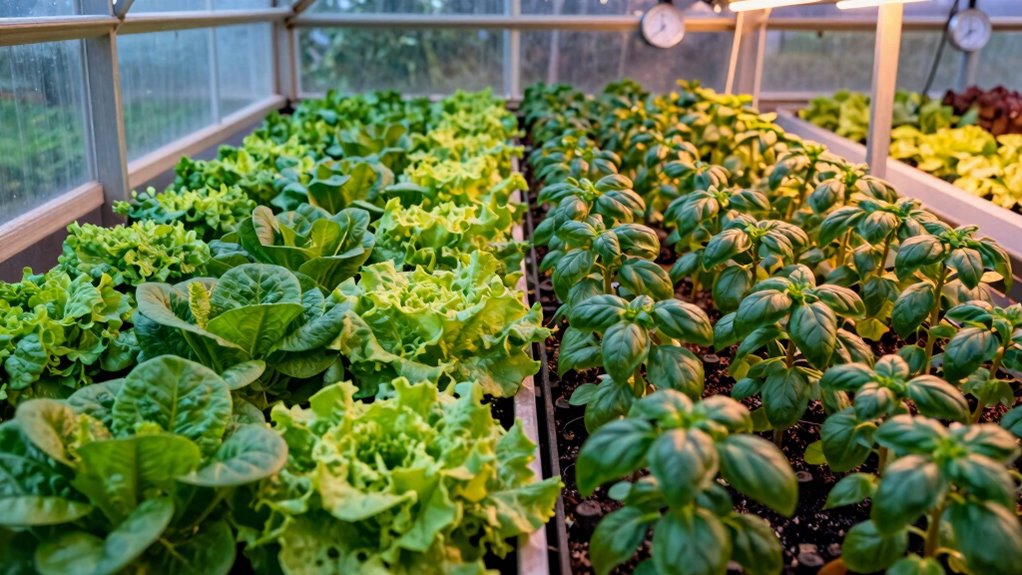
While a two-zone greenhouse offers many advantages, it also presents unique challenges that can hinder your growing success. Common pests, like aphids or whiteflies, can quickly spread between zones if not managed carefully. Regular monitoring and integrated pest management are essential. Watering challenges are also frequent, as cool greens and warm herbs have different needs. Overwatering can cause root rot in cool greens, while underwatering might stress warm herbs. To avoid these issues, tailor your watering schedule to each zone’s specific moisture requirements, using separate systems if possible. Maintaining proper airflow and humidity levels helps prevent pests and diseases. Staying vigilant and adjusting your practices guarantees both zones thrive without common setbacks.
Tips for Maintaining and Adjusting Your Two-Zone Setup Over Time
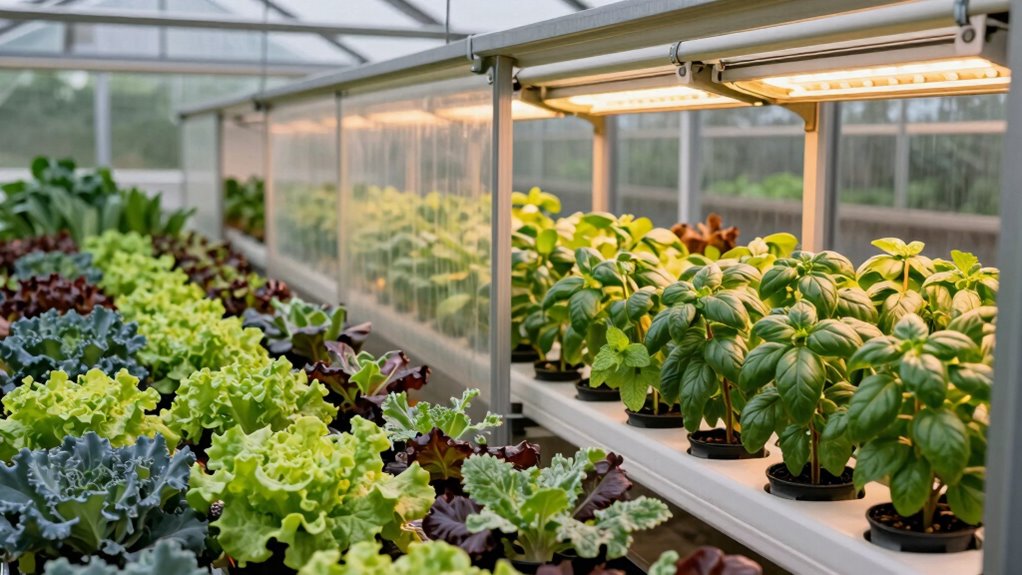
Regularly inspecting your two-zone greenhouse is essential for catching issues early and ensuring each area functions ideally. To maintain excellent conditions, focus on these four tips:
- Adjust lighting optimization to meet the needs of cool greens and warm herbs, ensuring proper light levels.
- Monitor temperature and humidity, making changes as plants grow or seasons shift.
- Implement pest management strategies proactively to prevent infestations in either zone.
- Regularly check and calibrate heating and cooling systems to keep conditions stable.
Frequently Asked Questions
Can I Convert an Existing Greenhouse Into a Two-Zone Setup?
Yes, you can convert your existing greenhouse into a two-zone setup. Start by making necessary existing greenhouse modifications, like adding insulation or heating elements, to create distinct temperature areas. Use zone partitioning techniques such as removable walls or curtains to separate cool and warm zones effectively. This allows you to optimize growing conditions for both cool greens and warm herbs simultaneously, maximizing your greenhouse’s productivity and efficiency.
What Are the Initial Costs of Building a Two-Zone Greenhouse?
The initial costs of building a two-zone greenhouse depend on your material choices and size, with a rough estimate ranging from $5,000 to over $20,000. You should conduct a cost analysis focusing on material selection, such as durable framing and insulation, to balance budget with long-term efficiency. Remember, investing in quality materials can reduce maintenance costs and improve plant growth, making your greenhouse more successful.
How Do I Ensure Proper Airflow Between Cool and Warm Zones?
Imagine your greenhouse as a symphony, where airflow ventilation keeps every note in harmony. To guarantee proper airflow between cool and warm zones, install adjustable vents, fans, and passive vents to promote consistent airflow. Use temperature regulation devices to prevent hot or cold spots. Regularly monitor humidity and airflow, adjusting vents as needed, so the cooler and warmer areas blend seamlessly, creating a balanced environment for all your plants.
Are There Specific Lighting Requirements for Each Zone?
Yes, you should use zone-specific fixtures to meet each area’s lighting needs. Cool greens require lower-intensity, broad-spectrum lighting for ideal growth, while warm herbs benefit from higher-intensity, targeted lighting that promotes flowering. Incorporate lighting differentiation by installing adjustable, zone-specific fixtures, allowing you to customize light levels. This approach guarantees each zone gets the right light, boosting plant health and productivity without over- or under-lighting.
What Are the Best Plant Combinations for Aesthetic Purposes?
Think of your greenhouse as a Renaissance painting—thoughtfully balanced and vibrant. For stunning plant pairing, combine purple basil with bright green lettuce or red leaf chard. Use color coordination to create visual harmony, like pairing soft greens with deep reds or purples. Mix textures and heights to add depth and interest. Your goal is a lively, eye-catching display that’s as functional as it is beautiful, making your greenhouse a true masterpiece.
Conclusion
With a two-zone greenhouse, you’re crafting a symphony of perfect conditions, harmonizing cool greens and warm herbs side by side. It’s like having your own botanical oasis, where every plant thrives in its ideal environment. Keep tuning your zones, adjusting as needed, and watch your garden flourish year-round. This strategy turns your greenhouse into a resilient, lush sanctuary—proof that with thoughtful design, you can grow nature’s finest melodies all in one space.