Vertical farming in a greenhouse helps you maximize limited space by stacking plants in multiple tiers, making the most of narrow or crowded areas. It’s ideal for urban settings or regions with land constraints, allowing you to grow more crops efficiently. Using innovative techniques like hydroponics and LED lighting, you can boost yields and create a controlled environment. Keep exploring to discover how these technologies work together to optimize your vertical farm’s productivity.
Key Takeaways
- Vertical stacking of plants maximizes limited greenhouse space efficiently.
- Multi-tiered racks with integrated LED lighting optimize light distribution across all levels.
- Hydroponic systems reduce land and soil requirements, enabling more crops in confined areas.
- Automated nutrient and water delivery systems streamline space utilization and labor.
- Controlled environment conditions protect crops and enable year-round production in compact spaces.
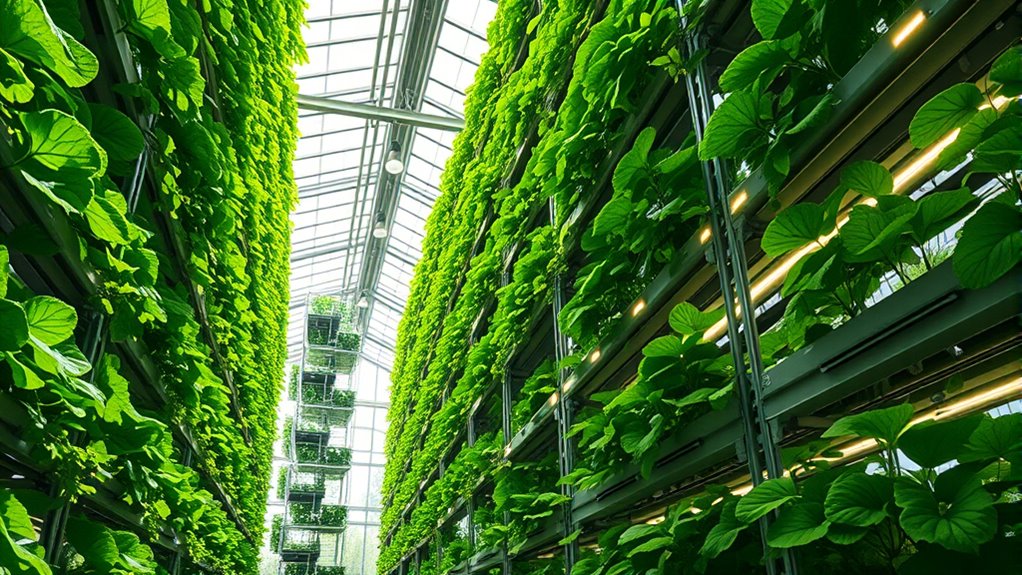
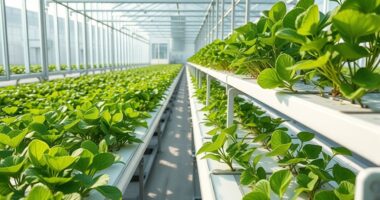
Have you ever wondered how vertical farming inside greenhouses is revolutionizing agriculture? It’s a smart way to maximize limited space while boosting crop yields. By stacking plants vertically, you make efficient use of every inch of available area, which is especially valuable in urban settings or regions with land constraints. In this setup, hydroponic techniques play a vital role. Instead of traditional soil, you grow plants in nutrient-rich water solutions, allowing roots to access everything they need directly. This method reduces water usage markedly and speeds up plant growth because nutrients are delivered precisely when needed. It also minimizes soil-borne diseases, making the entire process cleaner and more sustainable.
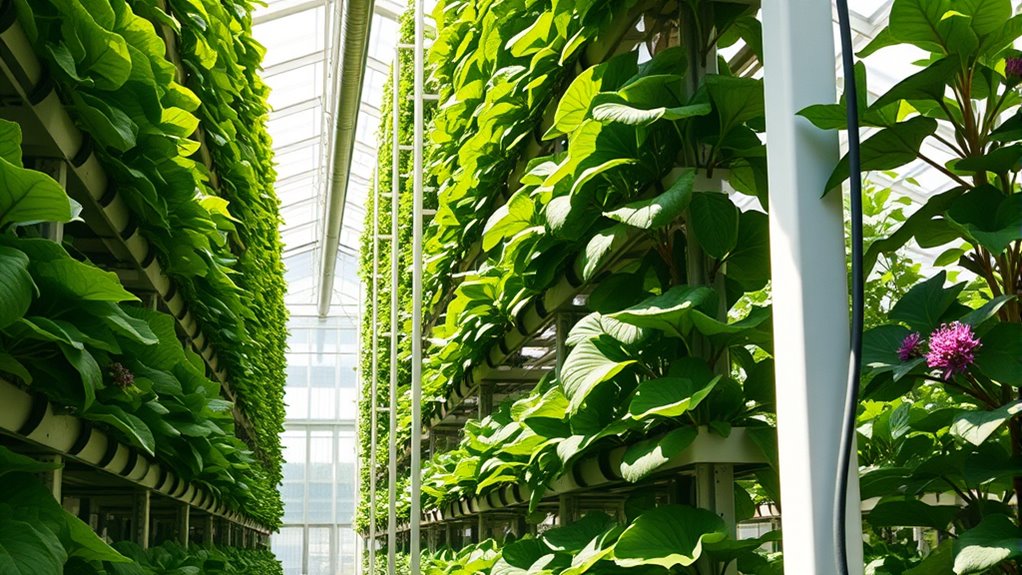
Vertical greenhouses use hydroponics to grow more efficiently in limited space and urban environments.
Lighting is another essential element, and LED lighting is a game changer here. Unlike traditional grow lights, LEDs are energy-efficient, produce less heat, and can be tailored to emit specific wavelengths that optimize photosynthesis. When you combine LED lighting with vertical farming, you create a controlled environment where light intensity and duration can be adjusted perfectly to suit each crop’s needs. This flexibility means you can grow a variety of plants year-round, regardless of external weather conditions. Plus, because LEDs consume less power, the overall energy costs decrease, making the operation more economical and environmentally friendly.
In a greenhouse setting, integrating hydroponic techniques with LED lighting allows for precise control over the growth environment. You can set up vertical racks with multiple tiers, each equipped with LED fixtures that provide uniform light distribution. This ensures every plant gets the right amount of light, promoting uniform growth and maximizing yield. The water and nutrient delivery system can be automated, reducing labor and minimizing waste. As a result, you can achieve faster crop cycles and higher productivity compared to traditional farming methods.
Moreover, the greenhouse environment offers protection from pests and harsh weather, which, combined with these advanced techniques, further enhances plant health and reduces chemical use. This synergy creates a highly efficient farming system that conserves resources while increasing output. You’re able to grow fresh produce closer to urban markets, decreasing transportation costs and carbon footprint. The combination of hydroponic techniques and LED lighting in vertical greenhouses isn’t just about growing more in less space; it’s about doing so sustainably, efficiently, and with precision. This innovative approach is shaping the future of agriculture, making it possible to feed more people with fewer resources, all within a compact, controlled environment.
Additionally, using Ring Security Cameras can help monitor the greenhouse environment remotely, ensuring optimal conditions and security at all times.

VIVOSUN 4×4 Grow Tent Kit Complete System, WiFi-Controlled Grow System with Full Spectrum 400W LED Plant Grow Light, Automatic Ventilation, GrowHub Outlet A22 with Temperature and Humidity Sensor
Starter Grow Tent Kit: Perfect for first-time indoor growers seeking a simple, budget-friendly setup; This kit includes a...
As an affiliate, we earn on qualifying purchases.
Frequently Asked Questions
What Are the Initial Costs for Setting up Vertical Farming in a Greenhouse?
Your initial financial investment for setting up vertical farming in a greenhouse typically ranges from $50,000 to $150,000, depending on scale and technology. Infrastructure costs include installing shelving, LED lighting, climate control, and irrigation systems. You’ll also need to budget for seeds, nutrients, and ongoing maintenance. While the upfront costs are significant, they’re offset by higher yields and efficient space use, making it a smart long-term investment.
How Does Vertical Farming Impact Greenhouse Energy Consumption?
Oh, the irony isn’t lost on you—vertical farming might seem like a major energy hog, but it actually boosts energy conservation through improved lighting efficiency. You’ll notice a reduction in overall greenhouse energy consumption because optimized LED lighting targets plants precisely, cutting down unnecessary power use. So, while it initially feels like a drain, vertical farming can help you save energy and lower costs over time.
What Crops Are Best Suited for Vertical Farming in Greenhouses?
You should choose crops like leafy greens, herbs, and strawberries for vertical farming in greenhouses. These crops thrive with optimized crop selection and are well-suited for vertical growing techniques. Their quick growth cycles and high yields make them ideal for maximizing space efficiently. By focusing on these crops, you can improve productivity and ensure a steady supply of fresh produce, all while making the most of your greenhouse’s vertical space.
How Is Pest Control Managed in a Vertically Farmed Greenhouse?
Think of pest control as a watchful eye—you need to stay ahead of issues. You manage pests in a vertical greenhouse using pest prevention strategies like sealing entry points and maintaining cleanliness. Biological control also plays a key role; introducing natural predators like ladybugs or predatory mites keeps pests in check. This eco-friendly approach reduces chemical use, ensuring your crops stay healthy and your greenhouse remains a thriving, pest-free environment.
What Are the Maintenance Requirements for Vertical Farming Systems?
You need to regularly check and clean your vertical farming systems to guarantee ideal performance. Focus on lighting maintenance to keep grow lights functioning efficiently, and monitor nutrient management to prevent deficiencies or excesses. Keep an eye on water delivery systems, adjusting as needed, and inspect structural components for wear. Routine maintenance helps maximize crop yields and system longevity, making your vertical farm more productive and sustainable.

DGSL 14 Pcs Polycarbonate Greenhouse Panels, 4' x 2' x 0.16'' Twin-Wall Panels, Polycarbonate Sheet for All Weather Outdoor Garden and Greenhouse Covering
Polycarbonate Panels: The greenhouse roof panels allow 80% light transmission into the greenhouse, which greatly benefits plant growth....
As an affiliate, we earn on qualifying purchases.
Conclusion
Think of your greenhouse as a towering skyscraper of life, each level a bustling neighborhood of plants thriving in harmony. By embracing vertical farming, you become the architect of this green city, maximizing every inch of space like a master builder crafting a vibrant metropolis. With each layer, you create a thriving ecosystem that’s efficient and sustainable. So, step up and design your own lush skyline—where innovation and nature grow side by side, reaching new heights.

Sinimaka 10 Pack Polycarbonate Greenhouse Panels, 8' x 4' x 0.24'' Twin-Wall Polycarbonate Sheets, All Weather Clear Roof Panels Greenhouse Replacement Panels
Strong Material - 10 pieces of 8 x 4 ft polycarbonate panels, approximately 0.24 inches thick, feature a...
As an affiliate, we earn on qualifying purchases.

EVERECO 6 Pcs Polycarbonate Greenhouse Panels, 6'FT x 2'FT x 0.24" in Twin-Wall Polycarbonate Sheet, All-Season UV Protected Plastic Roof Sheeting for Greenhouse Covering/Outdoor Garden
[High Transmittance & UV Protection] Made of optical-grade material, this polycarbonate sheet has over 90% light transmittance. Sunlight...
As an affiliate, we earn on qualifying purchases.