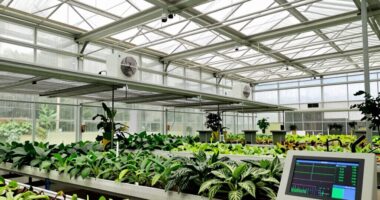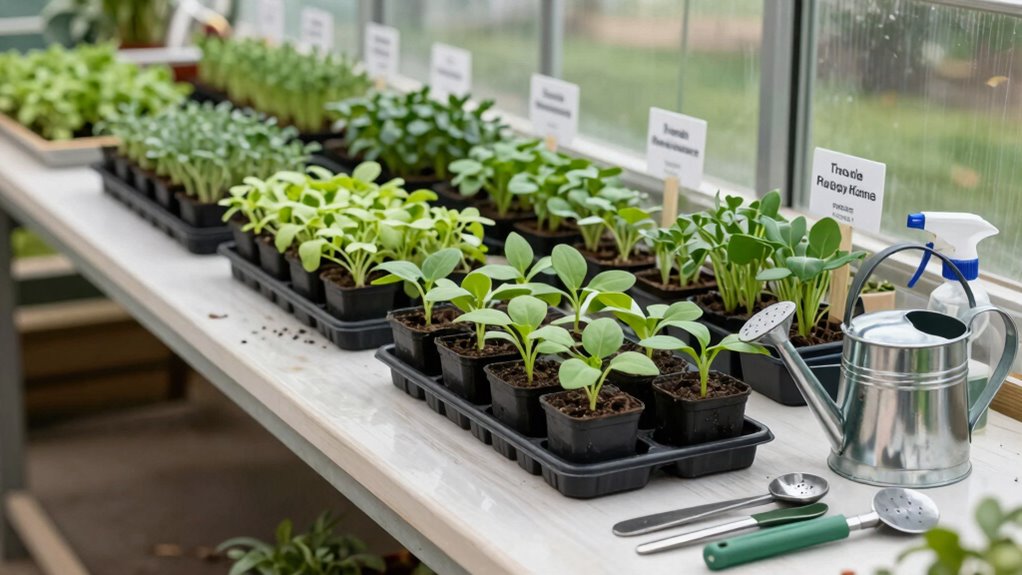

To save time daily, set up your greenhouse benches with durable, easy-to-clean materials like galvanized steel or high-quality plastic, incorporating drainage features for quick maintenance. Position taller plants at the back and keep pathways clear for easy access. Raise benches to a comfortable height, and guarantee proper ventilation and lighting for healthy growth and early pest detection. Regularly clean surfaces and tools to prevent pests and diseases. Keep these tips in mind for a streamlined, efficient greenhouse setup.

Get garden gear delivered free — and shop member deals
- Fast, free delivery on millions of items
- Access to Prime Big Deal Days deals on October 6–7
- Prime Video, Amazon Music and more included
Key Takeaways
- Use durable, easy-to-clean materials like galvanized steel to reduce maintenance time.
- Position benches strategically to maximize space and streamline plant access and inspection.
- Incorporate proper drainage features to prevent water buildup and facilitate quick cleaning.
- Design ergonomic layouts to minimize movement and reduce fatigue during daily tasks.
- Ensure good airflow and lighting for faster plant health monitoring and pest detection.

Have you ever wondered how to create an efficient and organized space in your greenhouse? The key lies in setting up your greenhouse bench properly. A well-designed bench setup streamlines daily tasks, helping you save time and reduce stress. When you focus on an effective layout, plant propagation becomes quicker, and pest management gets simpler. This setup isn’t just about space; it’s about making your workflow smoother and more productive.
Start by choosing the right materials for your benches. Durable, easy-to-clean surfaces like galvanized steel or high-quality plastic ensure that cleaning is quick and effortless. Proper drainage is essential, so make sure your benches have built-in slopes or drainage holes to prevent water buildup, which can lead to plant diseases or pest problems. When your benches are easy to clean, you can prevent pest infestations and disease spread, keeping your greenhouse healthier overall.
Choose durable, easy-to-clean bench materials with proper drainage to prevent pests and diseases in your greenhouse.
Position your benches strategically. Place taller plants toward the back or along the sides, and keep pathways clear for easy access. This layout allows you to move swiftly between sections, especially when tending to plant propagation or inspecting for pests. Also, consider raising the benches to a comfortable working height. Not only does this reduce back strain, but it also gives you better control over pests—since you can quickly spot and address issues before they spread. Additionally, selecting proper materials for your benches can significantly impact their longevity and ease of maintenance.
To further optimize your setup, install proper lighting and ventilation systems. Good airflow helps prevent fungal diseases and discourages pests. Adequate lighting accelerates plant growth and makes it easier to spot pests early. Regularly cleaning your benches and tools is critical; it minimizes the chance of introducing pests or diseases and reduces the time you spend on pest management later. Incorporating ergonomic design principles into your workspace can also enhance comfort and efficiency during long hours of work. Moreover, understanding the principles of biodiversity can help you create a healthier greenhouse environment that naturally supports pest control and plant health.
galvanized steel greenhouse benches
As an affiliate, we earn on qualifying purchases.
As an affiliate, we earn on qualifying purchases.
Frequently Asked Questions
What Materials Are Best for Greenhouse Bench Frames?
You should choose materials for greenhouse bench frames that excel in plant support and material durability. Aluminum is a top choice because it’s lightweight, resistant to rust, and sturdy, making it perfect for supporting plants without bending. Steel is also durable and strong, but make sure it’s coated to prevent rust. Avoid cheap plastics, as they lack the strength and longevity needed for daily use, compromising plant support and overall durability.
How to Prevent Pests From Hiding Under Benches?
Think of your greenhouse as a fortress defending against sneaky pests. To prevent pests from hiding under benches, you should implement pest exclusion strategies with sturdy bench barriers. These barriers act like invisible shields, blocking pests from slipping underneath. Regularly inspect and maintain these barriers, ensuring no gaps or tears, and keep the area clean and dry. This proactive approach keeps pests at bay, protecting your plants and saving you time.
Can I Customize Bench Height for Different Plants?
Yes, you can customize bench height for different plants by using an adjustable height and ergonomic design. This allows you to set the perfect level for each plant’s needs, making watering, pruning, and harvesting easier. By tailoring the height, you reduce strain and improve efficiency, ensuring healthier plants and a more comfortable working environment. Adjustability is key to creating a versatile greenhouse setup that adapts to your gardening tasks.
What Drainage Options Are Recommended for Benches?
Drainage options are like a well-oiled machine, ensuring your plants stay healthy. You should use perforated trays or gravel layers beneath your benches to enhance water drainage, preventing water buildup that can lead to pests and root rot. Installing a slope for runoff and using raised benches also helps. Good water drainage not only keeps pests at bay but also promotes healthy root development, making your greenhouse thrive.
How Often Should I Disinfect Greenhouse Benches?
You should disinfect greenhouse benches weekly to prevent disease buildup. Regular soil sterilization helps maintain a healthy environment, reducing pathogen presence. If your benches are mobile, disinfect them thoroughly after moving to new areas to avoid cross-contamination. Using a suitable disinfectant guarantees effective sanitation, keeping your plants healthy. Consistent cleaning and soil sterilization are key to a productive greenhouse, especially when benches are frequently moved or adjusted.
Conclusion
Imagine a greenhouse bench setup that simplifies your daily routine, saving you precious time and effort. This isn’t just a handy tip—it’s a game-changer backed by proven efficiency. When you invest in the right setup, you’re not just easing your workload; you’re giving your plants the best care they deserve. Don’t believe the myth that good results require endless work—sometimes, all it takes is a smarter setup to transform your gardening experience.
Fall yard work Picks
leaf blowers
As an affiliate, we earn on qualifying purchases.