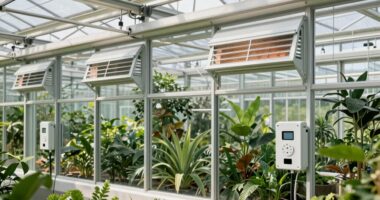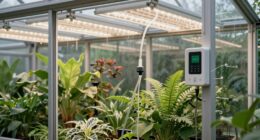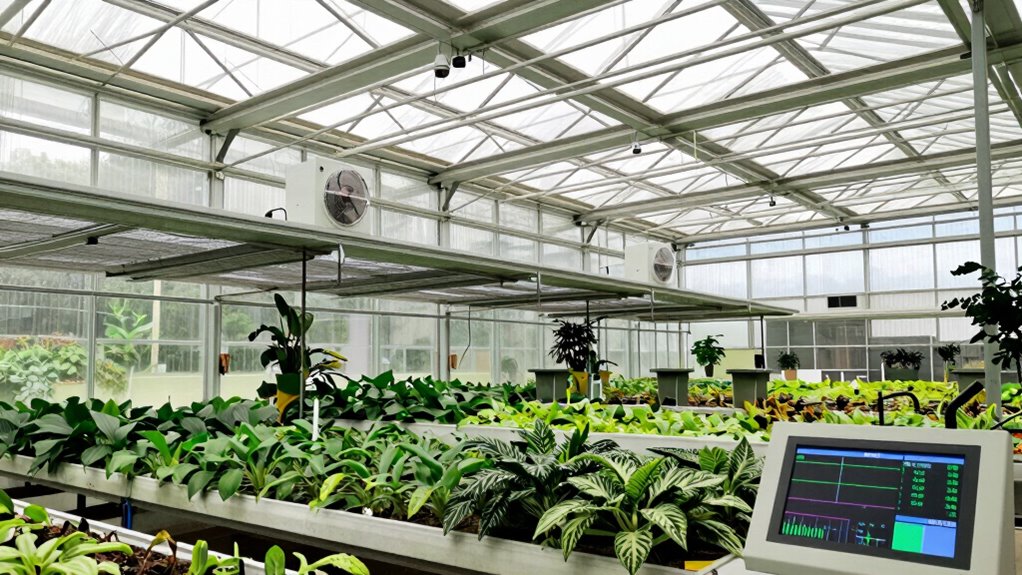

To effectively plan climate control for a large greenhouse, you should integrate soil health, pest management, and technology. Use climate sensors to monitor temperature, humidity, and moisture in real time, and adjust systems automatically. Regular soil testing helps maintain ideal conditions, while controlling humidity and temperature disrupts pests. Combining these strategies creates a resilient environment that boosts productivity. Keep exploring to discover more tips on creating the perfect climate for your greenhouse success.

Get garden gear delivered free — and shop member deals
- Fast, free delivery on millions of items
- Access to Prime Big Deal Days deals on October 6–7
- Prime Video, Amazon Music and more included
Key Takeaways
- Conduct thorough site assessments to understand local climate conditions and greenhouse-specific needs.
- Implement real-time monitoring with sensors for temperature, humidity, and soil moisture to enable responsive adjustments.
- Integrate soil health management and pest control strategies to create a resilient, balanced environment.
- Use automated climate control systems to optimize heating, cooling, and ventilation based on sensor data.
- Regularly evaluate and adapt climate strategies through ongoing data analysis and environmental assessments.
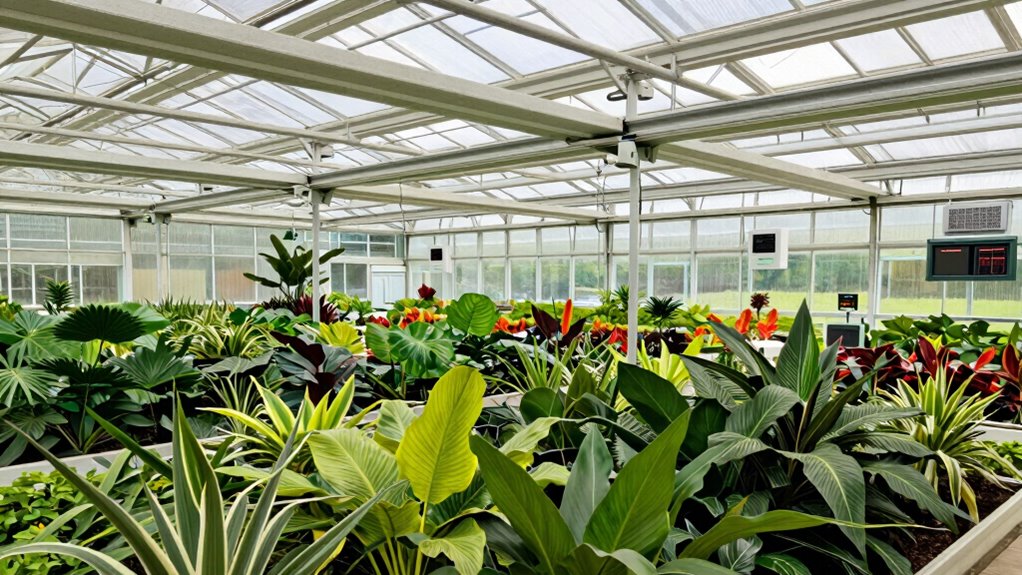
Effective climate control is indispensable for maximizing greenhouse productivity and maintaining healthy plant growth. When planning your climate control system for a large greenhouse, you need to consider several interconnected factors that influence plant health and yield. Central to this are soil health and pest management, which directly impact your ability to create a stable environment for your crops. Healthy soil acts as the foundation for vigorous plant growth, so maintaining ideal soil conditions should be a priority in your climate control strategy. This involves monitoring soil moisture, pH levels, and nutrient content to make sure your plants receive what they need. Proper soil management minimizes stress on plants, making them more resilient to temperature swings and humidity fluctuations. When soil is healthy, your greenhouse can better buffer against external weather changes, reducing the need for excessive heating or cooling. Maintaining soil health is essential for creating a resilient environment that supports optimal plant growth and reduces disease susceptibility. Additionally, incorporating soil testing into your routine can help identify specific deficiencies or imbalances that might affect climate control strategies. Regularly assessing soil quality can also help you adapt your climate management techniques to better suit current conditions. Moreover, understanding the interactions between soil properties and environmental controls can help optimize your overall climate strategy.
Healthy soil foundation reduces climate stress and boosts greenhouse productivity.
In addition, pest management plays a key role in climate control planning. Pests thrive in specific temperature and humidity ranges, so controlling these factors can greatly reduce infestations. For example, keeping humidity levels in check can prevent mold and fungal diseases, while consistent temperature regulation discourages pest breeding cycles. Implementing integrated pest management (IPM) practices—such as biological controls, trap crops, and targeted pesticide use—helps you maintain a pest-resistant environment without disrupting your climate control efforts. These measures work best when combined with a well-maintained climate system that prevents conditions favorable to pests. Regularly inspecting crops and adjusting environmental conditions accordingly can further enhance pest prevention strategies. Using climate sensors and automated systems allows you to track temperature, humidity, and soil moisture in real-time, enabling quick responses to changing conditions. This data helps you make informed decisions about activating heating, cooling, or ventilation systems to maintain an ideal environment. Developing a comprehensive understanding of pest ecology and climate management can further improve your ability to prevent infestations proactively.
Remember that soil health and pest management are ongoing processes that depend on consistent climate control. By integrating these elements into your planning, you ensure a stable environment that promotes plant growth, reduces crop losses, and minimizes the need for chemical interventions. Thoughtful, precise climate control creates a resilient greenhouse ecosystem where healthy soil and effective pest management work hand in hand to maximize productivity and guarantee the long-term success of your large greenhouse operation.
large greenhouse climate control system
As an affiliate, we earn on qualifying purchases.
As an affiliate, we earn on qualifying purchases.
Frequently Asked Questions
How Does Outdoor Weather Variability Affect Greenhouse Climate Control?
Outdoor weather variability directly impacts your greenhouse climate control, making weather forecasting essential. Sudden temperature drops or wind shifts require you to adjust heating, ventilation, and shading quickly. By monitoring local conditions and practicing microclimate management, you can maintain stable temperatures inside. This approach helps you respond promptly to outdoor changes, ensuring ideal growing conditions and preventing stress on your plants despite unpredictable weather patterns.
What Are the Most Cost-Effective Climate Control Options?
Are you maximizing your greenhouse’s cost savings? Choose energy-efficient systems like LED lighting, automated venting, and insulation to cut energy use. Consider passive strategies such as shade cloths and natural ventilation to reduce reliance on expensive equipment. These options promote cost reduction while maintaining ideal conditions. By combining smart technology with simple passive measures, you can effectively manage climate control without breaking the bank.
How Often Should Climate Systems Be Maintained?
You should maintain your climate systems regularly, ideally every one to three months, to guarantee ideal humidity management and ventilation strategies. Regular checks help prevent issues like mold or overheating. During maintenance, clean filters, inspect fans, and calibrate sensors. Consistent upkeep keeps your greenhouse’s environment stable, promoting healthy plant growth and reducing energy costs. Don’t overlook routine maintenance; it’s key to effective climate control.
Can Automated Controls Adapt to Seasonal Changes?
Automated controls are like a seasoned sailor adjusting to changing winds—they adapt seamlessly to seasonal changes. With proper sensor calibration and automation integration, your climate system responds dynamically, maintaining ideal conditions year-round. These systems constantly monitor temperature, humidity, and light, adjusting settings proactively. So, yes, automation can adapt to seasonal shifts, ensuring your greenhouse stays balanced without manual intervention, making your plants thrive in perfect harmony.
What Are Common Mistakes in Greenhouse Climate Planning?
You often overlook plant humidity levels and ventilation strategies, leading to common mistakes in greenhouse climate planning. Failing to monitor humidity can cause plant stress or disease, while inadequate ventilation hampers airflow and temperature regulation. You might also neglect seasonal adjustments, which are essential for maintaining ideal conditions. To avoid these errors, prioritize proper ventilation strategies and regularly check plant humidity, ensuring a healthy, productive greenhouse environment year-round.
Conclusion
By carefully planning your climate control system, you guarantee ideal growth, energy efficiency, and plant health. You monitor temperatures, manage humidity, and fine-tune airflow to create the perfect environment. You anticipate seasonal changes, adapt to your greenhouse’s unique needs, and maintain consistent conditions. With thoughtful planning, you prevent issues before they arise, promote lush growth, and maximize your greenhouse’s productivity. In the end, thorough climate control planning isn’t just a task—it’s the foundation of your success.
Fall yard work Picks
leaf blowers
As an affiliate, we earn on qualifying purchases.