
Poor placement, improper sealing, and incorrect duct sizing can drastically reduce your exhaust fan’s performance, causing noise, inefficiency, and faster wear. If your fan isn’t mounted securely or leaks happen in the ductwork, airflow drops and odors or moisture linger. Faulty wiring, lack of maintenance, or ignoring humidity levels worsen problems. Fixing these installation mistakes and ensuring proper setup can boost efficiency, extend lifespan, and keep your space well-ventilated. Keep going to learn essential tips to optimize your exhaust fan’s performance.
Key Takeaways
- Improper fan placement, mounting, and sealing cause airflow issues and reduce odor and moisture removal efficiency.
- Incorrect duct design, size, and unsealed joints restrict airflow and increase resistance, impairing performance.
- Using an undersized or oversized fan leads to ineffective ventilation or wasted energy and drafts.
- Poor electrical wiring, loose connections, or lack of dedicated circuits can cause safety hazards and system failure.
- Neglecting regular maintenance and filter cleaning decreases airflow, increases noise, and shortens fan lifespan.
How Placement and Mounting Affect Exhaust Fan Performance
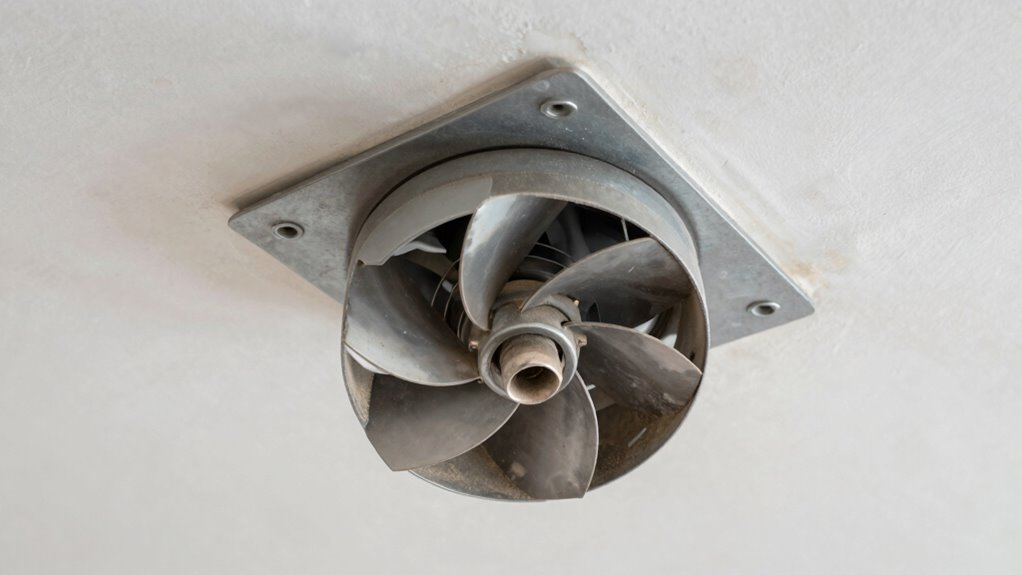
Proper placement and mounting are vital for an exhaust fan to work effectively. If you position the fan too high or too low, airflow dynamics suffer, reducing its ability to remove odors and moisture efficiently. The fan blade design plays a key role here; well-designed blades optimize airflow, creating stronger suction and better circulation. Mounting the fan securely ensures it operates smoothly without vibrations or noise, which can hinder performance. Incorrect placement can cause short-circuiting of airflow or dead zones where air doesn’t circulate properly. To maximize efficiency, install the fan near the source of moisture or odors, and ensure it’s level and firmly mounted. Additionally, understanding airflow principles can help in selecting the optimal location and orientation for your fan. Proper placement and mounting directly influence how well the fan handles airflow, making all the difference in its overall effectiveness.
Why Bad Ducting Can Wreck Your Exhaust Fan’s Effectiveness
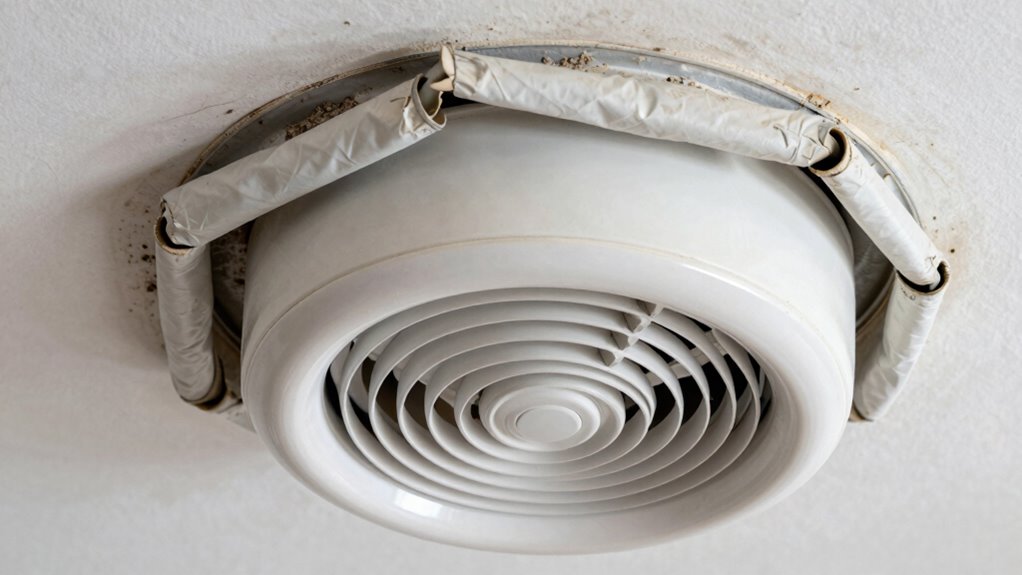
Bad ducting can seriously cut down your exhaust fan’s effectiveness. If the duct design is poor or there are leaks, airflow gets restricted or lost altogether. This results in inefficient removal of air and may lead to increased energy consumption. It also emphasizes the importance of using energy-efficient components to optimize performance and reduce environmental impact.
Poor Duct Design
If your ductwork isn’t designed correctly, it can severely reduce your exhaust fan’s performance. Poor duct design causes airflow restrictions, making the fan work harder without effectively removing air. Proper duct insulation is vital to prevent heat transfer and reduce condensation, which can lead to mold and material deterioration. Additionally, fan placement matters—installing the fan too far from the vent or in a location with sharp bends increases resistance, decreasing efficiency. Keep ducts as straight and short as possible, and avoid tight turns that cause turbulence. Well-designed ducting ensures smooth airflow, reduces strain on the fan, and maximizes performance. When ductwork is optimized, your exhaust system operates quietly, efficiently, and effectively, keeping your space well-ventilated. Incorporating local automation can further enhance system performance by adjusting ventilation based on real-time conditions.
Leaks Reduce Airflow
Leaks in your ductwork can considerably reduce your exhaust fan’s airflow, undermining its ability to clear out fumes and moisture. When leaks occur, they allow air to escape before it reaches the vent’s outlet, causing significant airflow reduction. This means your fan isn’t working efficiently, and harmful contaminants linger longer in your space. To prevent this, focus on leak prevention during installation by sealing all joints and connections tightly. Regularly inspect ductwork for cracks or gaps and fix them promptly. Properly sealed ducts ensure maximum airflow and ideal fan performance. Remember, even small leaks can have a big impact on airflow, so don’t overlook the importance of maintaining a tight, secure duct system to keep your exhaust fan functioning at its best.
Proper Wiring and Power Setup for Your Exhaust Fan
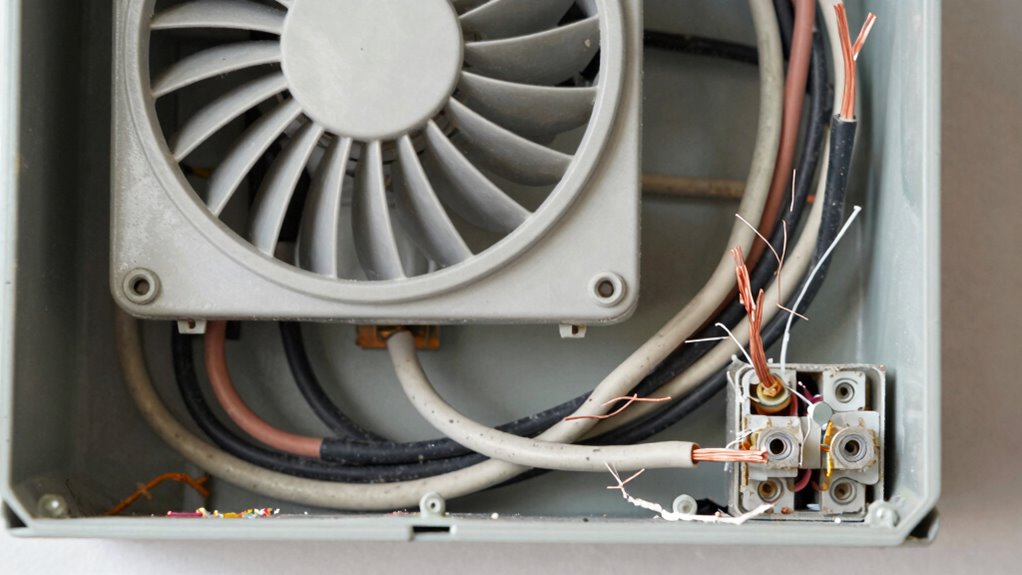
Proper wiring is essential to guarantee your exhaust fan operates safely and effectively. You need to use correct wiring techniques and connect it to the right power sources to prevent issues. Let’s go over how to set up your fan’s wiring and power supply properly. Additionally, understanding electrical safety principles helps avoid common hazards and ensures reliable operation of your equipment.
Correct Wiring Techniques
To guarantee your exhaust fan operates safely and efficiently, it’s essential to follow correct wiring techniques. Start by ensuring circuit safety; always turn off the power before working on any wiring. Use the proper wiring color codes—typically black or red for hot wires, white for neutral, and green or bare copper for ground—to prevent confusion. Double-check connections to avoid loose or incorrect wiring, which can cause short circuits or fire hazards. Use wire nuts and proper connectors to secure all connections firmly. Keep wiring neat and organized to prevent accidental disconnections or shorts. Avoid splicing wires improperly, and don’t overload circuits. Following these wiring standards ensures your fan runs smoothly without risking electrical failures or safety hazards. Additionally, understanding electrical safety practices can further protect you during installation.
Proper Power Sources
Choosing the right power source is essential for your exhaust fan’s safe and reliable operation. Using the proper electrical safety measures ensures that your setup complies with ventilation standards and reduces the risk of electrical hazards. Always connect your fan to a dedicated circuit to prevent overloads and ensure consistent performance. Verify that the wiring matches the fan’s specifications, including voltage and amperage requirements. Avoid extension cords or temporary wiring, which can cause voltage drops or fire hazards. Proper wiring also involves grounding the fan correctly to prevent electrical shocks. Additionally, adhering to electrical codes and standards helps safeguard your installation and maintain safety compliance. By adhering to these standards, you guarantee ideal airflow, longevity, and safety. Correct power setup isn’t just about performance; it’s about protecting your home and everyone inside.
How Sealing and Insulating Improve Airflow and Efficiency

Sealing leaks and insulating your exhaust fan’s ductwork can considerably boost airflow and efficiency. Proper sealing techniques prevent air from escaping before reaching the vent, ensuring that your fan moves air effectively. Use high-quality duct tape or mastic sealant to close gaps around joints and connections. Insulating methods, such as adding foam or fiberglass insulation around ducts, reduce temperature fluctuations and prevent condensation, which can hinder airflow. When ducts are well-sealed and insulated, the fan doesn’t have to work as hard to move air, leading to better performance and energy savings. These steps also minimize noise and prolong the lifespan of your exhaust system. Investing time in sealing and insulating is a simple yet vital way to optimize your exhaust fan’s operation. Understanding wood movement and how it affects duct integrity can further help in maintaining a sealed system over time.
Choosing the Right Size and Capacity for Your Space

Selecting the right size and capacity for your exhaust fan guarantees it effectively ventilates your space without wasting energy. Proper size selection is vital to ensure the fan can handle the volume of air needed for your room. If it’s too small, it won’t remove moisture, odors, or pollutants efficiently. Conversely, an oversized fan will waste energy and create drafts. Focus on capacity matching by calculating the airflow requirement, often measured in CFM (cubic feet per minute), based on your space’s size and use. This ensures your fan operates at peak efficiency, preventing overworking or underperforming. Taking the time to choose the correct size and capacity guarantees better ventilation, energy savings, and a more comfortable environment. Additionally, understanding the contrast ratio of your exhaust fan can help optimize its performance in different lighting and environmental conditions.
Common Maintenance Tips and Filter Replacements
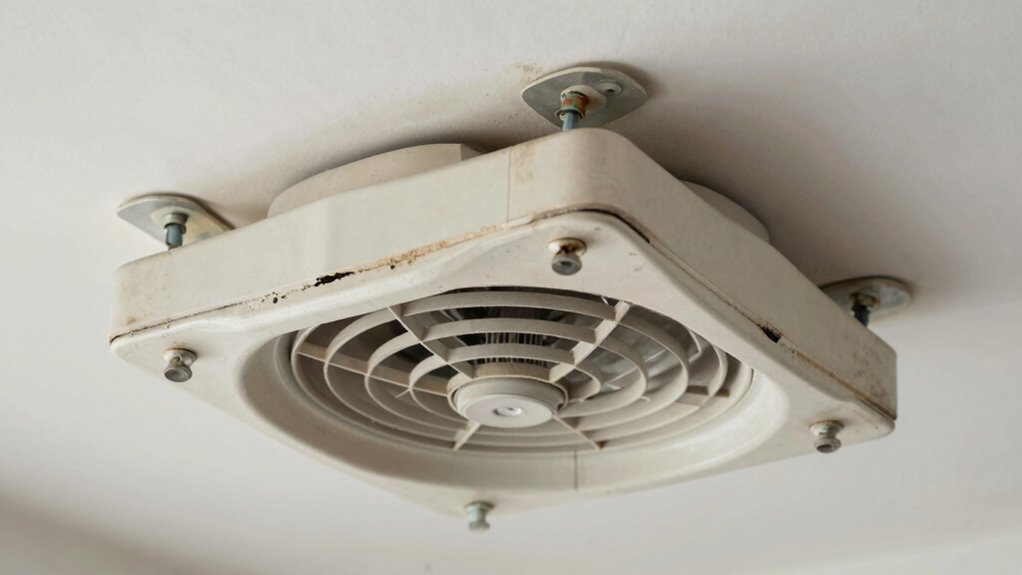
To keep your exhaust fan working efficiently, you need to check the filters regularly for dirt and dust buildup. Replacing filters on time prevents reduced airflow and potential damage. Staying on top of these simple maintenance steps ensures your fan performs at its best and lasts longer. Incorporating proper sizing and load planning can help ensure your ventilation system operates reliably and efficiently.
Regular Filter Checks
Regular filter checks are essential to guarantee your exhaust fan operates efficiently and prevents buildup of dust and debris. Regularly inspecting your filter ensures it’s clean and functioning properly, which keeps airflow ideal and reduces strain on the fan. If you neglect filter inspection, dirt and debris can clog the system, decreasing performance and increasing energy consumption. When necessary, perform filter replacement promptly to maintain peak efficiency. Additionally, adhering to manufacturer-recommended maintenance schedules can help avoid costly repairs and ensure longevity of your exhaust fan.
Here’s how it feels when neglected versus well-maintained:
| Neglected Filter | Well-Maintained Filter |
|---|---|
| Reduced airflow | Smooth, strong airflow |
| Increased energy bills | Lower energy costs |
| Dust accumulation | Clean, clear environment |
| Fan overheating | Cool, efficient operation |
| Frequent breakdowns | Reliable performance |
Timely Filter Replacements
Timely filter replacements are essential for maintaining peak exhaust fan performance. When your air filter becomes clogged or dirty, it restricts airflow, causing the fan to work harder and reducing its efficiency. This can lead to inconsistent fan speed and diminished air circulation. Regularly inspect your air filter and replace it as needed, typically every few months or according to the manufacturer’s recommendations. Fresh filters help guarantee ideal airflow and prevent strain on the fan motor. Maintaining a clean filter also improves indoor air quality. Don’t ignore signs of reduced airflow or increased noise, as these indicate it’s time for a replacement. Proper filter management keeps your exhaust fan running smoothly, prolongs its lifespan, and keeps your ventilation system performing at its best.
How Humidity and Moisture Levels Impact Exhaust Fan Performance
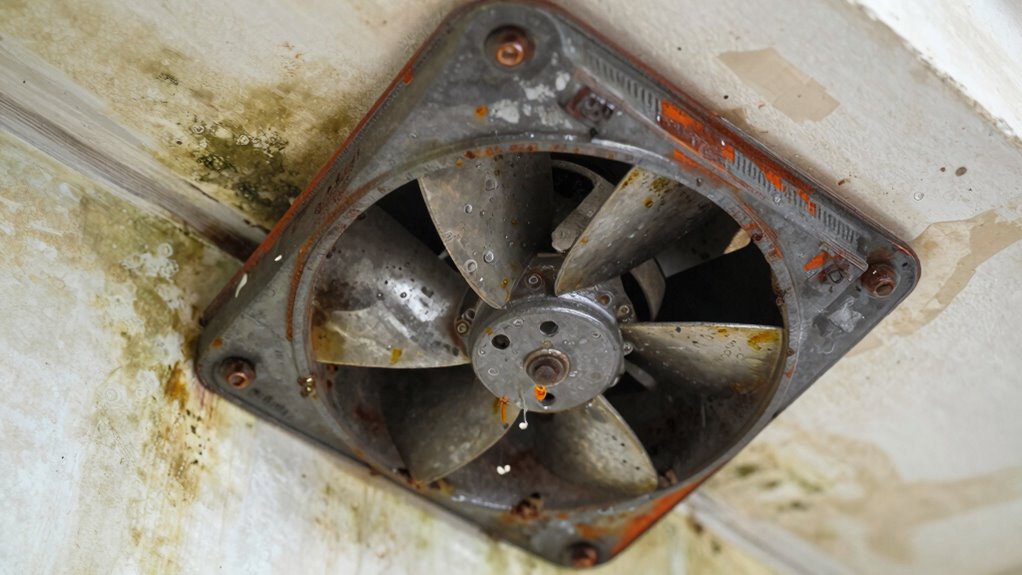
Humidity and moisture levels directly affect how well your exhaust fan performs. High humidity effects can cause moisture buildup within the fan components, leading to corrosion and decreased efficiency. When moisture isn’t properly managed, it can cause parts to seize or wear out faster. Effective moisture control is essential to maintain ideal airflow and prevent mold or mildew growth in the system. If humidity levels rise too high, your fan may struggle to expel damp air, reducing its overall effectiveness. Ensuring proper ventilation, using moisture-resistant materials, and maintaining a balanced humidity environment help your exhaust fan operate smoothly. Ignoring these factors can lead to early failure and costly repairs, so pay attention to humidity effects and implement moisture control strategies to maximize your fan’s performance.
Fixing Mounting Errors That Cause Noise and Vibration
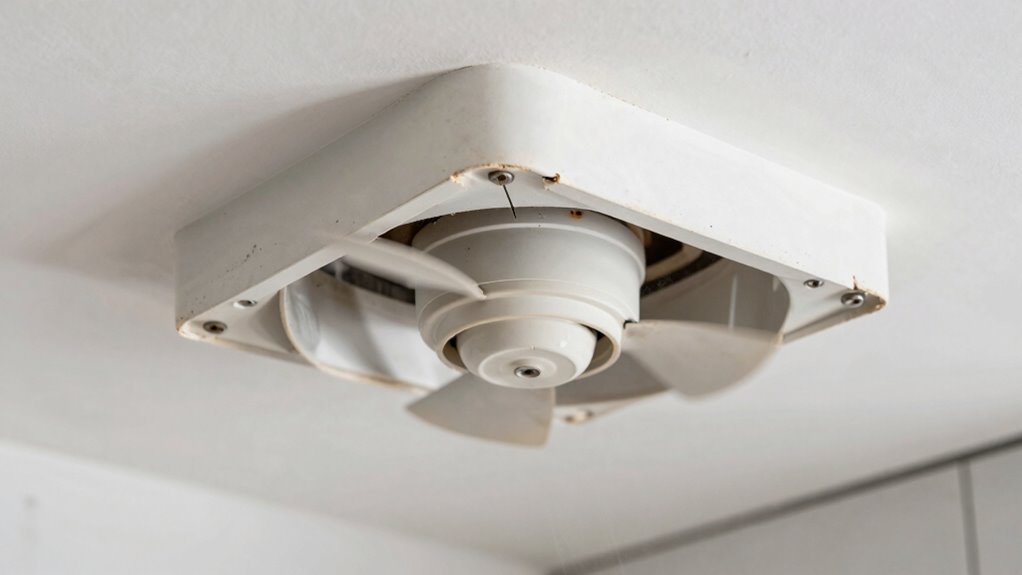
Mounting errors are a common cause of noise and vibration in exhaust fans, and addressing them can greatly improve your system’s performance. To enhance mounting stability, ensure the fan is securely fastened to a solid, vibration-absorbing surface. Use appropriate mounting brackets and hardware, and avoid loose or uneven fittings. Check that the fan is level and aligned properly to prevent wobbling. Incorporate rubber or foam vibration isolators between the fan and mounting surface to reduce vibration transfer. Regularly tighten all bolts and mounting points, especially after initial installation. Proper mounting stability not only minimizes noise but also prolongs the fan’s lifespan. Correcting these mounting errors is a simple yet effective step toward vibration reduction and ideal exhaust fan operation.
Troubleshooting Noisy or Ineffective Exhaust Fans

When your exhaust fan is making excessive noise or not performing effectively, the problem often lies in simple, fixable issues. First, check the fan blade alignment; misaligned blades can cause imbalance and noise. Second, inspect for motor overheating, which may reduce efficiency and cause strange sounds. Finally, listen for rattling or vibration, which could indicate loose mounting or debris. Addressing fan blade alignment ensures smooth operation, while preventing motor overheating keeps the fan running quietly. Regularly cleaning the blades and motor housing also helps avoid buildup that hampers performance. By tackling these issues, you’ll restore your exhaust fan’s effectiveness and reduce unwanted noise, ensuring it works efficiently without unnecessary disruptions.
Top Tips to Improve Your Exhaust Fan’s Performance

To boost your exhaust fan’s performance, start by regular cleaning and maintenance. Dust and debris buildup can hinder airflow, reducing efficiency and increasing noise. Ensuring the fan blades and vents are clear allows for ideal airflow, which improves ventilation and energy use. Check that the fan is properly installed with the correct duct size and minimal bends—this enhances airflow optimization. Additionally, sealing any leaks around the ductwork prevents air loss and noise infiltration. To reduce fan noise, consider installing vibration mounts or sound-dampening materials around the unit. Regularly inspecting and maintaining these aspects keeps your fan running smoothly, maximizes airflow, and minimizes disruptive noise, ensuring your exhaust system performs at its best.
Frequently Asked Questions
How Does the Age of an Exhaust Fan Affect Its Performance?
As your exhaust fan ages, its performance declines due to age-related wear and motor degradation. You’ll notice it struggles to vent air efficiently, uses more energy, or makes more noise. Over time, dust and debris can build up, further impairing function. Regular maintenance and timely replacement help restore ideal airflow and energy efficiency, preventing performance issues caused by the natural decline associated with aging components.
Can External Weather Conditions Influence Exhaust Fan Efficiency?
Coincidences happen when external weather conditions impact your exhaust fan efficiency. You might notice reduced airflow during high humidity or heavy rain, revealing how weather impact and climate factors directly influence performance. Wind can cause backdrafts, while extreme temperatures strain the motor. By understanding these weather effects, you can better maintain your fan, ensuring it runs smoothly despite the unpredictable patterns of climate factors around you.
What Safety Precautions Should Be Taken During Installation?
During installation, prioritize safety by wearing protective gear and turning off power to prevent electrical shocks. Follow proper installation safety procedures, such as securing the fan firmly and using appropriate tools. Pay special attention to electrical precautions, making sure wiring is correct and connections are insulated. Double-check all safety measures before powering up. These steps help prevent accidents, ensure reliable operation, and protect both you and the equipment.
How Often Should Exhaust Fans Be Inspected or Replaced?
You should inspect your exhaust fan at least once a year as part of your maintenance schedule to guarantee peak performance. Look for signs like unusual noises, reduced airflow, or excessive dust buildup. Replace the fan if it shows persistent issues despite cleaning or if it’s more than 10 years old, which is often the replacement criteria. Regular maintenance helps prevent failures and keeps your ventilation system working efficiently.
Are There Eco-Friendly Options for High-Performance Exhaust Fans?
You’ll find plenty of eco-friendly options for high-performance exhaust fans. While some might think sustainable fan options are less effective, many are now designed with energy-efficient solutions that match or surpass traditional models. These fans use advanced motors and eco-conscious materials, helping you save energy and reduce your carbon footprint without sacrificing performance. Embracing sustainable fan options guarantees your ventilation system stays powerful and environmentally responsible.
Conclusion
To get the most out of your exhaust fan, avoid common mistakes like improper placement or poor ducting. For example, imagine installing a fan too far from the source of moisture—you’ll notice less airflow and lingering odors. By paying attention to proper mounting, sealing, and sizing, you’ll improve efficiency and reduce noise. Take these tips seriously, and you’ll enjoy a cleaner, healthier space with reliable exhaust performance every time.