
When choosing glazing options, you get a range of benefits: glass offers clear, sleek appearances with good insulation, especially in double or triple layers; polycarbonate provides high impact resistance and flexible shaping for durability and security; while polyfilm is a cost-effective, quick-to-install solution that improves thermal insulation without altering aesthetics. Each choice suits different needs—whether for safety, energy efficiency, or budget. If you continue exploring, you’ll discover even more about each option’s strengths and ideal uses.
Listen free for 30 days with Audible
Thousands of audiobooks and originals — cancel anytime.
As an affiliate, we earn on qualifying purchases.
Key Takeaways
- Glass offers superior clarity, sleek aesthetics, and excellent thermal insulation, especially with double or triple glazing options.
- Polycarbonate provides high impact resistance, durability, and flexibility for curved or shaped glazing applications.
- Polyfilm is a cost-effective, easy-to-install film that enhances thermal insulation but offers limited impact resistance.
- Glass is more fragile and vulnerable to shattering, while polycarbonate is highly impact-resistant and more secure.
- Polyfilm is suitable for quick upgrades and renters, but less durable over time compared to glass and polycarbonate.
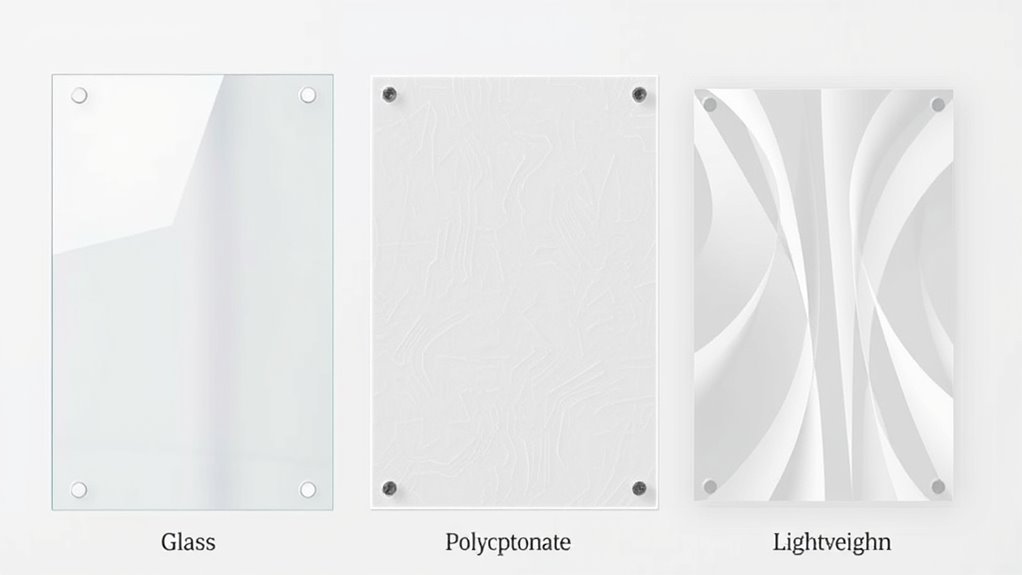
Choosing the right glazing options can considerably enhance the energy efficiency, security, and aesthetic appeal of your windows. When deciding between glass, polycarbonate, or polyfilm, it’s important to consider how each material impacts your home’s thermal insulation and overall look. Glass is the most traditional choice, offering excellent clarity and a polished appearance that many find visually appealing. Its smooth surface enhances the aesthetic appeal of your windows, giving your home a sleek, modern look. Plus, glass provides good thermal insulation, especially when you select double or triple glazing options. These layered panes trap air or inert gases, reducing heat transfer and helping you save on energy bills. If your goal is to maximize insulation and maintain a sophisticated appearance, high-quality glass can be tailored with coatings to reflect infrared heat, further improving thermal performance.
Choosing the right glazing enhances energy efficiency, security, and the sleek look of your windows.
Polycarbonate is another popular glazing material, especially valued for its durability and impact resistance. If security is a priority, polycarbonate windows make an excellent choice because they’re resistant to shattering and vandalism. While polycarbonate may not have the same aesthetic appeal as glass, modern manufacturing techniques allow it to be made translucent or tinted, which can enhance the exterior look of your property. Its thermal insulation properties are decent but generally less effective than multi-pane glass. However, because it’s lightweight and flexible, polycarbonate can be curved or shaped easily, providing creative options for architectural design that might otherwise be difficult with glass. This flexibility also helps with installation, making it a practical choice in various applications.
Polyfilm, often used as a secondary glazing or retrofit solution, offers a cost-effective way to improve thermal insulation without a substantial aesthetic impact. It’s a thin film that’s applied directly over existing windows, creating an additional barrier to heat loss. While polyfilm doesn’t add much to the aesthetic appeal—since it’s usually clear and discreet—it can greatly boost your window’s thermal insulation, especially in older or single-pane installations. Its ease of installation and affordability make it a popular choice for renters or those looking for a quick upgrade. However, it’s less durable than glass or polycarbonate and may be prone to condensation or damage over time. Still, if your main concern is improving energy efficiency without altering your home’s look, polyfilm can be an effective, budget-friendly solution.
In the end, your choice depends on what you prioritize most—whether it’s aesthetic appeal, security, or thermal performance. Each option offers its own benefits and compromises, so weigh them carefully in relation to your specific needs and preferences.
As an affiliate, we earn on qualifying purchases.
Frequently Asked Questions
Which Glazing Option Offers the Best Insulation?
When choosing glazing options, you’re looking for the best insulation to improve thermal efficiency. Polycarbonate typically offers superior insulation performance, providing better thermal efficiency than glass or polyfilm. It has multiple layers and insulating properties that help retain heat, making it a smart choice if you’re aiming to reduce energy costs. While glass looks great, polycarbonate’s better insulation performance can keep your space warmer and more energy-efficient throughout the year.
How Do Glazing Options Impact UV Protection?
You should consider how glazing options impact UV protection by examining their UV blocking abilities and transparency levels. Glass often offers excellent UV filtering while maintaining high transparency, so it protects your interiors effectively. Polycarbonate also provides UV blocking but may have slightly lower transparency, reducing visibility. Polyfilm typically offers good UV protection at a lower cost, though it might compromise clarity. Your choice depends on balancing UV protection and transparency to suit your needs.
Are There Any Maintenance Differences Among the Options?
When choosing glazing options, you might wonder about maintenance differences—cleaning frequency and durability concerns matter most. You’ll find that glass requires less frequent cleaning and resists scratches, making upkeep easier. Polycarbonate demands more regular cleaning to prevent cloudiness and scratches, raising durability concerns over time. Polyfilm needs minimal maintenance but can be susceptible to tears and UV damage. So, your choice depends on how much maintenance you’re willing to do and durability priorities.
Which Glazing Material Is Most Environmentally Friendly?
When choosing a glazing material, you’ll want to regard sustainability factors and eco-friendly materials. Glass is often the most environmentally friendly because it’s highly recyclable and durable, reducing waste over time. Polycarbonate and polyfilm may have lower manufacturing impacts but are less recyclable and can degrade faster. Overall, glass tends to be the most sustainable option, especially if you prioritize eco-conscious choices that minimize environmental impact throughout their lifecycle.
How Do Cost Considerations Vary for Each Glazing Type?
Ever wondered how your choice impacts your budget? When comparing glazing types, you’ll notice differences in cost efficiency and installation expenses. Glass often has higher initial costs but offers durability, while polycarbonate may be more affordable upfront but less long-lasting. Polyfilm tends to be the most budget-friendly, with simple installation. Your decision hinges on balancing upfront costs with long-term value, directly affecting your overall project expenses.
Conclusion
When choosing between glass, polycarbonate, and polyfilm, consider durability, cost, and clarity. Glass offers premium visibility but can be fragile, while polycarbonate provides impact resistance at a higher price. Polyfilm is budget-friendly but less durable. Did you know that polycarbonate is up to 250 times more impact-resistant than glass? This statistic highlights how your choice influences safety and longevity. Pick the option that best fits your needs to guarantee your project’s success and lasting performance.
College move-in / dorm season Picks
dorm essentials
As an affiliate, we earn on qualifying purchases.