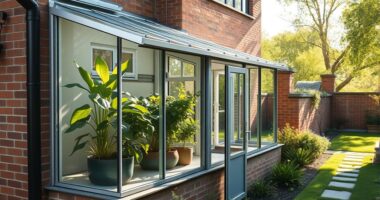
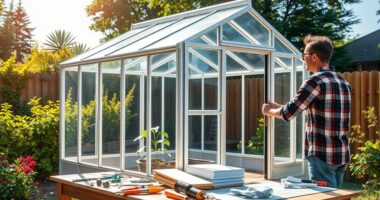
To add free heat to your greenhouse, orient it so the long side faces true south (Northern Hemisphere) or true north (Southern Hemisphere), maximizing sunlight exposure during peak hours. Positioning it correctly captures more solar energy, naturally warming your space. Use strategic land assessments and avoid shading obstacles like trees or buildings. Incorporating thermal mass and proper shading techniques can further boost passive heating. Keep exploring for more tips to optimize your greenhouse’s warmth!
Key Takeaways
- Position the long side of the greenhouse to face true south (Northern Hemisphere) for maximum sunlight exposure.
- Ensure the site is flat or gently sloped to optimize sun access and reduce shading.
- Use natural windbreaks like trees or fences to minimize heat loss from wind chill.
- Incorporate thermal mass materials inside to absorb and release heat, enhancing passive warming.
- Conduct thorough site assessment to avoid shading from buildings or trees, maximizing passive solar gain.
How Does Greenhouse Orientation Impact Solar Heating?
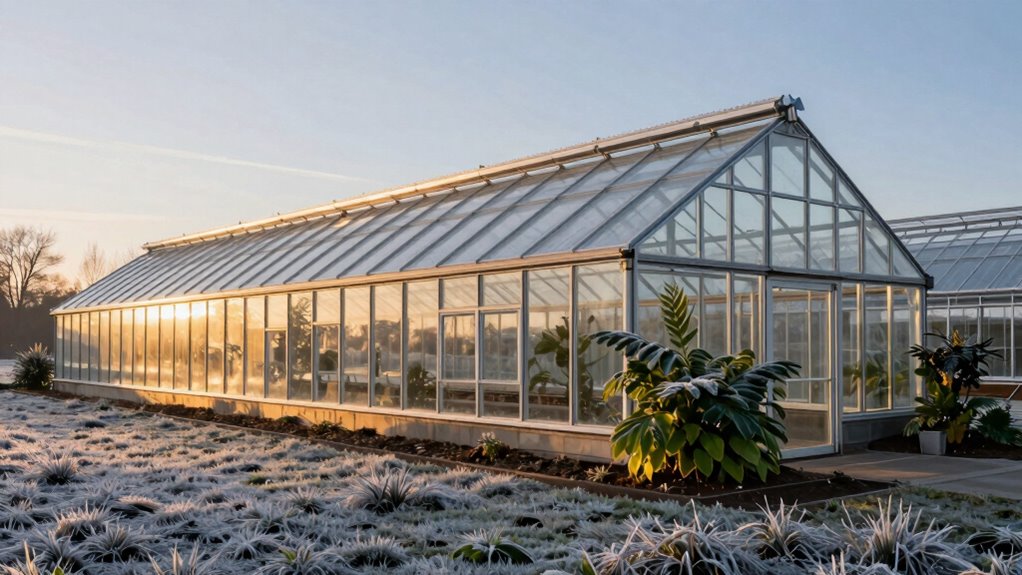
Greenhouse orientation plays a crucial role in maximizing solar heating. By carefully positioning your greenhouse, you can optimize sunlight exposure throughout the day, increasing solar gain. When oriented correctly, the greenhouse captures more sunlight during peak hours, warming the interior naturally and reducing the need for supplemental heating. Typically, facing the long side of the structure toward the south (in the Northern Hemisphere) ensures consistent sunlight exposure, especially in winter months. Proper orientation allows sunlight to penetrate deeply into your space, warming surfaces and air effectively. Incorporating protective styling benefits from different positioning strategies can further enhance heat retention and promote healthy plant growth. Ultimately, understanding how your greenhouse’s orientation affects solar gain helps you harness free, renewable heat from the sun, making your greenhouse more energy-efficient.
What Are the Best Directions to Position Your Greenhouse for Free Heat?
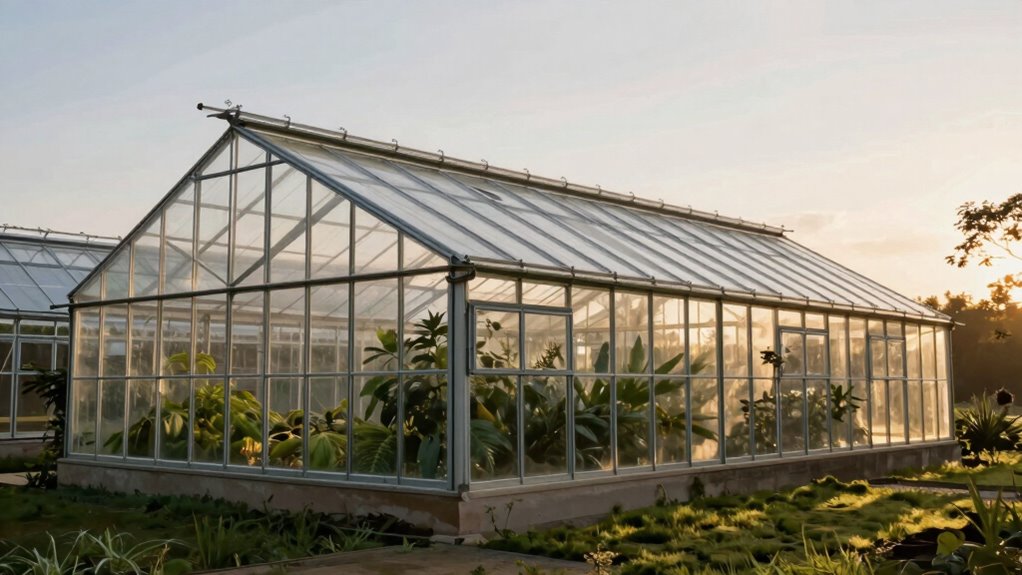
To maximize free heat from the sun, you should position your greenhouse so that its long side faces true south in the Northern Hemisphere or true north in the Southern Hemisphere. This orientation allows maximum sunlight exposure, boosting interior warmth. When planning, consider solar panel placement on the roof or nearby structures to harness additional solar energy efficiently. Proper windbreak positioning is also essential; place barriers like trees or fences on the windward side to reduce heat loss caused by wind chill. These barriers help retain heat inside your greenhouse, complementing the solar gain. Additionally, utilizing energy-efficient cloud servers to monitor and optimize your greenhouse environment can further enhance heating efficiency. By aligning your greenhouse correctly and optimizing windbreaks and solar panel placement, you’ll enhance natural heating, reducing your energy costs and creating a warmer environment for your plants.
How to Assess Your Land’s Sun Path and Topography for Greenhouse Placement

Understanding your land’s sun path and topography is essential for ideal greenhouse placement. Start with a land survey to identify natural features, slopes, and shade sources. Observe how the sun moves across your property during different seasons, noting areas with best sun exposure. Look for spots that receive consistent sunlight, especially during winter when heat is most needed. Consider the topography—flat or gently sloping land often provides better sun access and easier construction. Avoid shaded areas blocked by trees, buildings, or hills. By evaluating these factors, you can position your greenhouse to maximize passive solar gain, reducing heating costs. Taking the time to analyze your land’s sun path and topography ensures your greenhouse gets the best possible sun exposure for year-round growth. Assessing land features can help you identify optimal placement and avoid common shading pitfalls.
A Step-by-Step Guide to Planning Your Greenhouse Orientation
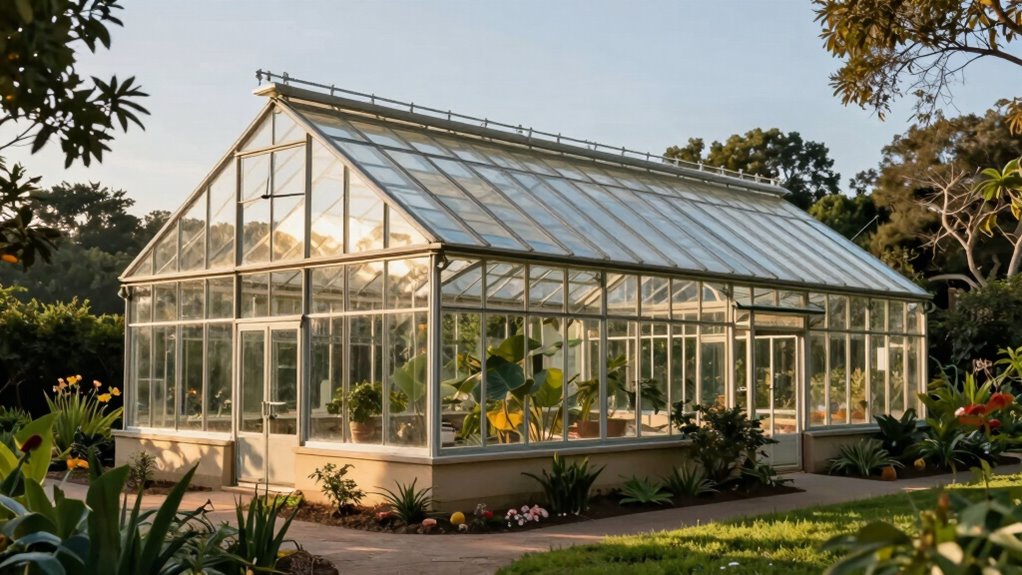
Planning your greenhouse orientation begins with evaluating your land’s sun exposure and topography to guarantee ideal sunlight throughout the year. Use passive design principles to maximize solar gain and minimize energy loss. Determine the optimal direction for your greenhouse by aligning it to capture the most sunlight, typically facing south in the northern hemisphere. Consider natural features like trees or slopes that could shade or block sunlight, and adjust your layout accordingly. Ensure your site allows for proper ventilation and efficient heat retention. Creating a detailed plan now helps you avoid costly modifications later. Proper site assessment and integrating passive design strategies enhances solar gain, which naturally heats your greenhouse and reduces reliance on supplemental heating. This careful planning sets the foundation for an energy-efficient, thriving greenhouse.
Common Mistakes to Avoid When Orienting Your Greenhouse for Passive Heating
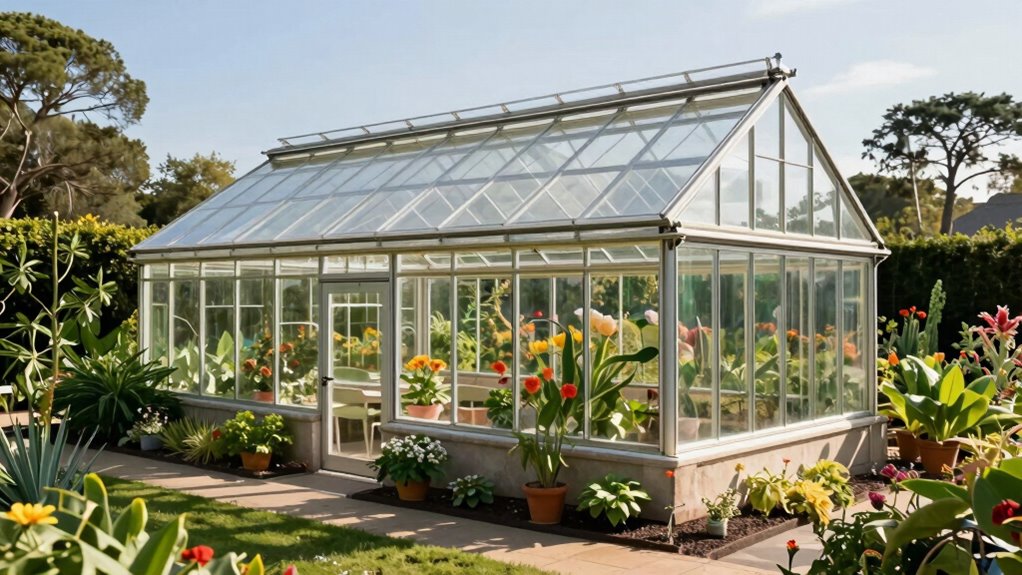
One common mistake is neglecting to take into account shading from nearby trees, buildings, or terrain, which can substantially reduce sunlight during critical heating months. Shade issues can prevent your greenhouse from gaining enough passive heat, especially in winter. Also, poor orientation can cause ventilation problems, trapping hot air or not allowing enough airflow. To visualize, consider this:
| Shade Issues | Ventilation Problems |
|---|---|
| Nearby trees block sun | Stale air buildup |
| Buildings cast shadows | Excess humidity levels |
| Terrain dips create shade | Poor airflow design |
| Tall structures nearby | Insufficient exhaust |
| Foliage growth | Temperature fluctuations |
Additionally, proper site assessment is essential to identify potential shading and airflow challenges before construction. Avoid these pitfalls by evaluating your site carefully, ensuring clear sun exposure, and planning for proper ventilation to maximize passive heating.
Extra Tips to Maximize Passive Solar Heating in Your Greenhouse
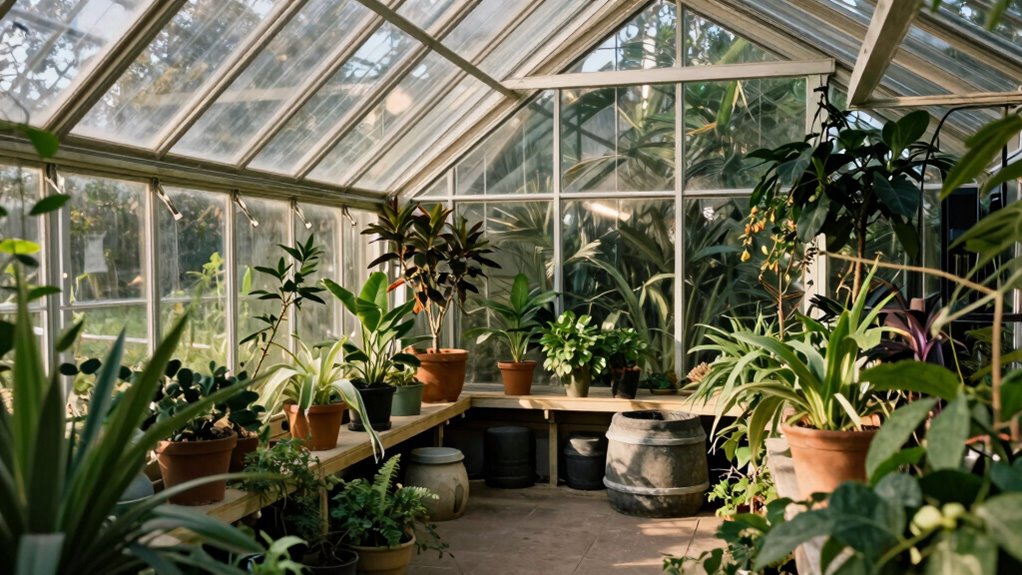
To further enhance passive solar heating, focus on maximizing the amount of sunlight that reaches your greenhouse throughout the day. Proper placement of solar shading can prevent overheating during summer months while allowing winter sun to enter freely. Use adjustable shading devices like blinds or curtains to control sunlight intensity. Incorporate thermal mass, such as concrete, water barrels, or stone, inside your greenhouse to absorb and store heat during the day. This stored heat is then slowly released at night, maintaining a warmer environment. Position thermal mass where it can receive direct sunlight for maximum efficiency. Regularly monitor shading and thermal mass placement to optimize heat gain and minimize heat loss, ensuring your greenhouse stays warm and productive year-round. Understanding passive solar design principles can help you further optimize your greenhouse’s heating efficiency.
What Should You Do If Your Greenhouse Isn’t Heating Well? Troubleshooting Tips
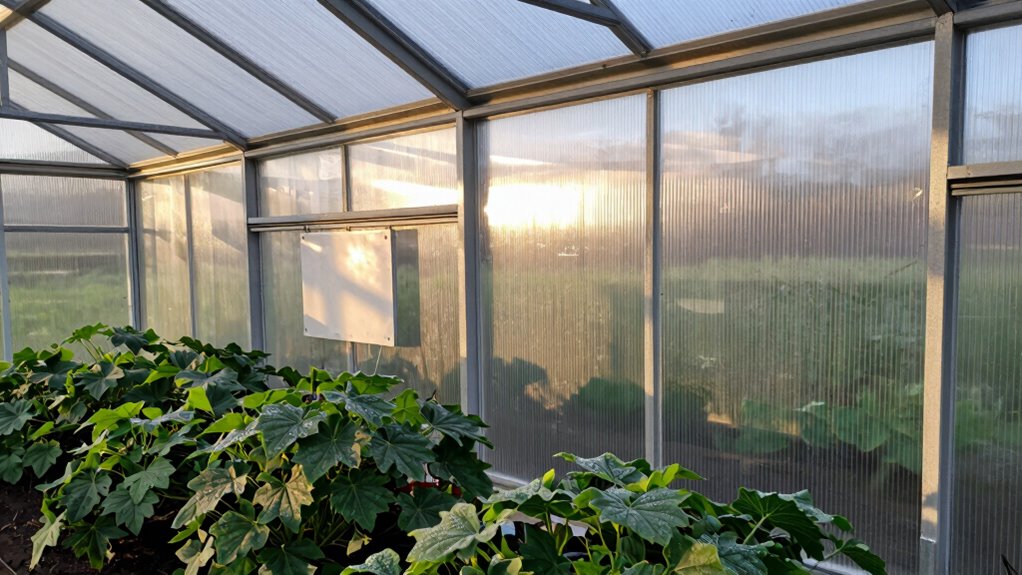
If your greenhouse isn’t heating well, the first step is to identify potential issues that could be causing heat loss or insufficient warmth. Check for gaps in your insulation techniques, as poor sealing can let heat escape. Consider whether your solar thermal system is functioning properly—if it’s not capturing enough sunlight or storing heat efficiently, your greenhouse will struggle to stay warm. Inspect for drafts around vents, doors, and windows, and seal leaks with weatherstripping or caulk. Adding reflective materials can improve heat retention, and upgrading insulation can make a big difference. Also, ensure your heating system, whether passive or active, is operating correctly. Troubleshooting these areas helps optimize heat retention and guarantees your greenhouse stays warm and productive. Incorporating simple, practical solutions can significantly improve your greenhouse’s warmth without extensive renovations.
Frequently Asked Questions
How Does Local Climate Influence Greenhouse Orientation Choices?
You should consider your local climate when choosing your greenhouse orientation. Urban shading from buildings can block sunlight, so position it to maximize sun exposure. Wind exposure matters too; orient your greenhouse to minimize wind chill and avoid damage, often by placing it away from prevailing winds or using windbreaks. Balancing these factors helps you harness natural heat and protect your plants, making your greenhouse more efficient.
Can Vertical or Angled Glazing Improve Passive Solar Heating?
Yes, vertical or angled glazing can improve passive solar heating by optimizing solar gain. Angled glazing allows you to capture more sunlight during winter months when the sun is lower, increasing heat absorption. Vertical glazing works well for maintaining consistent light, especially in high latitudes. Adjusting glazing angles maximizes solar gain, helping your greenhouse stay warmer naturally and reducing your need for supplemental heating.
What Are Cost-Effective Methods to Measure Sun Paths Accurately?
Think of yourself as a modern-day Galileo, exploring sun paths with simple tools. To measure sun angles cost-effectively, use solar tracking apps on your smartphone or a protractor with a ruler for manual readings. Incorporate shading techniques to test different angles, observing how sunlight hits your space at various times. This hands-on approach helps you fine-tune your greenhouse’s orientation without expensive equipment, ensuring ideal passive solar heating.
How Do Seasonal Changes Affect Optimal Greenhouse Orientation?
Seasonal changes greatly influence your greenhouse’s ideal orientation. In summer, you should prioritize solar shading to prevent overheating, while in winter, maximize sun exposure for warmth. Proper orientation enhances ventilation efficiency, helping cool the greenhouse when needed. Adjusting your greenhouse’s tilt or shading devices seasonally ensures consistent interior conditions, reducing energy costs and improving plant health year-round. Keep monitoring sun paths to fine-tune your setup effectively.
Are There Specific Materials That Enhance Heat Retention Based on Orientation?
Forget flimsy plastics—use thermal mass materials like concrete, brick, or water barrels to turn your greenhouse into a heat hoarder. Insulation techniques, such as double glazing or foam panels, boost heat retention based on orientation, trapping warmth all day long. You’ll laugh at cold mornings when your smart choices keep your plants cozy. Material secrets like these guarantee your greenhouse’s orientation works handsomely with the right thermal mass and insulation.
Conclusion
By aligning your greenhouse with the sun’s gentle dance across the sky, you invite warmth to linger like a cozy embrace on a chilly day. When you carefully assess your land’s natural topography and plan your orientation wisely, sunlight becomes your ally, transforming cold corners into sun-kissed havens. With mindful positioning, you’ll watch your plants thrive in a radiant, passive warmth—turning your greenhouse into a sunlit sanctuary that’s always ready to nurture growth.