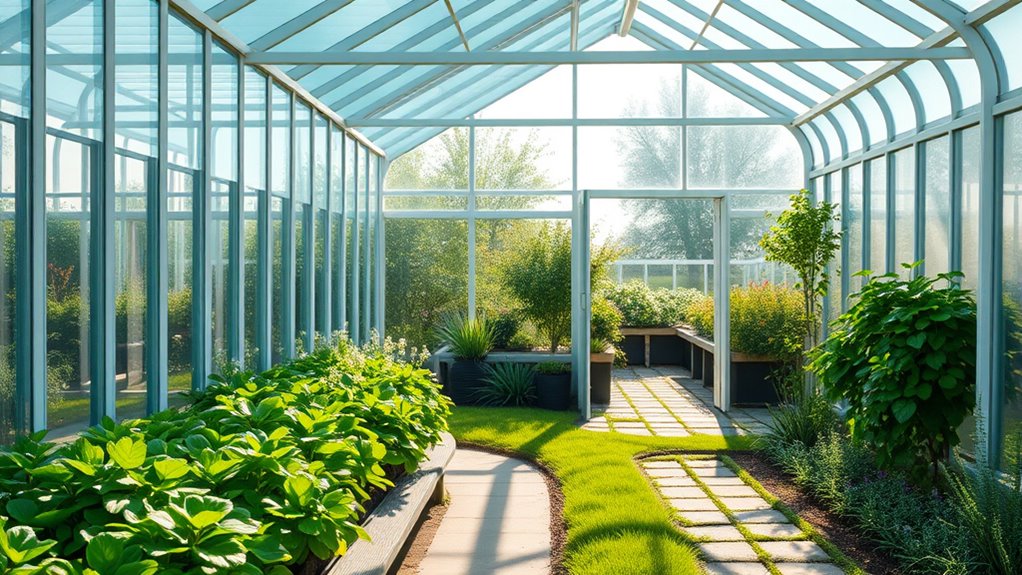

Choosing between a small or large greenhouse depends on your gardening goals, space, and future plans. A small greenhouse is easier to manage, energy-efficient, and great for sensitive plants or limited areas. Larger structures offer more room for diverse crops, better climate control, and expansion. Think about your long-term ambitions and maintenance capacity. To make an informed decision that best suits your needs, explore the key factors that compare both options further.

Get garden gear delivered free — and shop member deals
- Fast, free delivery on millions of items
- Access to Prime Big Deal Days deals on October 6–7
- Prime Video, Amazon Music and more included
Key Takeaways
- Consider your available space and gardening goals to determine if a small or large greenhouse best suits your needs.
- Smaller greenhouses are easier to manage and more energy-efficient for delicate plants or limited budgets.
- Larger greenhouses support diverse plant varieties, extended growing seasons, and future expansion plans.
- Evaluate long-term maintenance, costs, and climate control capabilities to choose a size that ensures sustainability.
- Match your greenhouse size to your gardening ambitions, whether for hobbyist projects or commercial-scale cultivation.

Choosing the right size for your greenhouse is a crucial first step that can substantially impact your gardening success. When deciding whether to go with a small or large structure, consider how much space you’ll need for your plants, your gardening goals, and your available budget. The size you choose influences more than just capacity; it also affects how effectively you can manage climate control and pest management. A larger greenhouse offers more room to create distinct zones, which can help maintain ideal conditions for different plant varieties. It allows you to set up better ventilation systems, heating, and cooling options that keep your plants healthy regardless of outside weather fluctuations. Conversely, smaller greenhouses are easier to heat and cool, making climate control simpler and more energy-efficient. This can be especially important if you’re growing sensitive plants or operating in a region with extreme weather.
Pest management becomes more manageable in a smaller greenhouse because you have fewer entry points and a clearer overview of your plants. With less space, it’s easier to monitor for pests and act quickly to prevent infestations. Larger structures, however, require more diligent pest management strategies since pests can spread faster across a bigger area. You’ll need to implement effective screening, regular inspections, and possibly integrated pest management (IPM) techniques to keep pests in check. The size of your greenhouse also influences your ability to control the environment, which directly impacts pest prevalence. A well-sized greenhouse allows you to maintain consistent humidity and airflow, reducing conditions that favor pests and diseases. Additionally, understanding how to diversify your investment with greenhouse equipment and supplies can enhance your gardening success and protect your plants from unforeseen issues.
Think about your long-term plans when choosing size. If you only want to grow a few plants or experiment with a small vegetable patch, a compact greenhouse might suffice. But if you plan to expand, grow a variety of crops, or start seedlings for multiple seasons, a larger structure provides the space and flexibility you’ll need. Remember that larger greenhouses, while offering more room and control, also demand more maintenance, higher initial costs, and increased energy consumption. Balancing these factors against your gardening ambitions will help you select a size that aligns with your capabilities and goals. Ultimately, selecting the right size isn’t just about capacity; it’s about creating an environment where your plants thrive and your gardening efforts are sustainable.
Frequently Asked Questions
How Does Climate Impact Greenhouse Size Requirements?
Climate substantially impacts your greenhouse size needs because you must account for climate adaptation and temperature control. In colder areas, you might need a larger space or better insulation to maintain warmth efficiently. Conversely, in warmer climates, a smaller or well-ventilated greenhouse could suffice. Adjusting size based on your climate ensures ideal plant growth, energy efficiency, and easier temperature regulation, helping you create a comfortable environment regardless of external weather conditions.
Can I Expand My Greenhouse Later?
Think of your greenhouse as a living organism; it can grow with your needs. Yes, you can expand it later, especially if you plan for expansion potential early on. This allows you to increase storage capacity and cultivate more plants. Just guarantee the foundation is sturdy and the structure is adaptable. With proper planning, your greenhouse can evolve seamlessly, supporting your gardening ambitions as they flourish.
What Are the Legal Restrictions for Greenhouse Sizes?
You need to check local building codes and zoning laws, as they often set restrictions on greenhouse sizes. These regulations can include setback requirements, height limits, or permits needed for certain structures. Before building, contact your city or county planning office to confirm your greenhouse complies. Ignoring these rules might lead to fines or having to dismantle your greenhouse, so it’s best to research and obtain necessary approvals upfront.
How Does Intended Plant Type Influence Size Decisions?
Ever wondered how your plant types influence your greenhouse size? If you’re growing tall trees or sprawling vegetables, you’ll need more space to support healthy plant growth. For delicate herbs or small seedlings, a compact size might suffice. By considering the growth habits of your plants, you optimize space and ensure healthy development. So, understanding your plants’ needs helps you select the right size, avoiding overcrowding and promoting thriving growth.
What Are Cost Considerations for Different Greenhouse Sizes?
You should consider cost analysis and budget planning when choosing greenhouse sizes. Larger greenhouses cost more for materials, construction, and heating, while smaller ones are more budget-friendly. Think about your long-term needs and how much you’re willing to invest upfront. By comparing costs for different sizes, you can find a balance that offers the best value and suits your gardening goals without overspending.
Conclusion
Ultimately, choosing between a small or large greenhouse depends on your needs and space. Some believe bigger always means better, but a well-planned smaller greenhouse can be just as productive and easier to manage. Think about what you want to grow and how much time you’ll spend tending your plants. Remember, it’s not about size alone — the right fit makes all the difference. Trust your instincts, and your green thumb will thrive no matter the size.
Fall Picks
fall essentials
As an affiliate, we earn on qualifying purchases.