
TL;DR
A seed-starting rack featured by YouTube channel Greens and Machines uses ¾-inch PVC pipe and connectors to create three shelves for trays and adjustable grow lights. The design measures about 54 by 18 by 60 inches, can be adapted to a space, and comes apart for storage; the reported materials cost is around $100.
A three-shelf seed-starting rack built from PVC pipe offers home gardeners a customizable place for seed trays and grow lights, in a design featured by YouTube channel Greens and Machines. The rack uses common ¾-inch pipe and connectors, can be adjusted to fit a growing space, and can be taken apart for storage.

Get garden gear delivered free with Prime
- Fast, free delivery on millions of items
- Prime Video, Amazon Music and more included
- Member-only deals all year
The design calls for about 50 feet of ¾-inch PVC pipe, three cross connectors and 52 tee connectors. The assembled rack is approximately 54 inches wide, 18 inches deep and 60 inches tall, though those dimensions can change to suit the available space. The reported materials cost, including a pair of pipe cutters, is about $100; a hand saw or miter saw can also cut the pipe.
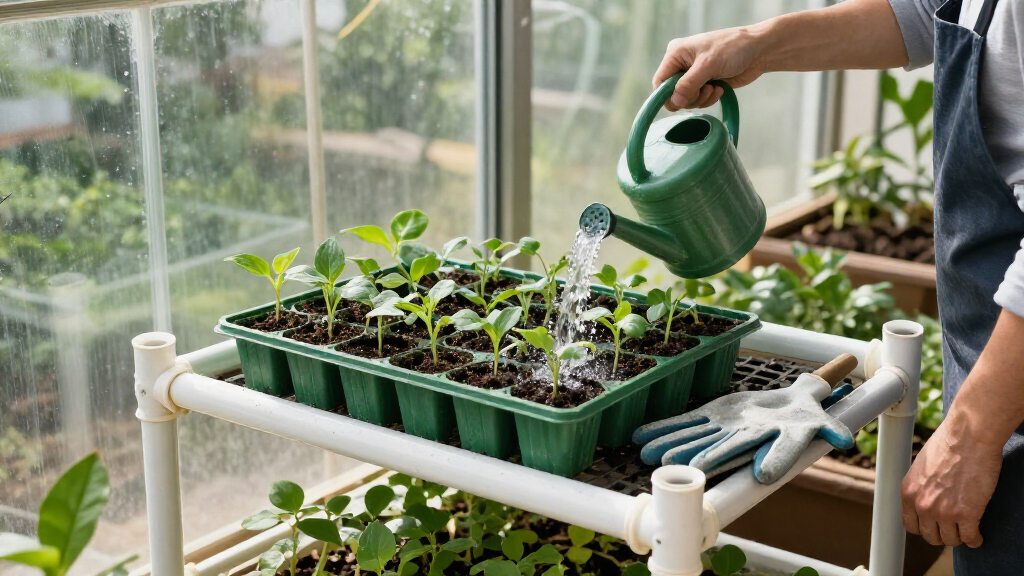
Three levels of piping form the shelves. Tees connect the shelf runs to the legs and also serve as feet, while cross connectors join the structure at the center. The design is intended to support seed trays and provide places to hang chain-adjustable grow lights. Because the pipe connections do not rely on hardware or fasteners, the rack can be disassembled, and its dimensions or shelf count can be changed.
Light placement needs to account for the type of bulb and the plants being grown. The project information gives a distance of 3 to 12 inches for fluorescent lights and about 24 inches or more for LEDs. Although hanging lights can be raised or lowered, shelf spacing should leave enough room for the intended light-to-seedling distance.
Build a seed-starting rack with PVC pipe
This adaptable frame organizes seed trays and adjustable grow lights indoors. Its parts can be changed or taken apart for storage.
What the frame uses
Common PVC parts form a modular structure that can be sized for your space.
¾-inch PVC pipe
The design calls for about 50 feet, joined with tees and cross connectors.
Fitted connections
Three cross connectors and 52 tees connect the shelves and legs without fasteners.
Loose plywood tops
Unfixed panels can create flat shelf surfaces while keeping the rack easy to take apart.
Plan the light clearance
Choose lights and tray positions before setting shelf heights.
| Light type | Suggested distance |
|---|---|
| Fluorescent | 3 to 12 inches |
| LED | About 24 inches or more |
Adapt it to your setup
The frame can change as your room, trays or growing needs change.
Adjust the approximate dimensions to fit the intended location.
Allow room for trays and the light-to-seedling distance your setup needs.
Adjust pipe lengths, add or remove shelves, or dismantle the frame.
A Reusable Setup for Seed Starting
For home gardeners, the rack combines vertical growing space with room for several seed trays in a footprint of about 54 by 18 inches. That can make it easier to organize seedlings and lighting indoors before plants are ready to move outside. Its modular construction also means the setup does not have to be treated as a permanent fixture: gardeners can change pipe lengths, remove or add shelves, or take the frame apart when it is no longer needed.
The reported cost of around $100 in materials gives readers a planning estimate, not a guaranteed total. Prices may differ by location, and the estimate includes cutters. The design may appeal to people who already have a suitable saw or who want to reuse the rack for different plants, but the provided details do not compare its cost or load capacity with commercial shelving.
Products Worth Considering

Orbit B-hyve XR 8-Zone Indoor/Outdoor Smart Sprinkler Controller

Husqvarna 120 Mark III 16-Inch Gas Chainsaw, 38 cc
Orbit B-hyve XR 16-Zone Indoor/Outdoor Smart Sprinkler Controller
As an affiliate, we earn on qualifying purchases.
How the PVC Frame Fits Together
PVC is commonly used in plumbing, but its availability and ability to be cut and joined also make it a familiar material for DIY projects. In this design, straight pipe sections create the shelf runs and legs, while tees and cross connectors form the joints. The result is a frame that depends on fitted connections rather than screws or other fasteners, making it straightforward to dismantle and store.
The design also allows for optional changes. Plywood pieces can be added as shelf surfaces, with the project description recommending that they remain unfixed so the frame keeps its modular character. A solid surface could accommodate alternatives to plastic seed trays, including egg cartons or soil blockers. The description presents this as a possible addition, not a required part of the build.
Costs, Capacity and Build Details
The available project details do not provide a full cutting list, step-by-step assembly instructions, or a tested maximum weight capacity. While the design is described as sturdy enough for heavy seed trays, no load measurements or testing information are supplied. Gardeners should not treat that description as a stated weight rating.
The roughly $100 estimate is also not a fixed price, and it is unclear which retailers or date it reflects. The appropriate shelf spacing depends on the grow-light model and seedling setup; the stated distances are general guidance in the project description, not instructions for every light. Readers should check their light maker’s guidance and allow for plant growth when planning the frame.
Plan Dimensions Before Cutting
Anyone building the rack can start by measuring the intended location and deciding how many shelves and trays are needed. Before cutting pipe, they should also choose the grow lights and plan the vertical clearance between shelves around the required distance from lights to seedlings. A trial arrangement of trays and lights can help identify spacing needs, but the project details do not specify a formal assembly test or required tools beyond a cutting method.
After the frame is assembled, gardeners can adjust it as their setup changes, including changing pipe lengths or removing shelves. Optional plywood tops can provide flat support, while leaving them unattached preserves the ability to take the rack apart. The next practical step is to confirm materials and local prices, then adapt the listed dimensions to the room and equipment.
Key Questions
What materials does the rack use?
The listed build uses about 50 feet of ¾-inch PVC pipe, three cross connectors and 52 tees. Pipe cutters are included in the reported cost estimate, but a hand saw or miter saw can also be used to cut the pipe.
How large is the assembled seed rack?
The design is about 54 inches wide, 18 inches deep and 60 inches tall. Its pipe lengths can be changed to fit the available space.
How much does the project cost?
The described materials cost is around $100, including pipe cutters. The estimate may vary with local prices and the tools a builder already owns.
How far should grow lights be from seedlings?
The project description gives 3 to 12 inches for fluorescent lights and about 24 inches or more for LEDs. Check the light maker’s instructions, since suitable spacing can vary by equipment and plant setup.
Can the rack be stored or modified?
Yes. Its pipe connections do not use hardware or fasteners, so the frame can be disassembled. The design can also be changed by adjusting pipe lengths or adding or removing shelves.
Source: hunker.com