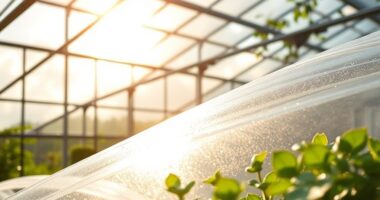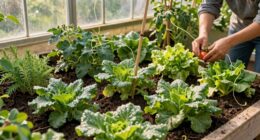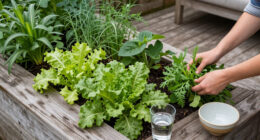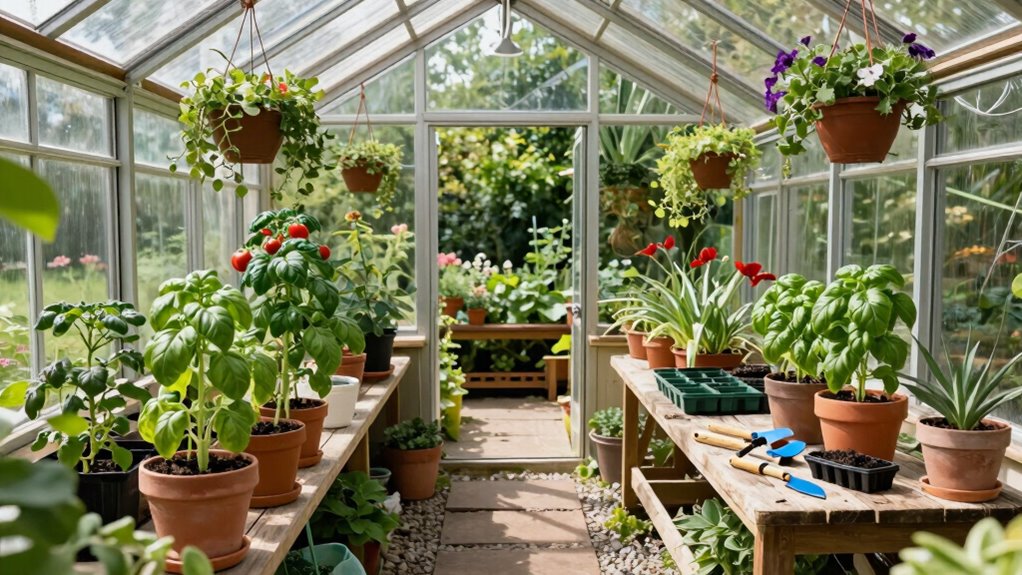
To build a greenhouse that fits how you garden, start by identifying your preferences for low-maintenance or experimental setups. Choose materials like recycled wood or bamboo for sustainability and natural aesthetics. Incorporate climate control options that match your plant choices and schedule, whether manual or automated. Design the space to support your favorite plants, considering insulation, ventilation, and automation. Prioritize creating a natural, intuitive environment that reflects your gardening style—more tips await to help you customize it perfectly.

Get garden gear delivered free — and shop member deals
- Fast, free delivery on millions of items
- Access to Prime Big Deal Days deals on October 6–7
- Prime Video, Amazon Music and more included
Key Takeaways
- Assess your gardening preferences and schedule to choose a greenhouse design that fits your maintenance style and plant needs.
- Select sustainable, eco-friendly materials that blend naturally and promote durability for long-term use.
- Incorporate climate control options—manual or automated—that align with your plants and effort level.
- Design the space to accommodate specific plants’ environmental requirements and seasonal changes.
- Prioritize functionality and biodiversity to create a personalized, eco-conscious greenhouse that supports your gardening goals.
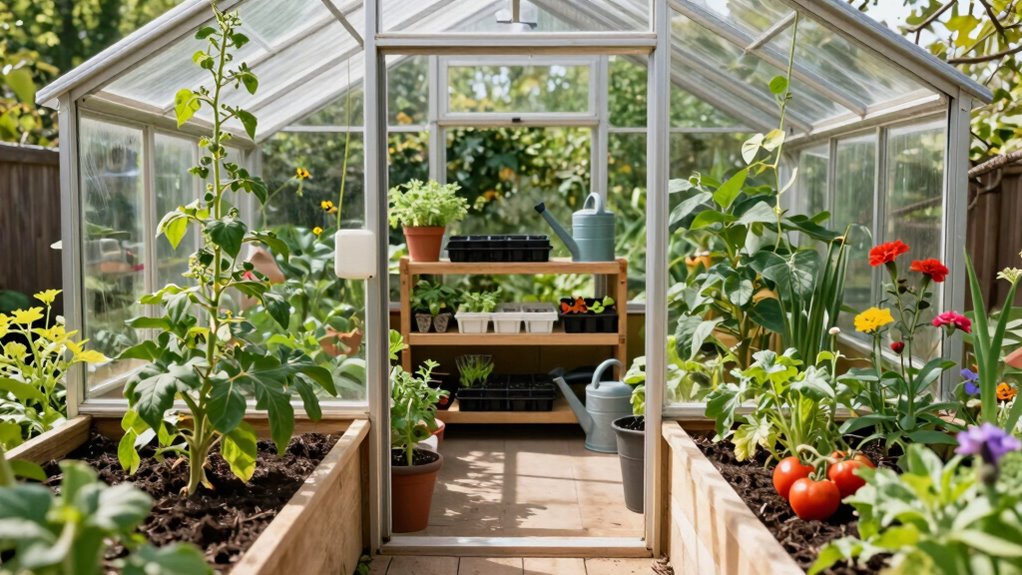
Have you ever felt frustrated by greenhouses that don’t quite fit your gardening style? Maybe you’ve seen sleek, high-tech structures that seem more suited for commercial farms, or perhaps overly complicated designs that don’t match your laid-back approach. Building a greenhouse that aligns with your unique gardening habits starts with understanding what matters most to you. Do you prefer low-maintenance setups, or are you excited about experimenting with advanced climate control? Whatever your style, the key is choosing sustainable materials that suit your needs and designing a structure that makes climate control manageable and efficient.
When selecting materials, prioritize options that are environmentally friendly and durable. Sustainable materials like recycled wood, bamboo, or recycled metal can drastically reduce your greenhouse’s ecological footprint. These materials often blend better with natural surroundings, giving your greenhouse a more organic feel and making it easier to integrate into your existing garden. Additionally, they tend to require less energy to produce and are often more resilient over time, meaning your setup stays good-looking and functional without frequent replacements. Choosing eco-friendly materials during construction not only benefits the environment but can also enhance the overall aesthetic of your garden. Incorporating sustainable building practices can further improve the long-term health of your greenhouse and garden ecosystem.
Climate control is another critical aspect to consider, especially if you want a greenhouse that works seamlessly with your gardening style. If you’re hands-on and enjoy managing temperature and humidity yourself, you might opt for simple features like adjustable vents, shade cloths, or passive heating methods. These options give you direct control without overcomplicating things. On the other hand, if you prefer a more automated approach, you can incorporate climate control systems that monitor and adjust conditions automatically. These systems might include fans, heaters, or humidity regulators linked to smart sensors, allowing you to maintain optimal growing conditions with minimal effort. Automated climate control can also help reduce energy consumption by optimizing environmental conditions efficiently.
Designing your greenhouse with your specific plants and gardening schedule in mind helps ensure you’re not stuck with a space that’s too hot, too cold, or too humid. For example, if you grow tropical plants, you’ll need reliable heating and humidity control, whereas cool-season vegetables might thrive with simpler ventilation. Keep in mind that your gardening style—whether you’re a meticulous planner or a casual gardener—should influence your choices about insulation, ventilation, and automation. The goal is to create a space that feels natural and intuitive for you, not a complex machine that takes more effort than it’s worth. Incorporating biodiversity into your greenhouse design can further support local ecosystems and promote sustainable gardening practices.
In the end, building a greenhouse that matches your way of gardening isn’t just about the physical structure. It’s about tailoring every element—from materials to climate control—so that it enhances your gardening experience rather than complicates it. When you prioritize sustainable materials and smart climate control, you create a space that’s not only functional but also truly yours. Being mindful of eco-friendly choices during construction can also help reduce your environmental impact and promote a healthier garden environment. With thoughtful planning, your greenhouse can become a reflection of your gardening philosophy and a sustainable addition to your outdoor space.
As an affiliate, we earn on qualifying purchases.
Frequently Asked Questions
How Much Does It Cost to Build a Custom Greenhouse?
Building a custom greenhouse typically costs between $5,000 and $20,000, depending on size, materials, and features. You’ll want to take into account plant selection and pest management strategies when designing it, which can influence costs—like adding screens or ventilation. Keep in mind, investing in quality materials and proper pest controls helps protect your plants and guarantees your greenhouse remains a productive, long-lasting space tailored to your gardening style.
What Permits Are Needed for Greenhouse Construction?
Think of building permits and zoning regulations like the blueprint to a journey—you need the map before you start. You’ll likely need building permits for your greenhouse, especially if it’s large or permanent, and you should check local zoning rules to guarantee compliance. Contact your city or county planning office to understand specific requirements, and avoid surprises that could delay your project or lead to fines.
How Do I Choose the Best Location for My Greenhouse?
You should choose a location with excellent sunlight exposure, ideally facing south to maximize sunlight efficiency. Avoid shady areas and tall trees that can block light. Consider pest prevention by selecting a site away from standing water, compost piles, or dense vegetation that attract pests. Guarantee good airflow and drainage, and place your greenhouse where it’s easy to access for maintenance and watering, making sure your plants thrive year-round.
What Are the Maintenance Requirements for a Greenhouse?
Ever wonder how to keep your greenhouse thriving? You need to regularly check for pest prevention and manage water efficiently. Keep your vents clean and monitor humidity to prevent mold. Water plants thoughtfully, avoiding overwatering or underwatering. Regularly clean your greenhouse surfaces, inspect for pests, and adjust ventilation as needed. These simple maintenance steps help guarantee your greenhouse stays healthy, productive, and a perfect extension of your garden.
Can I Automate Climate Control in My Greenhouse?
Yes, you can automate climate control in your greenhouse. Install temperature sensors to monitor conditions and connect them to an automated system that adjusts heating, cooling, and ventilation. Incorporate automated watering to keep your plants hydrated without manual effort. This setup helps maintain ideal conditions, reduces your workload, and ensures your plants thrive consistently, regardless of outside weather fluctuations.
Conclusion
Building a greenhouse tailored to your gardening style isn’t just about bricks and glass; it’s about creating a sanctuary where your plants thrive as naturally as they do in the wild. Think of it as planting seeds of your own paradise, carefully nurtured and designed to fit your rhythm. When your greenhouse reflects how you garden, it becomes more than structure — it’s a living extension of your passion, blooming with your unique touch.
Fall Picks
fall essentials
As an affiliate, we earn on qualifying purchases.