
If you rely solely on heating without managing humidity and ventilation, your plants can still suffer stress even in warm greenhouses. Poorly controlled heating can dry out the air, causing dehydration, leaf scorch, and slowed growth. Additionally, inadequate ventilation creates uneven temperatures, creating hot and cold spots that stress plants. To keep your plants healthy, you need to balance heating with proper humidity control and airflow. Keep going to discover how these factors work together for ideal growth.

Get garden gear delivered free with Prime
- Fast, free delivery on millions of items
- Prime Video, Amazon Music and more included
- Member-only deals all year
Key Takeaways
- Overheating or uneven heating causes temperature fluctuations, stressing plants even in warm greenhouses.
- Ignoring humidity control leads to dehydration and leaf scorch despite adequate warmth.
- Inadequate ventilation results in poor air circulation, creating microclimates that stress plants.
- Relying solely on heating without monitoring can cause dry air and nutrient absorption issues.
- Lack of continuous environmental adjustments allows temperature and humidity imbalances, harming plant health.
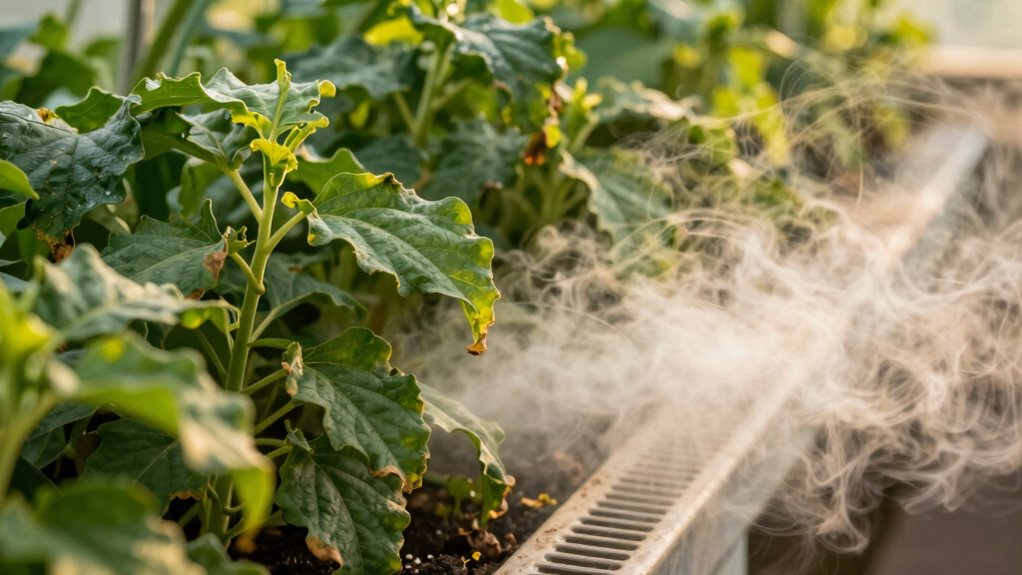
Heating mistakes can substantially stress your plants, especially during colder months when they rely on proper warmth to thrive. When heating systems are not properly managed, plants can experience unnecessary strain that hampers their development. When the air becomes too dry, your plants can suffer from dehydration, slowed growth, or even leaf scorch. To prevent this, you need to monitor humidity closely and consider using humidifiers or misting systems that maintain consistent moisture levels. Proper humidity control helps your plants absorb nutrients efficiently and keeps their tissues healthy, reducing stress caused by dry air. Additionally, understanding how heating technology impacts your greenhouse environment can help optimize conditions for your plants.
Another frequent error involves inadequate ventilation efficiency. When heating systems are not paired with effective ventilation, it can lead to temperature stratification—where warm air stays at the top and cooler air settles below. This uneven distribution creates microclimates that stress plants, especially if they experience sudden temperature swings. You might notice some parts of your greenhouse feeling too hot while others remain too cold, which hampers uniform growth. Improving ventilation efficiency means ensuring air circulates well throughout the space. Using exhaust fans, vents, and circulation fans helps keep the air moving, preventing hot spots and stale air buildup. This not only stabilizes temperature but also reduces humidity pockets that can promote disease.
Many greenhouse operators forget that heating isn’t a set-and-forget solution. It requires ongoing adjustments to maintain *ideal* conditions. For example, if you rely solely on heating without considering humidity control, you might inadvertently cause drought stress. Conversely, ignoring ventilation efficiency can lead to poor air quality and uneven temperatures, stressing your plants further. Balancing these elements is *essential*. Install sensors to monitor temperature, humidity, and airflow—then use this data to fine-tune your heating and ventilation systems. This proactive approach minimizes stress and creates a more stable environment for your plants to flourish.
Being aware of climate control principles and implementing them can significantly reduce the risk of stress caused by improper heating practices. Ultimately, avoiding these heating mistakes means paying attention to how your greenhouse environment functions as a whole. Proper humidity control and ventilation efficiency are *vital* to creating a stable, healthy space where your plants can grow without undue stress. When you actively manage these factors, you’re ensuring your plants stay resilient, healthy, and productive, even during the coldest months.
As an affiliate, we earn on qualifying purchases.
Frequently Asked Questions
How Do Heating Errors Affect Plant Nutrient Absorption?
Heating errors can hinder your plant’s nutrient absorption by causing root damage and leading to nutrient deficiency. When temperatures are improperly managed, roots may become stressed or damaged, making it harder for them to absorb essential nutrients from the soil. This stress weakens your plants, stunts growth, and increases susceptibility to pests and diseases. To prevent this, maintain consistent, appropriate temperatures and monitor your greenhouse carefully.
Can Improper Heating Cause Pest Infestations?
Improper heating can indeed lead to pest infestations. When you fail to maintain consistent temperatures, pests like fungus gnats and spider mites find the environment inviting, increasing pest attraction. This imbalance weakens your plants’ defenses, making pest prevention harder. Stay vigilant, guarantee even heating, and regularly monitor your greenhouse. By doing so, you create an environment less appealing to pests, keeping your plants healthy and thriving.
What Are the Long-Term Effects of Heating Stress on Plants?
Heating stress can cause long-term effects on your plants, leading to ongoing plant stress and growth decline. Over time, inconsistent or excessive heat damages root systems and hampers nutrient uptake, weakening the plants’ overall health. This stress may make plants more vulnerable to diseases and pests. If you don’t address heating issues promptly, you risk stunting growth and reducing yields, ultimately compromising your greenhouse’s productivity and plant robustness.
How Does Heating Influence Plant Flowering Cycles?
Imagine a greenhouse where sudden temperature fluctuations delay your plants’ flowering. Heating influences plant flowering cycles by affecting flowering triggers; consistent warmth promotes timely blooming, while irregular heating disrupts hormonal signals. For example, if temperatures spike unexpectedly, it can delay or prevent flowering altogether. Proper, stable heating helps synchronize flowering cycles, ensuring healthy blooms and better yields. Ignoring these factors causes stress, ultimately harming your plants’ reproductive success.
Are Certain Plant Species More Sensitive to Heating Mistakes?
Yes, certain plant species are more sensitive to heating mistakes due to their specific plant temperature needs. You’ll find that delicate species, like orchids or tropical plants, require precise temperature control and are more prone to stress if heating isn’t managed properly. Understanding each species’ sensitivity helps you avoid issues like uneven flowering or disease. By monitoring temperature closely, you can guarantee healthy growth and prevent stress caused by heating errors.
Conclusion
So, don’t let heating mistakes stress your plants even in warm greenhouses. You might think that maintaining warmth solves all problems, but uneven or improper heating can actually harm your plants’ health. Take the time to monitor and adjust your heating system regularly. It’s worth the effort, because healthy plants thrive and produce better yields. Remember, a little attention now prevents bigger problems later—keeping your greenhouse a perfect environment for growth.
Halloween Picks
halloween
As an affiliate, we earn on qualifying purchases.