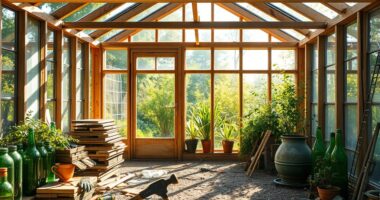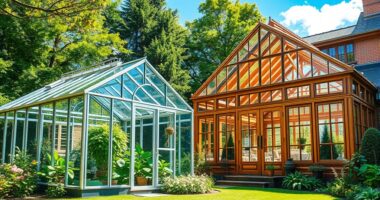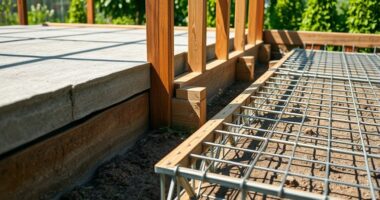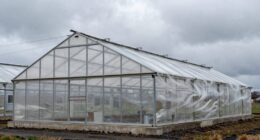
Choosing between a polytunnel and a rigid greenhouse depends on your budget, climate, and gardening goals. Polytunnels cost less upfront, are quick to set up, but offer less insulation, making them less suitable for cold climates. Rigid greenhouses require higher initial investment but provide better durability and climate control for year-round growing. To find the best fit for your needs and discover which structure suits your garden plans, consider the detailed factors below.
Key Takeaways
- Rigid greenhouses offer better insulation and climate control, ideal for year-round gardening in colder climates.
- Polytunnels are more cost-effective and quicker to install, suitable for budget-conscious or temporary setups.
- Rigid greenhouses are more durable and require less maintenance, making them a long-term investment.
- Polytunnels are more susceptible to weather fluctuations, possibly needing additional heating or cooling.
- The choice depends on your budget, climate conditions, and desire for long-term durability versus quick setup.

When choosing between a polytunnel and a rigid greenhouse, understanding their differences can substantially impact your gardening success. One of the key factors to take into account is climate control. Rigid greenhouses typically offer better insulation and more stable temperatures, thanks to their solid frames and glass or polycarbonate panels. This allows you to maintain ideal growing conditions throughout the year, especially in colder climates. Polytunnels, on the other hand, are usually made from high-grade polyethylene or similar materials that provide some insulation but are less effective at controlling temperature fluctuations. They tend to be more susceptible to external weather conditions, which means you might need additional heating or cooling measures to keep your plants comfortable. If climate control is a priority for your gardening ambitions, a rigid greenhouse might be the better choice.
Rigid greenhouses provide superior insulation and temperature stability, ideal for year-round gardening in colder climates.
Another vital aspect is construction costs, which can greatly influence your decision. Polytunnels generally require lower upfront investment due to their simpler design and materials. They are quicker to assemble and often don’t demand extensive foundations or specialized skills, making them a cost-effective option for many gardeners. Rigid greenhouses, however, usually involve higher construction costs because of their sturdy frames, glass or polycarbonate panels, and the need for precise installation. These structures are more durable and long-lasting, but the initial expenditure can be significant. If you’re working within a tight budget, a polytunnel might make more sense, especially since it still offers valuable protection for your crops.
Durability and maintenance are also worth evaluating. Rigid greenhouses tend to last longer and require less frequent repairs, thanks to their sturdy construction. They’re resistant to wind, snow, and other harsh weather conditions, making them a reliable long-term investment. Polytunnels, while generally cheaper, may need more frequent repairs or replacements of the plastic covering over time, especially if exposed to severe weather. Maintenance costs and effort should factor into your decision, especially if you’re looking for a structure that will serve you for many years with minimal hassle.
Ultimately, your choice hinges on your specific needs, budget, and climate. If you prioritize precise climate control and durability, and are willing to invest more money upfront, a rigid greenhouse makes a compelling option. But if you’re seeking affordability, quicker setup, and are okay with some external weather influences, a polytunnel could be the ideal solution. Both structures can boost your gardening efforts, so consider these differences carefully to choose the one that aligns best with your goals.
Frequently Asked Questions
Which Structure Offers Better Pest Control?
A rigid greenhouse generally offers better pest control because it provides superior pest exclusion and fewer pest entry points. Its solid walls and secure doors help keep pests out more effectively than a polytunnel, which may have gaps or vents that pests can exploit. By choosing a rigid greenhouse, you reduce pest entry points, making it easier to maintain a pest-free environment and protect your plants from unwanted invaders.
How Do Maintenance Costs Compare Over Time?
You’ll find that maintenance costs differ based on your structure’s ventilation efficiency and insulation properties. Rigid greenhouses typically have higher initial costs but require less ongoing maintenance due to sturdier materials and better insulation, reducing heating expenses. Polytunnels are cheaper upfront but may need more frequent repairs and ventilation adjustments over time. Consider your climate and budget to determine which structure’s maintenance costs align best with your long-term gardening goals.
Can Polytunnels Withstand Extreme Weather Conditions?
You might worry if a polytunnel can handle fierce storms or heavy snow. While they offer good climate resilience, their material durability varies—stronger, UV-resistant fabrics perform better. During extreme weather, a well-constructed polytunnel can withstand gusts and snow loads, but it’s essential to choose high-quality materials and secure anchoring. Keep in mind, with proper maintenance and upgrades, your polytunnel can stand resilient through many weather challenges.
Are There Specific Crops Better Suited for Each Structure?
You’ll find that some crops are better suited to each structure based on crop compatibility and growing season. For example, polytunnels excel at extending growing seasons for delicate crops like strawberries or herbs, while rigid greenhouses provide a more controlled environment ideal for tropical or heat-loving plants. Consider the specific needs of your crops and your local climate to determine which structure supports best growth and yields.
What Are the Environmental Impacts of Each Option?
Thinking like a knight in shining armor, you’re aware that both options impact the environment. Polytunnels often use sustainable materials and require less energy, making them more eco-friendly. Rigid greenhouses typically demand higher energy use for temperature control, but can incorporate energy-efficient systems. Your choice influences your farm’s carbon footprint, so consider the environmental impacts carefully, balancing durability, sustainability, and energy efficiency to make a greener, smarter decision.
Conclusion
Ultimately, choosing between a polytunnel and a rigid greenhouse is like picking between a trusty friend and a steadfast partner. Both offer unique benefits, but your decision hinges on your specific needs and budget. Remember, the right structure can transform your gardening journey from a simple hobby to a flourishing sanctuary. So, weigh your options carefully—because in the end, your garden’s success depends on the foundation you choose. Will you nurture your dreams today?