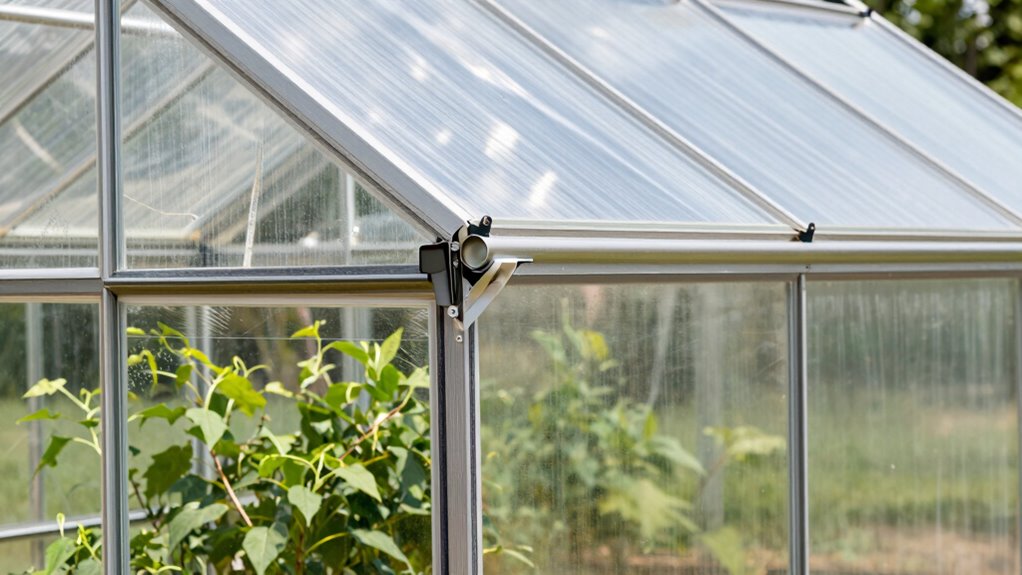

In your backyard greenhouse, glass offers clear, direct sunlight that supports ideal plant growth but can cause overheating and fragile panels that break easily. Polycarbonate, on the other hand, diffuses light evenly, helping plants grow healthier with less hot spots. It’s more impact-resistant and provides better thermal insulation, making it suited for fluctuating temperatures. To explore how these choices impact your greenhouse’s performance and longevity, keep exploring what fits best for your gardening needs.

Get garden gear delivered free — and shop member deals
- Fast, free delivery on millions of items
- Access to Prime Big Deal Days deals on October 6–7
- Prime Video, Amazon Music and more included
Key Takeaways
- Glass offers high clarity and natural sunlight but is more fragile and prone to breakage than durable polycarbonate.
- Polycarbonate provides better impact resistance and durability, making it safer for backyard environments.
- Glass allows more solar heat, which can cause overheating, while polycarbonate helps regulate temperature more effectively.
- Polycarbonate has built-in UV protection that extends material lifespan and shields plants, unlike glass which may allow some UV penetration.
- Polycarbonate’s superior thermal insulation helps maintain consistent temperatures, reducing energy costs for heating or cooling.
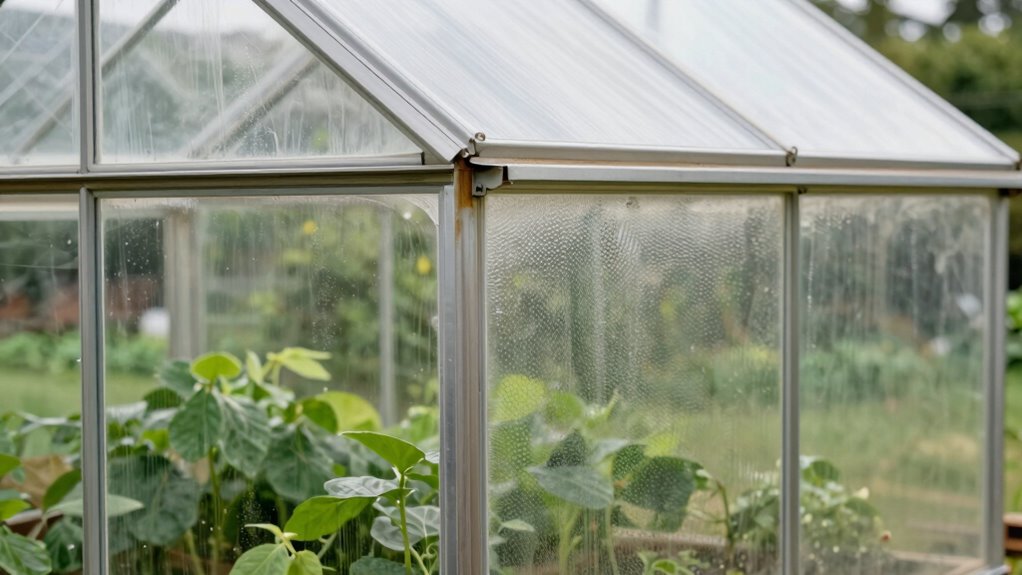
Have you ever wondered whether glass or polycarbonate is the better choice for your greenhouse? The decision hinges on several factors, but two of the most important are how each material handles solar heat and UV protection. These aspects directly influence the growing environment inside your greenhouse and how much energy you need to regulate temperature. Glass has long been favored for its clarity and traditional appeal, but polycarbonate offers distinct advantages in certain areas. Understanding how each material affects solar heat and UV protection will help you make an informed choice that suits your gardening needs.
Glass naturally allows more solar heat to pass through, helping to keep your greenhouse warm during cold days. Its high light transmission ensures your plants receive ample sunlight, which is essential for photosynthesis. However, this advantage can be a double-edged sword. In hot climates or during summer, too much solar heat can cause overheating, making it challenging to maintain ideal conditions. You might find yourself spending extra on cooling systems or shading devices to prevent your plants from getting scorched. Conversely, polycarbonate tends to diffuse sunlight more evenly, reducing the risk of hot spots and overheating. Its ability to regulate solar heat means you can often keep temperatures stable with less energy input, especially in warmer regions. Additionally, the solar heat management capabilities of polycarbonate make it a popular choice for energy-efficient greenhouse designs. The light diffusion ability of polycarbonate also contributes to more uniform plant growth by minimizing harsh shadows. The impact resistance of polycarbonate is another benefit, as it makes the panels less likely to break during storms or accidents. Moreover, polycarbonate’s thermal insulation properties help in maintaining a consistent internal climate, reducing temperature fluctuations. This insulating quality can be especially beneficial in regions with large temperature swings between day and night.
UV protection is another critical factor. Glass offers excellent UV filtering naturally, but it can also allow some UV rays to penetrate, which might harm delicate plants or cause fading of colors over time. Polycarbonate panels, on the other hand, are manufactured with UV inhibitors that considerably enhance UV protection. This feature prolongs the lifespan of the material itself, preventing yellowing and brittleness caused by UV exposure. For you, this means fewer replacements and a more durable structure, especially if your greenhouse is exposed to intense sunlight over many years. Also, the UV inhibitors in polycarbonate help shield your plants from harmful rays, promoting healthier growth and reducing stress. Proper UV protection can significantly extend the longevity of your greenhouse and its contents, making it a worthwhile investment.
greenhouse impact resistant polycarbonate panels
As an affiliate, we earn on qualifying purchases.
As an affiliate, we earn on qualifying purchases.
Frequently Asked Questions
Which Material Is More Environmentally Sustainable for Greenhouses?
Polycarbonate is generally more environmentally sustainable for greenhouses because it offers better recycling options and has a lower manufacturing impact compared to glass. You can recycle polycarbonate more easily at the end of its life, reducing waste. Its manufacturing process also consumes less energy, lowering your greenhouse’s overall carbon footprint. Choosing polycarbonate helps you create a more eco-friendly greenhouse while still providing excellent insulation and durability.
How Do Glass and Polycarbonate Affect Plant Growth?
Like a gentle sun’s caress, glass delivers high light transmission, fostering vibrant plant growth, while polycarbonate’s insulation properties keep temperatures stable. This affects plant health—glass encourages quicker growth with abundant sunlight, but polycarbonate offers consistent warmth, reducing stress. Your choice influences how well your plants thrive; opt for glass if sunlight is plentiful, or polycarbonate for a controlled environment that nurtures steady development year-round.
Are There Any Health Risks Associated With Polycarbonate?
Yes, there are some health concerns with polycarbonate, mainly related to chemical leaching. Over time, chemicals like BPA can seep into your plants or your hands when touching the material. While most modern polycarbonate is BPA-free, it’s still wise to check product labels and handle the material carefully. Regularly cleaning your greenhouse and choosing high-quality, certified polycarbonate can help minimize potential health risks.
How Do Maintenance Requirements Differ Between Glass and Polycarbonate?
Imagine a sunny afternoon, and you notice your greenhouse’s surface. You’ll find glass requires less frequent cleaning, but when it gets dirty, cleaning can be more tedious. Repairs are straightforward but may involve replacing entire panels. Polycarbonate, on the other hand, demands more regular cleaning to maintain clarity, yet its repair process is simpler—small cracks or damages are easier to fix with minimal effort.
Can Polycarbonate Withstand Extreme Weather Better Than Glass?
Yes, polycarbonate generally withstands extreme weather better than glass due to its superior durability and weather resistance. It’s designed to flex without breaking under heavy snow, hail, or strong winds, making it ideal for unpredictable conditions. While glass can crack or shatter more easily, polycarbonate offers a resilient, impact-resistant option that keeps your greenhouse protected during harsh weather, ensuring your plants stay safe year-round.
Conclusion
Ultimately, choosing between glass and polycarbonate in your greenhouse is like selecting between the clarity of truth and the resilience of a well-worn myth. Glass offers timeless elegance and maximum light, while polycarbonate provides durability and impact resistance. Your decision shapes not just your plants’ growth but echoes the ancient garden’s whisper—reminding us that, like nature itself, our choices should balance beauty with strength, fostering a sanctuary where life flourishes in harmony.
Fall yard work Picks
leaf blowers
As an affiliate, we earn on qualifying purchases.