To size your greenhouse heater accurately, you need to understand the BTU calculation process. Start by calculating your greenhouse’s total heat loss based on surface area, insulation, and ventilation. Then, determine the volume of your space, accounting for climate conditions and seasonal changes. Matching your heater’s BTU rating to this data prevents energy waste and keeps plants healthy. Keep going to discover how precise calculations and proper insulation make all the difference.
Key Takeaways
- Calculate total heat loss by measuring surface areas and considering insulation, ventilation, and sealing to determine accurate BTU needs.
- Determine your greenhouse volume (length x width x height) to estimate baseline heating requirements.
- Assess outdoor temperatures during the coldest months to identify peak heating load for proper BTU sizing.
- Incorporate factors like humidity, microclimates, and seasonal variations to refine your heating capacity calculations.
- Use proper sizing—within 10% of your BTU estimate—and regular maintenance for efficient, consistent greenhouse heating.
Why Proper Greenhouse Heater Sizing Saves You Money
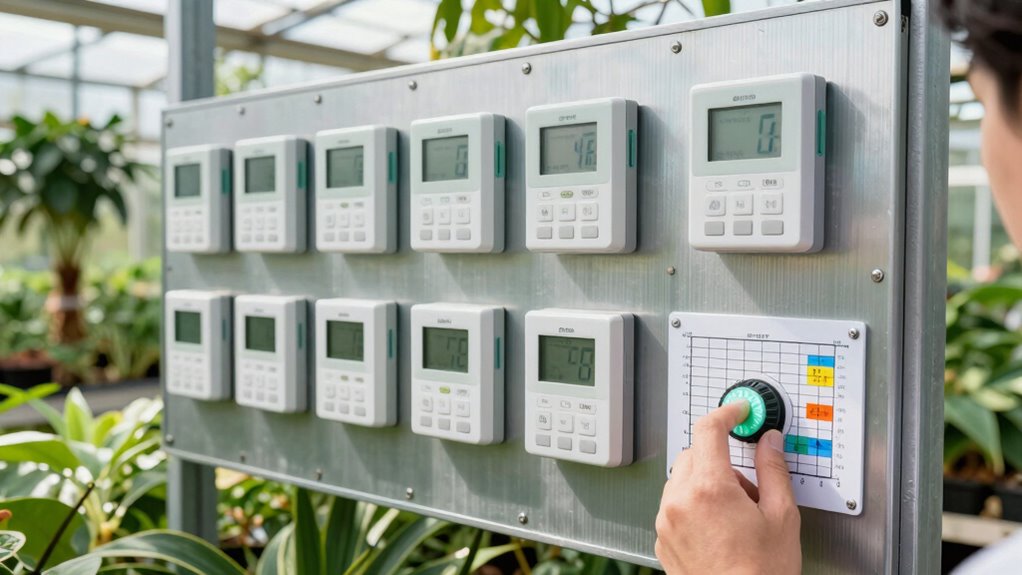
Properly sizing your greenhouse heater is essential because it guarantees you’re not wasting energy or money. When your heater is too large, it can cause rapid temperature swings, disrupting greenhouse ventilation and stressing your plants. Conversely, a heater that’s too small won’t maintain consistent temperatures, slowing plant growth rates and reducing productivity. Correct sizing ensures steady, ideal conditions, promoting healthy growth and minimizing energy use. This efficiency translates into lower utility bills and fewer equipment replacements. Properly matched heaters also help avoid overworking your system, reducing wear and tear. Additionally, understanding your greenhouse’s specific heating needs can help you leverage European cloud innovation for smarter climate control solutions. By understanding your greenhouse’s specific heating needs, you maximize plant growth rates while conserving resources, ultimately saving you money and ensuring a healthier, more productive environment.
What Is a BTU and Why It Matters for Greenhouse Heating
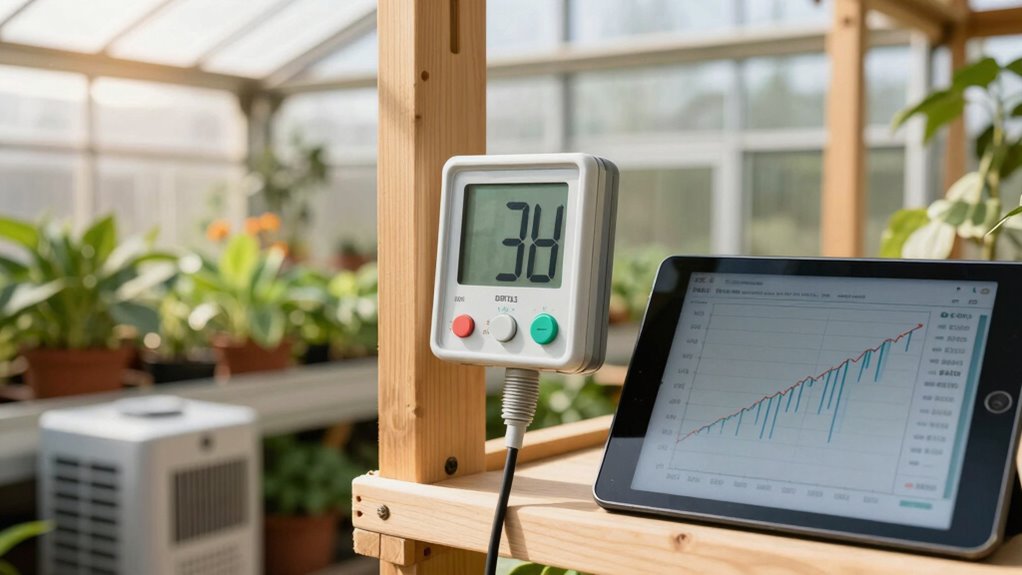
Understanding the concept of BTUs is key to choosing the right heater for your greenhouse. A BTU, or British Thermal Unit, measures the amount of heat needed to raise one pound of water by one degree Fahrenheit. Knowing this helps you select a heater that provides sufficient climate control without wasting energy. When your heater’s BTU rating matches your greenhouse’s heating needs, you maximize energy efficiency, saving money and reducing your environmental impact. An undersized heater won’t maintain consistent temperatures, while an oversized one wastes fuel and increases costs. By understanding BTUs, you can ensure your greenhouse stays warm enough for ideal plant growth, all while keeping energy use optimized and costs minimized. Pool terminology can also help you better grasp heating efficiency and system sizing concepts.
How to Calculate Your Greenhouse’s Heat Loss
To keep your greenhouse warm, you need to understand how much heat it loses. Calculating the heat loss rate helps you determine the right size of your heating system. Several factors, like insulation and outside temperature, influence how much heat escapes. Additionally, understanding the contrast ratio of your heating system can help you choose equipment that provides deeper blacks and brighter whites, ensuring a more efficient and visually effective climate control.
Calculating Heat Loss Rate
Calculating your greenhouse’s heat loss rate is essential for designing an efficient heating system. To do this, you need to consider three key factors:
- Measure the surface area of your greenhouse walls and roof to determine potential heat escape.
- Use insulation values to estimate how much heat is lost through different materials.
- Account for ventilation and humidity control, which affect heat loss, especially during colder months.
- Incorporate adhesive strips or wall mounting brackets for securing insulation or heating equipment, ensuring safety and stability.
Knowing your heat loss rate helps you size your heating system accurately, avoiding overspending or underheating. If you plan to use solar panels, understanding heat loss ensures you generate enough energy to compensate. Proper calculation also helps maintain ideal humidity levels, preventing excessive moisture loss or buildup, which impacts plant growth and system efficiency.
Factors Affecting Loss
Several factors influence how much heat your greenhouse loses, and accurately evaluating these helps you determine the right heating needs. Ventilation challenges can substantially increase heat loss if vents are open too much or poorly sealed, allowing warm air to escape. Shading strategies also impact heat retention; excessive shading can reduce heat gain, but insufficient shading during cold nights may lead to heat loss through solar radiation. Building materials matter too—single-pane glazing loses more heat than double or triple glazing. Air leaks and thermal bridging can further increase loss, making it essential to seal gaps and use insulating materials. Understanding these factors helps you tailor your greenhouse’s design and controls, reducing unnecessary heat loss and optimizing your heating system’s efficiency. Utilizing thermal performance data can further assist in selecting materials that minimize heat transfer.
Estimating Your Heating Needs for Different Climates and Seasons
Understanding how much heat your greenhouse needs depends heavily on the climate and season. In a seasonal climate, you’ll experience temperature fluctuations that impact heating needs. To estimate accurately:
Greenhouse heating needs vary with climate and season, requiring careful assessment of outdoor temperatures and humidity.
- Assess outdoor temperatures during the coldest months to determine peak heating requirements.
- Adjust for humidity control, since higher humidity can increase heat demand to prevent condensation.
- Consider seasonal variations—winter demands more heating, while milder seasons need less or none.
- Use load‑planning tools to help refine your estimates based on specific conditions and greenhouse design.
How to Measure Your Greenhouse Volume for Accurate Sizing
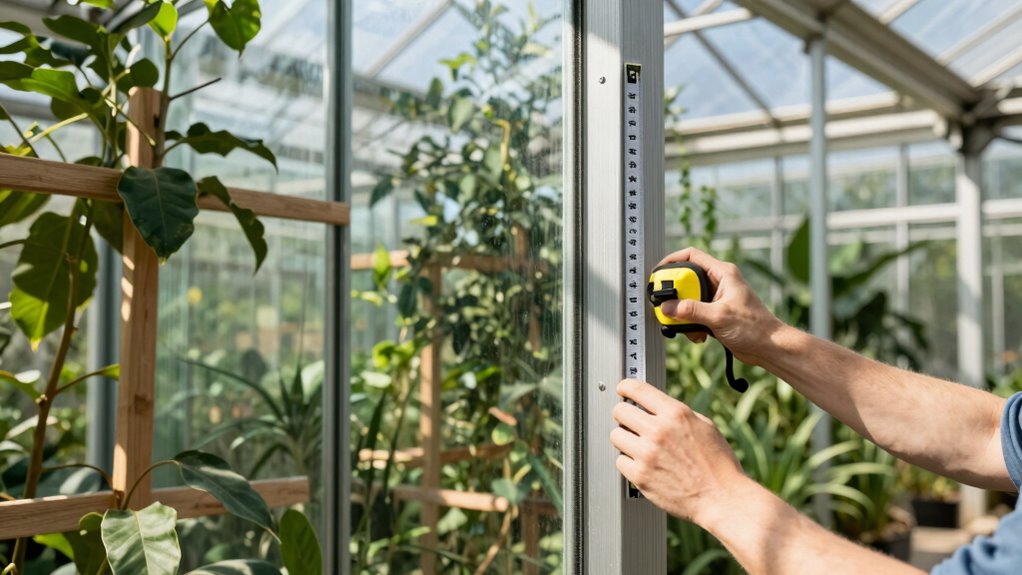
To size your greenhouse accurately, you’ll need to determine its total volume. Measure the length, width, and height of each section, then multiply these dimensions to find the cubic footage. Keep in mind ventilation effects, as proper airflow can influence heating needs; larger vents or fans may require more heat to compensate for heat loss. Consider how plant placement impacts temperature distribution—crowded or densely packed plants can create microclimates, affecting the overall volume you need to heat. Accurate volume measurement guarantees you select a heater with the right BTU rating, avoiding under or oversizing. By carefully calculating your greenhouse’s total space, accounting for ventilation effects, and understanding plant placement, you set a solid foundation for effective, efficient heating. Additionally, understanding your greenhouse’s air exchange rate can help optimize your heating system’s performance and energy efficiency.
Step-by-Step: Choosing the Right BTU Rating for Your Heater
To select the appropriate BTU rating, start by measuring your greenhouse volume accurately. Next, consider how much heat you’ll lose through walls, vents, and doors. Additionally, understanding the heat retention properties of your materials can help optimize heating efficiency. Finally, match your heater’s capacity to your needs to guarantee efficient and effective warmth.
Measure Greenhouse Volume
Calculating your greenhouse’s volume is the first step in choosing the right BTU rating for your heater. To do this accurately, measure:
- The length, width, and height of your greenhouse in feet.
- Multiply these dimensions to get the total cubic footage.
- Adjust for features like vents or shade areas that affect heat retention.
- Understanding heat dynamics helps you anticipate how quickly your greenhouse will warm up or cool down, informing better heater sizing decisions.
Knowing your volume helps determine how much heat you need to maintain ideal conditions for plant growth. It also informs how solar panels can supplement heating and humidity control systems efficiently. For example, a larger volume requires a higher BTU rating, while proper measurement ensures you don’t overshoot or undersize your heater. Accurate volume calculations save energy and costs, giving you reliable climate control without guesswork.
Calculate Heat Loss
Wondering how much heat your greenhouse loses during colder days? To determine this, you need to calculate heat loss accurately. Ventilation challenges and humidity control are key factors, as excessive ventilation can increase heat loss, while poor humidity management may cause condensation issues. Start by identifying your greenhouse’s surface area, including walls, roof, and windows. Use a heat loss formula that accounts for insulation levels, outdoor temperatures, and air exchange rates. Consider heat transfer through conduction, convection, and infiltration. Additionally, understanding the different types of insulation can help optimize your heating efficiency. By understanding these factors, you’ll know how many BTUs your heater needs to compensate for cold weather. Proper calculation prevents under- or overheating, ensuring your plants stay healthy. This step is essential for choosing a heater with the right capacity for your greenhouse environment.
Match Heater Capacity
Once you’ve determined your greenhouse’s heat loss, the next step is to match your heater’s capacity accurately. Proper sizing ensures you maintain consistent temperatures without wasting energy. First, consider heater placement; position it where air circulates evenly to maximize efficiency. Second, choose a heater with a capacity within 10% of your calculated BTU requirement to prevent short-cycling. Third, establish regular maintenance schedules to keep your heater running smoothly, ensuring reliable heat delivery. Matching capacity involves balancing size with your greenhouse’s specific needs, avoiding both under- and over-heating. Remember, an oversized heater can cause temperature swings, while an undersized one struggles to keep up. Correctly matched, your heater provides reliable warmth, suitable heater placement, and easier maintenance.
Common Mistakes When Sizing Greenhouse Heaters: and How to Avoid Them
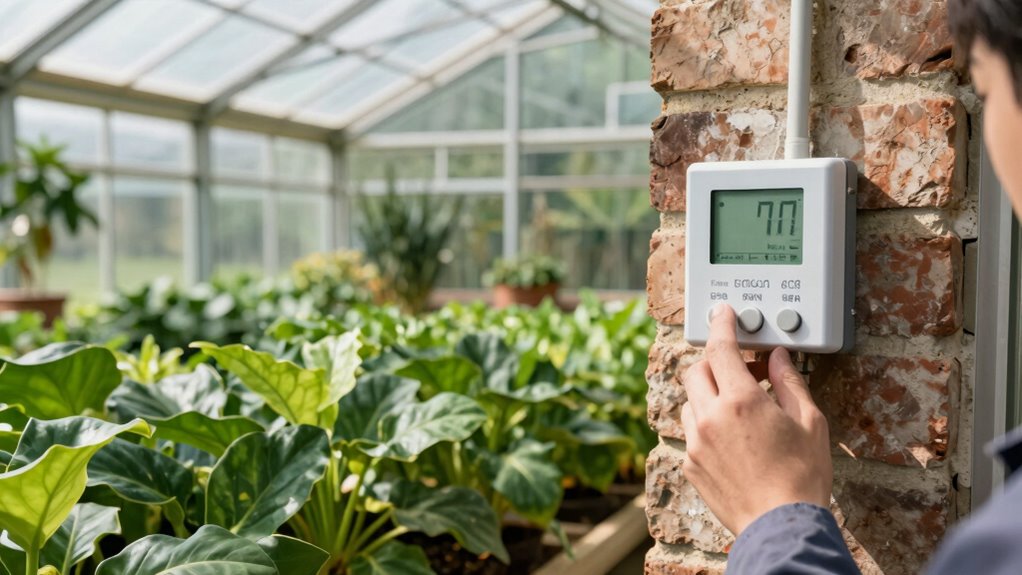
One of the most common mistakes when sizing greenhouse heaters is choosing a unit that’s either too large or too small for the space. Overestimating load leads to unnecessary energy costs and uneven heating, while underestimating can cause cold spots that harm plants. Ignoring insulation factors makes it easier to misjudge your true heating needs, resulting in inefficient performance. To avoid these errors, accurately assess your greenhouse’s heat loss, considering insulation, coverings, and ventilation. Don’t rely on guesswork or generic formulas—measure actual conditions and use precise calculations. Proper sizing ensures your heater operates efficiently, saving money and maintaining ideal growing temperatures. Remember, a correctly sized heater balances capacity with your greenhouse’s specific insulation and environmental factors.
How Insulation and Coverings Reduce Your Heating Costs
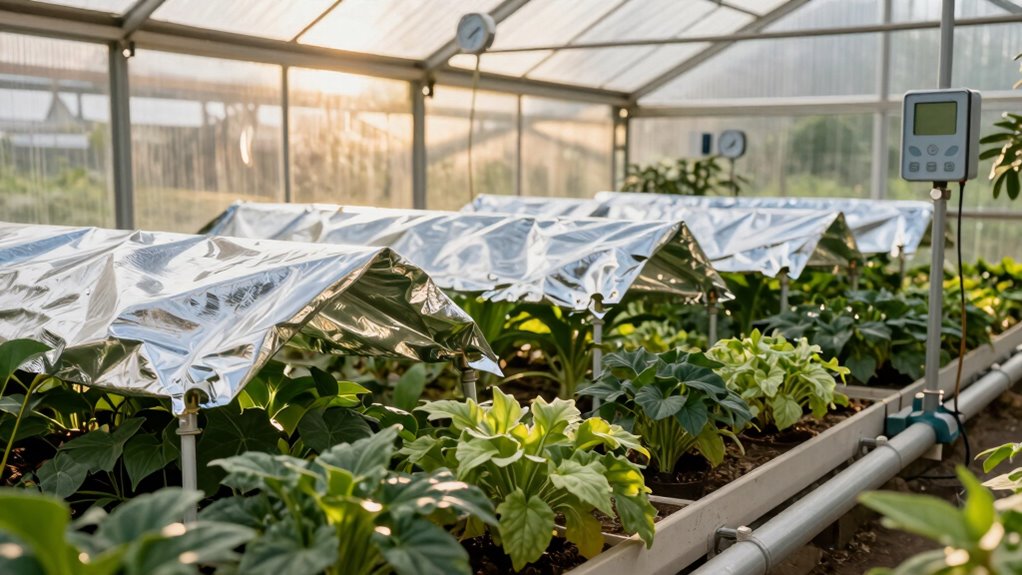
Insulation and coverings play a crucial role in reducing your greenhouse’s heating costs by minimizing heat loss. Thermal barriers and covering materials act as barriers that retain warmth effectively. Here are three ways they help:
- Reduce heat transfer: Covering materials like polycarbonate or polyethylene trap heat inside, preventing it from escaping.
- Enhance insulation: Using thermal barriers such as foam panels or bubble wrap adds an extra layer of insulation, cutting down on heat loss.
- Maintain consistent temperature: Proper coverings stabilize internal temperatures, reducing the need for frequent heating cycles.
Tips for Selecting an Efficient and Cost-Effective Heating System
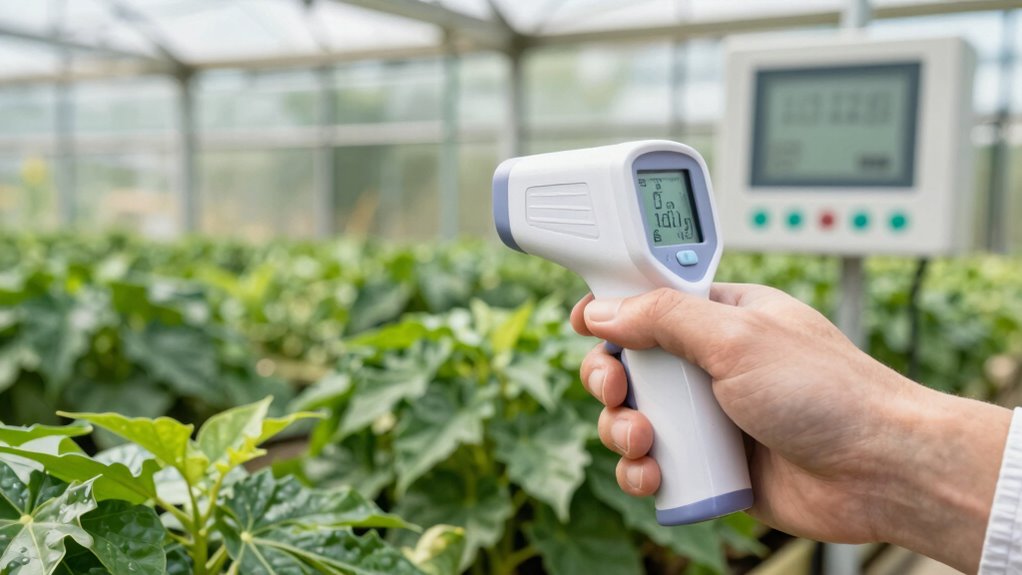
Choosing an efficient and cost-effective heating system starts with understanding your greenhouse’s specific needs, such as size, crop type, and local climate. To promote plant health, select a system that provides consistent, even heat without creating cold spots or overheating areas. Focus on energy efficiency by comparing different options like electric, gas, or heat pumps, and choose one with high efficiency ratings. Properly sized systems minimize wasted energy and lower operational costs. Consider the installation and maintenance costs, as well as the system’s lifespan. An efficient setup ensures your plants stay healthy and vigorous while reducing energy bills. Remember, a well-chosen heating system balances upfront investment with long-term savings, making it the smartest choice for sustainable greenhouse management.
Fine-Tuning Your Heating System for Peak Performance
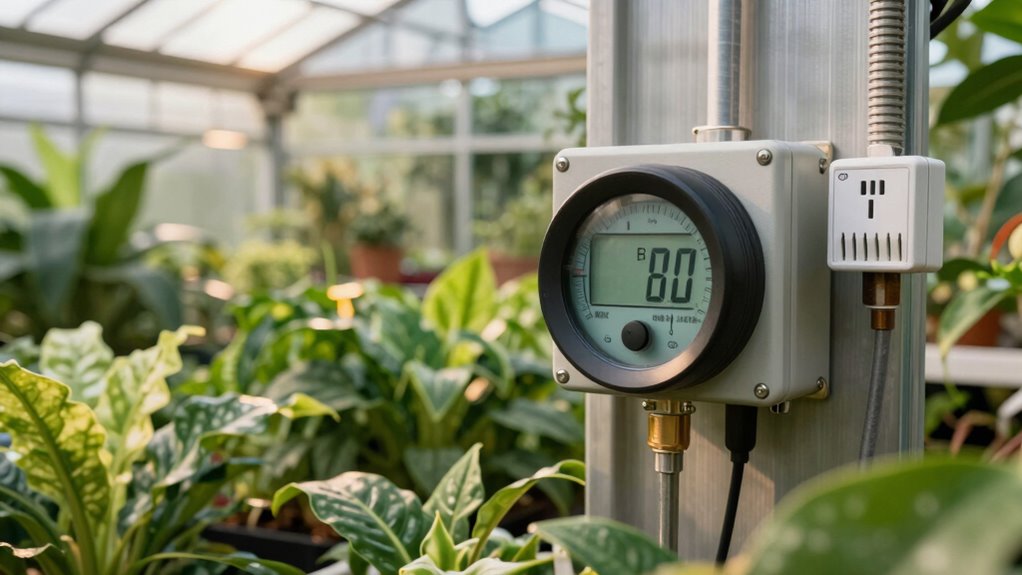
To get the most out of your heating system, you need to fine-tune it regularly. Make sure you calibrate your system and adjust the thermostat settings to match your greenhouse’s needs. Keep an eye on temperature trends to identify and correct any issues before they affect your plants.
Regular System Calibration
Regular system calibration is essential for ensuring your greenhouse heating operates efficiently and reliably. Proper calibration helps you maintain consistent temperatures, improves fuel efficiency, and prevents energy waste. To achieve this, start by checking your thermostat calibration:
- Verify the thermostat’s accuracy with a reliable thermometer. Adjust if needed to match actual temperature readings.
- Regularly inspect your fuel delivery systems for leaks or blockages to optimize fuel efficiency.
- Test the system’s response by setting specific temperatures and observing how quickly and accurately it reaches and maintains them.
Optimize Thermostat Settings
While calibrating your system is essential, fine-tuning your thermostat settings guarantees your greenhouse heating runs at peak efficiency. Start by ensuring your thermostat calibration is accurate; incorrect calibration can cause temperature swings or energy waste. Use reliable temperature sensors placed strategically within your greenhouse to get precise readings. Adjust the thermostat to maintain your ideal temperature range, avoiding unnecessary overheating or cooling. Regularly check sensor placement—avoid direct sunlight or drafts that can skew readings. Fine-tuning involves small adjustments based on actual temperature data, ensuring the system responds correctly to environmental changes. By optimizing your thermostat settings, you reduce energy consumption, improve plant health, and extend your heating system’s lifespan. Proper calibration and sensor placement are key to consistent, efficient greenhouse heating.
Monitor Temperature Trends
Monitoring temperature trends over time allows you to identify patterns and make informed adjustments to your greenhouse heating system. By tracking data regularly, you can fine-tune humidity control, which impacts plant health and pest prevention. To effectively oversee,:
- Record temperature and humidity levels daily to observe fluctuations.
- Note how external weather influences indoor conditions.
- Adjust your heating settings based on seasonal trends and plant needs.
This process helps you maintain consistent conditions, reducing the risk of pests that thrive in unstable environments. It also ensures your plants stay healthy by preventing temperature swings that could stress them. Over time, analyzing these trends allows you to optimize your system, saving energy and creating a stable environment for your greenhouse’s success.
Frequently Asked Questions
How Does Outdoor Wind Affect Greenhouse Heating Requirements?
Outdoor wind increases your greenhouse’s heating requirements by causing heat loss through wind effects on the structure. Wind can break through insulation impact, making your greenhouse lose heat faster. To combat this, you should reinforce windbreaks and make certain of proper sealing around doors and vents. By reducing wind effects, you’ll lower your heating needs, saving energy and maintaining a stable environment for your plants.
Can Solar Gain Replace Traditional Heating Systems Entirely?
Solar gain can’t fully substitute traditional heating systems because its efficiency varies with weather, season, and greenhouse design. You rely on passive heating to maximize solar efficiency, capturing warmth during sunny days, but you’ll still need supplemental heat during cloudy periods or cold nights. Combining passive heating with a backup system ensures your greenhouse stays consistent in temperature, preventing plant stress and optimizing growth year-round.
How Often Should I Maintain or Calibrate My Heater’s BTU Output?
Your heater’s BTU output needs calibration at least once a year, but if you notice uneven heating or increased energy bills, don’t wait that long. Regular maintenance, including cleaning filters and checking controls, keeps it running efficiently. Think of heater calibration as fine-tuning a musical instrument — ensuring every note hits perfectly. Staying on top of maintenance frequency prevents surprises and keeps your greenhouse warm and thriving all season long.
What Impact Does Humidity Have on Heating Efficiency?
Humidity control impacts your heating efficiency by affecting vapor pressure inside the greenhouse. When humidity is high, it increases vapor pressure, making it harder for heat to effectively warm the space, leading to higher energy use. Conversely, managing humidity helps maintain ideal vapor pressure, reducing the load on your heater. This balance ensures more efficient heat distribution, saving energy and maintaining a stable environment for your plants.
Are There Eco-Friendly Alternatives to Conventional Btu-Based Heating?
Think of eco-friendly heating options as your greenhouse’s green thumbs. You can harness solar panels to generate clean energy, reducing reliance on fossil fuels. Heat pumps are like energy-efficient whisperers, transferring heat rather than creating it, which saves power. Both options cut your carbon footprint, making your greenhouse more sustainable. Switching to solar-powered heat pumps combines the best of both worlds, ensuring warmth while protecting the environment.
Conclusion
Properly sizing your greenhouse heater is like fitting a key to a lock—you guarantee warmth without waste. When you understand BTUs and calculate heat loss accurately, you avoid costly mistakes and keep plants healthy year-round. Think of your greenhouse as a delicate ecosystem; with the right heating, it’s like a cozy nest in winter, where every element works in harmony. Master this math, and you’ll create a thriving, efficient space that grows with confidence.