To cut water waste fast, focus on designing your drip system thoughtfully. Map your garden zones based on plant types and soil conditions, and place emitters along the root zones for uniform distribution. Use pressure regulators, filters, and durable materials to prevent leaks and clogs. Incorporate control devices like timers and moisture sensors to automate and optimize watering schedules. Properly spaced emitters and well-organized lines guarantee even coverage, boosting efficiency—learn more to maximize your water savings.
Listen free for 30 days with Audible
Thousands of audiobooks and originals — cancel anytime.
As an affiliate, we earn on qualifying purchases.
Key Takeaways
- Properly spacing emitters along plant root zones ensures uniform watering and prevents runoff.
- Incorporating pressure regulators maintains optimal pressure, reducing leaks and water waste.
- Using soil moisture sensors automates watering, avoiding overwatering and runoff.
- Designing zones based on plant water needs prevents overwatering and conserves water.
- Regular system maintenance and high-quality components minimize leaks and clogging, enhancing water efficiency.
drip irrigation emitters for garden
As an affiliate, we earn on qualifying purchases.
As an affiliate, we earn on qualifying purchases.
How to Design a Drip System Layout for Maximum Water Efficiency
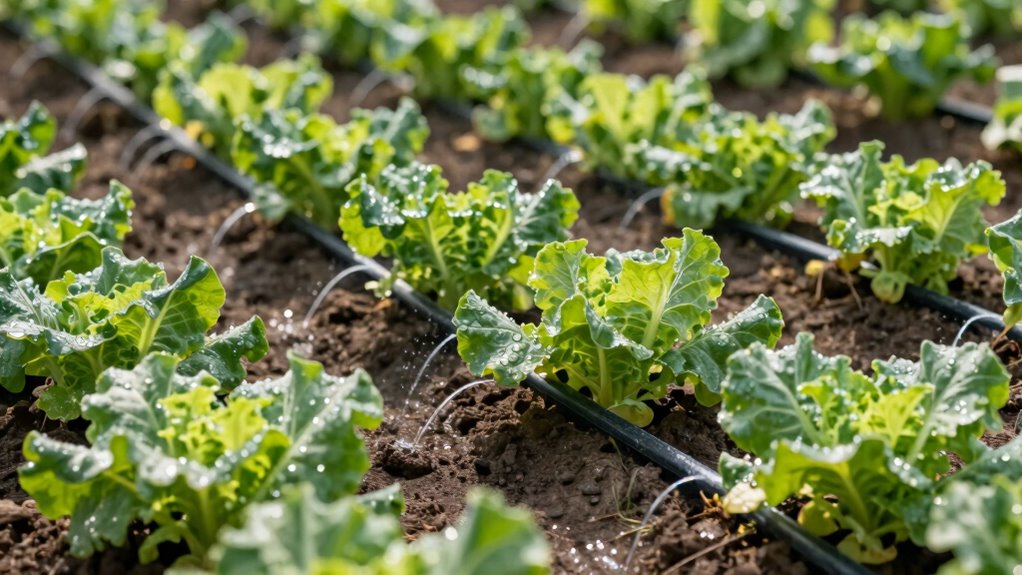
Designing a drip system layout for maximum water efficiency starts with understanding your garden’s specific needs. You want to create a plan that optimizes water delivery while minimizing waste. Incorporate fertilizer delivery into your design by including emitters that support fertigation, so nutrients reach plants efficiently. System automation plays a vital role; installing timers and sensors allows you to control watering times precisely, reducing overwatering and evaporation. Map out your garden zones based on plant types, soil conditions, and sun exposure to customize emitter placement. Use pressure regulators and filters to guarantee consistent flow and prevent clogging. Additionally, selecting appropriate emitter types can further enhance water efficiency and ensure even watering coverage. By thoughtfully designing your layout with these elements, you’ll maximize water savings and promote healthy plant growth with less effort and resource waste.
Where to Place Emitters for Optimal Water Distribution
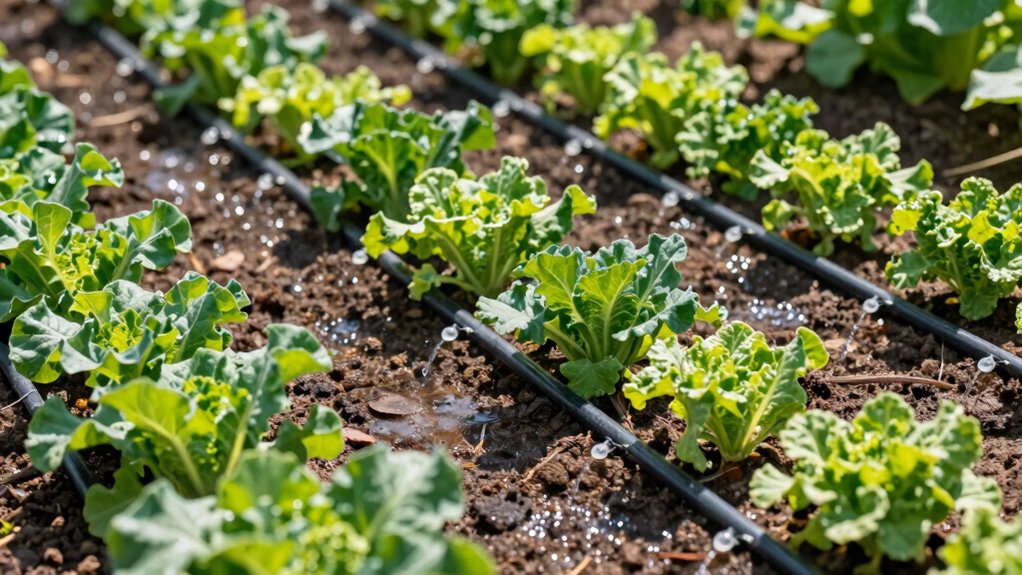
To achieve the best water distribution, you need to place emitters where they provide uniform coverage across your plants. Think about the types of plants you’re watering, as some require more or less water, and adjust emitter placement accordingly. Also, consider your terrain, as slopes and uneven ground can affect water flow and coverage.
Uniform Water Coverage
Have you ever wondered how to guarantee your plants receive consistent, adequate water? The key is achieving uniform water coverage. To do this, consider your soil composition—sandy soils drain quickly, requiring closer emitter placement, while clay soils retain water longer, so spacing can be wider. Weather patterns also influence coverage; hot, dry conditions demand more frequent watering, so evenly distributed emitters prevent dry spots. Place emitters along the plant’s root zone, ensuring each area gets the right amount of moisture. Avoid clustering emitters too close together, which can cause overwatering in some spots and dryness in others. By adjusting emitter placement based on soil and weather, you promote even water distribution, reduce waste, and keep your plants healthy. Additionally, understanding soil moisture retention helps optimize emitter spacing for maximum efficiency.
Consider Plant Types
Different plant types have unique water needs and root structures, which influence where you should place emitters for ideal coverage. Considering plant diversity and growth stages ensures efficient watering. For instance, young plants need closer emitters, while mature plants can handle wider spacing. Placement varies by root depth and spread, optimizing water use and promoting healthy growth. Use this table as a guide:
| Plant Type | Water Needs | Emitter Placement |
|---|---|---|
| Shallow-rooted | High | Near base, close to roots |
| Deep-rooted | Moderate to low | Spread along root zone |
| Vegetables/Flowers | Medium to high | Evenly around plant base |
Adjust emitter locations based on plant diversity and growth stages to maximize water efficiency and minimize waste. Proper emitter placement helps ensure each plant receives the right amount of water, reducing runoff and evaporation.
Account for Terrain
Since terrain features can considerably influence water flow, placing emitters strategically is essential for even distribution. On sloped land, water tends to run downhill, increasing the risk of soil erosion and uneven watering. To prevent this, position emitters along contour lines to promote slope stabilization and reduce runoff. Avoid placing emitters at the top or bottom of slopes, where water tends to pool or erode soil. Instead, stagger emitters across the terrain to ensure water infiltrates evenly. Consider soil type and terrain shape when planning placement; loose or sandy soils need more careful positioning to prevent erosion. Properly accounting for terrain helps maintain healthy soil structure and ensures your plants receive consistent moisture without waste. Implementing offensive security measures in your irrigation system can also help prevent tampering or hacking attempts.
What Control Devices Should You Use to Save Water?
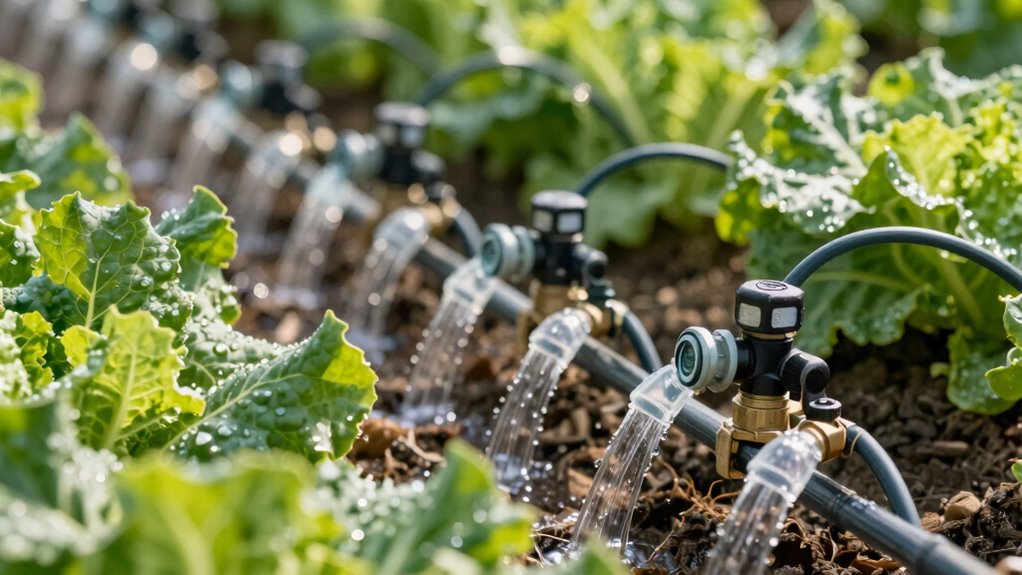
To maximize water savings with drip irrigation, choosing the right control devices is essential. Smart timers are a great investment because they automate watering schedules based on your plants’ needs, preventing overwatering and runoff. Pairing these timers with moisture sensors helps you monitor soil moisture levels directly, ensuring you only water when necessary. This combination reduces waste by adjusting watering times automatically, even when weather conditions change. Instead of running fixed schedules, you’ll deliver water precisely when your plants need it, conserving water and promoting healthier growth. Using smart timers and moisture sensors together creates a responsive system that minimizes waste and maximizes efficiency. Investing in these control devices is one of the easiest ways to cut water waste fast and improve your drip irrigation system’s performance. Smart IoT technologies enable real-time monitoring and remote control, further enhancing water conservation efforts.
How to Simplify Your System to Prevent Leaks and Runoff

Simplifying your drip irrigation system is key to preventing leaks and runoff. When your system is straightforward, it’s easier to monitor soil moisture levels and avoid overwatering that causes water runoff. Use fewer connectors, filters, and emitters to reduce potential leak points. Properly pressure-regulate your system to ensure consistent flow without excess pressure that can cause leaks. Regularly check for clogged emitters that can lead to uneven watering. Here’s a handy guide:
| Step | What to Do | Why It Matters |
|---|---|---|
| Minimize fittings | Use as few connectors as possible | Reduces leak points |
| Maintain pressure | Use pressure regulators | Prevents leaks and runoff |
| Check emitters | Clear blockages regularly | Ensures even soil moisture |
| Simplify layout | Keep lines direct and organized | Prevents uneven watering and runoff |
| Monitor soil moisture | Use sensors to avoid overwatering | Keeps soil moist without excess water |
How to Create Zones and Schedule Watering for Best Results
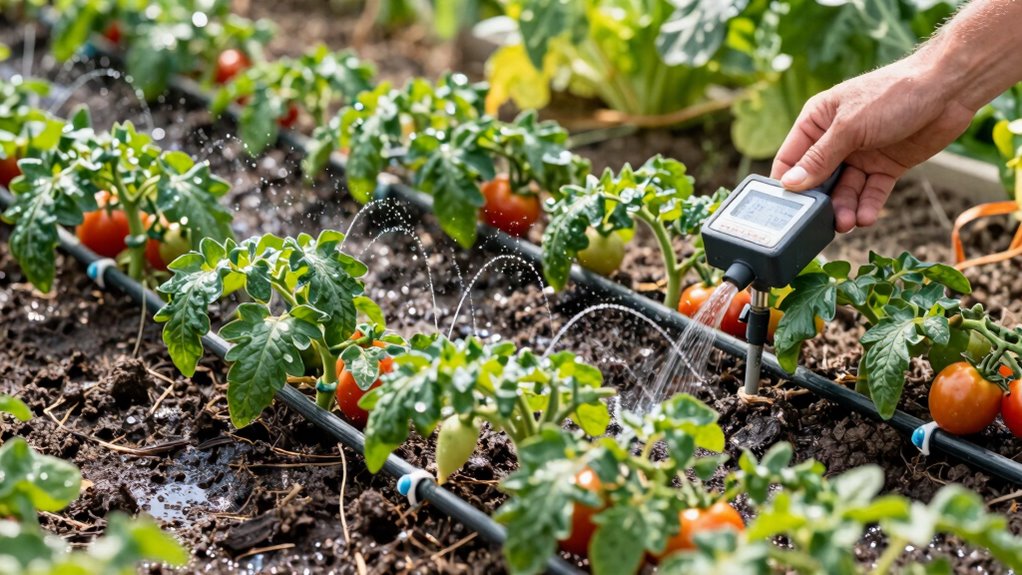
Creating zones in your irrigation system allows you to tailor watering schedules to different areas’ specific needs, ensuring efficient water use. Proper zoning considers plant types, sun exposure, and soil type. To optimize results, follow these steps:
Design irrigation zones tailored to plant needs for efficient watering and healthier landscapes.
- Group plants with similar water needs to develop effective watering frequency schedules.
- Adjust drip emitter spacing based on plant size and root zone, preventing water waste.
- Set different watering durations for each zone to match their specific moisture requirements.
- Use a timer to automate zones, ensuring consistent watering and avoiding over- or under-watering.
- Effective zone design helps prevent water runoff and ensures each plant receives the optimal amount of water.
Which Materials Last and Help Conserve Water in Drip Components
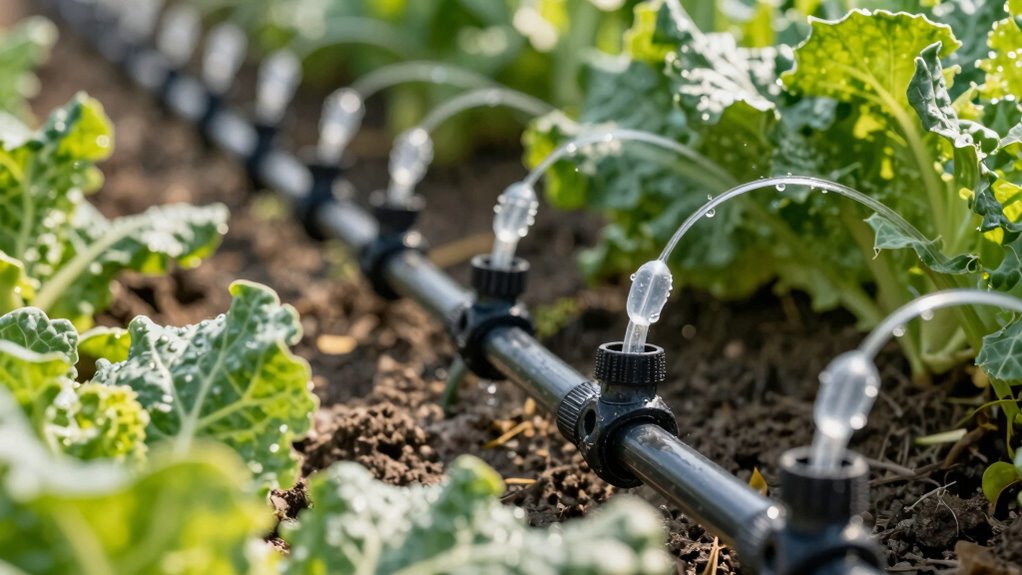
Choosing sturdy materials for your drip irrigation system is essential for conserving water and reducing maintenance. The materials you select should withstand different soil types and climate considerations. For example, in sandy soils, consider using thicker, UV-resistant tubing to prevent leaks and degradation. Clay soils may require flexible emitters that resist clogging, ensuring consistent water delivery. In hot, sunny climates, choose UV-stabilized components to prevent cracking and brittleness over time. Additionally, high-quality, corrosion-resistant fittings help prevent leaks and waste. Using durable materials not only extends the lifespan of your system but also minimizes water waste caused by leaks or broken parts. Incorporating sound science into your material choices can further optimize system performance and water savings. By matching your materials to your soil and climate, you ensure your drip system remains efficient and conserves water effectively over the long term.
How to Troubleshoot Common Design Flaws That Waste Water
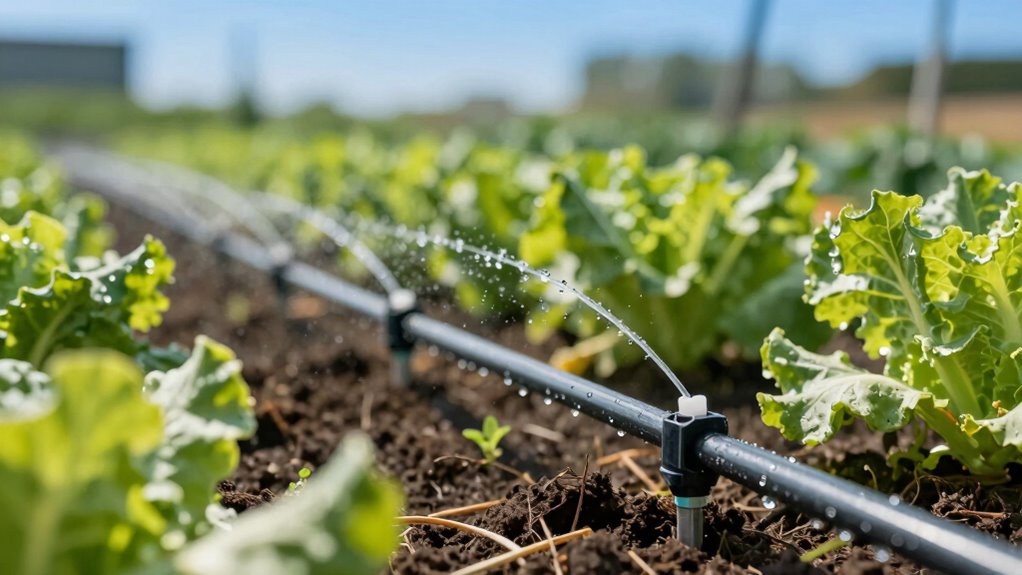
To prevent water waste, start by checking for blockages or clogs in your system that could restrict flow. Next, inspect the pressure regulator to make sure it’s functioning correctly and maintaining consistent pressure. Finally, verify that your system layout is proper, with emitters placed correctly to avoid overwatering or dry spots. Incorporating advanced filtration systems can also help reduce clogging and maintain optimal system performance.
Check for Blockages and Clogs
Blockages and clogs are common issues that can considerably reduce the efficiency of your drip irrigation system. To maintain peak water flow, regularly perform clog inspection to identify potential problems early. Here are four key steps:
- Check filter screens and clean them to prevent blockage prevention issues.
- Inspect emitters for debris or mineral buildup that might cause clogs.
- Flush out hoses and tubing to clear any accumulated sediment.
- Look for uneven watering patterns, which can signal hidden blockages.
- Consider the use of filter screens made from durable materials to prevent debris from entering the system and causing clogs.
Inspect Pressure Regulator Functionality
A malfunctioning pressure regulator can cause significant water waste in your drip irrigation system. Poor pressure regulation leads to inconsistent flow control, which can result in overwatering or uneven watering. To troubleshoot, start by inspecting the regulator for signs of damage or leaks. Check if it maintains steady pressure when the system is running; if pressure fluctuates or drops, the regulator may be faulty. Use a pressure gauge to verify the output matches the recommended levels for your system. If it’s not functioning properly, replace the regulator or adjust the pressure setting if possible. Proper pressure regulation ensures ideal flow control, preventing excess water use and ensuring your plants receive the right amount of water. Regularly inspecting the regulator keeps your system efficient and water waste minimal. Additionally, understanding the system components can help you identify other potential issues that cause pressure inconsistencies.
Ensure Proper System Layout
Ensuring your drip irrigation system is properly laid out can substantially reduce water waste caused by design flaws. To troubleshoot common issues, focus on these key points:
- Check plant spacing—ensure emitters are close enough to water each plant adequately without overlap or gaps.
- Assess soil absorption—place emitters where soil drains well, preventing runoff or pooling that wastes water.
- Avoid over- or under-planting zones; mismatched spacing can cause dry spots or overwatering.
- Map out your entire system, ensuring uniform coverage and consistent pressure throughout, reducing the chance of leaks or dry areas.
Frequently Asked Questions
How Do Climate Conditions Influence Drip Irrigation Design Choices?
Climate conditions directly influence your drip irrigation design choices by dictating water needs and system durability. You adapt for drought-prone areas with efficient water conservation features, like low-flow emitters and timers. In humid regions, you may reduce system pressure to prevent overwatering. Understanding local climate guides your choices, ensuring your system optimizes water use, withstands weather extremes, and supports climate adaptation efforts, ultimately conserving water and improving crop health.
Can Drip Systems Be Integrated With Rainwater Harvesting Setups?
Yes, you can integrate drip systems with rainwater harvesting setups. This combination allows you to efficiently deliver water and fertilizer directly to plants, reducing waste and runoff. Plus, it helps with pest management by maintaining consistent moisture levels, discouraging pests from settling. You’ll save water, optimize fertilizer delivery, and improve plant health—all while making the most of natural rainwater.
What Are the Most Eco-Friendly Materials for Drip Irrigation Components?
Think of eco-friendly drip irrigation materials as planting seeds that grow sustainability. You should choose biodegradable plastics or recycled materials, which break down naturally or reuse waste products. For example, some companies now produce drip lines from recycled plastic bottles, reducing landfill waste. These options help you cut down on plastic pollution and support eco-conscious farming, making your irrigation system both effective and environmentally responsible.
How Does Soil Type Affect Emitter Placement and Flow Rates?
Soil type directly impacts emitter placement and flow rates. In compacted soils, you should space emitters further apart and lower flow rates to prevent clogging and guarantee even water distribution. For soils with high water retention, place emitters closer together to avoid overwatering and runoff. Adjusting emitter placement based on soil compaction and water retention helps optimize efficiency, reducing waste and promoting healthier plant growth.
Are There Smart Technologies to Optimize Water Use Automatically?
You’ll be amazed to learn that over 60% of farmers now use automation technology to optimize water use. Smart systems with sensor integration automatically adjust flow rates based on soil moisture and weather conditions, reducing waste and conserving resources. These innovative solutions make irrigation more efficient, saving water and energy. With such technology, you gain precise control, ensuring plants get exactly what they need without manual intervention, boosting productivity and sustainability.
Conclusion
Think of your drip system as a finely tuned orchestra; every part must work in harmony to avoid waste. By designing thoughtfully, placing emitters strategically, and choosing durable materials, you’ll create a symphony of water efficiency. Regular troubleshooting keeps the melody smooth, preventing wasteful discord. When every note is in tune, your garden thrives like a well-watered masterpiece—beautiful, sustainable, and perfectly orchestrated for maximum impact.
NFL season / tailgating Picks
team gear
As an affiliate, we earn on qualifying purchases.