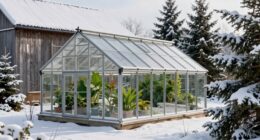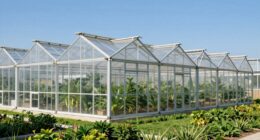
Many insulation myths suggest that adding more always keeps a greenhouse warmer, but over-insulating can trap heat and reduce natural solar gain. Poor installation, gaps, or using the wrong materials also lead to cold spots and air leaks, making your greenhouse colder despite extra insulation. Proper installation, balancing insulation with ventilation, and understanding how different materials perform are essential. Keep exploring to learn how to optimize your greenhouse’s climate and avoid common insulation mistakes.
Key Takeaways
- Over-insulating can trap heat and reduce solar gain, causing temperature fluctuations instead of maintaining warmth.
- Poor installation gaps, compression, or voids diminish insulation’s effectiveness and can lead to heat loss.
- Relying solely on insulation without proper climate control systems creates a false sense of security and uneven greenhouse temperatures.
- Using inappropriate or damaged insulation materials reduces thermal resistance and hampers heat retention.
- Neglecting regular inspection and maintenance allows moisture, mold, or damage to compromise insulation performance over time.
Why Is My Greenhouse Still Cold Despite Insulation?

Even with insulation, your greenhouse can still remain cold if other factors aren’t addressed. The type of insulation material you choose matters; some materials, like foam boards or bubble wrap, have better insulating properties than others. Additionally, insulation thickness plays a vital role—if it’s too thin, it won’t effectively trap heat. You might have invested in insulation, but if it’s not thick enough or isn’t made from suitable material, heat will escape, keeping the interior cold. Also, make sure there are no gaps or leaks around the insulation, as these can undermine its effectiveness. Properly selecting the right insulation material and increasing insulation thickness can greatly improve heat retention, ensuring your greenhouse stays warmer even during chilly days. Insulation effectiveness depends heavily on proper installation and material choice, which are crucial for maximizing thermal performance.
Common Myths About Greenhouse Insulation Debunked
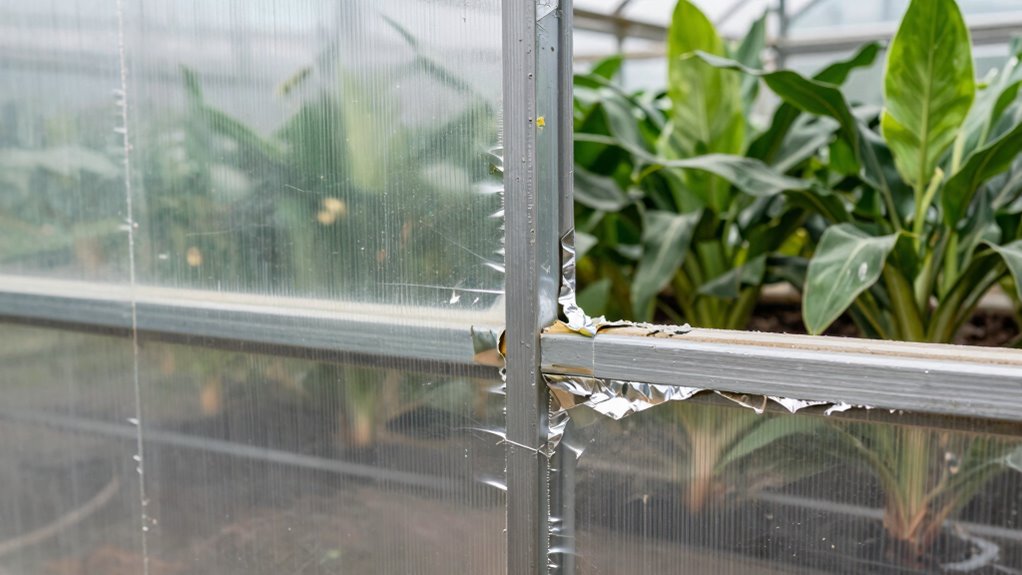
Many people believe that simply installing insulation will automatically keep their greenhouse warm, but this is a common misconception. While insulation can improve thermal resistance, it’s not a magic solution on its own. The effectiveness depends on the quality of the material used; low-quality options may have poor material durability, leading to gaps or degradation over time. Proper insulation must have high thermal resistance to reduce heat transfer, but durability ensures it remains effective season after season. Relying solely on insulation without considering these factors can give a false sense of security, leaving your greenhouse colder than expected. To truly optimize warmth, you need insulation that balances high thermal resistance with long-lasting material durability. Additionally, understanding comparative advantage principle can help optimize the overall design and energy efficiency of your greenhouse setup.
How Proper Ventilation Keeps Your Greenhouse Warm

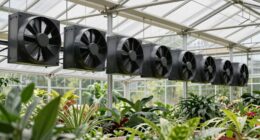
While insulation is essential for retaining heat, proper ventilation plays a crucial role in maintaining a warm and healthy greenhouse environment. Good airflow prevents excess humidity, reducing mold and disease risks. Passive airflow naturally circulates air, helping to balance temperature and humidity without extra equipment. Proper ventilation also:
- Promotes humidity control, preventing dampness that can harm plants
- Removes stale air, ensuring fresh oxygen reaches your crops
- Regulates temperature fluctuations, keeping your greenhouse consistently warm
- Prevents overheating during sunny days by allowing excess heat to escape
- Understanding airflow patterns enhances your ability to design effective ventilation systems for optimal climate control.
Does More Insulation Always Mean Better Heating?
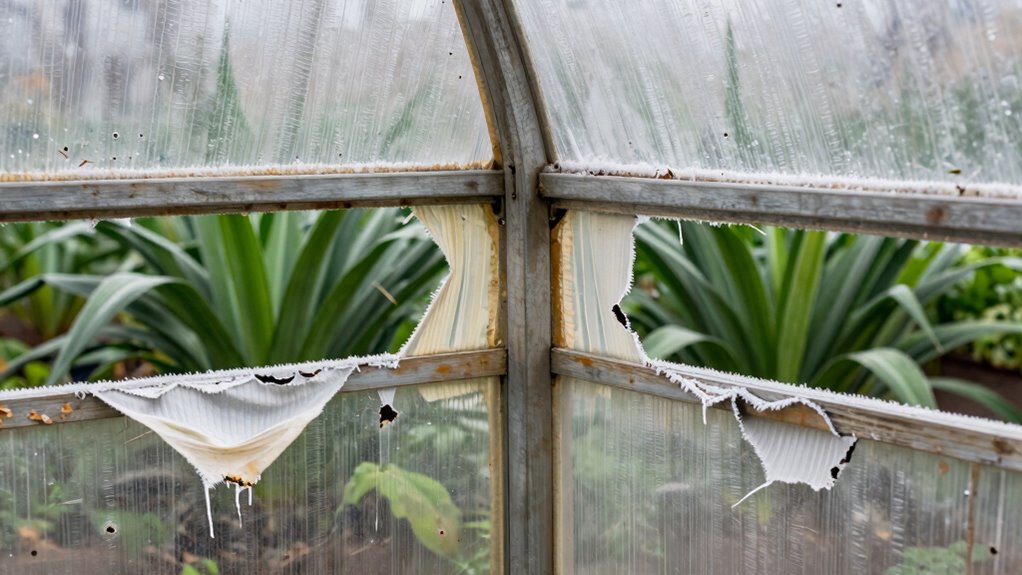
Adding more insulation might seem like the best way to keep your greenhouse warm, but it doesn’t always lead to better heating. Over-insulating can trap heat without allowing it to circulate effectively, reducing solar gain and causing temperature fluctuations. Instead, focusing on thermal mass—materials that absorb and slowly release heat—can help stabilize temperatures. This strategy ensures that daytime solar gain warms the thermal mass, which then radiates heat during cooler nights. Excess insulation can prevent this natural process, making your greenhouse colder than expected. Proper balance is key: insulation reduces heat loss, but effective thermal mass and controlled ventilation ensure consistent warmth. Remember, more insulation isn’t always better if it hinders natural heat flow and solar gain. Incorporating backup power solutions like generators or solar systems can help maintain consistent temperatures during extended cloudy periods or power outages.
Choosing Insulation Materials That Help Keep Your Greenhouse Warm

Choosing insulation materials that can withstand environmental stressors and maintain their insulating properties over time is crucial for long-term greenhouse performance material durability. When selecting insulation types, focus on those with high material robustness to withstand temperature fluctuations and humidity. Durable materials ensure long-lasting performance and reduce replacement costs. Consider options like rigid foam boards, which offer excellent insulation and resistance to moisture, or reflective bubble insulations that boost heat retention. You might also explore mineral wool for its fire resistance and durability. Additionally, double-layered or multilayered insulation systems can improve efficiency. Prioritizing insulation types with proven material durability helps prevent gaps or breakdowns over time, keeping your greenhouse warmer and more energy-efficient in the long run.
Installing Insulation Correctly: Why Gaps and Compression Matter
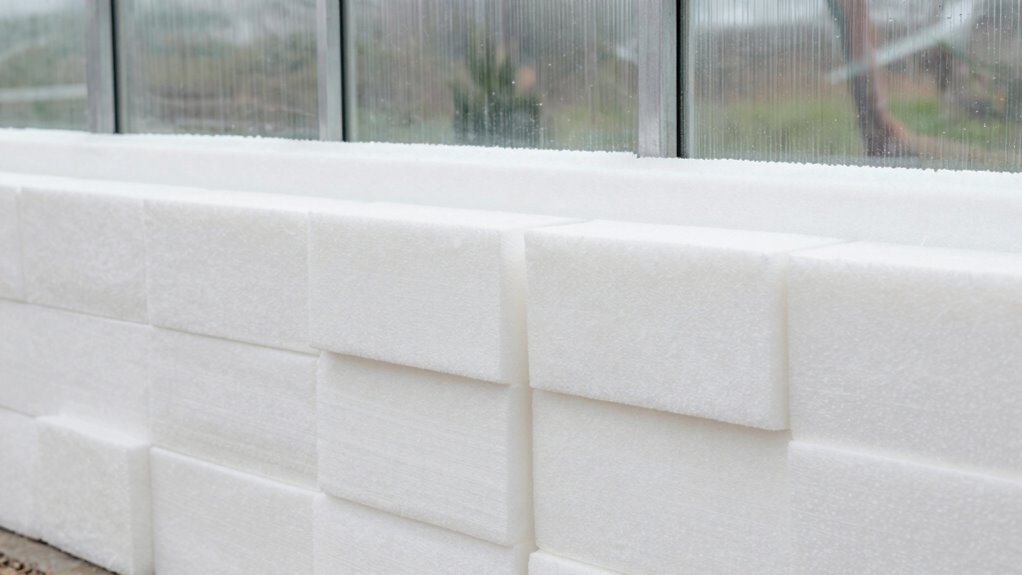
Proper installation is vital to guarantee your insulation performs effectively, as gaps and compression can considerably reduce its efficiency. Thermal gaps allow heat to escape, creating cold spots that undermine your greenhouse’s warmth. To prevent this, ensure insulation fits snugly without any openings or voids. Compression issues also matter—over-compressing insulation compresses air pockets, decreasing its ability to trap heat. Avoid squeezing insulation tightly into place, as this reduces its R-value and thermal performance. Take care to install panels or rolls smoothly and securely, maintaining consistent thickness throughout. Proper sealing and avoiding compression will maximize insulation effectiveness, keeping your greenhouse warmer and more energy-efficient. Additionally, understanding how installation quality impacts insulation performance can help you achieve better energy conservation and temperature regulation. Remember, well-installed insulation prevents unwanted thermal gaps and compression issues that could otherwise lead to heat loss.
How Insulation Quality Affects Your Greenhouse Climate

The quality of your insulation directly influences your greenhouse’s internal climate, determining how well it retains heat during cold months and keeps excess warmth out in summer. High-quality insulation offers better insulation durability, ensuring it lasts through seasons without degrading. It also provides superior moisture resistance, preventing mold and damage caused by humidity. When insulation is durable, you reduce energy costs and maintain a stable environment for your plants. Good insulation minimizes heat loss and prevents unwanted drafts, creating ideal growing conditions. Consider these benefits:
- Long-lasting performance in varying weather
- Resistance to mold and moisture buildup
- Consistent temperature regulation
- Reduced energy expenses
Investing in insulation quality can significantly impact your greenhouse’s overall climate control and operational efficiency.
Combining Insulation With Ventilation and Heating Strategies

To create an ideal greenhouse environment, you need to integrate insulation with effective ventilation and heating strategies. Proper insulation reduces heat loss, but without good ventilation efficiency, excess humidity and stale air can still cause problems. Ventilation helps regulate temperature and humidity, ensuring plants stay healthy. When combining insulation with ventilation, aim for controlled airflow that maintains warmth without causing drafts. Heating integration is also key; your heating system should work seamlessly with insulation to provide consistent warmth. Use thermostats and sensors to monitor conditions and adjust airflow and heat automatically. This integrated approach minimizes energy waste, keeps temperatures stable, and promotes optimal plant growth. Additionally, insulation materials play a crucial role in enhancing overall thermal performance. By balancing insulation, ventilation efficiency, and heating, you create a resilient environment that stays warm and healthy year-round.
Tips to Assess and Improve Your Greenhouse Insulation Effectiveness
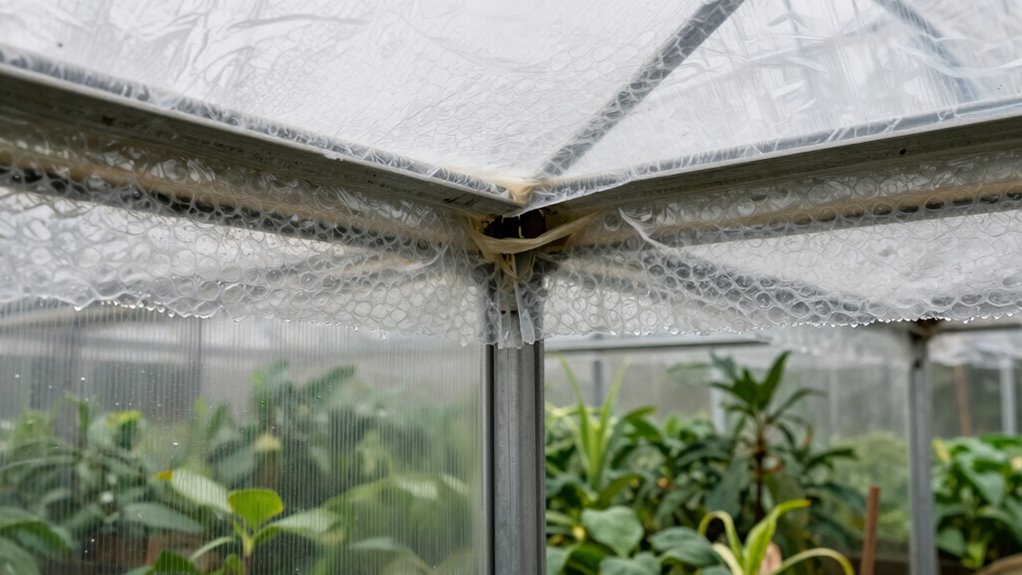
To improve your greenhouse’s insulation, start by checking for air leaks that could let warm air escape. Next, inspect the insulation layers to make sure they’re intact and properly installed. Finally, monitor temperature variances regularly to identify areas where insulation can be enhanced for better efficiency. Incorporating air quality considerations can also help maintain an optimal environment inside your greenhouse.
Check for Air Leaks
Finding air leaks is a crucial step in evaluating your greenhouse’s insulation. Small gaps can let in cold air, making your space harder to heat efficiently. To spot these leaks, check common trouble spots like:
- Around door and window frames
- At vent and exhaust openings
- Along the foundation and floor edges
- Near any seams or joints in the structure
Feel for drafts or use a lit incense stick to see if the smoke wavers near potential leaks. Sealing these insulation gaps with weatherstripping, caulk, or foam tape can drastically reduce heat loss. Regularly inspecting for air leaks ensures your greenhouse stays warmer and more energy-efficient, saving you money and improving plant health. Addressing these leaks is a simple, effective way to boost your insulation’s performance. Additionally, understanding waterproofing techniques can help prevent moisture-related issues that compromise insulation integrity.
Inspect Insulation Layers
After sealing air leaks around doors and windows, the next step is to assess the insulation layers themselves. Carefully inspect the material for damage, compression, or gaps that compromise effectiveness. Check for signs of moisture, mold, or discoloration, which indicate insulation failure. Material inspection helps guarantee your insulation layers are performing as intended. Use this table to evaluate different insulation types:
| Insulation Material | Key Inspection Tips |
|---|---|
| Foam boards | Look for cracks or warping |
| Fiberglass batts | Check for compression and gaps |
| Reflective foil | Ensure it’s intact and clean |
| Spray foam | Search for cracks or shrinkage |
Regular inspection keeps your greenhouse warm and energy-efficient.
Monitor Temperature Variances
Have you ever noticed uneven heating or cold spots in your greenhouse? Monitoring temperature variances is essential for effective climate control and insulation evaluation. Regular temperature monitoring helps identify problem areas that may be losing heat. Use digital thermometers or data loggers to track temperature fluctuations throughout the day, especially during cold nights. Keep a detailed record to analyze patterns and pinpoint insulation weaknesses. Consider placing sensors at different heights and locations for thorough insights. By assessing these variances, you can make targeted improvements, like sealing drafts or adding insulation where needed. Proper climate control relies on accurate temperature monitoring, ensuring your greenhouse stays warm and energy-efficient. Consistent checks allow you to optimize insulation and maintain a stable environment for your plants.
Common Mistakes to Avoid When Insulating Your Greenhouse
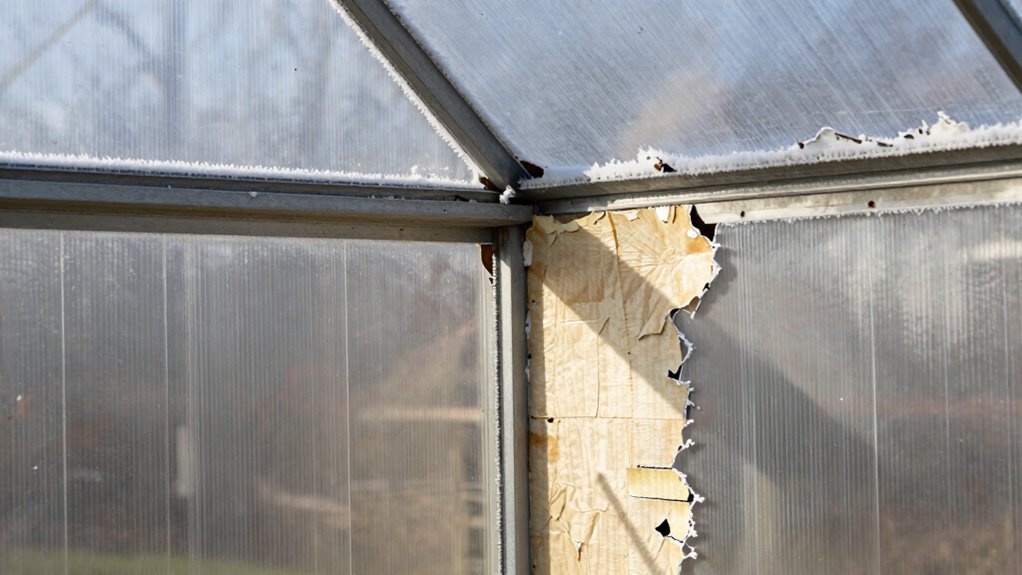
Insulating your greenhouse correctly is essential for maintaining ideal temperatures, but many beginners make common mistakes that can undermine their efforts. One key mistake is rushing the insulation installation without proper planning, which can lead to gaps and drafts that reduce efficiency. Another is poor material selection; choosing insulation not suited for greenhouse conditions or that doesn’t provide adequate thermal resistance can leave your plants vulnerable to cold. Be sure to research and select insulation materials designed for outdoor use, such as bubble wrap or rigid foam boards. Avoid over-insulating in areas prone to moisture buildup, which can cause mold or damage. Proper installation and appropriate material choice are crucial to creating an effective barrier that keeps your greenhouse warm and energy-efficient.
Frequently Asked Questions
Can Insulation Actually Cause My Greenhouse to Stay Colder?
Insulation can make your greenhouse stay colder if moisture gets trapped in it or if insulation installation isn’t done properly. Moisture buildup reduces insulation effectiveness, causing heat loss. Make sure you use the right type of insulation and install it correctly to prevent moisture issues. Proper installation keeps your greenhouse warmer, not colder, by maintaining better thermal control and avoiding the pitfalls of moisture-related insulation problems.
What Insulation Materials Are Best for Extreme Cold Climates?
In extreme cold climates, you should opt for insulation materials with high thermal resistance, like rigid foam boards or spray foam, which effectively block heat loss. Guarantee proper insulation installation to avoid gaps that reduce efficiency. These materials provide superior insulation, keeping your greenhouse warmer. Always verify the R-value and install carefully for best performance, especially in harsh winter conditions.
How Often Should I Inspect or Replace Greenhouse Insulation?
You should inspect your greenhouse insulation at least once every season to guarantee it remains effective. Regular inspection frequency helps you spot damage or wear early, allowing you to follow proper replacement guidelines promptly. If you notice tears, gaps, or significant deterioration, replace the insulation immediately to maintain ideal temperature control. Staying proactive with inspections and replacements keeps your greenhouse warmer and more energy-efficient, especially during extreme cold conditions.
Does Insulation Impact Humidity Levels Inside the Greenhouse?
Yes, insulation impacts humidity levels inside your greenhouse. Good insulation helps with humidity control by reducing drafts and moisture loss, maintaining stable conditions. However, its permeability matters; breathable insulation allows moisture exchange, preventing excess humidity, while non-permeable insulation can trap moisture, leading to issues like mold. You should choose insulation based on your humidity needs, ensuring it supports proper airflow and moisture regulation for healthy plant growth.
Are There Eco-Friendly Insulation Options for Greenhouses?
Yes, you can choose eco-friendly insulation options for your greenhouse. Sustainable materials like sheep’s wool, cellulose, and cork offer effective insulation while reducing environmental impact. These eco-friendly options help maintain consistent temperatures and humidity, supporting healthy plant growth. By switching to sustainable materials, you not only improve your greenhouse’s efficiency but also contribute to a greener future. Always verify the insulation’s R-value to guarantee the best thermal performance.
Conclusion
Don’t fall for the myth that more insulation always equals a warmer greenhouse. While insulation helps retain heat, proper ventilation and selecting the right materials are just as vital. In fact, over-insulating without allowing airflow can trap moisture and cause cold spots. To keep your greenhouse cozy, combine quality insulation with good ventilation and heating strategies. Investigate your setup regularly—it’s the best way to debunk false theories and create a thriving, warm environment for your plants.