To understand your greenhouse like a weather report, start by observing how different areas feel and behave—note which spots are warmer, cooler, moister, or sunnier. Use basic tools like thermometers, hygrometers, and light meters to gather data at plant level. Watch for patterns over time, adjusting vents, shading, or fans to balance temperature and humidity. Keep track of these conditions, and you’ll gain insights that help you optimize each microclimate for healthier plants. Keep exploring to learn more.
Key Takeaways
- Install sensors at plant canopy level to monitor temperature, humidity, and light for accurate microclimate data.
- Observe daily fluctuations in temperature and humidity to identify patterns and localized climate zones.
- Record environmental readings regularly to track changes and understand microclimate variations over time.
- Note soil moisture, airflow, and plant health indicators to assess how microclimates affect growth conditions.
- Adjust ventilation, shading, and watering based on real-time data to optimize each microclimate like a weather forecast.
Why Microclimates Are Key to Healthy Greenhouse Plants

Understanding microclimates within your greenhouse is essential because they directly influence plant health and growth. Microclimates affect soil composition, which determines nutrient availability and drainage, impacting root development. Variations in temperature and humidity within different zones can alter how soil retains moisture, influencing plant resilience. Recognizing these differences helps you optimize pest control strategies; certain microclimates may harbor pests or pathogens more easily. By adjusting watering, ventilation, and shading in targeted areas, you can create conditions that strengthen plants and reduce pest risks. Proper management of these microclimates ensures your plants thrive, leading to healthier growth and higher yields. Paying attention to these subtle environmental differences allows you to fine-tune your greenhouse for maximum productivity and plant well-being. Additionally, monitoring free-floating conditions can help you anticipate changes in microclimates, enabling proactive adjustments to maintain optimal plant health. Recognizing the significance of microclimate variations can guide you in implementing effective climate control measures tailored to each zone, especially since microclimate patterns can shift over time due to external weather influences. A thorough understanding of climate control techniques can further enhance your ability to stabilize microclimates and optimize plant growth conditions. Recognizing the significance of controlled environment agriculture further emphasizes the importance of managing these environmental nuances for optimal results.
What Are Microclimates and How Do They Affect Your Plants?

Microclimates can cause noticeable differences in temperature, humidity, and light within your greenhouse, directly influencing plant growth. Recognizing these variations helps you understand how plants adapt or struggle in specific areas. By adjusting your practices, you can optimize conditions and make certain of healthier, more resilient plants throughout your space. Implementing climate control systems can further enhance your ability to manage these microclimates effectively. Being aware of device vulnerabilities allows you to take proactive steps in safeguarding your equipment and ensuring consistent conditions. Additionally, understanding microclimate patterns enables you to predict and respond to environmental changes more accurately. Paying attention to environmental variability helps you fine-tune your management strategies for better plant health. Cultivating an awareness of microclimate dynamics empowers you to make informed decisions that promote thriving plant environments.
Microclimate Variations Impact
Even small differences in your garden’s landscape can create significant variations in temperature, humidity, and sunlight, all of which influence how your plants thrive. Microclimate diversity means that different areas may have distinct conditions, affecting growth and health. For example, a shaded corner might stay cooler and moister, while a south-facing spot receives more sunlight and warmth. Recognizing these variations helps you adapt your climate management strategies effectively. Understanding microclimates is key to cultivating a thriving, resilient garden. Additionally, being aware of climate variability can help you anticipate and mitigate potential issues caused by microclimate differences. Observing subtle microclimate patterns can reveal environmental influences that shape your garden’s unique conditions. By observing and documenting these subtle differences, you can develop more precise garden planning that takes microclimates into account.
Plant Adaptation Strategies
Have you ever noticed how some plants flourish in certain spots while struggling in others? That’s because plants develop adaptation strategies to survive microclimates. These strategies help reduce plant stress and improve resilience. For example, some plants may:
- Alter their leaf structure to minimize water loss in dry areas
- Adjust growth patterns to avoid cold drafts or intense sun
- Develop genetic adaptations over generations to tolerate specific temperature ranges
- Recognizing microclimate influences allows gardeners to optimize plant placement and care for better growth outcomes.
- Understanding plant adaptation strategies can help you create more resilient greenhouse environments.
- Implementing environmental awareness can further enhance plant health by tailoring care to specific microclimate conditions.
- Being aware of climate variability enables gardeners to anticipate and respond to changing conditions effectively.
How to Monitor Temperature, Humidity, and Light in Your Greenhouse

To keep your greenhouse conditions in check, you need the right monitoring devices for temperature, humidity, and light. Once you have them in place, you’ll learn to interpret the data they provide to guarantee ideal plant growth. Understanding how to read this information helps you make quick adjustments to create the perfect environment. Additionally, familiarizing yourself with wood movement can help you anticipate how your greenhouse materials may expand or contract with changing conditions, ensuring structural stability. Being aware of microclimates within your greenhouse can further optimize plant health by identifying localized variations in temperature or humidity. Recognizing how material expansion affects your greenhouse structure can help prevent potential damage caused by environmental changes, leading to more durable and resilient construction. Monitoring these factors allows for better management of environmental fluctuations, which are common in greenhouse settings. Paying attention to climate control systems can further enhance your ability to maintain consistent conditions and respond promptly to any variations.
Selecting Proper Monitoring Devices
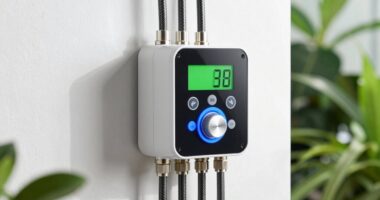
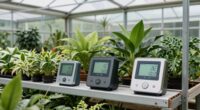
Choosing the right monitoring devices is essential for maintaining ideal conditions in your greenhouse. Proper selection ensures accurate readings of temperature, humidity, and light levels. When choosing devices, consider sensor placement to avoid direct sunlight or drafts, which can skew data. Make sure to regularly calibrate your devices to maintain accuracy. Look for versatile options like digital hygrometers, light meters, and temperature sensors that suit your specific microclimates.
- Position sensors at plant canopy level for precise data
- Calibrate devices periodically for consistent accuracy
- Use durable, weather-resistant equipment suitable for greenhouse environments
Interpreting Environmental Data
Wondering how to make sense of the data from your greenhouse monitors? Start by observing how temperature, humidity, and light levels fluctuate throughout the day. These readings reveal microclimates within your space, helping you optimize conditions for different plants. Pay attention to soil composition too, as it influences moisture retention and heat retention, impacting your readings. If you notice high humidity and temperature spikes, it might signal humidity issues or pest management concerns, since pests thrive in warm, damp environments. Consistent monitoring allows you to adjust fans, vents, or shading accordingly. Recognizing microclimate patterns in your greenhouse helps you create a balanced environment, reducing stress on your plants and preventing problems before they escalate. Accurate interpretation ensures your greenhouse stays healthy and productive.
How to Spot Microclimate Variations in Different Areas

Microclimate variations can often be subtle but considerably impact your greenhouse’s overall health. To spot these differences, observe how soil moisture varies across different areas—drier spots may need more watering, while wetter zones could cause root issues. Pay attention to airflow patterns; some corners might feel still and stagnant, increasing humidity and disease risk. Look for temperature differences during different times of the day, as some spots might warm or cool faster. Check plant growth and leaf color, which can signal microclimate issues. Consider these signs:
Monitor soil moisture, airflow, and plant health to identify subtle microclimate differences impacting your greenhouse.
- Variations in soil moisture levels
- Differences in airflow and air circulation
- Uneven plant health or growth patterns
Simple Tools and Tips for Reading Your Greenhouse Climate
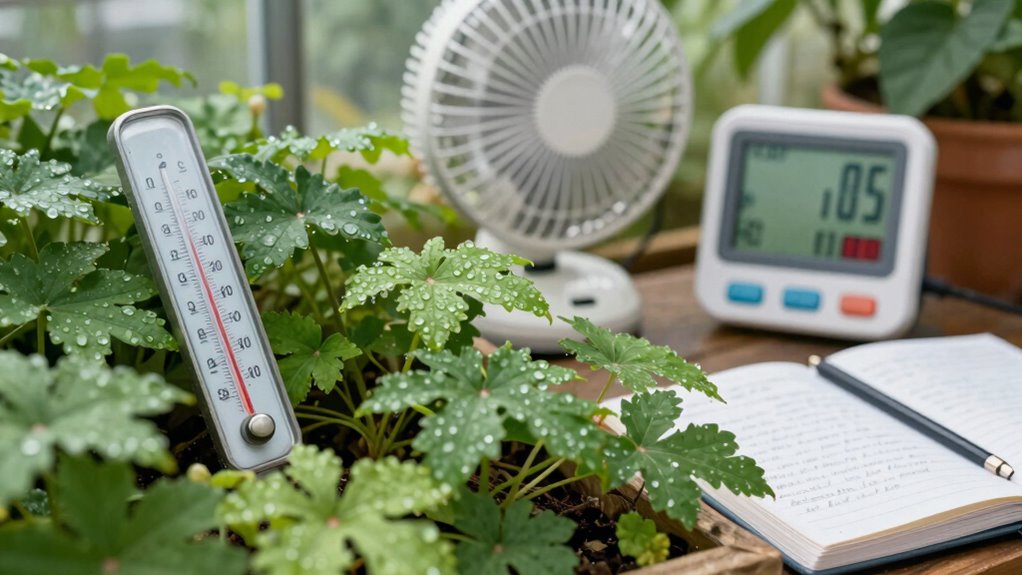
To effectively monitor these subtle microclimate differences, simple tools can make a big difference in your greenhouse management. A thermometer helps track temperature fluctuations, while a hygrometer measures humidity, essential for pest management and plant health. Use a soil pH tester to monitor soil amendments and guarantee ideal conditions. A moisture meter reveals watering needs, preventing over- or under-watering. Keep a small notebook or digital log to record readings and observe patterns over time.
| Tool | Purpose | Benefit |
|---|---|---|
| Thermometer | Track temperature | Prevents heat stress |
| Hygrometer | Measure humidity | Controls pests and disease |
| Soil pH tester | Check soil amendments | Optimizes plant growth |
| Moisture meter | Assess watering needs | Conserves water |
| Notebook | Record data and patterns | Improves microclimate management |
How to Adjust Ventilation, Shading, and Heating for Better Microclimates

Adjusting your greenhouse’s ventilation, shading, and heating systems is essential for maintaining ideal microclimates. Proper ventilation control helps prevent overheating and humidity buildup, while shading techniques protect plants from excessive sunlight. To optimize conditions:
Optimizing ventilation, shading, and heating ensures ideal greenhouse microclimates for healthy plant growth.
- Use adjustable vents or fans to regulate airflow based on temperature and humidity.
- Implement shading screens or shade cloths during peak sunlight hours to reduce heat stress.
- Set heating systems to maintain consistent temperatures during cold spells.
Creating and Managing Climate Zones for Diverse Plants
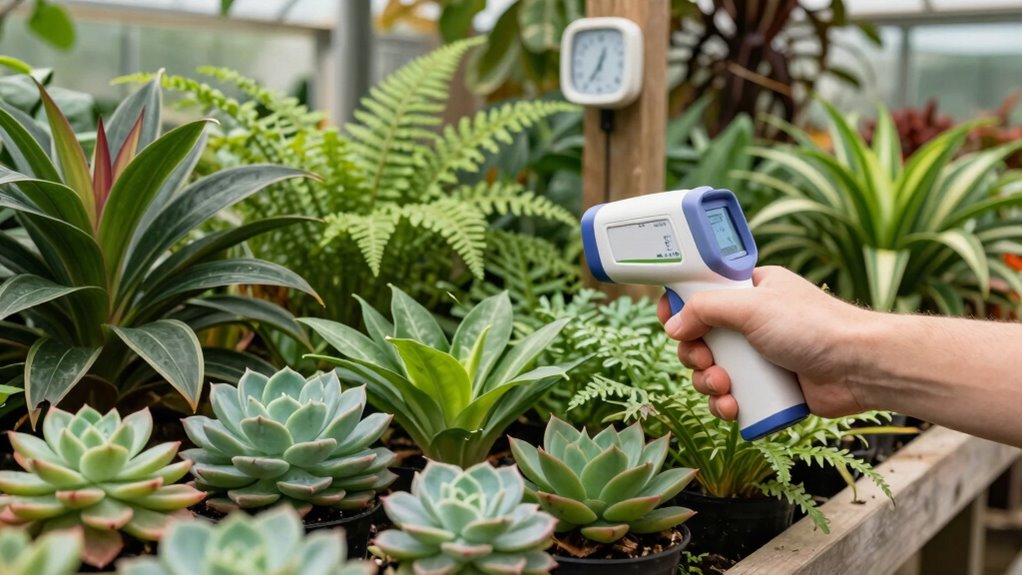
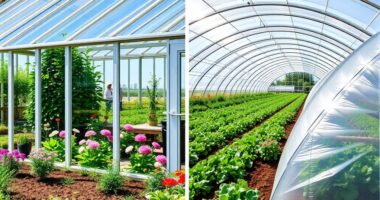
Creating distinct climate zones within your greenhouse allows you to grow a wider variety of plants successfully. By tailoring soil composition and microclimates, you can meet each plant’s specific needs. For example, moisture-loving plants thrive in shaded, humid zones, while drought-tolerant species prefer sunnier, well-drained areas. Managing pest populations becomes easier when you isolate vulnerable plants in specific zones, reducing risks and simplifying pest management. Consider dividing your greenhouse into sections, each with optimized conditions. This approach enhances plant health and yields.
| Zone Type | Ideal Conditions |
|---|---|
| Tropical | Warm, high humidity, rich soil |
| Succulents & Cacti | Dry, well-drained, sandy soil |
| Herbs & Vegetables | Moderate moisture, balanced soil |
| Shade-loving Plants | Low light, moist soil |
| Flowering Plants | Bright, consistent warmth, fertile soil |
Frequently Asked Questions
How Can I Identify Microclimates Without Specialized Equipment?
You can identify microclimates by observing your greenhouse’s soil moisture and sunlight exposure throughout the day. Notice areas where the soil stays wetter or drier, indicating different moisture levels. Check how long sunlight hits specific spots; some areas may be shadier or sunnier. These patterns reveal microclimates, helping you optimize plant placement, even without specialized equipment. Simply paying attention to these natural cues makes a big difference.
What Are Common Signs of Microclimate Stress in Plants?
You’ll notice signs of microclimate stress in your plants through changes like leaf curling and uneven soil moisture. When soil dries out quickly or stays overly wet, it indicates a microclimate issue. Leaf curling often signals temperature stress or humidity problems. Keep an eye on these signs, and adjust watering or ventilation accordingly to create a more stable environment, helping your plants thrive despite microclimate fluctuations.
How Often Should I Record Climate Data in My Greenhouse?
You should record climate data in your greenhouse at least once daily to guarantee climate consistency. Surprisingly, consistent data analysis over a month can reveal microclimate patterns that affect plant health. Regular recording helps you catch fluctuations early, allowing timely adjustments. This proactive approach ensures your greenhouse maintains ideal conditions, preventing stress and promoting healthy growth. So, make it a daily habit to track temperature, humidity, and light levels diligently.
Can Microclimates Change Throughout the Year?
Yes, microclimates can change throughout the year due to seasonal shifts and climate fluctuations. You might notice variations caused by temperature swings, sunlight changes, or shifts in wind patterns. These subtle differences affect your greenhouse’s microclimate, so it’s important to keep monitoring. By staying attentive to seasonal changes, you can adjust your environment to maintain ideal conditions for your plants year-round.
What Plants Are Most Sensitive to Microclimate Variations?
You’ll find shade-loving plants and drought-tolerant species are most sensitive to microclimate variations. Shade-loving plants thrive in cooler, shadier spots, so slight changes in sunlight or airflow can impact their growth. Drought-tolerant species depend on consistent moisture levels; if microclimates shift, they might struggle with water stress. Pay close attention to these plants’ responses, adjusting your greenhouse conditions to support their specific needs.
Conclusion
Think of your greenhouse as a living mosaic, each tile representing a microclimate. By reading these subtle shifts like a weather report, you become the skilled artist shaping a vibrant, balanced landscape. When you tune into temperature, humidity, and light, you’re guiding your plants through a tailored climate journey. Mastering these microclimates lets you craft a thriving, diverse garden—a masterpiece where every plant feels right at home.