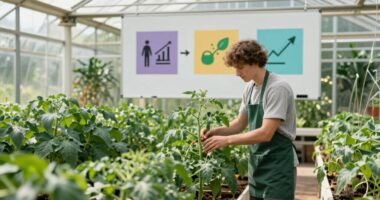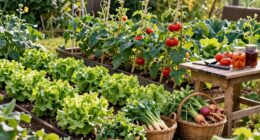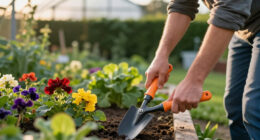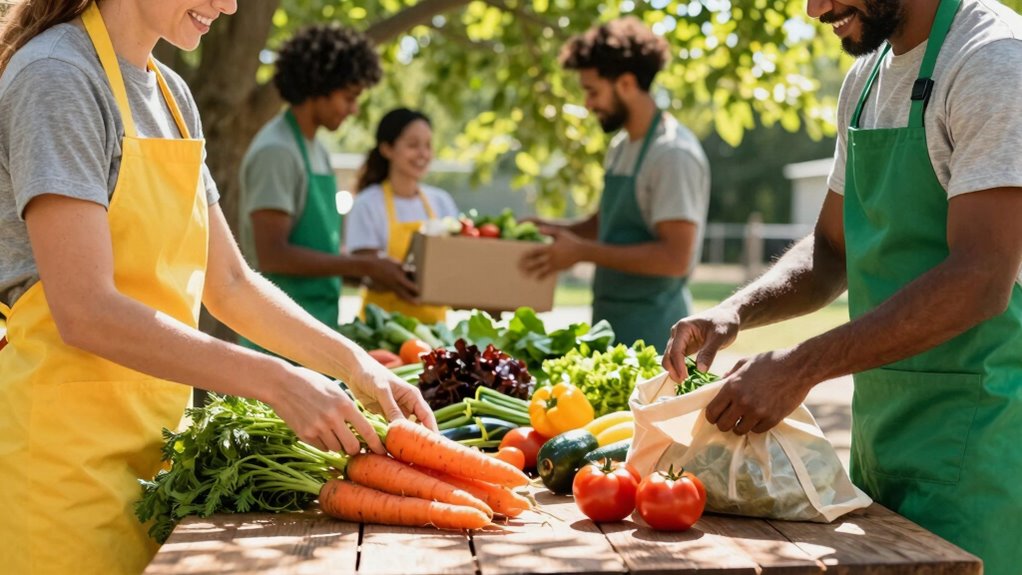

To donate produce safely and consistently, plan your harvest around peak ripeness, handle fruits and vegetables gently, and clean them thoroughly before storage. Use proper containers, maintain cold temperatures, and keep detailed records of your donations. Building strong partnerships with local food banks and scheduling regular donations guarantee ongoing support for your community. Keep safety and quality top priorities—exploring more tips will help you develop an efficient and trustworthy donation process.

Get garden gear delivered free — and shop member deals
- Fast, free delivery on millions of items
- Access to Prime Big Deal Days deals on October 6–7
- Prime Video, Amazon Music and more included
Key Takeaways
- Establish regular donation schedules and clear communication with community partners to ensure consistent produce distribution.
- Train volunteers on safe handling, hygiene, and proper produce identification to maintain quality and safety.
- Use proper sourcing, storage, and transportation methods to prevent spoilage and contamination during donation.
- Implement accurate record-keeping and labeling to ensure transparency, accountability, and regulatory compliance.
- Plan harvest timing carefully, monitor crop maturity, and employ pest prevention for high-quality, safe produce donations.
As an affiliate, we earn on qualifying purchases.
How to Safely and Consistently Donate Community Harvests
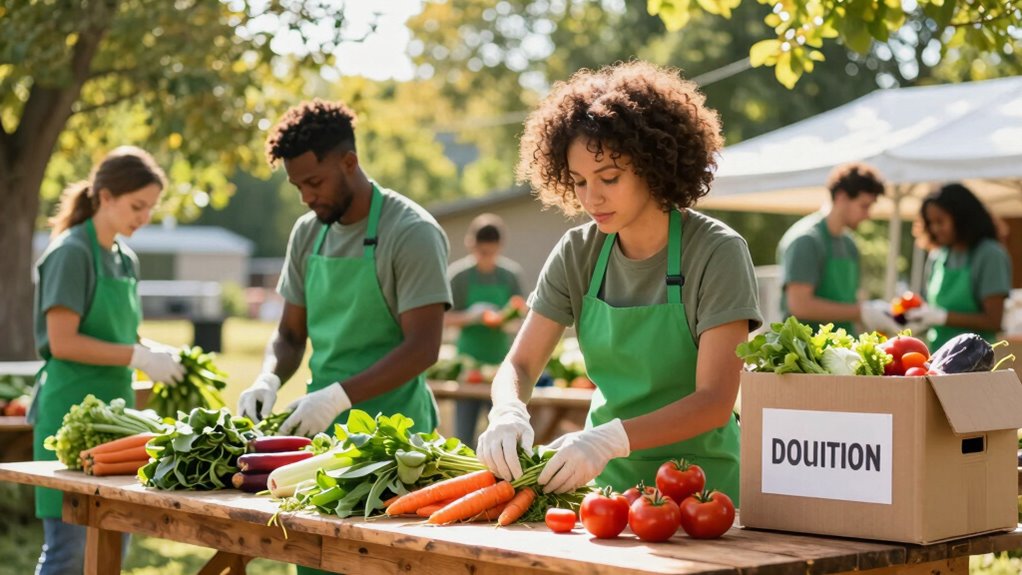
To donate Community Harvests safely and consistently, start by establishing reliable sourcing and storage practices. Proper volunteer training is essential; ensure everyone understands safe handling and hygiene standards. Educate volunteers on how to identify ripe, quality produce and avoid contaminated or spoiled items. Implement donation tracking systems to monitor what’s donated, when, and where it’s delivered. This not only helps you stay organized but also guarantees accountability and transparency. Regularly review procedures with volunteers, reinforcing safety protocols. Keep detailed records of donations for food safety compliance and to prevent discrepancies. Utilizing proper storage techniques ensures the produce remains fresh and safe during transportation and distribution. Developing a consistent donation schedule can also help maintain a steady supply and build trust within the community. Additionally, fostering a culture of food safety awareness among volunteers promotes ongoing vigilance and adherence to safety standards. Consistent training and accurate donation tracking form the backbone of a trustworthy donation process, helping you sustain a reliable supply of quality produce for those in need. Incorporating environmental considerations such as minimizing waste and proper disposal methods further enhances the safety and sustainability of your donation efforts. Moreover, understanding the importance of proper handling practices can prevent spoilage and ensure the safety of donated items from farm to table.
Planning Your Harvest for Safety and Quality

Effective planning is essential to guarantee your harvest maintains safety and high quality from the moment it begins. Start by evaluating your planting schedule to ensure crops mature at ideal times, reducing the risk of overripe produce. Incorporate pest prevention strategies early on, like crop rotation and natural barriers, to minimize pest damage and avoid chemical treatments. Conduct soil testing before planting to determine nutrient levels and identify any contaminants, ensuring a healthy growing environment. Proper soil health directly impacts produce safety and flavor. Keep detailed records of planting and pest control measures, so you can adapt your plan as needed. Utilizing soil testing techniques can further optimize soil health and crop safety. Additionally, consulting with professional agricultural services can provide tailored advice to improve your harvest quality. Regularly monitoring crop development throughout the season allows for timely interventions and adjustments. Staying informed about best practices in produce safety can help prevent contamination issues and ensure the sustainability of your donation efforts. By proactively managing these elements, you’ll produce safer, higher-quality produce ready for donation and community support.
Best Practices for Harvesting and Handling Produce

To guarantee your produce stays fresh and safe, you need to focus on harvest timing and proper handling. Selecting ripe, healthy fruits and vegetables and storing them correctly can make a big difference. Paying attention to these best practices helps maintain quality and reduces waste during distribution. Incorporating consistent feedback during the harvesting process can further improve the quality of the produce. Additionally, understanding the essential oils for produce preservation can aid in natural methods to extend freshness and protect against spoilage. Proper post-harvest handling techniques, such as cooling and gentle transportation, are essential for preserving produce integrity from field to market. Employing exfoliation techniques can also help in preparing produce for certain preservation methods, ensuring surface cleanliness. Utilizing smart monitoring devices can optimize storage conditions and prevent spoilage during transit.
Harvest Timing and Selection
Timing your harvest correctly is crucial to ensuring produce reaches its peak flavor, nutrition, and shelf life. You should monitor crop maturity closely, harvesting when fruits and vegetables are at their ideal ripeness. Proper crop rotation helps prevent soil depletion and reduces pest populations, making pest management more effective and less reliant on chemicals. By understanding the growth stages of your crops, you can select the right time to harvest, avoiding underripe or overripe produce. Consistent timing also helps ensure uniformity in donation quality. Keep an eye on weather patterns, as extreme conditions can affect harvest windows. Proper timing not only maximizes the nutritional value but also minimizes waste, making your donations more beneficial to community recipients. Utilizing AI tools can assist in predicting optimal harvest times based on environmental data, further enhancing your donation efforts. Additionally, understanding crop maturity indicators can improve your ability to determine the perfect harvest window. Regularly inspecting your crops for visual cues and texture changes can also serve as reliable harvest indicators to guide your timing decisions. Recognizing the importance of environmental factors can further refine your harvest schedule to adapt to changing conditions.
Proper Handling and Storage
Proper handling and storage are essential steps to preserve the quality and safety of your harvested produce. Handle fruits and vegetables gently to prevent bruising, and wash them in clean, cold water. Keep produce at appropriate temperatures; leafy greens and herbs should be stored in damp conditions, while root vegetables prefer dry storage. Use sanitized containers to avoid contamination. For organic certification standards, ensure produce remains free from pesticides and contaminants. Incorporate community composting by composting scraps responsibly, reducing waste and enriching soil. Proper storage also involves labeling and rotating stock to prevent spoilage. Additionally, understanding food safety practices can help minimize the risk of contamination and spoilage. Proper handling of produce can also help maintain the wave and wind of freshness during transportation and storage. It is also helpful to monitor storage conditions regularly to adapt to any changes in temperature or humidity that could affect produce quality. Maintaining appropriate humidity levels is vital for prolonging freshness, especially during transportation. A further consideration is market requirements, which can influence how produce should be prepared and stored before donation. Here’s a quick reference:
| Produce Type | Storage Method | Tips |
|---|---|---|
| Leafy Greens | Refrigerate in damp cloth | Use breathable containers |
| Root Vegetables | Cool, dry storage | Keep in dark, ventilated space |
| Herbs | Short-term refrigeration | Keep in water or moist paper towels |
How to Clean, Store, and Transport Your Harvest Properly
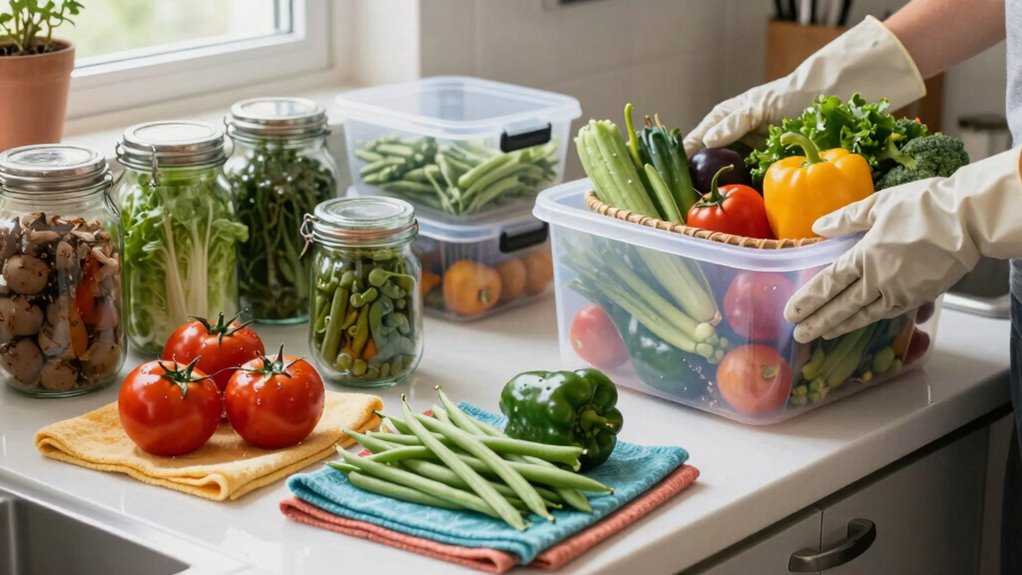
Cleaning, storing, and transporting your harvest correctly can make a significant difference in preserving its freshness and quality. Proper cleaning removes dirt and bacteria, setting the stage for safe transport. To do this effectively:
- Rinse produce gently with cool water, avoiding soap or chemicals.
- Dry thoroughly to prevent mold and decay.
- Use breathable containers or crates that support proper airflow during storage and transit.
- Applying a methodical approach to each step helps ensure consistency and thoroughness in handling your harvest.
When storing, keep items at appropriate temperatures to maintain freshness. For transport, ensure your produce is secure to prevent bruising and damage. Always prioritize safe transport by handling with care and using clean, sturdy containers. These steps help maintain the quality of your harvest and ensure it arrives ready for donation.
Setting Up Regular Donation Schedules and Building Community Partnerships
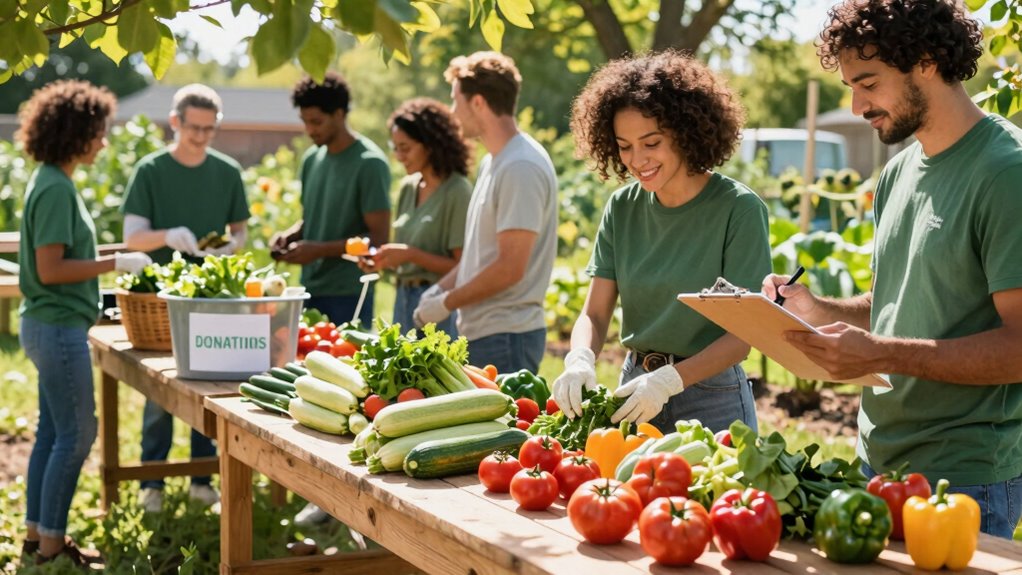
Establishing a consistent donation schedule is key to guaranteeing your community benefits regularly from your harvest. To do this, coordinate volunteer efforts effectively, ensuring there’s always help available for collection and distribution. Building strong community partnerships with local food banks, shelters, and nonprofits creates a reliable network for your donations. Consider offering donation incentives, like recognition or small rewards, to motivate volunteers and partner organizations to stay engaged. Regular schedules help streamline the process, making donations predictable and manageable for everyone involved. Clear communication about deadlines and pick-up times encourages cooperation. By staying organized and fostering trust, you guarantee your produce reaches those in need consistently, strengthening community ties and maximizing your harvest’s impact.
Essential Food Safety Guidelines for Food Donations
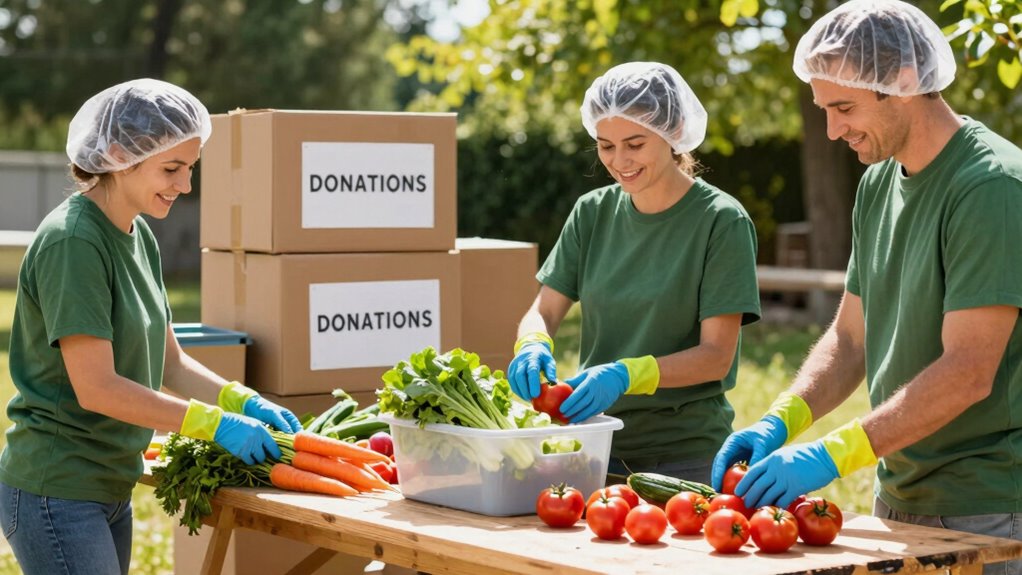
Once you’ve set up a reliable donation schedule and built strong community partnerships, it’s important to prioritize food safety to protect those who will receive your donations. To guarantee proper donation logistics and maintain food safety, follow these key guidelines:
- Keep produce at proper temperatures—refrigerate or cool items promptly to prevent spoilage.
- Avoid cross-contamination by washing hands, cleaning surfaces, and separating raw from cooked foods.
- Inspect all produce for signs of spoilage, mold, or damage before donating.
How to Label and Document Your Donations Correctly

Ever wonder why proper labeling and documentation are crucial for food donations? Accurate labeling ensures donors and recipients know what’s inside, reducing confusion and waste. To maintain labeling accuracy, include essential details like the type of produce, quantity, harvest date, and any relevant handling instructions. Follow documentation best practices by keeping clear records of each donation, including date, description, and weight or volume. This helps track donations for reporting and accountability, ensuring compliance with local regulations. Use consistent formats and clear handwriting or digital entries to prevent errors. Proper labels and thorough documentation not only streamline the donation process but also protect both you and the receiving organization, fostering trust and transparency in community giving efforts.
Overcoming Common Challenges in Community Food Donations
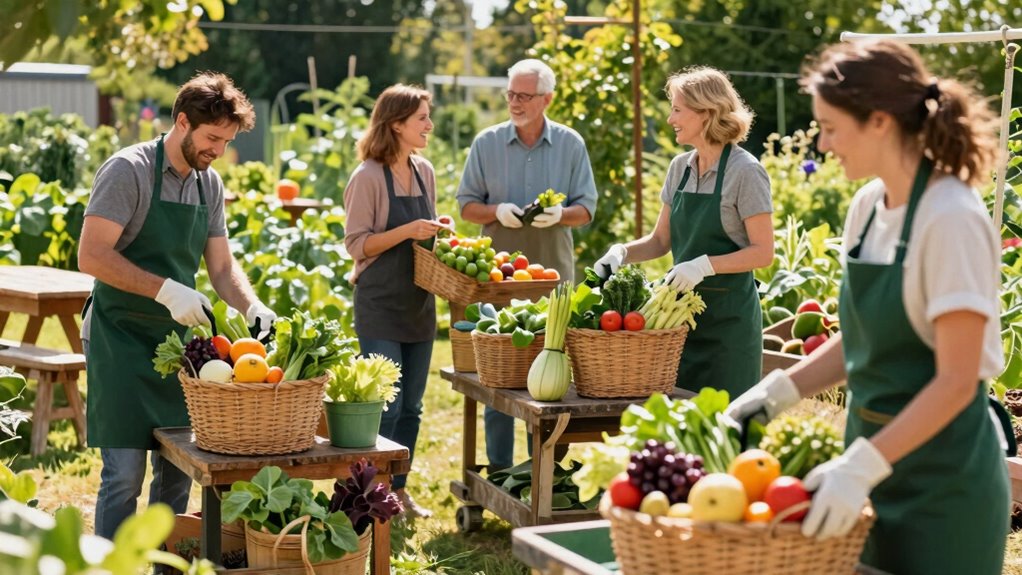
You’ll need to prioritize food safety to protect those who receive your donations, which can be challenging with varied food sources. Managing donation consistency is also key to ensuring food banks are reliably stocked without waste. By addressing these issues directly, you can make a bigger impact and reduce food waste in your community.
Ensuring Food Safety
How can community organizations effectively guarantee food safety amid donation challenges? First, prioritize pest control by inspecting produce regularly and keeping storage areas clean to prevent contamination. Second, pay close attention to harvest timing; collecting produce at peak ripeness reduces spoilage risks and ensures freshness. Third, implement strict handling procedures, such as washing produce thoroughly and using proper refrigeration, to minimize bacterial growth. Consistent communication with donors about best practices helps maintain quality. Regular training on food safety protocols equips volunteers to identify and address potential issues early. Together, these steps help you navigate common hurdles, safeguarding the health of those you serve while maintaining the integrity of donated produce.
Managing Donation Consistency
Maintaining a steady flow of quality donations can be challenging for community organizations, especially when donor participation fluctuates or supplies become unpredictable. To manage this, establish clear communication with donors about your needs and deadlines. Implement crop rotation strategies to diversify produce sources, reducing reliance on a few donors and improving consistency. Also, effective pest management guarantees healthy crops, leading to more reliable harvests. Here’s a simple overview:
| Strategy | Benefit |
|---|---|
| Regular communication | Builds donor trust and commitment |
| Crop rotation & pest management | Ensures stable, high-quality yields |
Addressing Food Waste
Addressing food waste is a crucial step in overcoming common challenges in community food donations. To minimize waste, focus on three key areas.
- Inspect produce carefully for garden pests or spoilage before donating, ensuring only fresh, safe items reach recipients.
- Implement proper storage techniques to prolong freshness, reducing the chance of spoilage during transit or storage.
- Recycle or compost leftover scraps to enrich soil, preventing waste from ending up in landfills and supporting community gardening efforts. By managing these aspects, you decrease unnecessary waste, support soil enrichment projects, and contribute to a more sustainable donation process. Keeping produce healthy and avoiding pest issues helps ensure donations are safe and useful, ultimately reducing food waste and strengthening community resilience.
Inspiring Ongoing Giving Through Community Engagement
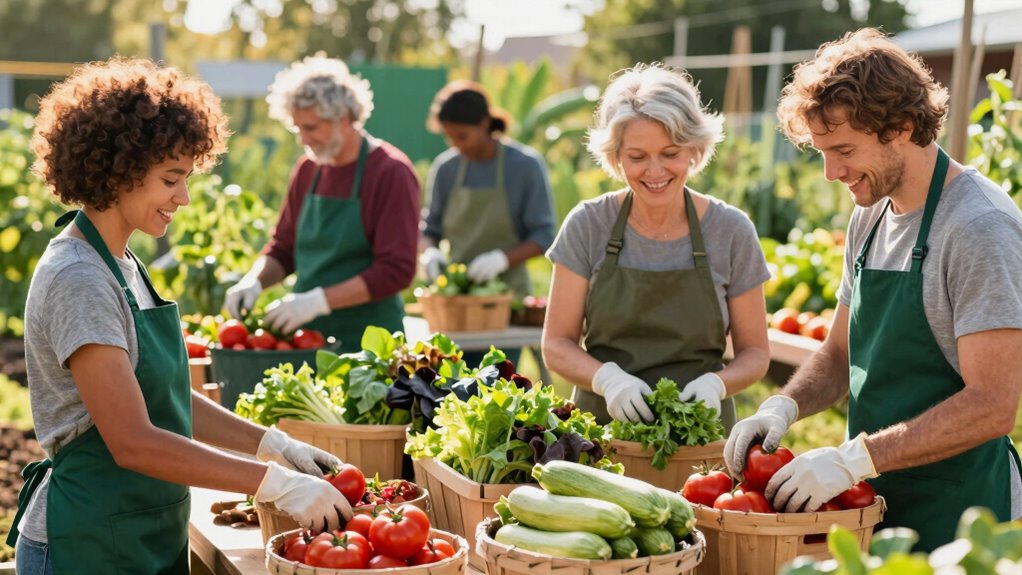
Community engagement is a powerful way to inspire ongoing giving, turning donors into active participants in your mission. By focusing on volunteer coordination, you create meaningful opportunities for community members to get involved, fostering a sense of ownership and connection. Effective community outreach helps you share your goals clearly, inviting broader participation and support. When people see how their contributions directly impact others, they’re more likely to give consistently. Host events, workshops, or farm tours to strengthen relationships and demonstrate transparency. Recognize volunteers’ efforts publicly, reinforcing their value. This ongoing interaction builds trust and loyalty, encouraging community members to donate produce regularly. Ultimately, engaging your community transforms donors into advocates who are committed to your mission long-term.
Frequently Asked Questions
What Legal Requirements Exist for Donating Homegrown Produce?
You should guarantee your homegrown produce complies with local health and safety standards to avoid legal issues. It’s wise to have liability insurance in case of any claims related to your donation. Keep donation documentation, like receipts or logs, to prove your contributions and meet any organizational requirements. By following these steps, you can donate produce safely and confidently, knowing you’re protected and compliant with relevant legal requirements.
How Can I Encourage Others to Participate in Community Harvests?
You can encourage others to participate in community harvests by engaging in community outreach and sharing your experiences on social media. Post photos and stories about your donations to inspire friends and neighbors. Invite them to join events or organize a group donation. By highlighting the positive impact and making participation easy and fun, you motivate others to contribute, creating a stronger, more connected community dedicated to giving back.
Are There Specific Certifications Needed for Donating Produce?
Think of your produce as a gift wrapped in safety and trust; no special certifications are strictly required, but having an organic certification can boost confidence. Ensuring your produce meets food safety standards is like setting a sturdy foundation for a house—essential and reassuring. While certifications aren’t mandatory, adhering to food safety practices guarantees your donation remains fresh and safe, lighting the way for others to follow in your generous footsteps.
How Do I Handle Donations of Produce With Minor Blemishes or Imperfections?
When donating produce with minor blemishes or imperfections, you should still adhere to produce quality and donation standards. Remove any visibly rotten or moldy parts, and package the rest carefully to prevent further damage. Clearly label the produce if necessary, so recipients understand its condition. This way, you guarantee your donation is safe, useful, and aligns with community standards, helping reduce food waste and support those in need effectively.
What Resources Are Available for Training Volunteers in Safe Harvesting Practices?
You can find volunteer safety and harvest training resources through local agricultural extension offices, nonprofit organizations, and online platforms like USDA’s Cooperative Extension Service. These programs offer hands-on workshops, instructional videos, and safety guidelines to guarantee proper harvesting practices. By participating in these trainings, you’ll learn how to handle produce safely, minimize waste, and protect volunteers, making your donations more effective and sustainable.
Conclusion
By turning your harvest into a steady stream of generosity, you become the heartbeat of your community’s well-being. With careful planning and unwavering commitment, your produce can bloom into hope and nourishment for those who need it most. Think of your efforts as seeds of kindness, growing into a garden of lasting impact. Keep your dedication steady, and watch how your giving transforms your community into a vibrant tapestry of care and connection.
Fall yard work Picks
leaf blowers
As an affiliate, we earn on qualifying purchases.