Proper ventilation is key to keeping your greenhouse plants healthy. It helps regulate temperature and humidity, prevents stagnant air, and reduces the risk of mold, pests, and diseases. By using exhaust fans, vents, and airflow management, you guarantee fresh, oxygen-rich air circulates evenly around your plants. Monitoring humidity and adjusting vents or fans as needed keeps your environment ideal. Continue exploring to learn how to optimize your ventilation for robust, thriving plants.
Key Takeaways
- Proper ventilation balances temperature and humidity, preventing mold, pests, and fungal diseases that threaten plant health.
- Use exhaust fans, vents, and automatic openers to promote continuous airflow and remove stale, humid air.
- Regularly monitor environmental conditions with hygrometers and thermometers to adjust ventilation as needed.
- Adequate air circulation supports photosynthesis, strengthens stems, and ensures even distribution of fresh air.
- Tailor ventilation strategies to weather conditions to avoid drafts in cooler weather and excessive drying in hot days.
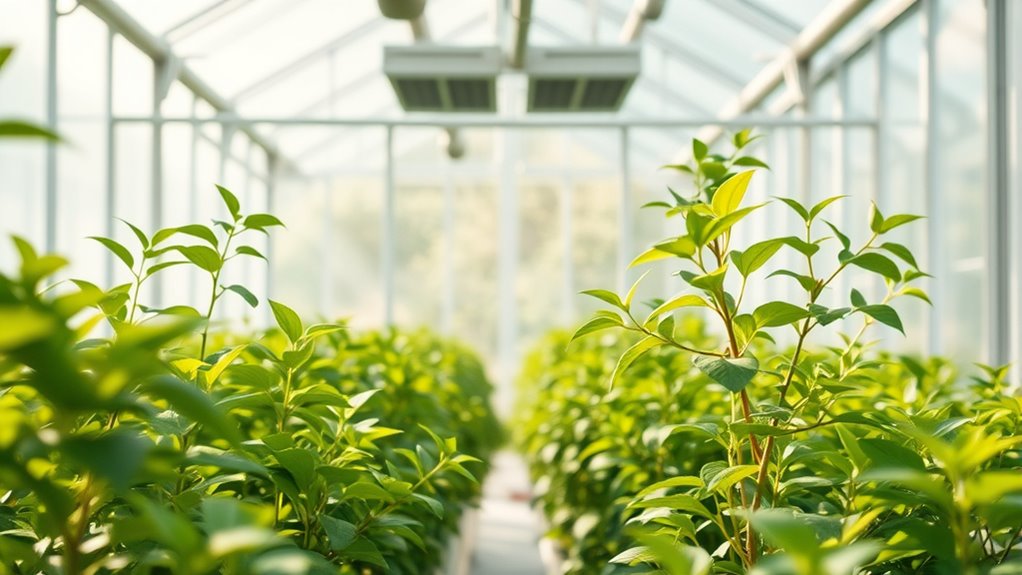
Proper ventilation is essential for healthy greenhouse plants, as it helps regulate temperature, control humidity, and prevent disease. When you ensure good air circulation inside your greenhouse, you create an environment where plants can thrive without the risk of overheating or excess moisture buildup. Air circulation is the backbone of effective ventilation because it distributes fresh air evenly, preventing pockets of stagnant air that can foster mold, mildew, or pests. You want to design your ventilation system so that air flows smoothly throughout the space, removing stale air and bringing in fresh, oxygen-rich air that plants need for photosynthesis and overall health.
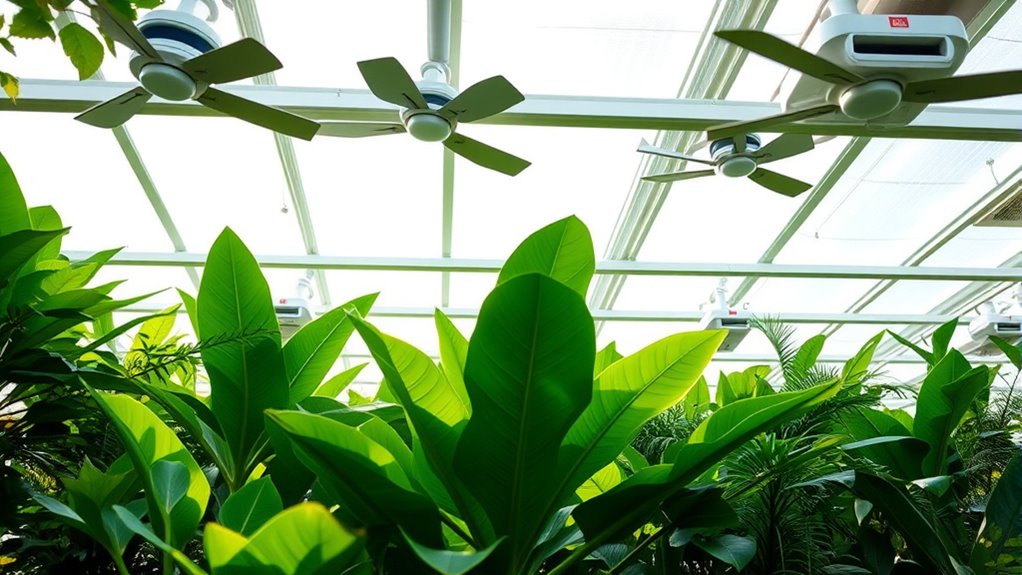
Good airflow keeps greenhouse plants healthy by preventing mold, controlling temperature, and supporting photosynthesis.
Humidity control plays a crucial role in maintaining your plants’ vitality. If the humidity level gets too high, it can lead to fungal infections, root rot, and other moisture-related issues. Conversely, too low humidity can cause stress, leaf curling, and poor growth. By managing air exchange, you help keep humidity at optimal levels. Properly ventilated greenhouses allow excess moisture to escape, reducing the likelihood of disease. You might incorporate exhaust fans, roof vents, or side vents to facilitate this process. These systems work together to promote continuous airflow, which keeps humidity in check without creating drafts that could harm delicate plants.
In practical terms, you should monitor the environment regularly. Use hygrometers to measure humidity and thermometers for temperature. When you notice humidity climbing beyond comfortable levels, increase ventilation to promote evaporation and moisture removal. During hot days, opening vents or turning on fans prevents overheating and encourages cooling through air movement. In cooler weather, you might need to adjust vents carefully to avoid drafts but still allow fresh air in. It’s important to strike a balance—too much airflow can dry out plants, while too little can lead to stagnation and disease. Additionally, understanding the importance of air circulation can help optimize your greenhouse conditions for healthy plant growth.
Your choice of ventilation equipment directly impacts air circulation and humidity control. Automatic vent openers, for example, can open and close based on temperature, ensuring consistent conditions without manual effort. Fans can be strategically placed to enhance air movement, especially in larger greenhouses. By maintaining a steady flow of air, you help your plants develop stronger stems and healthier leaves, as they receive a constant supply of fresh air and are less prone to fungal issues. Ultimately, effective ventilation isn’t just about installing equipment; it’s about actively managing airflow to create a stable, healthy environment where your plants can flourish.
Frequently Asked Questions
How Does Ventilation Affect Humidity Levels in a Greenhouse?
Ventilation directly impacts humidity levels in your greenhouse by improving air circulation, which helps remove excess moisture. When you increase ventilation, you promote moisture control, preventing humidity from rising too high. This keeps the environment balanced, reducing the risk of mold and plant diseases. Proper airflow ensures fresh air enters and stale, moist air exits, maintaining ideal humidity levels for healthy plant growth.
What Are the Best Ventilation Types for Different Plant Species?
You’ll want to pick ventilation types based on your plant’s needs and airflow patterns. For delicate orchids, choose gentle exhaust fans or automated vents to prevent drafts, while robust vegetables thrive with cross-ventilation and automatic fans that respond to temperature shifts. Ventilation automation ensures ideal airflow without your constant fussing, letting you pretend you’re a master horticulturist while your plants happily breathe easy.
Can Poor Ventilation Lead to Pest Infestations?
Poor ventilation can definitely lead to pest infestations because it hampers airflow management, creating humid, stagnant conditions that pests love. Without proper pest prevention, pests thrive and spread quickly. To avoid this, make sure your greenhouse has good airflow, regular ventilation checks, and proper circulation. This helps keep humidity levels in check, reduces pest hiding spots, and ultimately protects your plants from unwanted invasions.
How Often Should Greenhouse Ventilation Systems Be Maintained?
Ever wonder how often you should check your ventilation system? You should perform regular maintenance on your ventilation system at least every three to six months, depending on usage and environmental conditions. A consistent maintenance schedule ensures your system runs efficiently, prevents pest issues, and maintains ideal plant health. Don’t wait for problems to arise—stay proactive and inspect your ventilation system regularly to keep your greenhouse thriving.
Does Ventilation Influence the Growth Rate of Greenhouse Plants?
Yes, ventilation considerably influences the growth rate of your greenhouse plants. By improving air circulation, you guarantee fresh air reaches your plants, reducing disease risk and promoting healthy development. Proper ventilation also aids temperature control, preventing overheating or cold stress that can slow growth. Consistent air circulation and temperature regulation create an ideal environment, helping your plants thrive and grow faster. Regularly maintaining your ventilation system keeps these benefits consistent.
Conclusion
By mastering proper ventilation, you’re opening the secret to thriving greenhouse plants. Imagine turning your space into a lush, vibrant jungle where every leaf breathes freely, and pests have nowhere to hide. Good airflow isn’t just a detail—it’s the heartbeat of a healthy greenhouse. So, keep those vents open and let fresh air be your plants’ best friend. With the right ventilation, you’ll transform your greenhouse into a paradise that outshines even the most lush rainforests.