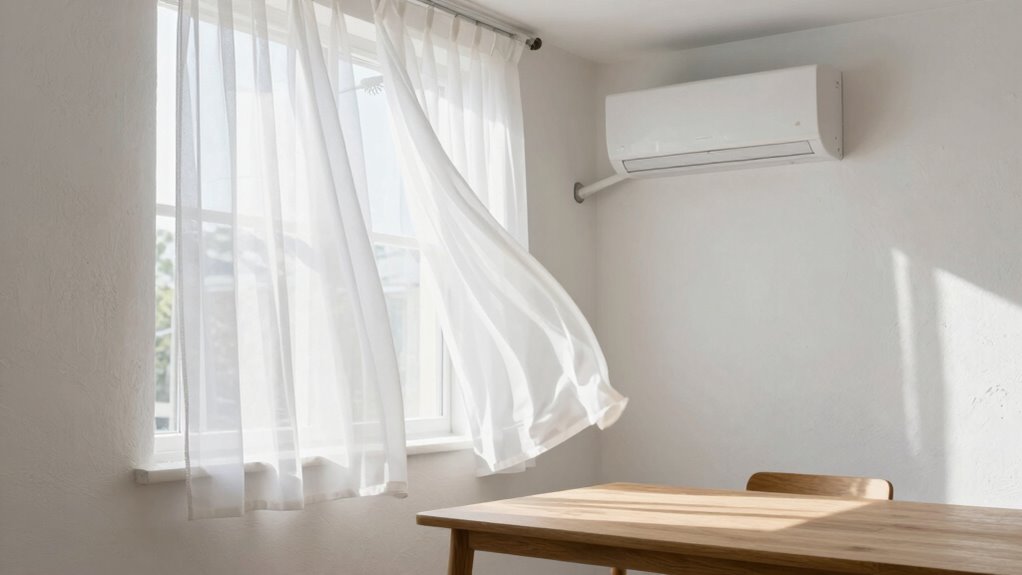
To prevent mold quickly and without chemicals, focus on good ventilation. Open windows regularly, use exhaust fans in bathrooms and kitchens, and keep vents unobstructed to promote airflow. Monitor humidity levels with a hygrometer and aim for 30-50% to inhibit mold growth. Avoid common mistakes like improper vent placement or ignoring moisture sources. Keep learning how proper airflow and moisture control work together to protect your home long-term.
Key Takeaways
- Regularly open windows and doors to promote natural cross-ventilation and fresh air circulation.
- Use exhaust fans in bathrooms and kitchens to quickly remove excess humidity.
- Keep vents unobstructed and positioned to optimize airflow and moisture removal.
- Monitor indoor humidity levels with a hygrometer, maintaining 30-50% to prevent mold growth.
- Fix leaks promptly and ensure proper drainage to reduce moisture sources that foster mold.
Why Ventilation Is the Key to Preventing Mold

Proper ventilation is essential because it helps control moisture levels in your home. When you improve air exchange, you reduce humidity that mold spores thrive on. Fresh air constantly replaces stale indoor air, preventing moisture buildup on walls, ceilings, and other surfaces. Additionally, good ventilation enhances air filtration, removing airborne mold spores and pollutants before they settle and grow. This continuous process keeps the indoor environment dry and less hospitable to mold growth. Without proper airflow, moisture can accumulate unnoticed, creating ideal conditions for mold to develop. By prioritizing effective ventilation, you actively manage moisture and airborne contaminants, making your home less vulnerable to mold problems. One key aspect of proper ventilation is ensuring consistent air circulation, which helps maintain a balanced indoor climate. Ultimately, maintaining a well-ventilated space is one of the most straightforward ways to prevent mold naturally.
Simple and Effective Ventilation Tips for Your Home

Implementing simple ventilation strategies can substantially improve indoor air quality and reduce moisture buildup. Start by opening windows regularly to allow fresh air in and stale air out. Use exhaust fans in bathrooms and the kitchen to remove excess humidity. Incorporate indoor plants, which naturally filter the air and help regulate humidity levels. Additionally, air purifiers can be effective in capturing airborne pollutants and maintaining a cleaner environment. Keep vents clear of dust and debris to guarantee ideal airflow. When weather permits, create cross-ventilation by opening windows on opposite sides of your home. These small steps promote better air circulation, decrease moisture, and help prevent mold growth, all without harsh chemicals. Regular ventilation practices are essential for reducing indoor pollutants and maintaining a healthy environment. Consistent ventilation is key to a healthier, mold-free home.
How to Improve Airflow in Different Rooms

To improve airflow in different rooms, start by evaluating each space’s layout and ventilation needs. Identify areas where air tends to stagnate or feel stuffy. Airflow optimization involves adjusting vent placement to maximize circulation; for example, placing vents near windows or doorways encourages cross-ventilation. Guarantee vents aren’t obstructed by furniture or curtains, which can block airflow. Open windows regularly to create natural drafts, especially in rooms with poor ventilation. Use exhaust fans in kitchens and bathrooms to remove excess moisture and promote fresh air movement. Consider installing additional vents or adjustable registers if airflow feels insufficient. Proper vent placement and strategic adjustments are key to maintaining consistent airflow, reducing moisture buildup, and preventing mold growth in every room. Incorporating simple, room-by-room solutions tailored to each space can make a significant difference in overall airflow and indoor air quality.
Monitoring Humidity and Managing Moisture to Keep Mold Away
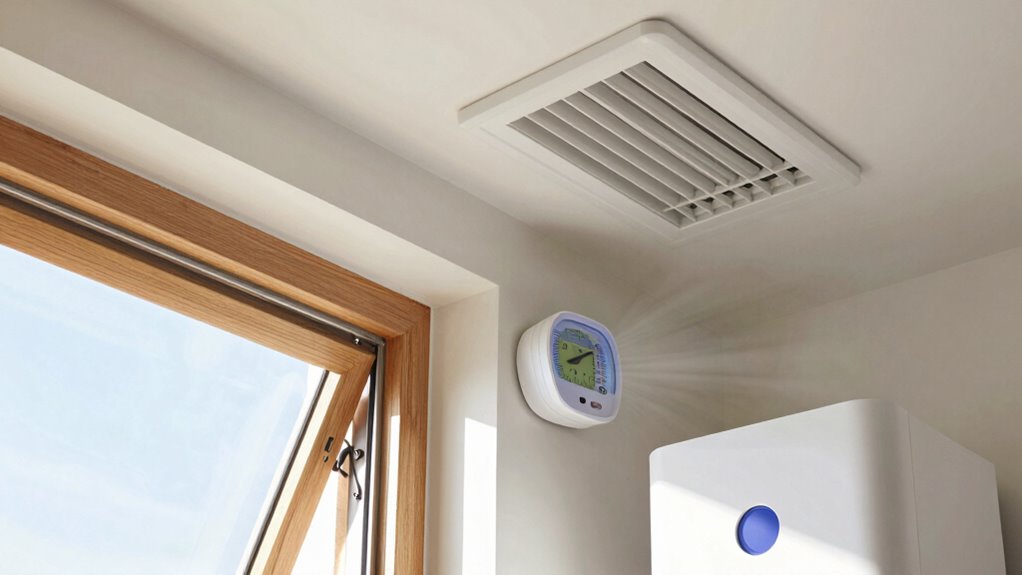
Maintaining ideal humidity levels is essential for preventing mold growth and ensuring a healthy indoor environment. To do this, you need to monitor your indoor humidity regularly with a hygrometer. Keep humidity between 30-50% to inhibit mold spores from settling and growing. Good air circulation helps disperse excess moisture and reduces damp spots where mold can thrive. Managing moisture involves promptly fixing leaks, using exhaust fans in bathrooms and kitchens, and ensuring proper drainage around your property. Controlling moisture not only prevents mold but also improves indoor air quality. By staying vigilant about humidity levels and encouraging proper air circulation, you create an environment that’s hostile to mold growth, keeping your home safer and healthier without relying on chemicals. Additionally, understanding the principles of filtration and proper ventilation can further enhance your efforts to maintain a mold-free home.
Common Ventilation Mistakes and How to Avoid Them
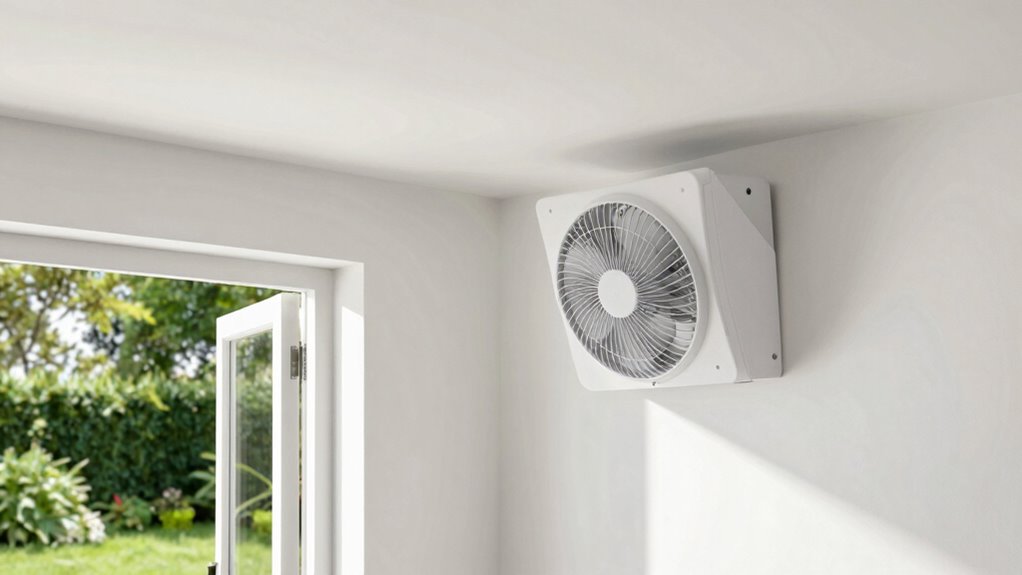
Many homeowners make common ventilation mistakes that can undermine indoor air quality and promote mold growth. One mistake is poor vent placement, which can hinder proper air exchange and trap moisture indoors. If vents are located too close to sources of humidity, like bathrooms or kitchens, moisture isn’t effectively removed. Conversely, vents placed incorrectly or blocked by furniture reduce airflow, allowing damp air to linger. Another mistake is relying solely on passive ventilation without ensuring sufficient airflow or proper air exchange rates. To avoid these issues, position vents strategically to promote continuous airflow and prevent moisture buildup. Regularly check and maintain vents to ensure they’re unobstructed and functioning correctly. Proper vent placement and efficient air exchange are key to maintaining a healthy, mold-free environment. Additionally, integrating mechanical ventilation systems can significantly improve airflow and moisture control in enclosed spaces.
Frequently Asked Questions
Can Natural Ventilation Alone Prevent Mold Effectively?
Natural ventilation can substantially help mold prevention when used consistently, but it might not be enough alone. You need to guarantee good airflow and reduce humidity levels, especially in damp areas. Opening windows and vents regularly allows fresh air in, helping to dry out moisture. However, for best results, combine natural ventilation with other mold prevention strategies like controlling indoor humidity and fixing leaks.
How Often Should I Ventilate My Home for Mold Prevention?
You should ventilate your home at least 2-3 times daily, especially in high-humidity areas like the bathroom and kitchen. Aim for 5-10 minutes per session to guarantee effective air exchange and humidity control. Regular airing reduces moisture buildup, making it harder for mold to develop. Keep windows open when possible, and use exhaust fans to maintain ideal air flow, helping to prevent mold growth naturally.
Are There Specific Signs Indicating Poor Ventilation Leading to Mold?
You can tell if your ventilation is poor by noticing moisture buildup and stale air in your home. If you see condensation on windows, damp walls, or mold spots, that’s a sign your ventilation isn’t enough. Also, a persistent musty smell indicates stale air trapped inside. When these signs appear, increase your ventilation efforts to reduce moisture, improve air circulation, and prevent mold growth effectively.
Does Increased Airflow Increase Energy Costs Significantly?
Does increased airflow bump up energy costs considerably? Think of your home’s ventilation efficiency as a delicate dance—more airflow can mean higher energy consumption, but it also helps prevent mold and improve air quality. While you might see a slight rise in costs, the health benefits and mold prevention often outweigh the extra energy use. Properly balanced ventilation ensures you breathe easier without breaking the bank.
Can Plants Help Improve Indoor Air Quality and Reduce Mold Risk?
Yes, plants can help improve your indoor air quality and reduce mold risk. Their benefits include filtering airborne toxins, increasing humidity regulation, and promoting better airflow. By adding houseplants, you enhance overall air quality, which discourages mold growth. Plus, plants create a healthier, more inviting environment. Just make sure not to overwater them, as excess moisture can contribute to mold development.
Conclusion
By embracing good ventilation habits, you create a gentle breeze of freshness that keeps mold at bay. Think of it as giving your home a soothing breath of life—helping air circulate freely and moisture stay in check. With just a few simple steps, you’ll turn your space into a cozy, welcoming haven where mold quietly takes a backseat. Remember, a well-ventilated home is your best ally in maintaining lasting comfort and health.