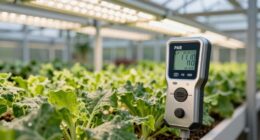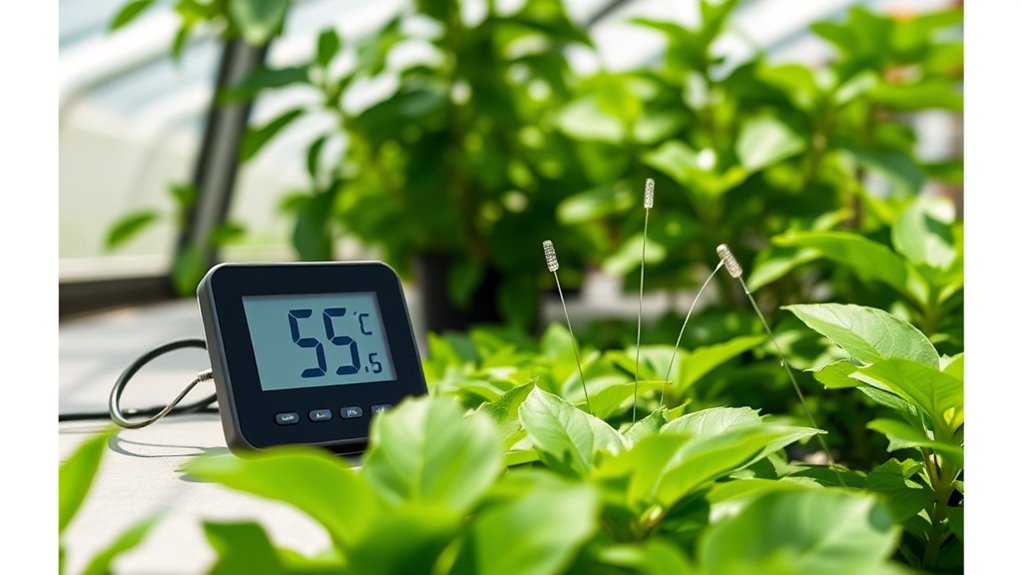

To monitor your greenhouse’s temperature and humidity, install reliable sensors that provide real-time data. Regularly calibrate these sensors to guarantee accurate readings and prevent drift. Use data loggers to record environmental conditions continuously, so you can spot trends and address issues early. Connecting your sensors to a system with remote access allows easy monitoring from anywhere. Keep up with maintenance and calibration practices, and you’ll create ideal growing conditions — learn more to optimize your setup.
Key Takeaways
- Install reliable temperature and humidity sensors at various greenhouse locations for comprehensive coverage.
- Regularly calibrate sensors using manufacturer guidelines to ensure measurement accuracy.
- Use data loggers to continuously record environmental conditions for trend analysis and troubleshooting.
- Set up remote access or alerts to monitor real-time data and respond promptly to environmental changes.
- Perform routine sensor maintenance and data reviews to maintain optimal conditions for plant health.
Maintaining ideal temperature and humidity levels is essential for healthy plant growth in a greenhouse. To achieve this, you need reliable monitoring systems that give you accurate, real-time data. Proper sensor calibration is a critical step to guarantee your devices provide precise readings. Over time, sensors can drift from their original calibration, leading to inaccurate measurements that could compromise your plant health. Regularly calibrate your sensors according to the manufacturer’s instructions, using standard reference points or calibration solutions. This process helps you maintain trust in your data, allowing you to make informed decisions about heating, cooling, and ventilation adjustments. Additionally, employing HEPA filtration in your greenhouse environment can help reduce airborne allergens and pollutants, creating a healthier space for plants and workers alike. Data logging plays an indispensable role in monitoring greenhouse conditions effectively. By continuously recording temperature and humidity levels, you gather an extensive history of environmental changes over time. This data enables you to identify patterns, troubleshoot issues, and fine-tune your climate control strategies. Modern data loggers can connect directly to your sensors, storing readings at regular intervals—be it every minute or hourly. Some systems even allow remote access, so you can review data from your smartphone or computer, giving you flexibility and peace of mind. When setting up data logging, verify your devices are configured correctly and that the storage capacity suits your monitoring duration. Regularly download and review the logged data to spot trends and anomalies, such as sudden temperature spikes or drops, which may indicate equipment malfunction or external influences like drafts. In addition to calibration and data logging, you should establish a routine for verifying sensor accuracy periodically. Check sensors against known standards or reference instruments to confirm they still provide dependable measurements. If discrepancies are found, recalibrate or replace the sensors as needed. Integrating calibration and data logging practices into your greenhouse management helps you maintain ideal conditions consistently. It also minimizes the risk of over- or under-heating, which can stress plants or lead to disease. By staying proactive with sensor maintenance and leveraging detailed data, you can fine-tune your environment efficiently. Ultimately, precise sensor calibration and diligent data logging form the backbone of effective greenhouse climate control. They empower you to make accurate adjustments, maintain stable conditions, and ensure your plants thrive. With these tools and practices in place, you’ll stay ahead of environmental challenges, optimize growth conditions, and improve your overall gardening success.
Frequently Asked Questions
What Are the Ideal Temperature and Humidity Ranges for Different Greenhouse Crops?
You should adjust temperature and humidity based on crop-specific requirements and growth stage considerations. For example, leafy greens thrive at 65-75°F with 50-70% humidity, while tomatoes prefer 70-85°F and 60-70% humidity during flowering. Always tailor conditions to the specific crop and its growth stage, ensuring best growth and yield. Regular monitoring helps you maintain ideal conditions, preventing stress and promoting healthy development.
How Often Should I Calibrate My Greenhouse Sensors?
Think of your sensors as the heartbeat of your greenhouse—keeping them calibrated guarantees they stay in sync with reality. You should calibrate your sensors at least once every three to six months, depending on their sensor lifespan and usage. Regular calibration acts like tuning a musical instrument, preserving accuracy and preventing drift. By doing this, you maintain ideal growing conditions and ensure your crops thrive under precise environmental control.
Can I Automate Temperature and Humidity Adjustments in My Greenhouse?
Yes, you can automate temperature and humidity adjustments in your greenhouse using smart sensors and automated systems. Regular sensor maintenance guarantees accurate readings, which is vital for effective automation. The benefits of automation include maintaining ideal conditions, reducing manual labor, and improving plant health. By integrating reliable sensors with automated venting, heating, or misting systems, you create a responsive environment that adapts quickly to changing conditions, boosting your greenhouse’s efficiency.
What Are Common Causes of Sensor Inaccuracies in Greenhouses?
Imagine a gentle breeze rustling through leaves—yet, hidden issues can cause your sensors to falter. Common causes of inaccuracies include sensor drift, which makes readings slowly deviate over time, and wiring issues like loose connections or damaged cables. These problems disrupt your data, leading to incorrect adjustments. Regular calibration and inspecting wiring help guarantee your sensors stay true, keeping your greenhouse environment precisely controlled.
How Does External Weather Impact Greenhouse Temperature and Humidity Control?
External weather considerably impacts your greenhouse’s temperature and humidity control. Changes in outside temperature, sunlight, wind, and humidity can cause microclimate variations inside your greenhouse. You need to regularly monitor these external conditions because they influence your internal environment. Use sensors and weather data to adjust heating, cooling, and ventilation systems accordingly. This proactive approach helps maintain stable conditions, ensuring ideal plant growth despite fluctuating external weather.
Conclusion
So, now you know how simple it is to keep your greenhouse just right. With all these tools at your fingertips, you’d think it’s foolproof. But don’t forget—no matter how advanced your monitors are, neglecting regular checks or ignoring alerts can turn your perfect environment into a plant’s nightmare. Ironically, the key to thriving plants isn’t just high-tech gadgets; it’s your consistent attention. After all, even the best sensors can’t replace good old-fashioned care.