When temps swing wildly in your greenhouse, act quickly by monitoring temperature sensors and staying alert for early signs like bud swelling or leaf emergence. Cover vulnerable plants with frost cloths, insulate with bubble wrap, and enhance heating if needed. Adjust ventilation carefully to trap warmth and delay planting until conditions stabilize. Implementing these strategies now can help protect your crops—continue exploring ways to keep your greenhouse resilient during unpredictable weather.
Key Takeaways
- Continuously monitor greenhouse temperatures with sensors to detect early signs of false spring and trigger timely alerts.
- Cover sensitive plants with frost cloths or row covers during unexpected cold spells to trap heat.
- Insulate greenhouse walls and soil with bubble wrap or mulch to maintain stable temperatures.
- Delay outdoor planting and harden off plants gradually to reduce cold damage risk.
- Implement emergency heating, vent management, and rapid protective measures during sudden temperature drops.
How to Recognize Early Signs of False Spring in Your Greenhouse

Recognizing the early signs of false spring in your greenhouse is crucial to protecting your plants from unexpected cold damage. Keep an eye out for early signs like sudden bud swelling or unexpected leaf emergence, which indicate that plants are responding to warmer temperatures. Temperature fluctuations are common during false springs, causing plants to break dormancy prematurely. You might notice a rapid rise in daytime temperatures followed by sharp drops at night. These swings can trick your plants into thinking spring has arrived, making them vulnerable to cold snaps. Monitoring your greenhouse’s temperature regularly helps you detect these signs early. Additionally, understanding the climate variability that causes such swings can help you develop better contingency plans. By staying alert to these subtle changes, you can take proactive steps to shield your plants from damaging cold spells.
Quick Ways to Protect Plants During Sudden Cold Spells
When a sudden cold spell hits your greenhouse, quick action is essential to protect your plants from damage. To minimize harm, rely on weather forecasting to anticipate drops in temperature and act swiftly. Here are four quick ways to shield your plants:
Rapidly protect your greenhouse plants during cold snaps with quick, effective insulation and timely actions.
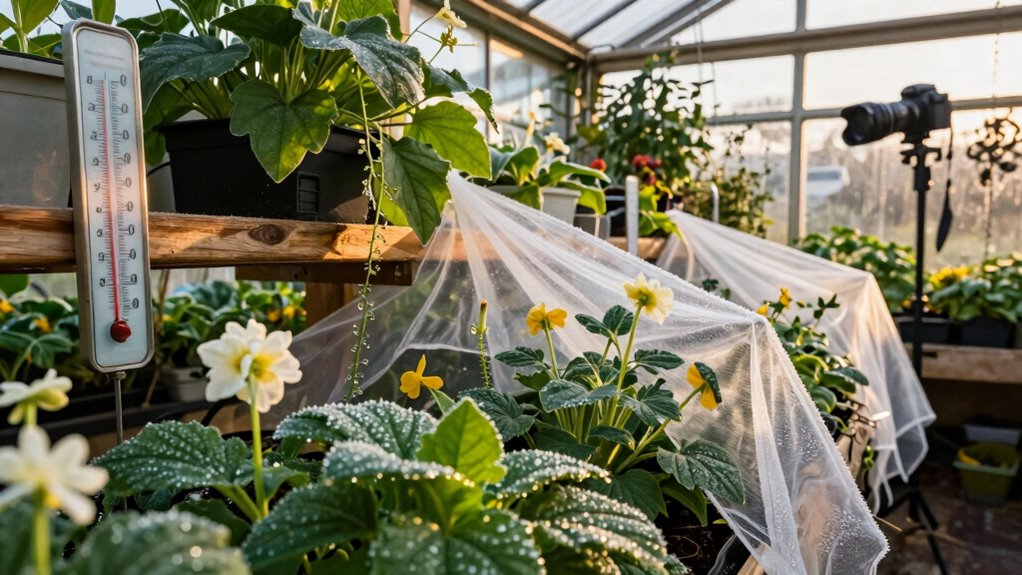
- Cover vulnerable plants with frost cloths or blankets to trap heat.
- Use cloches or row covers to insulate seedlings and young plants.
- Increase greenhouse ventilation or temporarily close vents to retain warmth.
- Conduct plant hardening by gradually exposing plants to cooler temperatures beforehand, making them more resilient.
- Maintain a high contrast ratio in your greenhouse lighting setup to ensure optimal photosynthesis and plant health during cold conditions.
These steps help you respond promptly, reducing stress on your plants during abrupt temperature swings and ensuring they survive the cold snap unscathed.
How to Prepare Your Greenhouse for Rapid Temperature Changes
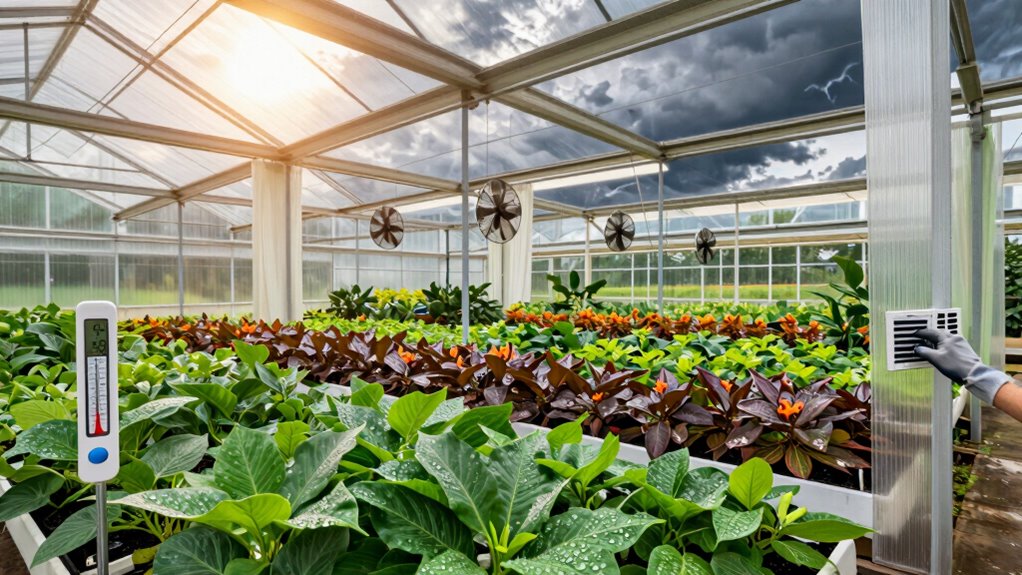
To keep your greenhouse stable during sudden temperature shifts, you need to focus on insulation and coverings that trap heat. Implementing effective heating and cooling strategies can help you quickly respond to these changes. By preparing these systems in advance, you’ll safeguard your plants and ensure consistent growth conditions. Additionally, integrating smart climate control systems can provide precise adjustments and remote monitoring to maintain optimal environments.
Insulation and Coverings
Preparing your greenhouse for sudden temperature drops hinges on effective insulation and coverings. Proper insulation helps retain heat, protecting plants from cold snaps, while coverings can provide an extra barrier. To optimize this, consider these strategies:
- Use thermal blankets or bubble wrap on walls and roofs to trap heat.
- Insulate the soil surface with mulch to maintain consistent soil moisture and prevent temperature fluctuations.
- Seal gaps around vents and doors to reduce drafts, which can invite pests seeking warmth.
- Cover vulnerable plants with row covers during cold spells, ensuring quick removal when temperatures rise.
These measures help stabilize internal conditions, minimize stress on plants, and support pest management efforts by reducing entry points for unwelcome visitors. Stay vigilant and adjust coverings as weather shifts.
Heating and Cooling Strategies
Effective heating and cooling strategies are essential for maintaining stable temperatures in your greenhouse during sudden weather shifts. Solar heating can be a powerful tool—maximize sunlight exposure during warm days to naturally raise temperatures, and consider passive solar techniques like strategic vent placement to help with cooling. Shade cloths are equally important; they protect plants from intense sunlight and prevent overheating when temperatures spike. During cold snaps, use supplemental heating sources, such as space heaters or heat mats, to avoid frost damage. Ventilation is critical for rapid cooling, so open side vents or roof windows quickly when temperatures rise unexpectedly. Combining solar heating, shade cloths, and efficient ventilation helps you stay ahead of temperature swings and safeguard your plants effectively.
Best Practices for Using Heating and Cooling Systems During Fluctuations
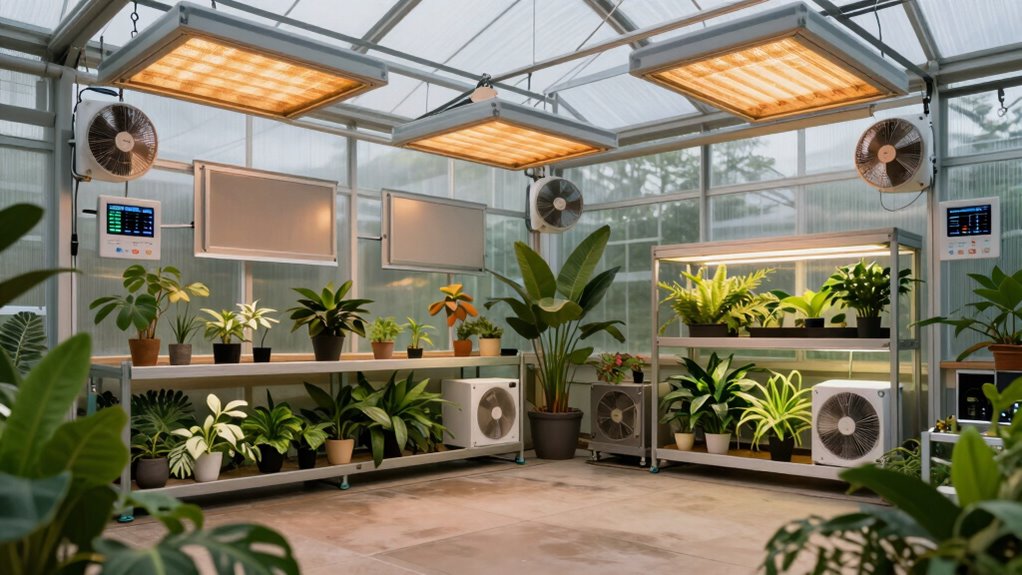
When temperatures fluctuate unexpectedly, you need to respond quickly to protect your plants. Effective thermal regulation and climate control are key during these wild swings. To do this, follow these best practices:
- Monitor sensors frequently to catch sudden changes early.
- Use automation systems to adjust heating or cooling swiftly, maintaining stable temperatures.
- Set specific thresholds for activating heaters or fans to avoid overcorrecting.
- Keep backup equipment ready to deploy if primary systems fail during rapid temperature shifts.
Additionally, understanding the importance of reliable, well-researched information can help you make informed decisions during these critical moments.
Insulate and Cover Plants to Prevent Frost Damage
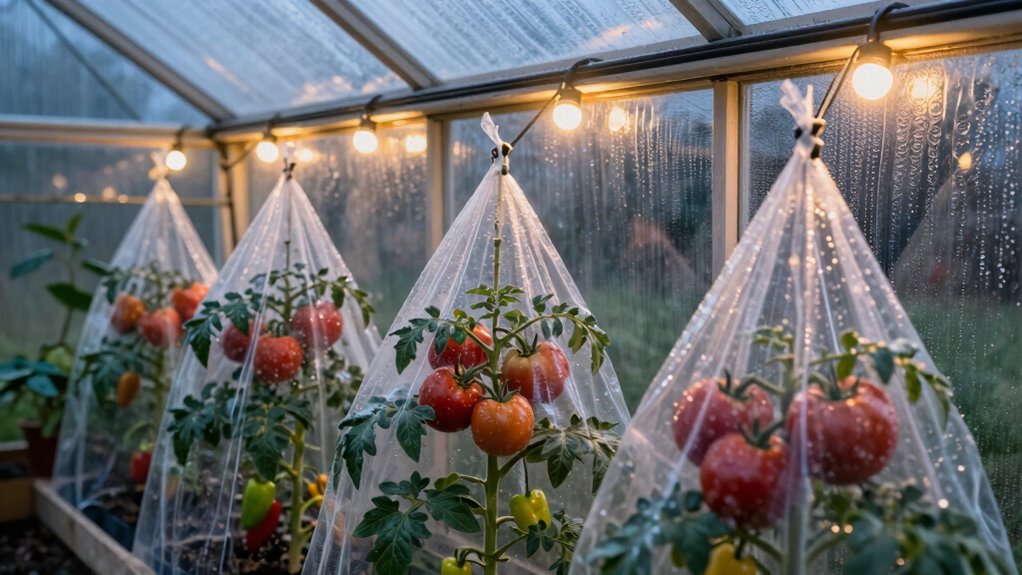
Insulating and covering your plants is a crucial step in preventing frost damage during unpredictable temperature drops. When temperatures plummet, exposed plant tissue becomes vulnerable to frost damage, which can kill or weaken your plants. Using materials like frost cloths, burlap, or blankets creates a barrier that helps retain warmth and shield delicate tissues from cold air. Covering plants overnight provides essential frost protection by trapping heat close to their surface. For added insulation, place stakes or frames to prevent coverings from direct contact with plant tissue, reducing the risk of frostbite. Remember, the goal is to keep the plant tissue above freezing. Properly insulating and covering your plants ensures they survive cold snaps, reducing the risk of damage caused by sudden temperature swings. Additionally, understanding the microclimates around your garden can help you identify the most vulnerable areas and apply targeted protection.
How to Monitor Temperatures and Set Alerts for Cold Snaps

To protect your greenhouse during cold snaps, you need to keep a close eye on temperatures. Set clear thresholds so you know when it’s getting too cold for your plants. Using alert systems helps you respond quickly before damage occurs. Additionally, monitoring indoor air quality with appropriate air purifiers can help maintain a healthy environment for your plants and reduce the risk of mold or pests that thrive in fluctuating conditions.
Setting Temperature Thresholds
Monitoring temperature closely is essential for protecting your greenhouse during unexpected cold snaps. Setting clear temperature thresholds helps you act quickly to safeguard plants, especially during plant hardening phases. Determine critical temperatures that signal when frost protection measures must activate. You are trained on data up to October 2023. Free Floating techniques can help you naturally maintain a stable environment and reduce reliance on artificial heating.
Using Alert Systems
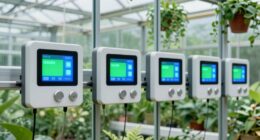
Effective alert systems are essential for promptly detecting temperature drops that threaten your greenhouse. By setting up reliable alerts, you can respond quickly to cold snaps, protecting plant growth and preventing pest outbreaks. Use sensors connected to your phone or computer to monitor temperatures continuously. Establish thresholds based on your plants’ needs, and program alerts to notify you immediately when temperatures approach dangerous levels. Here’s a quick reference:
| Temperature Range | Action Needed | Alert Method |
|---|---|---|
| Above ideal | No action | None |
| Near critical | Prepare heating | App alert |
| Below critical | Activate heating | SMS/Email |
Implementing temperature monitoring systems can significantly enhance your ability to maintain optimal conditions. This proactive approach helps maintain perfect conditions, safeguarding your plants and avoiding pest problems caused by temperature stress.
Adjusting Your Planting Schedule and Hardening Off for Spring

Since spring weather can be unpredictable during a false spring, it’s essential to adjust your planting schedule accordingly. You should gradually modify your planting timeline and focus on frost hardening your plants before exposing them to outdoor conditions. This helps prevent cold damage during sudden temperature drops. Additionally, understanding the importance of art care and living can help you better appreciate how to protect and maintain your plants through unpredictable weather. Consider these steps:
- Delay transplanting outdoor seedlings until the risk of frost diminishes.
- Harden off plants by gradually increasing their outdoor exposure over a week.
- Use row covers or cloches to protect tender plants during cold snaps.
- Keep an eye on weather forecasts to adapt your schedule as needed.
Emergency Steps to Take When a Cold Front Arrives Unexpectedly
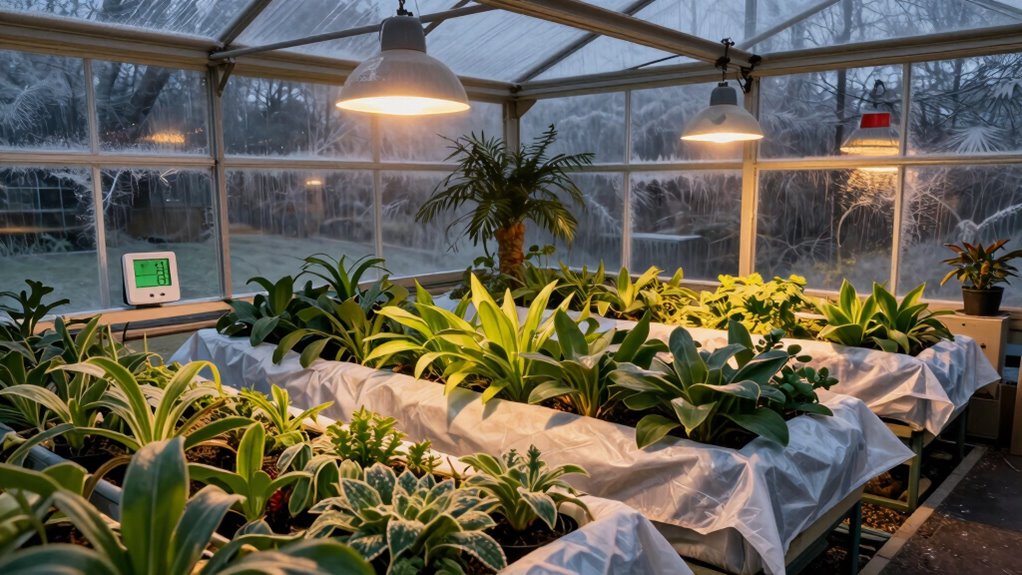
When a cold front hits unexpectedly, you need to act fast to protect your plants. Cover vulnerable plants immediately, boost your heating systems, and keep a close eye on the temperature. Staying alert and responsive can make all the difference in saving your greenhouse’s crops. Incorporating luxurious fabrics in your covers can provide additional insulation and help retain warmth during sudden temperature drops.
Cover Vulnerable Plants Quickly
As a cold front unexpectedly hits, acting quickly to cover vulnerable plants can make all the difference in their survival. Immediate protection prevents frost damage and preserves your crops. First, gather frost blankets, row covers, or old blankets to shield tender plants. Second, cover the most sensitive crops first, especially those recently planted or in early stages. Third, consider doing soil testing to understand your soil’s resilience, helping you plan crop rotation strategies for future cold snaps. Fourth, keep a close eye on weather updates to anticipate any temperature drops and adjust your covers accordingly. Quick action like this helps safeguard your investment and ensures your plants survive unpredictable cold spells, especially when rapid temperature swings threaten your greenhouse’s delicate ecosystem.
Increase Heating Measures Immediately
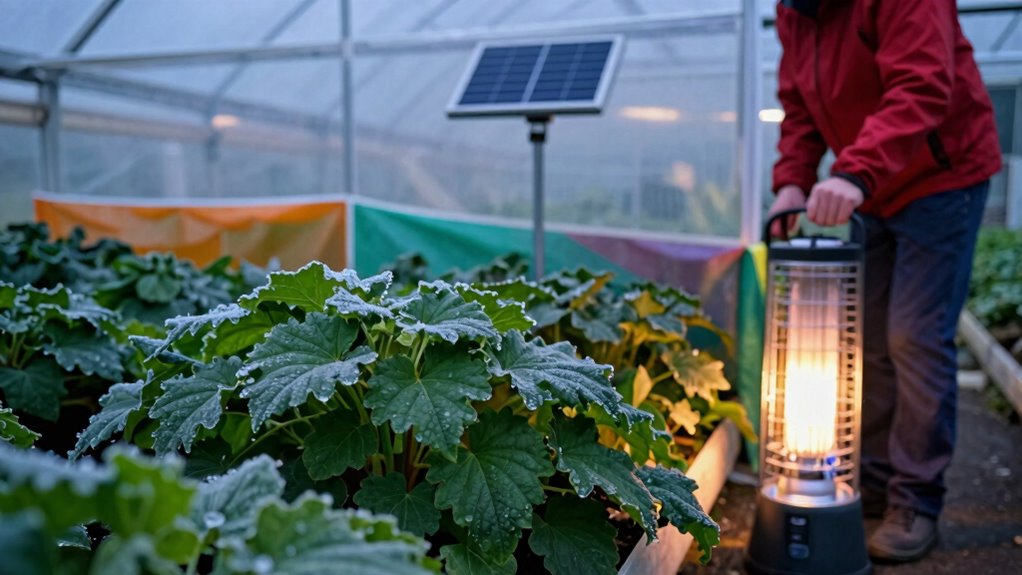
Quickly increasing your greenhouse’s heating measures is essential once a cold front hits unexpectedly. Immediate action helps prevent severe damage to tender plants and maintains a stable environment. If you haven’t already, boost your heat sources—use space heaters, heat mats, or supplemental lighting with heaters to raise temperatures quickly. Focus on protecting less hardened plants that haven’t undergone proper plant hardening; these are most vulnerable. Consider temporarily switching to cold resistant varieties that can tolerate sudden temperature drops, giving you extra security. Keep vents closed and insulate vulnerable areas to trap heat. Rapidly elevating temperatures minimizes stress on your plants, giving them a better chance to survive the sudden temperature decline. Acting swiftly now prevents long-term setbacks for your greenhouse crop.
Monitor Temperature Continuously
Since a cold front can arrive unexpectedly, continuous temperature monitoring is essential to respond effectively. Regular checks help you identify temperature drops early, allowing quick action to protect your plants. Use reliable thermometers or sensors to track both air and soil moisture levels, as cold weather can dry out soil or cause pests to become active. Promptly adjust heating or ventilation based on real-time data. Keep a close eye on soil moisture, because overly wet or dry soil affects plant health and pest control strategies. Additionally, monitoring helps prevent temperature fluctuations that could trigger pest outbreaks or damage sensitive crops. By staying vigilant, you can implement emergency measures swiftly, minimizing damage and maintaining a stable environment during unpredictable weather swings.
Ventilation Tips to Prevent Frost and Maintain Temperature Stability

Effective ventilation is essential for preventing frost damage and keeping temperature fluctuations in check during a false spring. Proper airflow management ensures warmer air circulates evenly, reducing cold spots that can lead to frost. Open vents early in the day to let excess heat escape, then close them at night to trap warmth. Incorporate fans or exhaust systems to enhance airflow and prevent stagnation. Controlling humidity is also key; high humidity levels can promote frost formation on plant surfaces. Use dehumidifiers if necessary, and avoid overwatering to keep humidity in check. Regularly monitor temperature and humidity levels to adjust ventilation accordingly. By managing airflow and humidity carefully, you create a stable environment that minimizes frost risk and maintains consistent temperatures.
Building Long-Term Resilience Against False Spring Weather Patterns
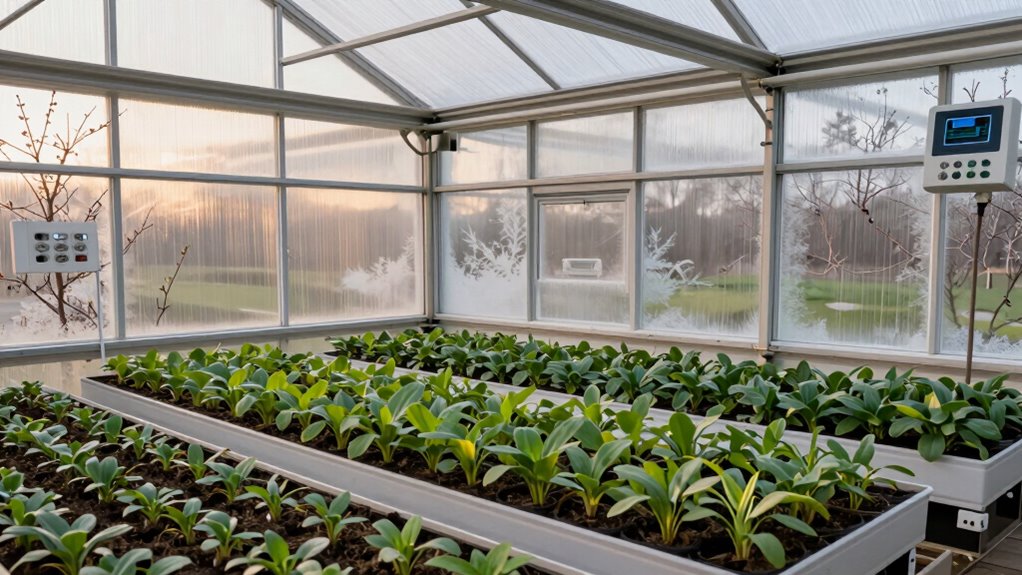
Building long-term resilience against false spring weather patterns requires proactive planning and adaptable strategies. You should focus on minimizing risks related to plant disease and pest management while preparing for temperature swings. Here are four key approaches:
- Invest in climate control systems that allow precise temperature regulation, reducing stress on plants.
- Implement integrated pest management to prevent pest outbreaks triggered by fluctuating weather.
- Practice crop rotation and select resilient varieties to lessen vulnerability to diseases caused by temperature fluctuations.
- Monitor weather forecasts closely and develop contingency plans for sudden temperature drops or spikes.
Frequently Asked Questions
How Can I Predict False Springs Before They Happen?
You can predict false springs by closely monitoring weather forecasting and analyzing historical patterns in your region. Keep an eye on short-term temperature spikes during late winter or early spring, especially when forecasts show unseasonably warm days followed by sudden cold snaps. Comparing current conditions with past false springs helps you anticipate these events, so you can take precautions to protect your plants and avoid damage from unexpected temperature swings.
What Are the Best Plant Varieties for Cold Tolerance?
You’ll want to choose hardy perennials and frost-resistant cultivars that can withstand sudden temperature drops. Varieties like sedum, black-eyed Susan, and certain coneflowers excel in cold tolerance, giving you confidence during unpredictable weather. Don’t worry about sacrificing beauty; many of these plants bloom vibrantly despite the chill. By selecting these resilient options, you minimize damage and keep your garden thriving, even during that tricky false spring period.
How Often Should I Check Greenhouse Temperature During False Springs?
You should verify greenhouse temperature at least every few hours during a false spring, especially during the warm daytime and chilly nights. Regular temperature monitoring helps you catch sudden drops early. Keep an eye on the thermometer and be ready to activate emergency heating if temperatures fall below your plants’ tolerance levels. Frequent checks ensure you can respond quickly, preventing damage and maintaining a stable environment for your plants.
Can I Automate Protection Measures for Sudden Temperature Drops?
Yes, you can automate protection measures for sudden temperature drops using thermal sensors and automated venting systems. Thermal sensors detect temperature fluctuations instantly, triggering vents to open or close automatically. This setup helps you respond quickly to cold snaps, maintaining ideal conditions without constant monitoring. Installing these systems reduces risks associated with false springs, giving you peace of mind and better control over your greenhouse environment even during unpredictable weather.
What Are Cost-Effective Ways to Insulate a Large Greenhouse?
You can insulate your large greenhouse cost-effectively by using thermal curtains and bubble wrap insulation. Thermal curtains trap heat overnight, reducing temperature loss, while bubble wrap adds a lightweight, inexpensive layer of insulation to walls and windows. Both options are easy to install and maintain, helping you protect your plants during temperature swings without breaking the bank. Combining these methods offers an efficient way to keep your greenhouse warmer.
Conclusion
Stay sharp and stay secure by spotting signs of sudden cold snaps and swiftly shielding your seedlings. Prepare your greenhouse with prudent planning, proper heating, and protective coverings to weather wild weather whims. By building resilience and remaining vigilant, you’ll ward off winter’s wicked whims and welcome spring’s promise. Keep calm, cover carefully, and continuously customize your climate control—your thriving plants depend on your proactive, persistent protection against unpredictable, unforgiving false springs.