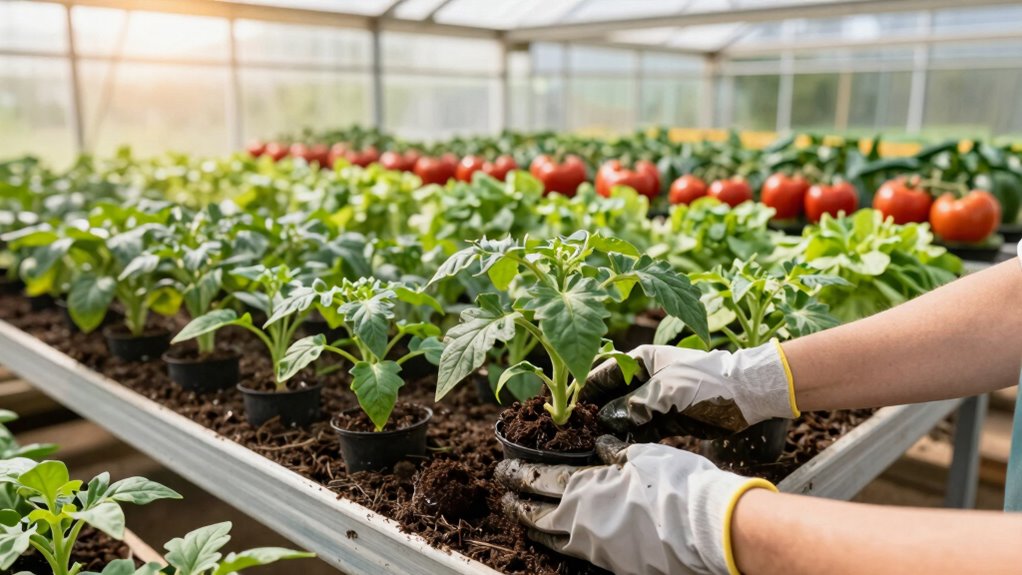

To prevent soil burnout in your greenhouse, plan a strategic crop rotation that varies plant families and nutrient requirements each season. Schedule planting and harvesting carefully to include legumes or cover crops that replenish soil nutrients. Incorporate organic amendments regularly and monitor soil health through testing. Avoid planting related crops consecutively to disrupt pest and disease cycles. Keep track of your schedule and make adjustments as needed for ideal long-term soil vitality—learning more will help you refine this process.

Get garden gear delivered free with Prime
- Fast, free delivery on millions of items
- Prime Video, Amazon Music and more included
- Member-only deals all year
Key Takeaways
- Rotate crops annually by changing plant families to prevent nutrient depletion and soil fatigue.
- Incorporate organic amendments like compost to replenish soil nutrients after each crop cycle.
- Avoid planting the same or related crops in the same spot to reduce disease buildup and soil burnout.
- Monitor soil health regularly through testing and adjust amendments accordingly to maintain fertility.
- Plan crop schedules that include fallow or cover crops to restore and maintain soil vitality.
As an affiliate, we earn on qualifying purchases.
How Crop Rotation Keeps Your Greenhouse Soil Healthy

Crop rotation is essential for maintaining healthy greenhouse soil because it prevents the buildup of pests and diseases that target specific plants. By rotating crops, you promote soil aeration, which improves oxygen flow and encourages beneficial microbial activity. This process helps break pest and disease cycles, reducing the need for chemical interventions. Incorporating crop diversity ensures different plants with varying nutrient needs and root structures grow in the same space, preventing soil depletion and nutrient imbalances. When you change crops regularly, you also minimize the risk of soil becoming compacted or exhausted from continuous use of the same species. Additionally, understanding soil health principles can help you optimize your crop rotation plan. This strategic approach keeps your greenhouse soil vibrant, healthy, and productive, supporting strong plant growth over time.
How to Choose the Best Crops for Your Greenhouse Rotation

To choose the best crops for your greenhouse rotation, start by evaluating their nutrient needs and how well they match your soil’s current conditions. Consider climate factors like temperature and humidity to guarantee your plants thrive, and think about pest and disease history to prevent future issues. Making informed decisions based on these points will help you maintain healthy, productive rotations.
Nutrient Needs Assessment
Understanding your greenhouse’s nutrient needs is vital for selecting the right crops for rotation. You need to evaluate the fertilizer requirements of potential crops to guarantee your soil can support them without overfeeding or deficiency. Some plants demand high nitrogen levels, while others thrive in soils with balanced or lower nutrients. Additionally, soil pH plays a crucial role; certain crops perform best within specific pH ranges. Testing your soil helps you identify deficiencies or imbalances, guiding you to choose crops that match its current state. Regularly monitoring soil health can help ensure your soil remains fertile and productive over time. Incorporating visual and auditory cues into your soil assessment process can facilitate more accurate evaluations. Being aware of crop nutrient requirements allows for better planning and prevents soil burnout, promoting sustainable growth. Recognizing the importance of soil testing can lead to more precise nutrient management, ultimately supporting long-term soil vitality. Utilizing proper crop rotation practices enhances soil structure and nutrient cycling, ensuring ongoing soil fertility. This approach keeps your soil healthy, promotes strong growth, and ensures your crop rotation remains sustainable over time.
Climate Compatibility Factors
Evaluating the climate compatibility of potential crops guarantees they can thrive under your greenhouse’s environmental conditions. Consider factors like temperature, humidity, light levels, and airflow, which directly influence plant growth. Some crops prefer cooler temperatures, while others thrive in warmer, more humid environments. Assess the greenhouse’s natural climate and any modifications you’ve made, such as heating or ventilation systems. Matching crops to these environmental factors ensures healthier plants and reduces stress. Additionally, pay attention to the crop’s tolerance for light exposure and moisture levels. By prioritizing climate compatibility, you create a balanced environment that supports conducive growth, minimizes resource waste, and prevents crop failure. This strategic approach helps you select the best crops for sustainable, productive greenhouse rotations. Understanding climate adaptability is essential for long-term success in crop rotation planning. Being aware of soil health and how different crops impact it can further optimize your rotation strategy, leading to more resilient and productive plantings. Recognizing the importance of crop resilience to changing conditions can help you adapt your practices for better outcomes. Incorporating climate resilience strategies can also bolster your crops’ ability to withstand unexpected environmental shifts. Regular monitoring and adjusting your practices based on environmental feedback further enhance crop success.
Pest and Disease Rotation
How can you minimize pest and disease buildup in your greenhouse? The key is strategic pest control and disease prevention through crop rotation. By choosing the right crops, you disrupt pest and pathogen life cycles, reducing infestations. Here are four effective steps:
- Rotate crops annually to prevent pests from establishing a foothold.
- Avoid planting related species together to cut down on shared diseases.
- Introduce resistant varieties to bolster pest control efforts.
- Monitor and remove infected plants immediately to stop disease spread.
- Plan your crop sequences carefully by understanding soil health principles, ensuring sustainable and productive rotations. Incorporating biological controls can further enhance pest management strategies. Additionally, selecting electric bikes with powerful motors can assist in transportation and farm chores, increasing efficiency on larger greenhouse operations. Maintaining soil fertility through organic amendments supports healthy plant growth and resilience against pests and diseases. Regularly rotating cover crops can also improve soil structure and nutrient cycling, leading to healthier plants. Implementing these practices keeps your soil healthy and resilient. Proper pest and disease rotation not only boosts crop health but also ensures a productive greenhouse season, lowering the need for chemical interventions. Stay vigilant, and your crops will thrive!
Creating an Effective Schedule for Greenhouse Crop Rotation
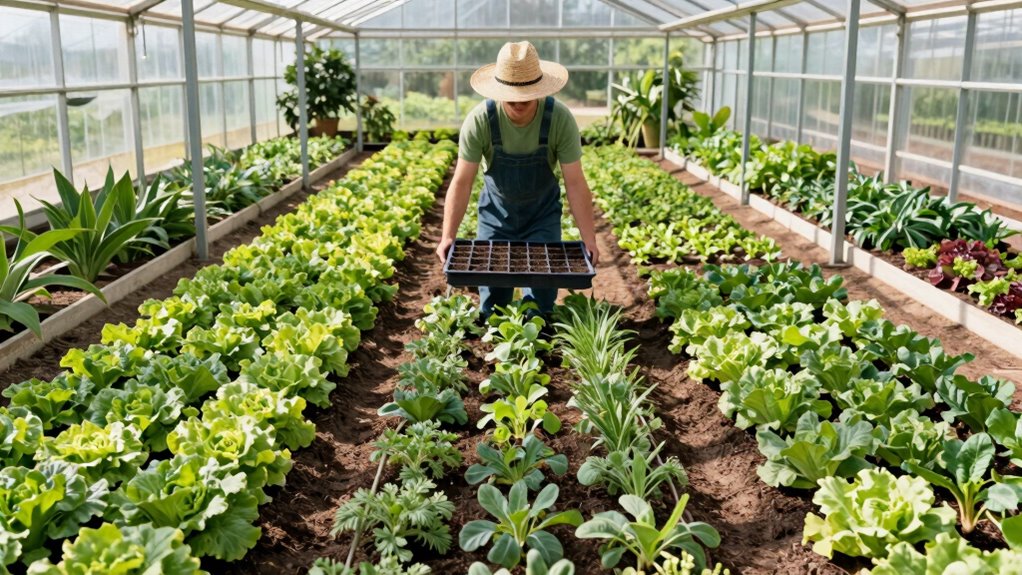
Creating an effective schedule for greenhouse crop rotation requires careful planning to optimize space, resources, and plant health. Start by mapping out your planting calendar, considering each crop’s growth cycle and nutrient needs. Incorporate companion planting to enhance growth and pest control, which can also influence your rotation timing. Maintain proper crop spacing to prevent overcrowding and reduce disease spread. Rotate crops based on their nutrient requirements, avoiding planting heavy feeders after those that deplete soil nutrients. Keep detailed records of planting dates, crop types, and outcomes to adjust your schedule over time. Incorporating soil health management practices can further prevent soil burnout and promote sustainable growth. Regularly analyzing soil nutrient levels helps tailor your crop choices and rotation schedule effectively. Implementing crop diversity strategies can also help sustain soil fertility and reduce pest buildup. Additionally, scheduling crop rotations strategically can improve overall soil fertility and minimize the risk of disease cycles. This systematic approach helps prevent soil burnout, manages pests naturally, and guarantees your greenhouse stays productive throughout the season. Furthermore, rotating crops with different root structures can improve soil aeration and reduce compaction, benefiting plant health.
Best Practices to Implement Crop Rotation Successfully
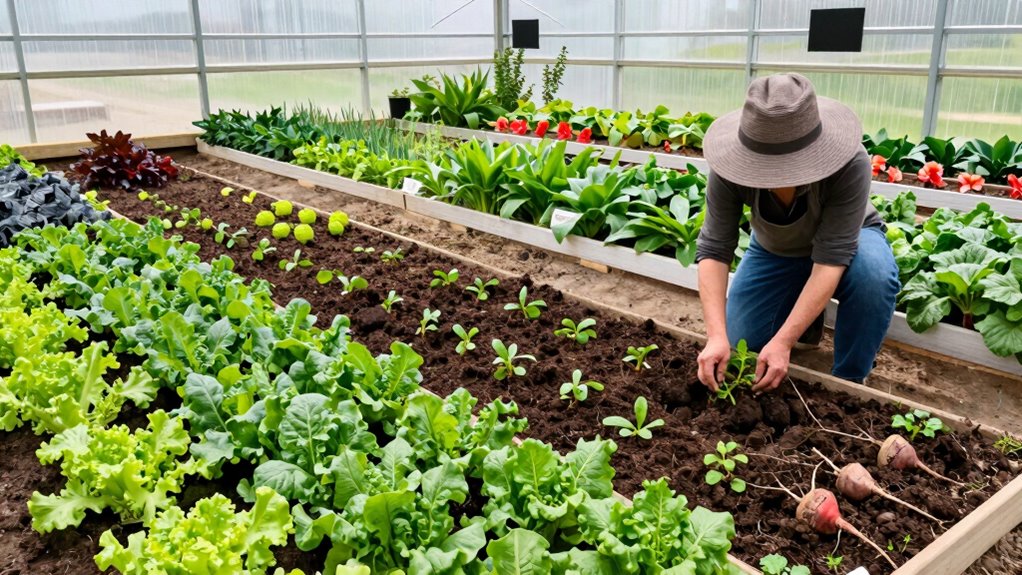
To implement crop rotation successfully, you need to plan your crop calendar carefully and stick to it. Rotating plant families helps prevent disease buildup and pests, keeping your greenhouse healthy. Additionally, maintaining soil health through proper practices guarantees your crops stay productive year after year.
Plan Crop Calendar
Have you established a detailed crop calendar to guide your greenhouse rotation plan? Effective season planning and precise crop timing are essential for success. Your calendar keeps you organized and ensures each crop gets the right conditions. Consider these key points:
- Align planting with seasonal changes to maximize growth and yield.
- Schedule crop rotations to prevent soil exhaustion and pest buildup.
- Track planting and harvesting dates to maintain a steady production flow.
- Adjust for unforeseen delays or weather shifts to stay flexible and responsive.
- Incorporate knowledge of sound vibrations and their influence on plant health to optimize your crop schedule. Additionally, understanding soil management and practices like crop rotation helps maintain soil fertility and prevent burnout. Regularly monitoring soil health indicators can also help you make timely adjustments. Incorporating soil testing can provide more precise insights to guide your crop choices.
A well-planned crop calendar helps you avoid burnout of your soil, optimize resource use, and produce healthy, vigorous plants. Stay committed to your schedule, and your greenhouse will thrive through every season.
Rotate Plant Families
Rotating plant families is key to maintaining healthy soil and reducing pest and disease pressures in your greenhouse. By changing the plant family each season, you prevent pests and pathogens specific to one group from establishing a foothold. To implement this effectively, plan your crop succession so that you don’t plant the same plant family in the same spot year after year. For example, follow legumes with brassicas or root vegetables with leafy greens. This crop rotation strategy breaks pest and disease cycles and helps maintain soil fertility. Keep track of the plant families you grow and their rotation schedule, ensuring you don’t repeat the same family too soon. Successful crop succession depends on diversifying plant families to keep your soil healthy and productive.
Maintain Soil Health
How can you guarantee that your soil remains healthy and productive throughout your crop rotation? The key is maintaining soil structure and enriching it with organic amendments. Healthy soil supports vigorous plant growth and prevents burnout. To succeed, consider these practices:
- Add organic amendments like compost or manure regularly to boost nutrients and improve soil texture.
- Avoid compaction by using proper watering techniques, preserving good soil structure.
- Rotate crops thoughtfully to prevent specific nutrient depletion and disease buildup.
- Monitor soil health through testing, adjusting organic inputs to maintain balance.
Common Mistakes to Avoid When Rotating Crops in Your Greenhouse
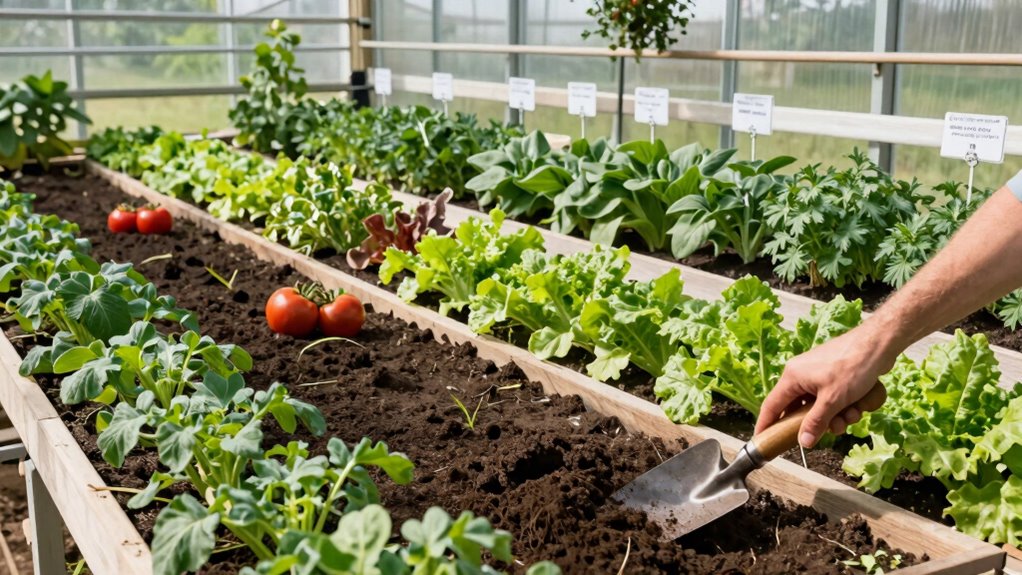
One of the most common mistakes in greenhouse crop rotation is failing to plan ahead, which can lead to nutrient imbalances and increased pest problems. Overwatering issues often arise when you don’t consider the crop’s water needs, causing root rot and nutrient leaching. Additionally, incorrect crop pairing can disrupt soil health and attract pests. To avoid these pitfalls, carefully select plant combinations that complement each other’s nutrient requirements and pest resistance. Use this table to guide your crop choices:
| Correct Pairing | Problematic Pairing |
|---|---|
| Legumes with leafy greens | Tomatoes with strawberries |
| Root vegetables with herbs | Cucumbers with melons |
| Fruits with nitrogen-fixers | Solanaceous crops with heavy feeders |
Proper planning guarantees healthy soil and prevents crop failure.
How to Monitor and Adjust Your Crop Rotation for Long-Term Success
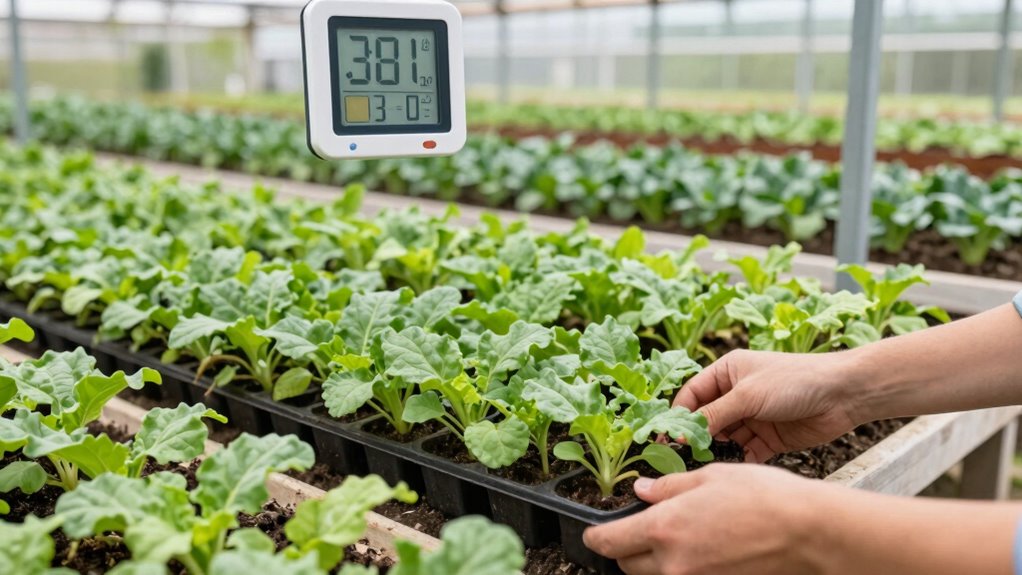
Monitoring your crop rotation regularly is vital to identify issues early and guarantee long-term success. Keep a close eye on soil health through soil testing to detect nutrient depletion or imbalances. Conduct pest monitoring consistently to catch problems before they escalate. To stay on track, consider these key actions:
- Schedule routine soil tests to inform your crop choices.
- Track pest activity and adjust your rotation to reduce infestations.
- Observe plant growth patterns to spot signs of soil fatigue.
- Adjust your crop plan based on soil and pest data to optimize yields.
Frequently Asked Questions
How Often Should I Rotate Crops in My Greenhouse?
You should rotate crops every planting cycle, typically every 4 to 6 weeks, to maintain soil nutrient management and prevent pest buildup. Regular rotation helps replenish essential nutrients and disrupt pest life cycles. Incorporate different crop families to reduce disease risks and improve soil health. By staying consistent with your rotation schedule, you’ll keep your greenhouse soil fertile, healthy, and pest-free, ensuring ideal growth and productivity.
Can I Rotate Crops Between Different Greenhouse Zones?
Yes, you can rotate crops between different greenhouse zones, and it’s a good idea to do so. Using greenhouse zoning helps you manage crop diversity effectively, reducing disease risks and soil exhaustion. By moving crops strategically between zones, you ensure each area gets a rest period, maintaining soil health and productivity. Just make certain to monitor each zone’s crop history so you can optimize rotations and support healthy, vigorous plant growth.
What Signs Indicate My Soil Needs Crop Rotation?
You’ll notice signs like a decline in crop yields, increased pest problems, or soil becoming compacted and less fertile. These issues indicate your soil health needs a boost through crop rotation. By rotating crops, you disrupt pest cycles and improve soil structure, promoting better nutrient cycling. This practice helps prevent soil burnout, ensuring your greenhouse remains productive and pest-free without relying heavily on chemical controls.
How Do Crop Rotation Schedules Vary by Crop Type?
Imagine your greenhouse as a lively dance floor, where crop types lead different moves. Leafy greens like lettuce rotate with legumes to replenish soil nitrogen, while root vegetables follow cucumbers to prevent pest buildup. Companion planting enhances this rhythm, creating a natural pest management system. By varying schedules based on crop type, you keep soil healthy and pests at bay, ensuring a vibrant, sustainable harvest dance every season.
Are There Specific Soil Amendments Needed During Crop Rotation?
Yes, during crop rotation, you should add specific soil amendments to maintain soil health. Incorporate organic amendment types like compost or manure to boost nutrient levels and improve structure. You might also need mineral amendments such as lime or sulfur, depending on soil deficiencies. Regularly testing your soil helps identify what amendments are necessary, ensuring your soil remains fertile and productive throughout each crop cycle.
Conclusion
By mastering crop rotation, you’re nurturing a resilient, vibrant soil that breathes new life with each cycle. Think of your greenhouse as a symphony, where every crop plays its part in harmony. When you rotate wisely, you prevent soil burnout and keep your garden thriving like a well-tended garden of dreams. Embrace these practices, and watch your greenhouse flourish, a living demonstration to your mindful stewardship and the endless cycle of growth.
Halloween Picks
halloween
As an affiliate, we earn on qualifying purchases.