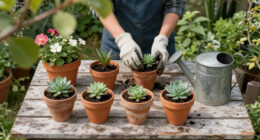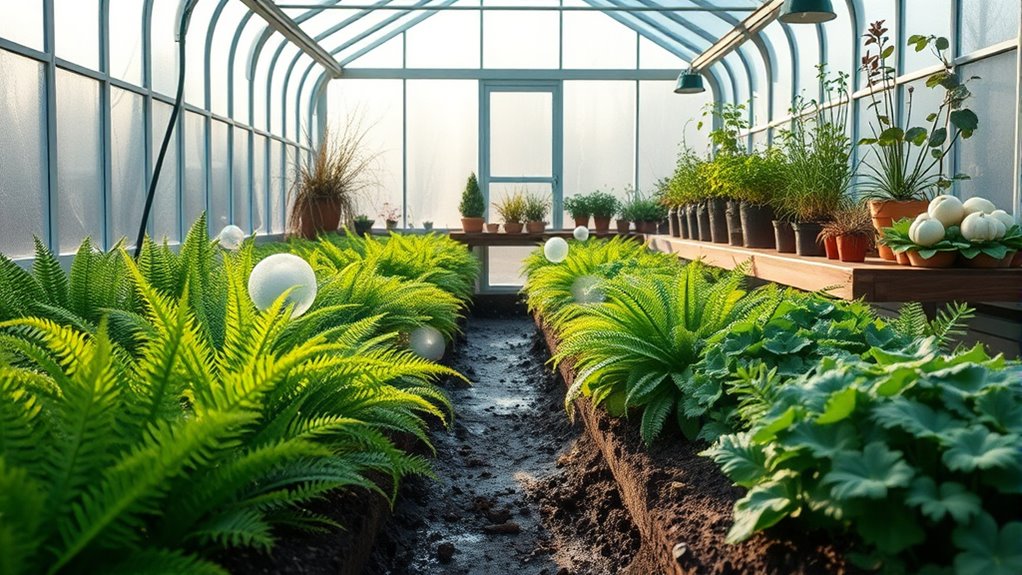

To overwinter your greenhouse plants, move them indoors or to a protected space to prevent cold damage. Regulate temperatures between 35°F and 50°F for plants that need a chill, and keep humidity moderate to prevent mold while ensuring good air circulation. Use grow lights sparingly for dormant plants, and create environment conditions that mimic natural dormancy. Keep these tips in mind, and you’ll be prepared to protect your plants all winter long.

Get garden gear delivered free — and shop member deals
- Fast, free delivery on millions of items
- Access to Prime Big Deal Days deals on October 6–7
- Prime Video, Amazon Music and more included
Key Takeaways
- Gradually move plants indoors or into a greenhouse, ensuring environment mimics natural dormancy conditions.
- Maintain temperatures between 35°F and 50°F for plants needing a chilling period.
- Use blackout curtains and fans for proper ventilation and to regulate light and temperature.
- Monitor and adjust humidity levels to prevent mold and dehydration during winter.
- Provide supplemental grow lights for active plants, but reduce light exposure for dormant species.
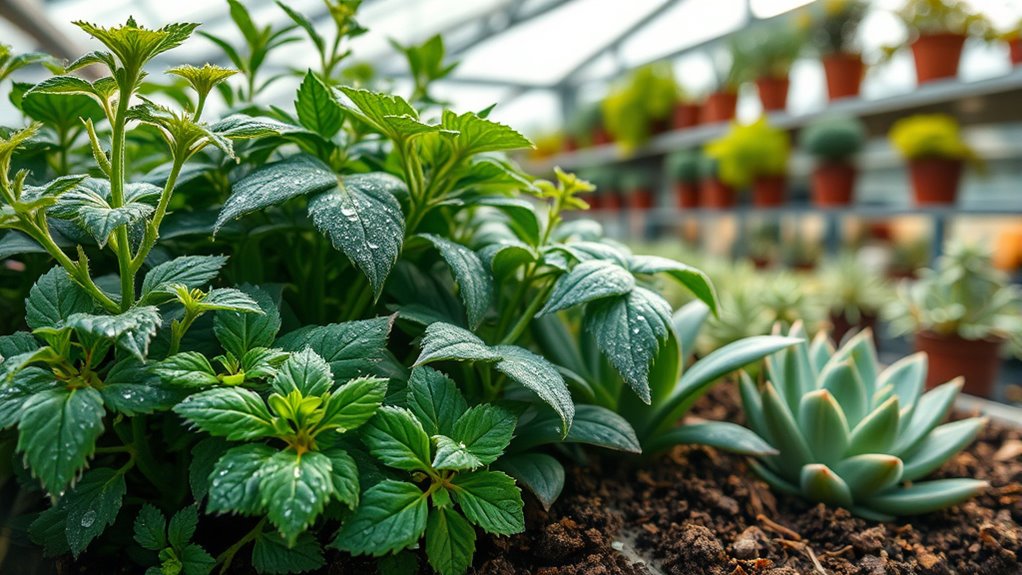
As winter approaches, bringing your plants indoors or into your greenhouse can help them survive the cold months. This shift is vital because many plants enter a period of plant dormancy to survive harsh conditions. During dormancy, growth slows or stops altogether, conserving energy until warmer weather returns. To support this process, effective temperature regulation becomes essential. You need to create an environment that mimics their natural dormant state, which typically involves cooler temperatures but not freezing.
Creating a cool, stable environment mimicking natural dormancy is key to overwintering plants successfully.
Start by evaluating the specific needs of your plants. Some plants require a period of cold to trigger dormancy, while others prefer a more stable, warmer environment. For those that need a chill, maintaining temperatures between 35°F and 50°F can encourage dormancy without causing damage. If your greenhouse isn’t naturally cool enough, consider using heaters with precise thermostats to control the ambient temperature. Avoid sudden temperature fluctuations, as these can stress your plants and hinder their dormancy process. Consistent temperature regulation helps your plants adjust gradually, reducing shock and promoting healthy overwintering.
Once you’ve established the right temperature, focus on reducing the day-night temperature gap. Many plants benefit from cooler nights, which signal them to enter dormancy. You can achieve this by lowering the greenhouse temperature at night or using blackout curtains during the day to prevent excessive heat buildup. Proper ventilation is also key to maintaining stable temperatures and preventing mold or fungal issues, which can be common in enclosed winter environments.
Humidity levels play a role too. Too much moisture can lead to rot or disease, while too little can cause dehydration. Aim for moderate humidity levels, and increase air circulation with fans if needed. This not only keeps humidity in check but also helps distribute temperature evenly around your plants.
Lighting is another consideration. During winter, natural sunlight diminishes, so supplementing with grow lights can ensure your plants receive enough light for their metabolic needs, especially if they’re actively growing before dormancy. However, for truly dormant plants, minimal light is preferable. Adjust lighting schedules based on each plant’s dormancy requirements.
Frequently Asked Questions
How Do I Prevent Pests During Overwintering?
To prevent pests during overwintering, start with thorough pest prevention by inspecting plants and removing any infested leaves. Use natural deterrents like neem oil or insecticidal soap to ward off pests without harsh chemicals. Keep your greenhouse clean, ensure proper airflow, and avoid overwatering, as damp conditions attract pests. Regularly monitor your plants so you can catch any issues early and maintain a healthy, pest-free environment.
What Are Signs of Plant Stress in Winter?
You notice your plant’s leaves are drooping and faded, which signals stress. For example, a gardener discovered their tropical plant showed signs of cold damage after a cold snap, with browning edges and wilting. These symptoms often indicate cold damage or nutrient deficiency. During winter, monitor for these signs and adjust care accordingly, providing warmth and proper nutrients to help your plants recover and thrive despite the chilly conditions.
Can I Overwinter Tropical Plants Outdoors?
You can overwinter tropical plants outdoors if you use proper outdoor overwintering techniques. Protect them from frost by mulching, covering with frost cloths, or creating windbreaks. Keep in mind tropical plant care involves maintaining humidity and avoiding cold drafts. These methods help prevent cold damage, but if temperatures drop too low, consider moving them indoors or into a heated greenhouse for better survival chances.
How Often Should I Water Overwintered Plants?
Think of your overwintered plants as sleeping giants; they need gentle care to awaken in spring. You should water them when the soil moisture drops, typically every 1-2 weeks, depending on indoor conditions. Check the soil regularly by feeling its moisture level — if it feels dry an inch below the surface, it’s time to water. Keep a consistent watering schedule to prevent stress and keep them healthy through winter.
What Are Common Mistakes to Avoid?
You should avoid seasonal pruning too early or too late, which can stress your plants. Also, don’t neglect soil insulation; it helps maintain consistent temperatures and prevents root damage. Be cautious with watering—overwatering can cause rot, especially if you forget to adjust based on seasonal changes. Keep an eye on humidity and airflow. Avoiding these mistakes guarantees your overwintered plants stay healthy and thrive through the season.
Conclusion
As you prepare your greenhouse for winter, remember that your plants are like quiet guardians of the changing seasons, symbolizing resilience and renewal. By nurturing them through the cold, you nurture hope itself—an enduring promise that life persists beneath the frost. Let your care be a silent testament to nature’s enduring cycle, reminding you that even in darkness, growth and beauty find a way to flourish.
Fall Picks
fall essentials
As an affiliate, we earn on qualifying purchases.