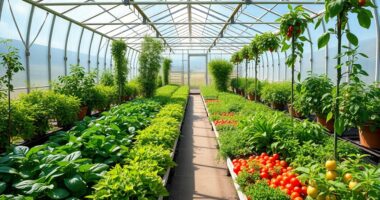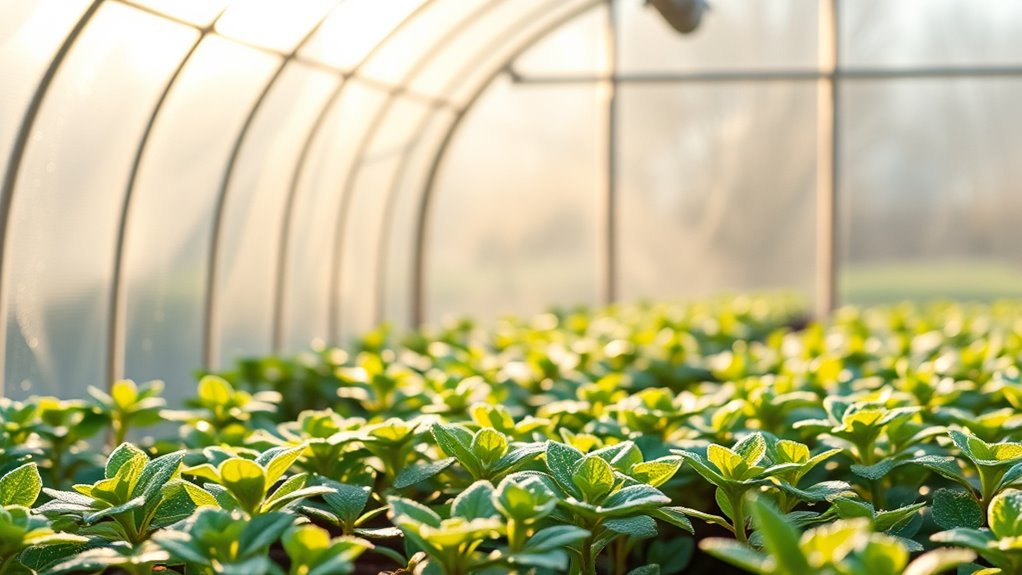
To protect your seedlings from late spring frosts, a greenhouse acts as a vital shield by maintaining a warm, controlled environment. Use insulation like thermal blankets during cold nights and control airflow with adjustable vents and fans to prevent overheating during warmer days. Make certain of good ventilation to reduce humidity and pests, and add physical barriers if needed. Proper management of temperature and pests helps your seedlings survive unpredictable weather—discover more tips to keep them safe and healthy.
Key Takeaways
- Use a greenhouse as a protective barrier to shield seedlings from late spring frosts and temperature drops.
- Maintain controlled ventilation to regulate temperature and humidity, preventing cold damage and mold growth.
- Close vents and add insulation during cold nights to retain warmth and prevent frost from harming young plants.
- Install pest-proof screens and regularly inspect seedlings to prevent pest entry and infestation during vulnerable periods.
- Monitor weather forecasts and adjust environmental controls proactively to safeguard seedlings from unexpected late frosts.
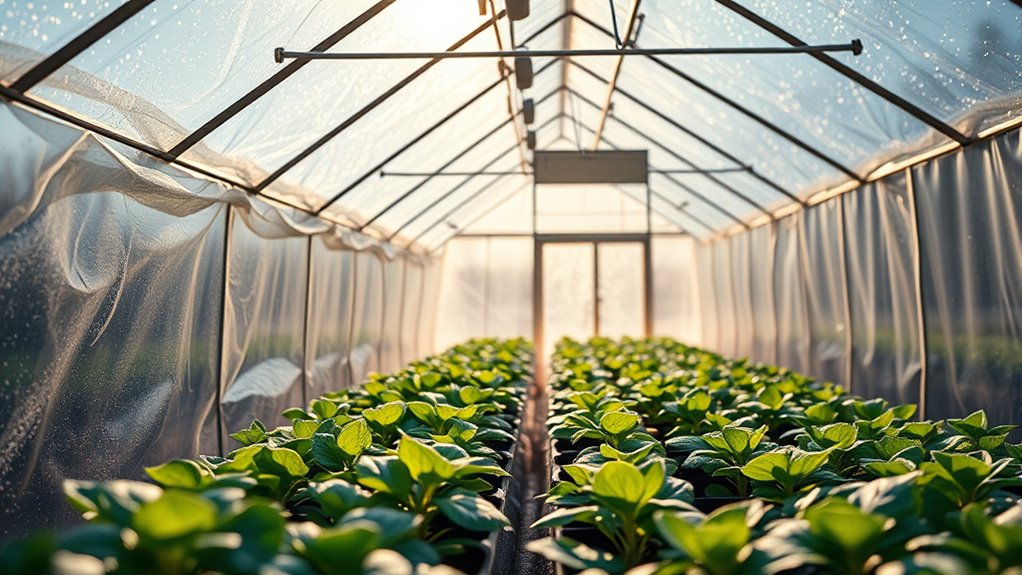
Starting seedlings outdoors can be risky due to unpredictable weather and pests, which is why greenhouse protection is essential. When late spring frosts threaten your young plants, a well-maintained greenhouse acts as a vital shield, ensuring your seedlings survive and thrive. To maximize this protection, you need effective ventilation strategies. Proper airflow is crucial because it helps regulate temperature and humidity inside your greenhouse, preventing sudden cold snaps or temperature fluctuations from damaging tender seedlings. Installing adjustable vents, exhaust fans, or louvered windows allows you to control the environment actively. During chilly nights, closing vents helps retain warmth, while opening them during the day prevents overheating and reduces humidity buildup, which can promote disease. Good ventilation also discourages mold and fungal growth, keeping your seedlings healthy. Additionally, maintaining Proper airflow helps prevent the buildup of stagnant air, which can harbor pests and pathogens.
Another key aspect of greenhouse protection is pest prevention. While a greenhouse offers a physical barrier against many pests, it’s not foolproof. Insects like aphids, whiteflies, and beetles can still find their way inside or hatch from eggs on plant surfaces. To prevent this, you should regularly inspect your seedlings and keep the greenhouse clean. Using pest-proof screens on vents and doors can block entry points for unwanted visitors. Introducing beneficial insects or natural predators can also help control pest populations without resorting to chemicals. Remember, pests thrive in warm, humid environments, so maintaining good ventilation and airflow becomes a double-edged sword—helping to prevent pests while also protecting your plants from cold damage.
In addition to ventilation and pest prevention, it’s wise to consider other protective measures during late spring frosts. Using row covers or thermal blankets inside the greenhouse adds an extra layer of insulation, especially during the coldest nights. Positioning your greenhouse in a sheltered location, away from wind and frost pockets, further enhances its protective capacity. Keep an eye on weather forecasts so you can prepare in advance, closing vents or adding extra insulation when a frost warning is issued. The goal is to create a stable, warm environment that shields your seedlings from sudden temperature drops and pests alike.
Ultimately, your success depends on actively managing your greenhouse environment. By implementing strategic ventilation, maintaining pest prevention measures, and preparing for cold snaps, you can give your seedlings the best chance to flourish despite late spring frosts. Your careful attention ensures that your young plants remain healthy and resilient, ready to take on the growing season.
Frequently Asked Questions
Can a Greenhouse Prevent All Types of Late Spring Frosts?
A greenhouse can’t prevent all types of late spring frosts, but it markedly boosts frost resistance for your seedlings. Its effective temperature regulation keeps the interior warmer, shielding plants from sudden cold snaps. While a greenhouse offers excellent protection, extreme weather conditions might still pose a risk. To maximize frost resistance, consider additional measures like heating or frost cloths during unexpected cold spells.
How Much Does a Greenhouse Typically Cost to Set Up?
Setting up a greenhouse is like planting a seed for future savings, and the cost can vary widely. You might spend around $500 to $5,000 on setup costs, depending on size, materials, and features. For a basic model, expect a price around $1,000. Keep in mind, detailed cost estimation helps you plan your investment wisely, balancing quality and affordability for a greenhouse that shields your seedlings from late spring frosts.
What Are the Best Materials for Greenhouse Coverings?
You should choose polycarbonate panels or polyethylene film for your greenhouse covering. Polycarbonate panels are durable, UV-resistant, and offer excellent insulation, making them ideal for year-round use. Polyethylene film is more affordable and easy to install, perfect for temporary or budget-friendly setups. Both materials help retain heat and protect your seedlings from late spring frosts, ensuring a healthier, more productive growing environment.
How Do I Maintain Optimal Temperature Inside My Greenhouse?
Oh, the thrill of maintaining perfect greenhouse temperatures! You’ll want to master ventilation strategies—open vents during the day to release excess heat and close them at night to retain warmth. Don’t forget temperature monitoring; use a reliable thermometer to track fluctuations. This way, you keep your seedlings cozy and thriving, avoiding the cruel fate of frostbite. Stay vigilant, and your plants will thank you!
Can a Greenhouse Be Used Year-Round for Seedling Protection?
Yes, you can use a greenhouse year-round for seedling protection and season extension. It provides a controlled environment that shields your plants from harsh weather and pests, allowing continuous growth. Proper insulation and ventilation help maintain consistent temperatures, even in winter. By using your greenhouse year-round, you guarantee healthy seedlings regardless of outside conditions, making it a smart investment for all-season gardening and pest control.
Conclusion
A greenhouse acts as a shield, giving your seedlings a fighting chance against late spring frosts. By providing a controlled environment, you’re keeping your plants safe and healthy, even when Mother Nature throws a curveball. Think of your greenhouse as a warm, sturdy umbrella on a rainy day—it keeps you dry and protected. With this extra layer of defense, you can rest assured your seedlings will thrive, come rain or shine.