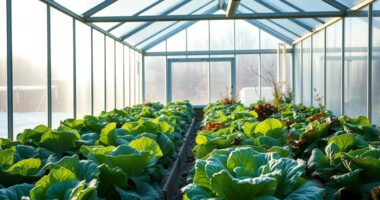
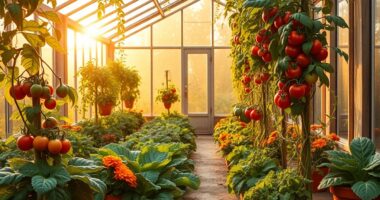
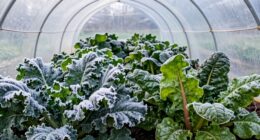
When your greenhouse experiences its first warm spring spell, open vents and doors gradually to increase airflow and prevent overheating, but keep an eye on outdoor temperatures and close vents during chilly nights to retain warmth. Watch for frost risks on cold evenings and adjust accordingly. Use sensors and weather alerts to help fine-tune conditions. Staying vigilant guarantees your plants thrive in ideal conditions—continue exploring to master spring ventilation strategies.
Key Takeaways
- Open vents during warm midday periods to promote airflow and heat escape; close them in the evening to retain warmth.
- Use fans alongside natural ventilation for precise temperature control, adjusting based on outdoor weather conditions.
- Monitor outdoor temperatures and weather forecasts to decide when to open or close vents, preventing overheating or chilling.
- Watch for early signs of plant growth and pests to adjust ventilation and humidity controls proactively.
- Protect plants during cold snaps by setting up frost alerts, closing vents at night, and covering vulnerable areas if necessary.
How to Manage Greenhouse Ventilation During Spring Fluctuations
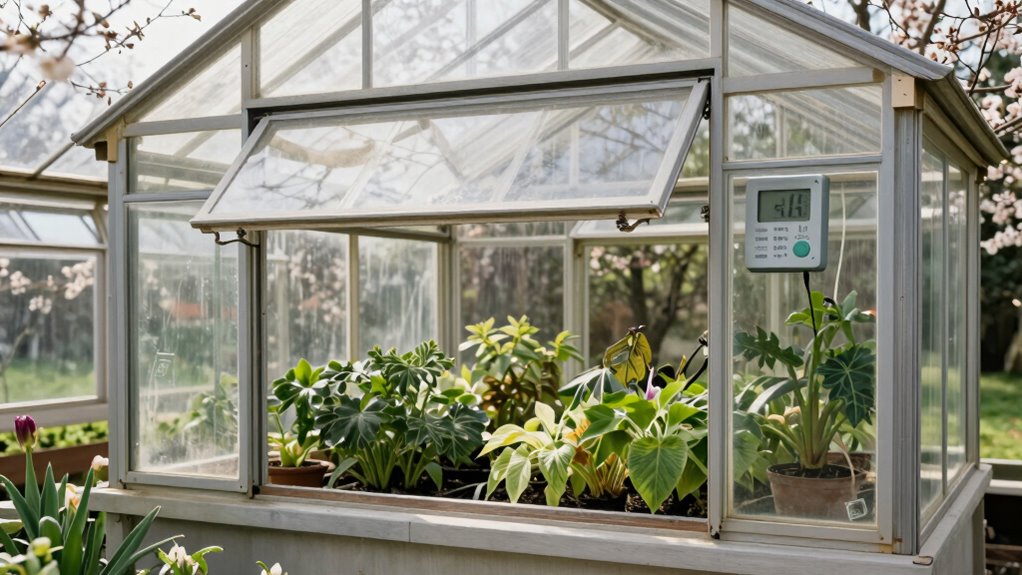
As spring temperatures fluctuate, managing greenhouse ventilation becomes essential to maintaining ideal growing conditions. You need effective ventilation strategies to handle sudden temperature swings and prevent overheating or humidity buildup. Start by opening vents during warmer periods to promote airflow optimization, ensuring fresh air circulates and excess heat escapes. When temperatures drop, close vents partially or fully to retain warmth while avoiding stagnation. Using fans in combination with natural ventilation can enhance airflow control, giving you more precision in adjusting conditions. Keep an eye on outdoor conditions and adjust your ventilation accordingly, so you don’t overcool or overheat your plants. Proper ventilation management helps maintain consistent temperatures, reduces disease risk, and supports healthy plant growth during unpredictable spring weather. Additionally, incorporating natural ventilation techniques can improve overall airflow and energy efficiency in your greenhouse. Maintaining proper ventilation balance is crucial to prevent issues like mold and plant stress. Regularly monitoring temperature fluctuations can help fine-tune your ventilation approach for optimal results. Staying informed about climate variability can further enhance your ability to adapt your ventilation strategies effectively.
How to Spot Early Signs of Spring in Your Greenhouse
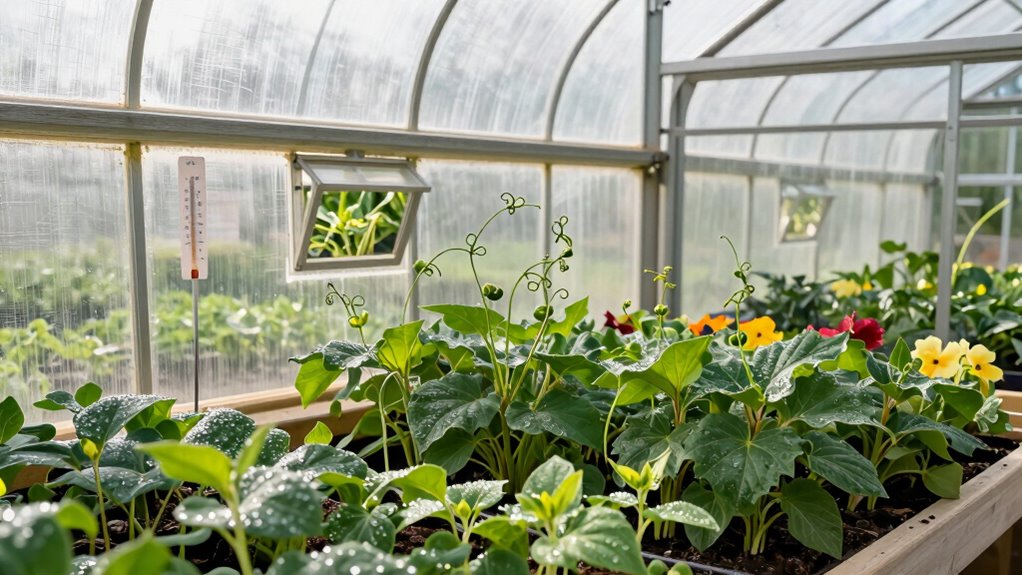
Recognizing early signs of spring in your greenhouse allows you to adjust care promptly and optimize plant growth. Look for subtle changes like new leaf emergence, increased flower buds, or faster seedling development. Warmer daytime temperatures and longer daylight hours also signal spring’s arrival. Keep an eye out for pests such as aphids or whiteflies, which become more active as conditions warm. Early detection helps you implement pest prevention strategies before infestations escalate. Use this table to understand these signs better:
| Sign of Spring | Meaning |
|---|---|
| New leaf growth | Indicates active plant development |
| More flower buds | Signs of upcoming blooming |
| Slight temperature rise | Promotes plant growth and pest activity |
| Longer daylight hours | Boosts photosynthesis and growth |
| Pest presence | Early warning for pest prevention |
Being attentive ensures healthy plants and a thriving greenhouse. Additionally, adopting methodical testing and regular monitoring can help identify issues early, ensuring your greenhouse remains healthy and productive.
Checking the Weather Outside: When and How to Adjust Ventilation

To keep your greenhouse comfortable, you need to regularly check outdoor temperatures and sunlight levels. If it’s warmer outside, open vents to improve airflow; if it’s cooler, close them to retain heat. Adjust your ventilation based on these factors to guarantee ideal growing conditions. Additionally, monitoring user privacy settings can help ensure your personal preferences are respected while managing cookies and personalized content. Being aware of climate control systems can further enhance your ability to maintain a stable environment for your plants. Incorporating nanotechnology-based sensors can provide more precise and real-time environmental data to optimize your greenhouse conditions. Utilizing smart automation technology can help you automate these adjustments for optimal plant health.
Monitor Outdoor Temperatures
Monitoring outdoor temperatures is essential for maintaining the right environment in your greenhouse. By regularly checking the weather, you can make informed decisions about when to open or close vents, ensuring ideal conditions for plant growth. If outdoor temperatures rise above your greenhouse’s ideal range, close vents to prevent overheating and reduce stress on your plants. Conversely, when temperatures drop, open vents to boost airflow and prevent humidity buildup that attracts pests. Keeping a close eye on outdoor temperatures also helps you avoid unnecessary energy use and maintain a stable climate. This proactive approach supports healthy plant development and minimizes pest problems, which thrive in inconsistent or overly humid conditions. Staying vigilant with temperature monitoring ensures your greenhouse remains a productive, pest-free space. Consistent temperature control is key to creating a stable environment that promotes healthy growth and pest prevention.
Assess Sunlight Levels
Evaluating sunlight levels is essential for maintaining ideal conditions in your greenhouse. You need to monitor sunlight intensity regularly to prevent overheating or insufficient light for your plants. Observe how solar exposure changes throughout the day, noting especially when the sun is at its peak. Use a light meter or simply watch for shadows and brightness levels inside your greenhouse. If sunlight is too intense, consider shading or adjusting vents to reduce heat buildup. Conversely, if sunlight is weak, open vents or move shade cloths to maximize exposure. Consistent assessment helps you optimize conditions for healthy growth. Additionally, understanding the best daisy varieties for gardens can help you select plants that thrive under your specific sunlight conditions. Remember, sunlight levels fluctuate with weather and season, so stay attentive to these changes to keep your greenhouse environment balanced and optimize plant health.
Adjust Ventilation Accordingly
Keeping an eye on the weather outside helps you determine when to adjust your greenhouse’s ventilation. Proper airflow management is essential for maintaining ideal conditions. Here are some ways to adapt your ventilation strategies:
- Monitor outdoor temperatures and wind conditions. If it’s warm and calm, open vents to promote airflow.
- Close vents during sudden cold snaps to prevent heat loss.
- Use fans or exhaust systems when outdoor air is humid or polluted, ensuring good air quality inside.
- Consider the insulation quality of your greenhouse to better understand how external weather impacts internal temperature regulation.
- Be aware of environmental factors such as humidity and pollution levels, which can influence the need for ventilation adjustments. Additionally, understanding micro-mobility solutions can inspire resilience in managing your greenhouse environment effectively.
Monitoring Your Greenhouse: Temperature and Humidity Tips
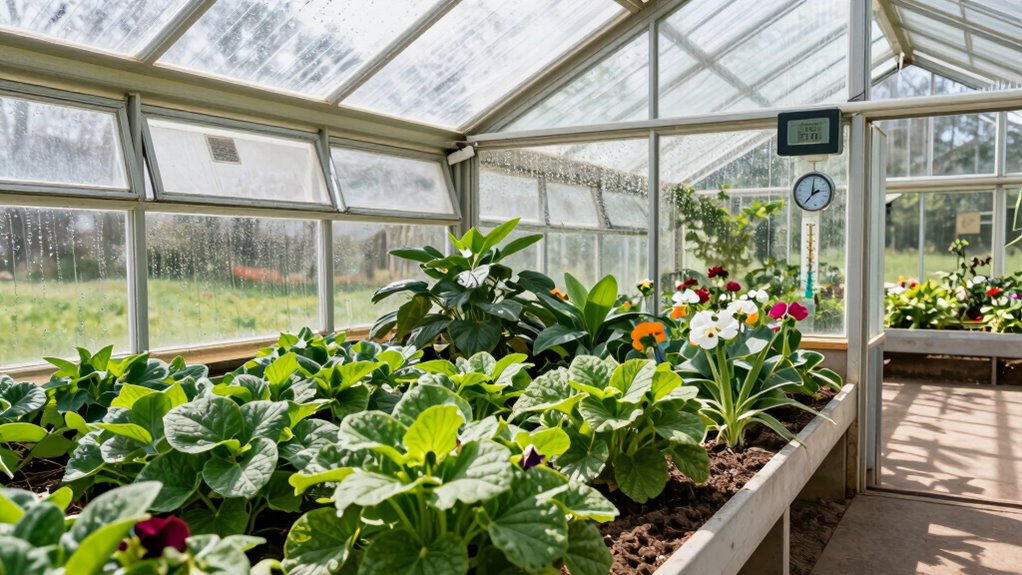
You need to keep a close eye on your greenhouse’s temperature fluctuations to prevent stress on your plants. Controlling humidity levels is just as important to avoid mold and pests. Regular monitoring ensures your environment stays ideal for healthy growth. To maximize your greenhouse’s potential, consider using environmental control systems that help maintain optimal conditions automatically.
Monitoring Temperature Fluctuations
Monitoring temperature fluctuations is essential to maintaining a healthy greenhouse environment. Sudden changes can stress plants, hinder growth, and invite pests. Regularly track temperatures to keep conditions steady and preferable. Incorporating a thermometer that provides accurate, real-time data can greatly improve your ability to respond promptly to temperature shifts. Using data logging devices can help you review temperature patterns over time, making it easier to anticipate and prevent issues. Here are three key tips:
- Use a reliable thermometer placed at plant canopy level to detect subtle shifts affecting plant growth.
- Record temperature readings daily to identify patterns and prevent overheating or chilling.
- Adjust vents, fans, or shading promptly when temperatures fluctuate outside ideal ranges.
Controlling Humidity Levels
Maintaining proper humidity levels is essential for healthy plant growth and preventing disease. Effective humidity control ensures your plants don’t suffer from excessive moisture or dryness. To manage moisture, monitor the humidity regularly with a hygrometer. If humidity is too high, increase ventilation or use a dehumidifier to reduce excess moisture. Conversely, if humidity drops too low, consider misting plants or adding a humidifier. Proper moisture management helps prevent fungal diseases and keeps plants thriving. Keep an eye on weather changes that can influence humidity and adjust your controls accordingly. For example, changes in temperature and humidity levels may require you to adjust environmental controls to maintain optimal conditions. Consistent monitoring and timely adjustments keep humidity in an ideal range, supporting healthy growth and reducing the risk of problems caused by improper moisture levels. Additionally, understanding the style of your greenhouse setup can help you optimize environmental controls for better plant health. Using appropriate humidity management tools can further enhance your ability to maintain stable conditions.
When and How to Open or Close Vents and Doors in Spring
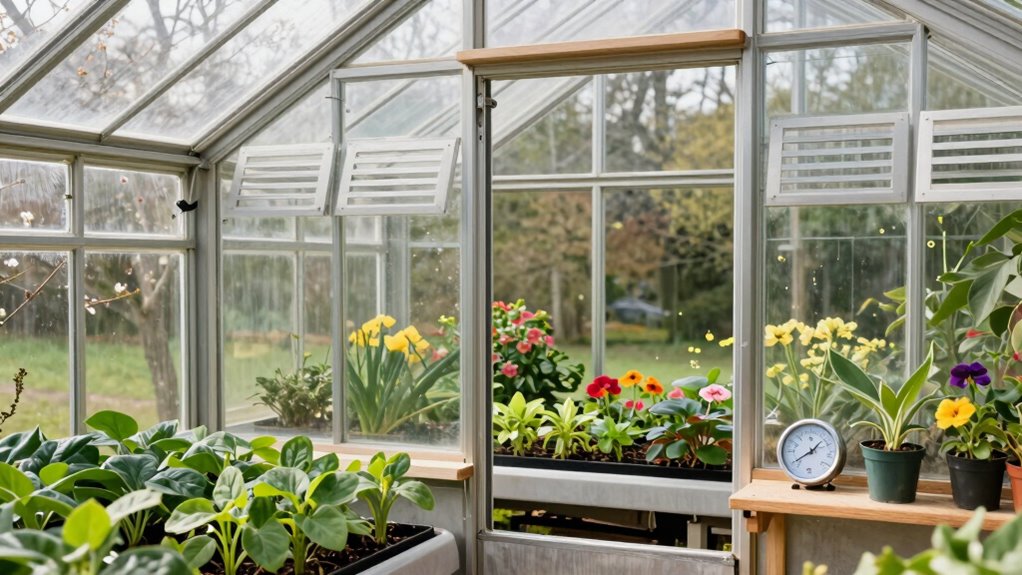
As temperatures begin to rise in spring, it is crucial to adjust your greenhouse vents and doors to maintain the right environment for your plants. Proper ventilation helps manage shade, prevent pests, and keep humidity levels balanced. Selecting appropriate ventilation techniques can significantly impact plant health and growth. Here’s how to do it effectively: 1. Open vents early in the day to release excess heat and humidity, then close them in the evening to retain warmth. 2. Keep doors closed during peak sunlight to prevent pests from entering and to control shade. 3. Monitor external conditions closely—if temperatures suddenly spike, increase ventilation; if it cools down, close vents to preserve heat. Additionally, understanding ventilation systems can help you choose the most effective setup for your greenhouse.
Fine-Tuning Ventilation as Conditions Change Throughout the Day
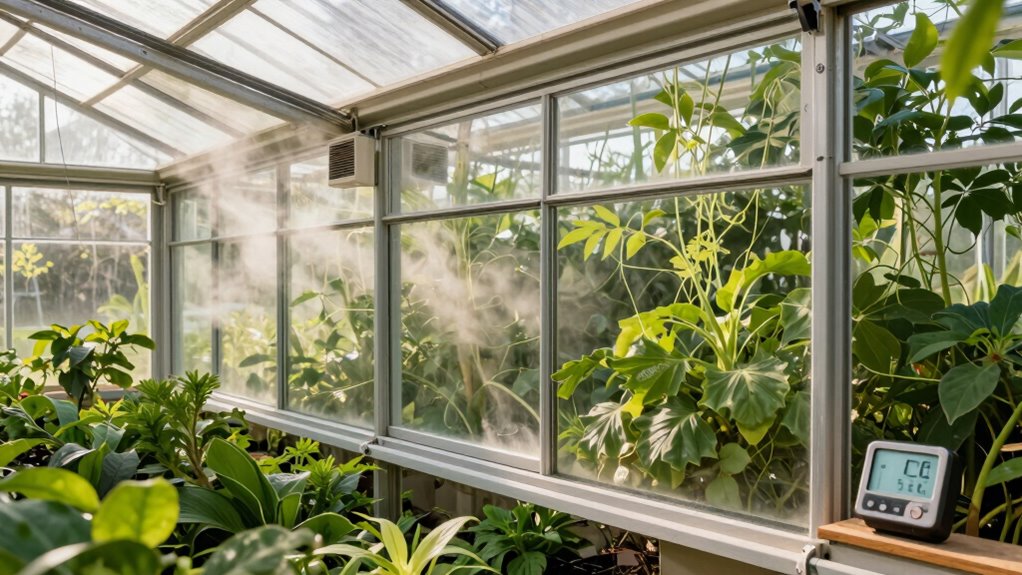
Adjusting your greenhouse vents throughout the day makes sure your plants stay comfortable as outdoor conditions shift. By fine-tuning ventilation, you manage airflow patterns to prevent overheating and humidity buildup. As the temperature rises, open vents gradually to promote fresh air exchange, which helps maintain ideal growing conditions. In the evening, close vents partially to retain warmth while still allowing some airflow. Proper airflow also supports odor control, preventing stale smells from accumulating inside. Observe how air moves within your greenhouse, adjusting vents accordingly to encourage even circulation. This ongoing fine-tuning prevents hot spots and ensures your plants receive consistent, fresh air regardless of changing weather. With attentive vent management, you’ll keep your greenhouse environment balanced and healthy throughout the day.
How to Watch for Cold Snaps and Frost Risks in Spring

Spring weather can change rapidly, making it essential to stay alert for cold snaps and frost risks that could harm your plants. To protect your greenhouse, monitor local weather forecasts daily and set up cold snap alerts if available. Here are three key ways to watch for frost risks:
- Check nightly temperatures—if they dip near or below freezing, take frost protection measures.
- Observe weather patterns—sudden clear nights can lead to frost formation.
- Use a thermometer inside your greenhouse to track temperature drops during the night.
Automating Ventilation: Using Sensors and Tools to Keep Conditions Just Right
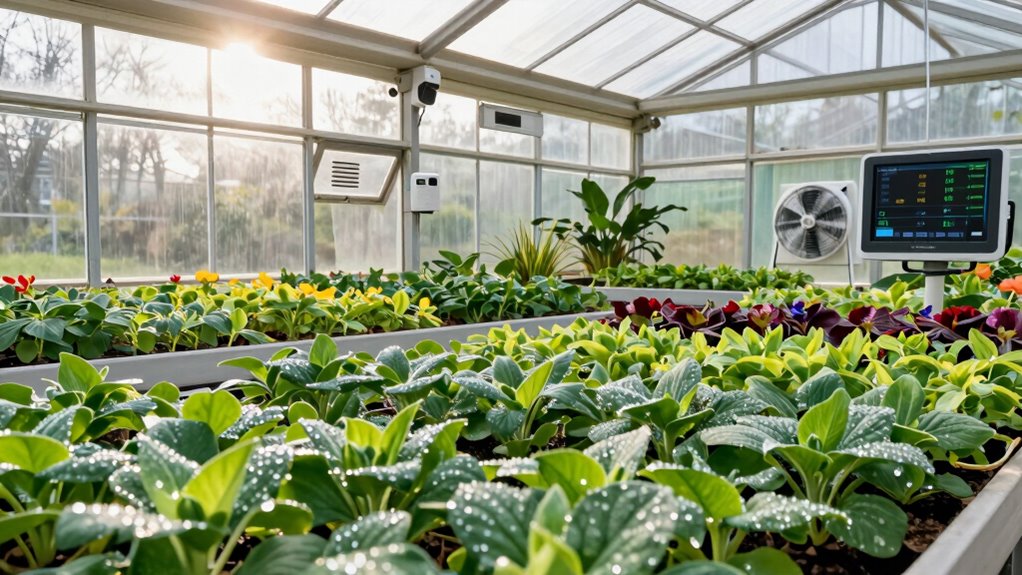
To maintain ideal growing conditions in your greenhouse, automating ventilation with sensors and tools is essential. Proper sensor calibration guarantees accurate readings of temperature, humidity, and light levels, helping your system respond appropriately. When sensors are correctly calibrated, your ventilation system opens or closes vents at the right times, preventing overheating or excessive humidity. Automated shading complements this process by reducing sunlight when conditions get too intense, protecting plants from heat stress. Integrating these tools creates a responsive environment that adapts seamlessly to changing weather. With automation, you can minimize manual adjustments, saving time and reducing errors. Ultimately, this setup keeps your greenhouse conditions just right, encouraging healthy, vigorous plant growth throughout spring.
Common Mistakes to Avoid When Ventilating Your Greenhouse in Spring
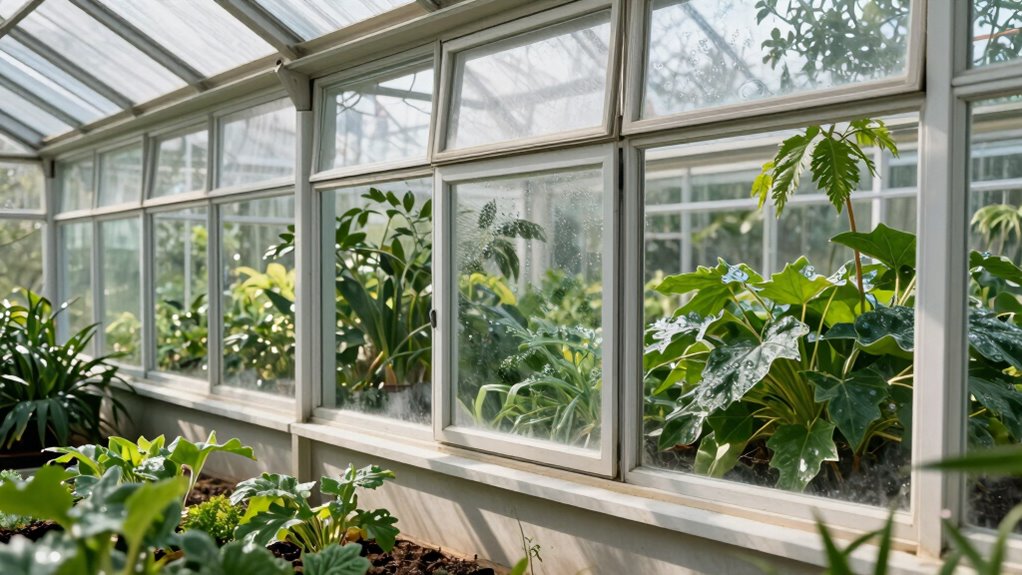
Even with automated systems in place, it’s easy to make mistakes that compromise your greenhouse’s climate. Poor ventilation safety practices or neglecting plant stress can lead to issues. To avoid common pitfalls:
- Don’t open vents too wide or too quickly, which can cause temperature swings and stress plants.
- Over-ventilate during early spring warm spells, risking rapid temperature drops that stress plants and reduce humidity.
- Ignore the importance of monitoring airflow; inadequate or uneven ventilation can create hot spots or stagnant air, harming plants.
Preparing Your Greenhouse for Summer: Transition Tips From Spring Warmth
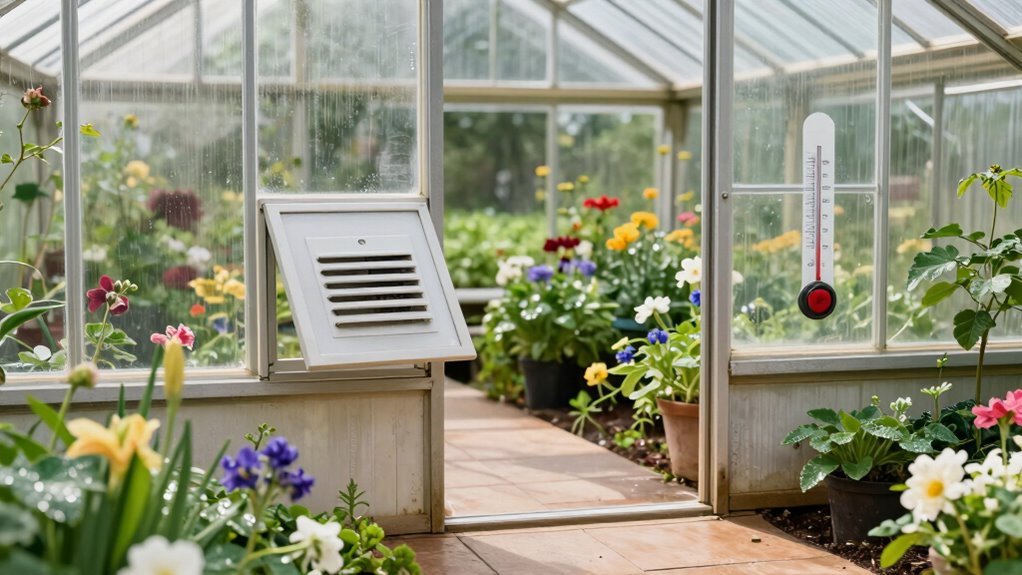
As temperatures rise and days grow longer, adapting your greenhouse to handle the summer heat effectively is vital. Start by improving soil preparation; add compost or organic matter to boost nutrients and improve water retention, helping plants withstand heat stress. Regularly check and adjust ventilation to prevent overheating, opening vents early in the day and closing them in the evening. Pest prevention becomes even more important during summer; inspect plants frequently and remove any pests or eggs promptly. Consider applying organic barriers or natural predators to keep pests at bay. Additionally, make certain your shading systems are ready to reduce intense sunlight. Proper soil prep and vigilant pest prevention will help your greenhouse shift smoothly from spring warmth into the heat of summer, keeping your plants healthy and productive.
Frequently Asked Questions
How Do I Prevent Pests During Spring Warming?
To prevent pests during spring warming, you should regularly inspect your plants for signs of infestation and keep the greenhouse clean. Use natural repellents like neem oil or insecticidal soap to deter pests without chemicals. Make certain proper ventilation to reduce humidity, which attracts pests. Quarantining new plants before introducing them helps prevent bringing in pests. Consistent pest prevention measures will keep your greenhouse healthy and pest-free during this essential season.
What Plants Thrive Best During Early Spring?
Imagine lush greens and vibrant blossoms emerging as you select the best spring crop selection. Early bloomers like radishes, lettuce, spinach, and peas thrive during early spring, their tender leaves and bright shoots bursting with life. These plants love the cool, warming days and thrive in your greenhouse’s early warmth. By choosing these hardy, fast-growing crops, you’ll enjoy fresh harvests and the promise of a thriving spring garden.
How Can I Improve Air Circulation Naturally?
To improve air circulation naturally, you should implement effective ventilation strategies like opening vents and doors to encourage natural airflow. Use cross-ventilation by opening opposite sides of your greenhouse to create a steady breeze. Keep internal fans on low settings if needed, but prioritize natural airflow. Regularly monitor the temperature and humidity to guarantee ideal conditions, preventing mold and promoting healthy plant growth through consistent, natural ventilation.
What Are Effective Ways to Monitor Soil Temperature?
Imagine you’re monitoring your greenhouse’s soil temperature, just like a hobbyist did last spring. You can use soil sensors to get real-time data and track temperature logs daily. Place sensors at root level and check the readings regularly. This way, you’ll spot temperature fluctuations early, ensuring your plants stay healthy. Using soil sensors and maintaining detailed logs helps you make informed decisions about watering and heating.
How Do I Handle Unexpected Cold Snaps at Night?
When a cold snap hits at night, you should act quickly to prevent nighttime frost damage. Use emergency heating options like space heaters or heat lamps to keep your greenhouse warm. Cover sensitive plants with frost cloths or blankets, and monitor the temperature closely. Keep an eye on weather forecasts so you can prepare in advance. Acting promptly helps protect your plants during unexpected cold snaps at night.
Conclusion
As spring brings its unpredictable weather, staying attentive to your greenhouse’s conditions is key. By adjusting vents, monitoring temperatures, and watching for cold snaps, you can create the perfect environment for your plants. Are you ready to master your spring ventilation routine and keep your greenhouse thriving? Remember, proactive care today guarantees a healthy, fruitful season ahead. Keep observing, adjusting, and enjoying the growth!