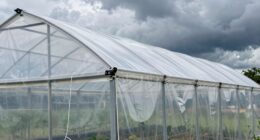

In the 30 minutes before high winds hit, quickly inspect your greenhouse for weak spots like loose panels, cracked glass, or blocked airflow paths. Secure support beams, tighten loose items, and reinforce anchor points with straps. Protect your plants by moving delicate ones indoors or staking tall plants. Seal gaps around vents and doors, and monitor weather updates closely. Following these steps can markedly reduce damage—keep going to learn more tips for storm-ready greenhouses.
Key Takeaways
- Inspect and secure ventilation, doors, and structural panels to prevent damage from high winds.
- Gather loose items and reinforce supports to avoid projectiles and structural failure.
- Tie down or stake tall plants and move delicate valuables indoors or under covers.
- Seal all openings, gaps, and cracks with weatherproof tape, caulk, or sealant for added wind resistance.
- Monitor weather updates and finalize your storm plan, including communication and emergency procedures.
Identify Weak Spots in Your Greenhouse Quickly

How can you spot vulnerabilities in your greenhouse before a storm hits? Start by inspecting ventilation issues; ensure vents and fans open and close smoothly to prevent pressure buildup during strong winds. Check for blocked or damaged airflow paths that could cause overheating or stagnation. Also, examine your watering systems—look for leaks, broken hoses, or loose fittings that might worsen damage if water escapes or freezes. Tighten loose connections and clear any obstructions. Pay attention to weak points like cracked glass, loose panels, or poorly secured doors. These weaknesses can become hazards in a storm. Conducting a comprehensive inspection of all structural components is essential for identifying hidden vulnerabilities. By proactively identifying and addressing ventilation problems and watering system flaws, you minimize risks and strengthen your greenhouse’s resilience against high winds and heavy rain.
Reinforce Supports and Secure Loose Items

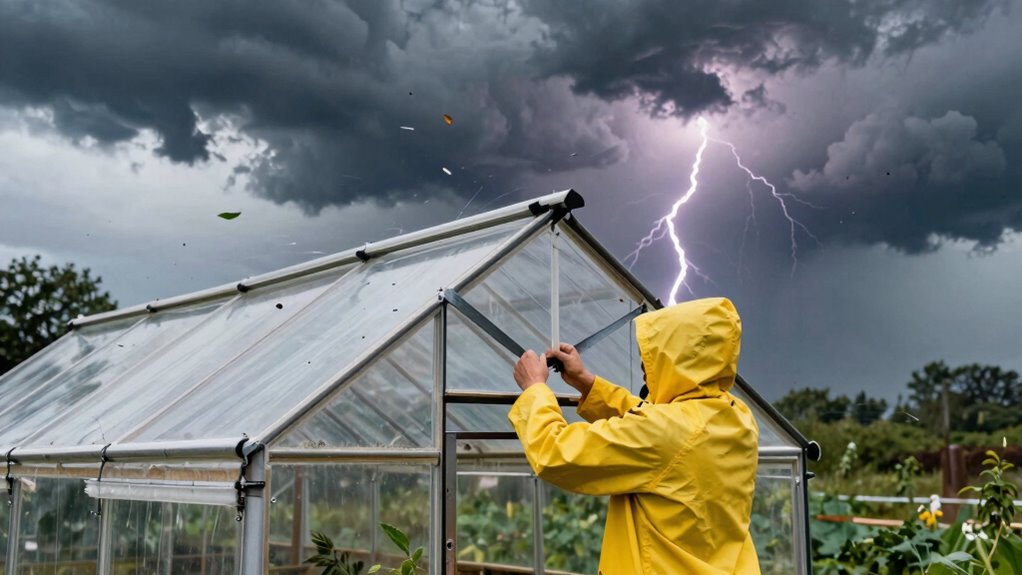
To prevent storm damage, it’s essential to reinforce supports and secure loose items in your greenhouse. Start by inspecting support beams, ensuring they’re tightly connected and free of cracks. Strengthen weak points with additional bracing if needed. Next, check all anchor points—securely fasten or reinforce them to prevent movement during high winds. Finally, gather loose objects like tools, pots,, and stakes, and secure or store them inside the greenhouse. Visualize this process with these steps:
Secure support beams, reinforce anchor points, and store loose items to protect your greenhouse during storms.
- Tighten all support beams and add braces where necessary.
- Reinforce anchor points with heavy-duty straps or anchors.
- Collect loose items and store or secure them to prevent flying debris.
- Understand hydraulics principles to ensure your greenhouse’s support system remains stable under wind pressure.
This quick routine helps minimize damage and keeps your greenhouse stable during storms.
Protect Plants and Valuables From Wind Damage

After securing loose items and reinforcing support structures, your next focus should be on protecting your plants and valuables from wind damage. Installing rain barriers around vulnerable plants can reduce wind impact and prevent soil erosion. Use wind gauges to monitor wind speed; if it surpasses safe thresholds, take immediate action. Consider moving delicate or valuable plants indoors or under temporary covers. Tie down or stake tall plants to prevent uprooting, and secure lightweight objects that could become projectiles. Ensure rain barriers are properly anchored to withstand gusts. Regularly check wind gauges during the storm; if winds intensify, be ready to reinforce barriers or relocate sensitive items. Proper filtration of your greenhouse environment can also help mitigate the effects of wind-driven debris and dust. Quick, decisive steps now can save your greenhouse’s interior and your investments from costly wind damage.
Seal Openings and Cover Gaps Before the Storm
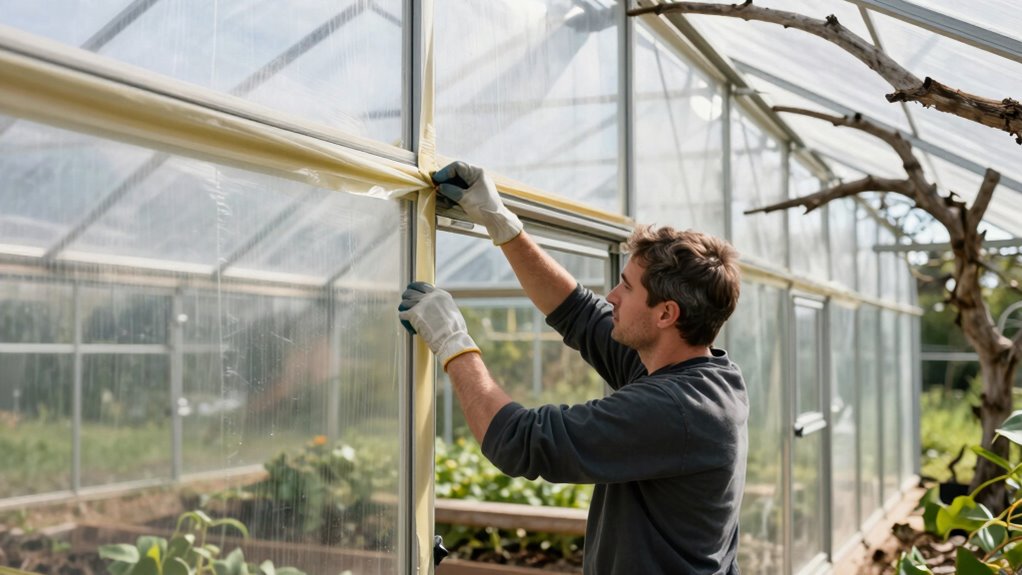
Sealing openings and covering gaps is essential to prevent wind and rain from entering your greenhouse during a storm. First, inspect ventilation gaps around vents and windows, sealing them with weatherproof tape or foam strips. Next, check the door seals, ensuring they are tight and secure — replace or reinforce any worn or damaged seals. Finally, look for small cracks or gaps in the structure’s framing and seal them with caulk or sealant to block wind entry. Visualize these steps:
- Pressing weatherproof tape along ventilation gaps to block airflow.
- Securing door seals with extra weatherstripping for a tight fit.
- Applying caulk over small cracks to prevent wind and water infiltration.
Check Weather Updates and Finalize Your Storm Plan
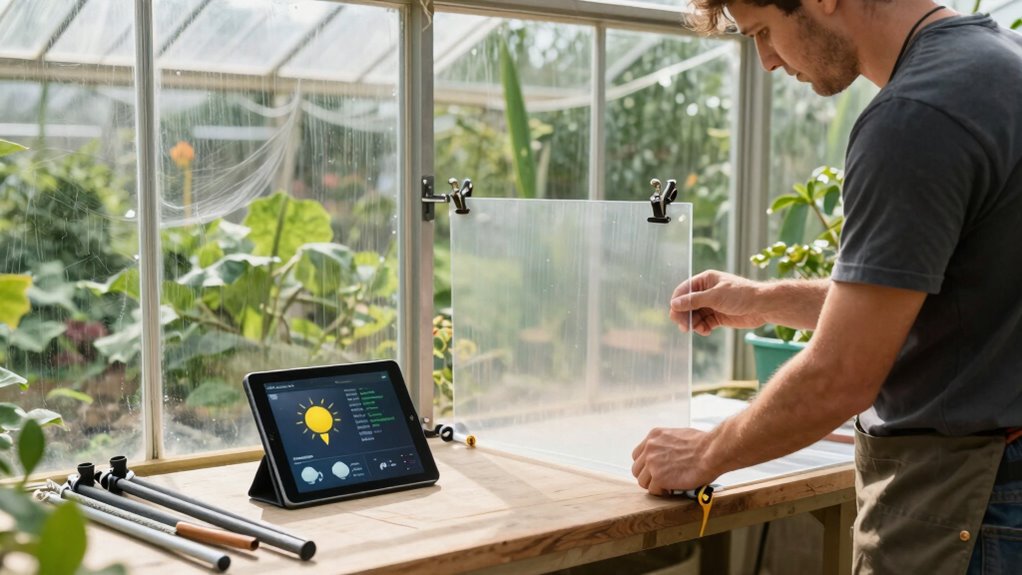
Monitoring weather updates is a vital step before a storm hits, especially after sealing your greenhouse openings. Stay alert by actively tracking storm updates through reliable weather alerts and storm tracking services. Check the latest forecasts frequently, focusing on wind speeds, rainfall, and storm trajectory. Use your phone or weather radio to receive real-time alerts, guaranteeing you’re aware of any sudden changes. Based on current data, finalize your storm plan: decide if you need additional reinforcement, move sensitive plants to protected areas, or prepare emergency supplies. Confirm your communication plan with family or staff, and make certain everyone knows their roles. Staying informed allows you to make quick, effective decisions, minimizing damage and keeping your greenhouse secure during extreme weather.
Post-Storm Inspection and Damage Prevention Tips
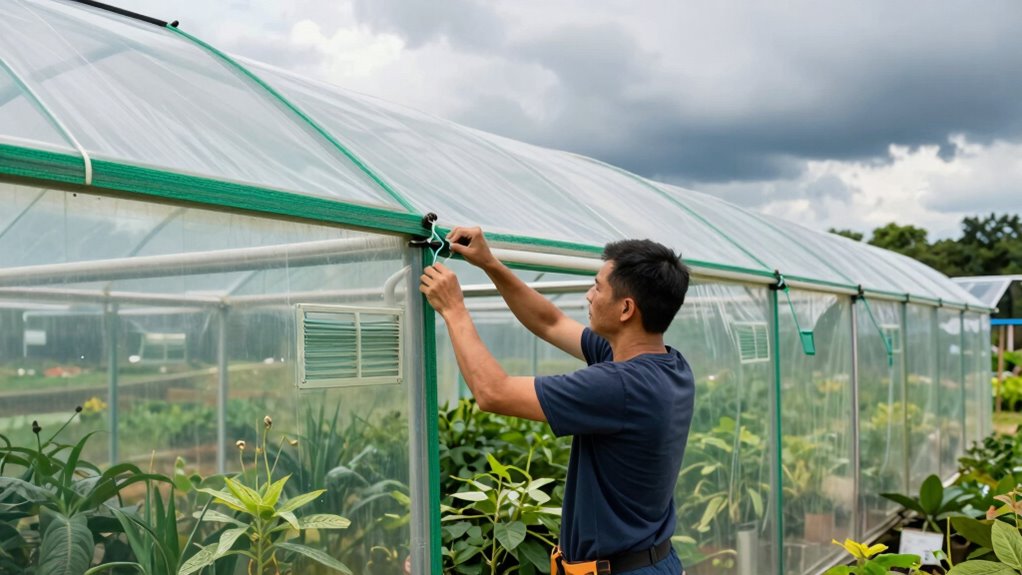
After the storm passes, you need to carefully inspect your greenhouse for damage. Pay close attention to securing structural supports and look for any vulnerabilities that could cause further issues. Addressing these areas promptly helps protect your plants and prevent future problems. Additionally, assessing the air quality within your greenhouse ensures that ventilation systems are functioning properly and that no debris is obstructing airflow, which is vital for maintaining a healthy environment for your plants.
Secure Structural Supports
Have you ever wondered how to guarantee your greenhouse’s supports stay strong through a storm? Start by inspecting your support beams for any signs of damage or looseness. Next, check all anchor points where support beams connect to the foundation, ensuring they’re secure and free of rust or corrosion. Finally, reinforce weak spots by adding additional support beams or tightening existing fasteners to prevent movement. Visualize sturdy support beams firmly anchored at key points, holding the structure steady against fierce winds. Imagine the support beams acting like resilient arms, absorbing gusts without bending or breaking. Ensuring these supports are solid before the storm hits reduces the risk of collapse and keeps your greenhouse safe. Conducting a structural assessment now can identify vulnerabilities and help you make necessary repairs, saving you costly repairs later.
Inspect for Vulnerabilities
Following a storm, it’s essential to thoroughly inspect your greenhouse for vulnerabilities. Check the storm drain to ensure it’s free of debris and functioning properly, preventing water buildup that could cause flooding or structural damage. Examine your ventilation system for damage or obstructions that might compromise airflow or allow wind to enter uncontrollably. Look for loose panels, damaged seals, or broken glass that could be blown in high winds. Inspect the roof and walls for any cracks or weaknesses that need immediate repair. Also, verify that all support braces are secure. Addressing these vulnerabilities quickly helps prevent further damage and keeps your greenhouse resilient during future storms. A thorough post-storm inspection safeguards your investment and ensures your plants remain protected. Additionally, consider astrological influences when planning future storm preparations, as some believe celestial bodies can subtly impact weather patterns.
Frequently Asked Questions
How Often Should I Perform Storm Prep Routines for My Greenhouse?
You should perform storm prep routines for your greenhouse at least seasonally, ideally before storm seasons like fall or spring. Creating a storm readiness schedule helps you stay proactive and guarantees your greenhouse is prepared. Regular maintenance checks and practicing your routine every few months will keep your greenhouse resilient. Staying ahead with seasonal maintenance minimizes damage and keeps your plants safe during high winds or storms.
What Specific Tools Are Essential for Quick Reinforcement?
You should keep essential tools like storm windows and tie-down straps ready for quick reinforcement. Storm windows protect your greenhouse from flying debris and wind damage, so have them easily accessible. Tie-down straps are vital to secure lightweight structures and equipment quickly. Keep these tools in a designated, easily reachable spot, and practice using them regularly to guarantee you can reinforce your greenhouse swiftly before high winds arrive.
How Can I Identify Early Signs of Structural Weakness?
You can spot early signs of structural weakness by paying close attention to foundation stability and material degradation. Cracks in the foundation or walls, warping, or rust are red flags. Keep an eye out for loose fittings, sagging roofs, or uneven surfaces, which indicate trouble brewing. If you catch these signs early, you can address issues before they become major problems—don’t wait until it’s too late to act.
Are There Eco-Friendly Materials Suitable for Storm Reinforcement?
Yes, you can use eco-friendly reinforcement options like bamboo, recycled plastic, and natural fiber composites for sustainable storm proofing. These materials are durable and environmentally conscious, helping you strengthen your greenhouse without harming the planet. Incorporating sustainable storm proofing techniques not only enhances wind resistance but also reduces your ecological footprint. Choose eco-friendly reinforcement to guarantee your greenhouse stays protected during storms while supporting sustainability.
What Should I Include in an Emergency Storm Kit for Greenhouses?
Did you know that 70% of greenhouse damage from storms is caused by wind surge and resistance failure? To prepare, include sturdy materials like tarps, spare fasteners, and weather-resistant tape in your emergency storm kit. Add a flashlight, batteries, and first aid supplies. Make certain you have tools to reinforce wind resistance, and keep records of your greenhouse’s structural details for quick repairs during high winds or storm surges.
Conclusion
With just 30 minutes, you can turn your greenhouse into a fortress against high winds. Think of it as giving your plants a warm hug before the storm hits—trust in your prep work to keep everything safe. When the skies clear, a quick inspection will help you spot any damage early, like catching raindrops before they turn into a flood. Stay proactive; your greenhouse’s resilience depends on it.