
To prevent powdery mildew, improve airflow around your plants by spacing them properly, pruning crowded foliage, and using fans if needed. Avoid overwatering, as excess moisture creates ideal conditions for fungal growth, and water at the plant base rather than overhead. Maintaining dry leaves and good circulation helps prevent spores from settling. Keep these tips in mind, and you’ll discover simple changes that can make a big difference in your garden’s health.
Key Takeaways
- Ensure proper plant spacing to improve air circulation and reduce humidity around foliage.
- Prune overcrowded branches and dense foliage to promote better airflow and drying.
- Water plants at the base rather than overhead to keep leaves dry and inhibit fungal growth.
- Avoid overwatering by monitoring soil moisture and ensuring good drainage to lower humidity levels.
- Use organic fertilizers and resistant plant varieties to strengthen plants against powdery mildew.

DREO Smart Fan for Bedroom, Powerful 85 ft Airflow, 12 Inches, Desk Fans in 20dB Quiet, 90°+90° oscillating fans, App/Voice Control, 9 Speeds & 8/12H Timer for Home Office Dorm
- Whole-room airflow: Up to 950 CFM, 85 ft reach
- 360° oscillation: 90° vertical and horizontal
- Quiet operation: Runs at 20dB for restful nights
As an affiliate, we earn on qualifying purchases.
As an affiliate, we earn on qualifying purchases.
Quick Tips to Prevent Powdery Mildew in Your Garden
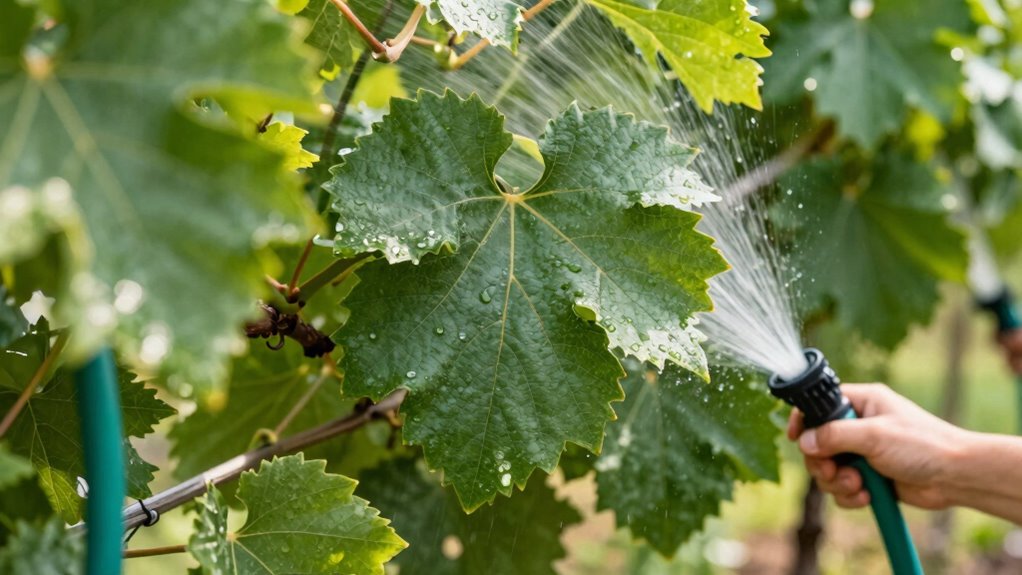
To effectively prevent powdery mildew in your garden, start by choosing resistant plant varieties whenever possible. Incorporate soil amendments like compost or organic fertilizers to improve soil health, which fortifies plants against disease. Healthy plants are less prone to fungal infections, so maintaining robust growth is key. Companion planting also helps; plant species that deter mildew, such as garlic or chives, near susceptible plants to create a natural barrier. Properly spaced plants ensure good air circulation, reducing humidity that fungi thrive on. Regularly inspect your garden for early signs of powdery mildew, removing affected leaves immediately. Additionally, understanding plant disease resistance can guide you in selecting the best plant varieties for your garden’s resilience. By combining resistant varieties, soil improvements, and strategic companion planting, you set a strong foundation for a healthier, mildew-resistant garden.
Why Good Airflow Is Key to Fungal Prevention

Good airflow plays a crucial role in preventing fungal problems like powdery mildew because it helps keep humidity levels low around your plants. When air circulates well, it reduces the chances of fungal spores settling and thriving on leaves. Proper air circulation discourages stagnant, moist conditions that fungi love. It also helps dry out excess moisture quickly, making it harder for spores to germinate. You can improve airflow by spacing plants adequately, pruning dense foliage, and installing fans if necessary. This creates a breeze that continually moves air through your garden, disrupting the environment fungi need to grow. Additionally, airflow management is an essential part of a comprehensive fungal prevention strategy. By maintaining good airflow, you minimize the risk of fungal spores taking hold and spreading, keeping your plants healthier and more resistant to powdery mildew.
How Overwatering Promotes Powdery Mildew: and How to Avoid It
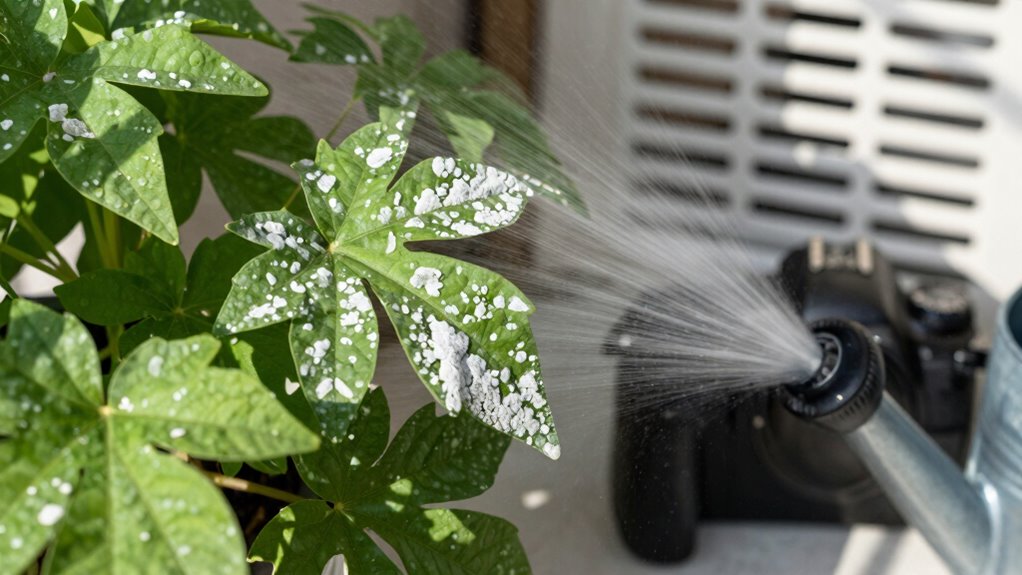
Overwatering creates ideal conditions for powdery mildew to thrive by keeping plant surfaces consistently moist. Excess soil moisture raises humidity around your plants, promoting fungal growth. It also causes plant stress, weakening natural defenses against disease. To avoid this, consider these key points:
- Maintain proper soil moisture levels—water only when the top inch feels dry.
- Ensure good drainage to prevent water from pooling around roots.
- Monitor plant health; stressed plants are more vulnerable to powdery mildew.
- Proper airflow is essential, as it helps reduce humidity and dry out plant surfaces, making conditions less favorable for fungal development airflow management.
Spacing and Pruning Techniques to Boost Air Circulation

Ensuring proper spacing and pruning is essential for increasing air circulation around your plants. When you adjust plant spacing, you give each plant enough room to breathe, reducing humidity and preventing fungal growth. Use pruning techniques to remove overcrowded or dead foliage, opening up the canopy and allowing better airflow. Regularly thinning out dense branches encourages a breeze to pass through, which helps keep leaves dry and less prone to powdery mildew. Focus on creating an even distribution of foliage, avoiding tight clusters. Proper spacing prevents moisture buildup, while strategic pruning maintains healthy growth. Additionally, implementing innovative European cloud servers can facilitate monitoring and management of your garden environment remotely. By implementing these techniques, you improve airflow, lower humidity, and create an environment less favorable for fungal development. Consistent attention to spacing and pruning is a simple yet effective step in powdery mildew prevention.
Watering Practices to Keep Leaves Dry and Fungal-Free

To prevent powdery mildew, you should adopt watering practices that keep leaves dry. Maintaining proper soil moisture is key; avoid overwatering to prevent excess humidity that promotes fungal growth. Focus on watering at the base of your plants rather than overhead, ensuring water reaches the roots without wetting the foliage. Consistently monitoring soil moisture helps you water only when necessary, reducing leaf wetness. Additionally, using water-efficient irrigation methods can help maintain optimal soil conditions and minimize excess moisture around your plants.
Using Fans and Ventilation to Reduce Humidity
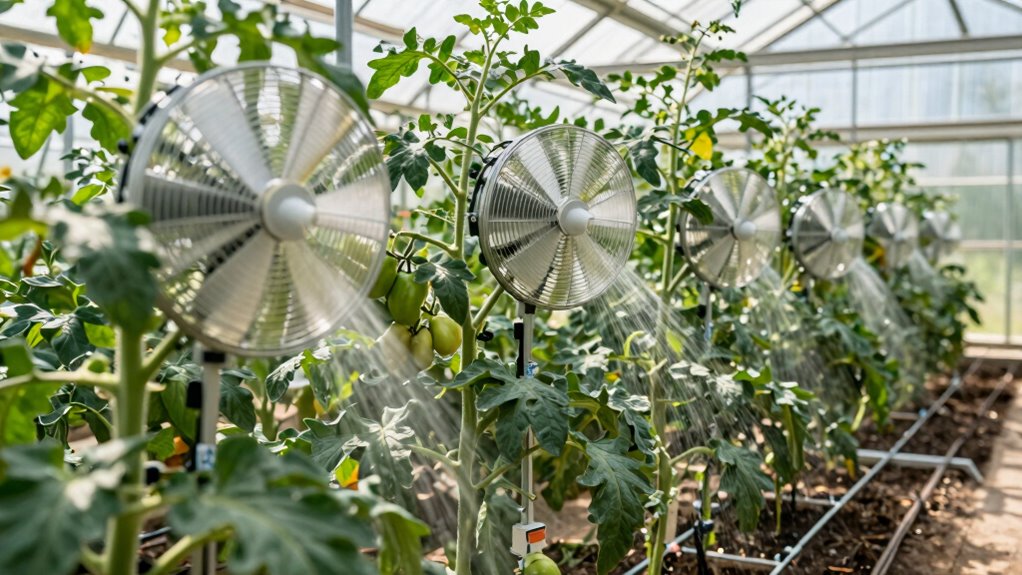
Have you considered how improving airflow can help prevent powdery mildew? Proper ventilation reduces humidity levels, making it harder for fungi to thrive. Adjust your dehumidifier settings to maintain ideal humidity—around 50-60%. Make sure your exhaust fan is correctly placed, ideally near high-moisture areas, to effectively remove excess moisture. Using fans to circulate air prevents stagnant pockets that trap humidity and promote mold growth. Position your fans to create a gentle, consistent airflow across plants, avoiding direct blasts that can damage leaves. Combining these strategies helps keep humidity in check, discouraging powdery mildew development. Regularly monitor your environment to ensure ventilation and humidity levels stay within the ideal range, creating a less hospitable environment for fungal spores. Ensuring proper airflow is essential to maintaining a healthy, mold-free space.
Monitor Your Environment to Catch Powdery Mildew Early
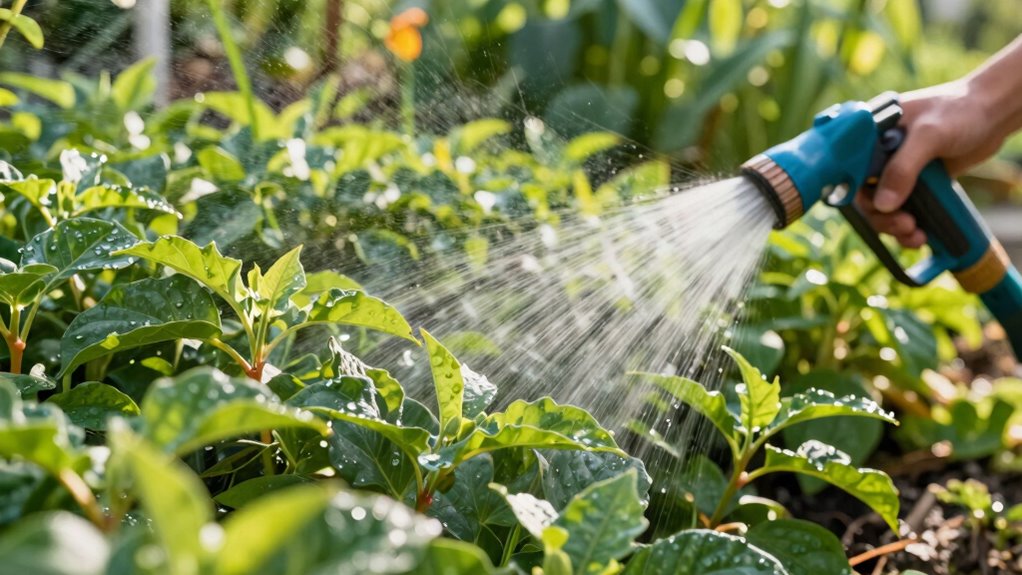
Monitoring your environment closely allows you to detect powdery mildew early, before it causes significant damage. Proper sensor placement and humidity monitoring are essential. By placing sensors in areas with poor airflow or high humidity, you can identify trouble spots quickly. Regularly checking humidity levels helps you maintain ideal conditions and prevent fungal growth. Here are three key tips:
Early environment monitoring helps prevent powdery mildew damage effectively.
- Position sensors at plant canopy height for accurate readings.
- Track humidity levels consistently to catch spikes early.
- Use digital sensors for real-time alerts when conditions become favorable for powdery mildew.
Maintaining optimal environmental conditions is crucial for preventing fungal infections, ensuring healthy plant growth and reducing the need for chemical treatments. Staying vigilant with environmental monitoring enables timely adjustments, reducing the risk of infection and protecting your plants effectively.
Frequently Asked Questions
Can Certain Plant Varieties Resist Powdery Mildew Better Than Others?
Yes, you can find plant varieties that resist powdery mildew better thanks to plant genetics. Look for resistant cultivars, which are specifically bred to handle the disease. These resistant types naturally fend off mildew, reducing your need for treatments. When selecting plants, choose resistant cultivars suited to your climate and garden conditions to keep your plants healthy and minimize powdery mildew issues.
What Role Do Soil Nutrients Play in Preventing Fungal Growth?
Soil nutrients play a vital role in preventing fungal growth by maintaining soil health and ensuring a proper nutrient balance. When your soil is rich in essential nutrients, your plants grow stronger and more resilient against powdery mildew. Avoid nutrient deficiencies that weaken plant defenses, and regularly test your soil to keep nutrient levels ideal. Healthy, well-balanced soil supports vigorous plants less susceptible to fungal infections, helping you keep powdery mildew at bay.
Are There Natural Remedies Effective Against Powdery Mildew?
You might think home remedies are magic, but organic solutions can truly help combat powdery mildew. Remedies like neem oil, baking soda sprays, or diluted milk have proven surprisingly effective. While they won’t instantly cure everything, they boost your plant’s natural defenses and reduce fungal spread. Just remember, consistent application and good airflow make these organic solutions work better, turning your garden into a resilient, mildew-free haven.
How Does Humidity Variation Across Seasons Affect Powdery Mildew Risk?
Seasonal humidity variations greatly impact your powdery mildew risk. Higher humidity in spring and fall creates ideal conditions for the fungus to thrive, reducing fungicide effectiveness. Conversely, drier summer months help prevent outbreaks. To protect your plants, adjust watering routines and improve airflow during humid periods. Staying vigilant during seasons with high humidity ensures you catch and manage mildew early, maintaining healthier plants year-round.
Can Specific Watering Times Reduce the Likelihood of Fungal Development?
You can cut down the risk of fungal development by timing your watering schedule wisely. Water early in the day so moisture has time to evaporate, aiding moisture control and reducing dampness that fungi love. Avoid watering late or in the evening, as lingering moisture promotes powdery mildew. This simple change helps create an environment less inviting for fungi, giving your plants a fighting chance to stay healthy and strong.
Conclusion
By improving airflow and adjusting your watering habits, you can substantially reduce the risk of powdery mildew in your garden. Remember, plants with good air circulation are 60% less likely to develop fungal issues. Keep an eye on humidity levels and prune regularly to maintain healthy growth. Implementing these simple changes not only protects your plants but also promotes a thriving, disease-resistant garden you can enjoy all season long.