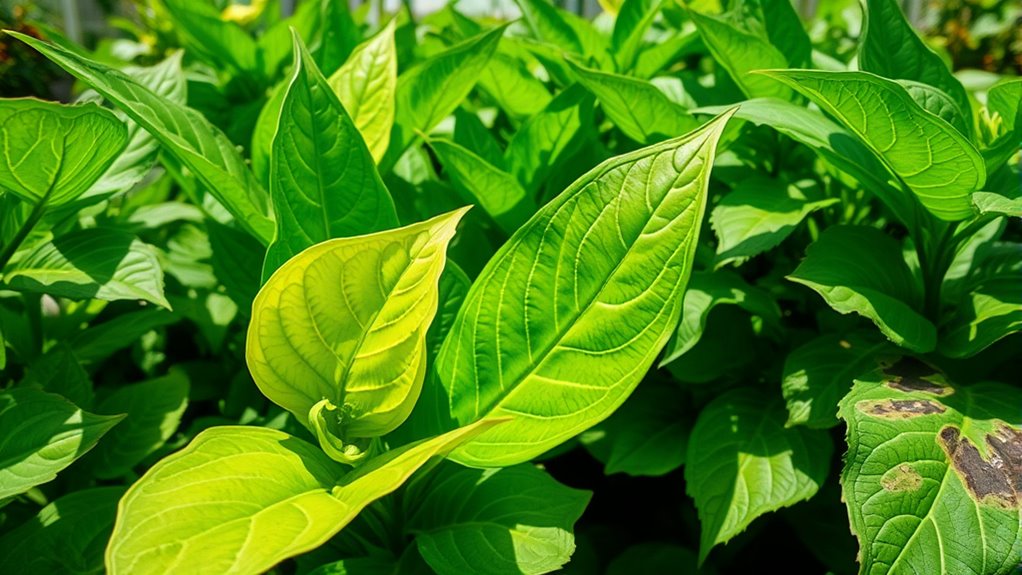

To distinguish nutrient deficiencies from diseases in greenhouse plants, look for specific, predictable symptoms like yellowing leaves or stunted growth for deficiencies, while diseases often cause spots, mold, or irregular lesion patterns. Regular soil testing and foliar analysis help confirm nutrient issues before symptoms become severe. Carefully observe symptom patterns and consider plant history to identify the root cause accurately. Stay with us to discover more tips for effective diagnosis and treatment.

Get garden gear delivered free with Prime
- Fast, free delivery on millions of items
- Prime Video, Amazon Music and more included
- Member-only deals all year
Key Takeaways
- Nutrient deficiencies typically cause specific, predictable symptoms like chlorosis or stunted growth, while diseases often present with spots, mold, or lesions.
- Gradual symptom development suggests deficiencies; sudden or spreading symptoms may indicate disease presence.
- Combining soil testing and foliar analysis helps differentiate between nutritional issues and pathogen-related problems.
- Disease symptoms often include irregular patterns, decay, or tissue necrosis, unlike the uniform patterns seen in deficiencies.
- Accurate diagnosis requires careful symptom assessment alongside diagnostic tools to ensure targeted, effective treatment.
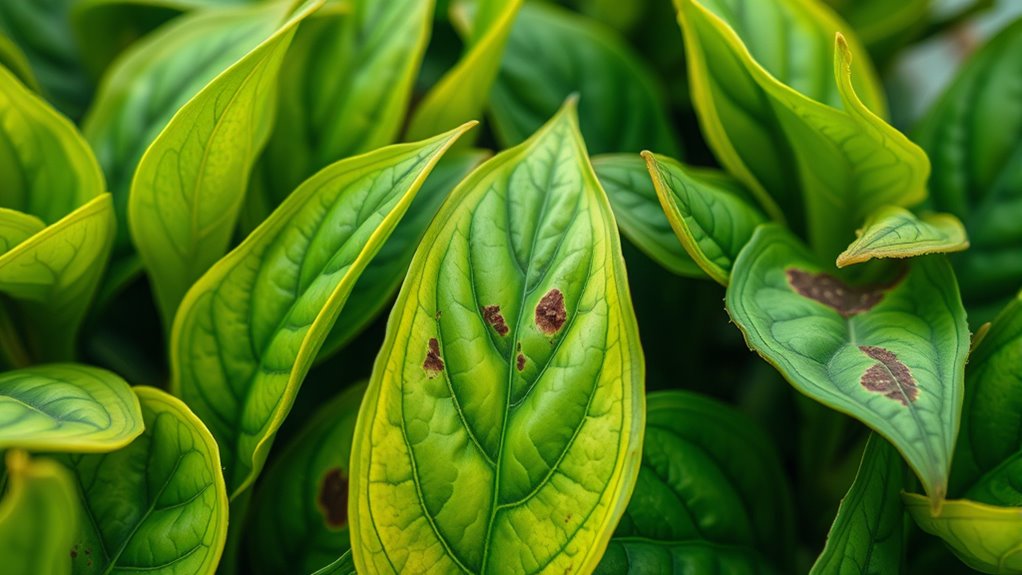
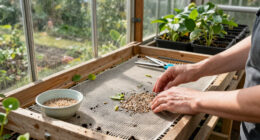
Identifying nutrient deficiencies early is essential for maintaining healthy greenhouse plants. When you notice unusual growth patterns, discoloration, or poor development, it’s important to determine whether these symptoms stem from nutrient deficiencies or diseases. To do this effectively, you need reliable diagnostic tools like soil testing and foliar analysis. Soil testing helps you understand the nutrient levels and pH of your growing medium, giving you a snapshot of what’s available to plants roots. This step is fundamental because it allows you to identify deficiencies before they manifest visibly, enabling targeted corrections. For example, if the soil test shows low nitrogen or potassium, you can amend the soil appropriately, preventing more severe deficiencies. On the other hand, foliar analysis involves testing the plant’s leaves directly, providing immediate insights into the nutrients within the plant tissues. This method is particularly useful when deficiencies develop rapidly or if you suspect that nutrient uptake is hindered despite adequate soil nutrients. By combining soil testing with foliar analysis, you get a thorough picture of your plants’ nutritional status, making it easier to distinguish between deficiencies and disease symptoms. Additionally, understanding soil pH is crucial because it affects nutrient availability to plants. Once you have these diagnostics in hand, you can interpret the symptoms more accurately. Nutrient deficiencies often cause specific, predictable symptoms such as chlorosis (yellowing) in particular leaf areas, stunted growth, or weak stems. These signs usually appear gradually and affect specific parts of the plant, depending on the nutrient involved. In contrast, diseases tend to produce more localized or widespread symptoms like spots, mold, wilting, or lesions that don’t follow the patterns typical of nutrient shortages. Recognizing these differences is key to deciding whether to adjust your fertilization regimen or to treat a pathogen. It’s important to remember that nutrient deficiencies and diseases sometimes mimic each other, making diagnosis tricky. Regular soil testing and foliar analysis act as your first line of defense, helping you catch issues early and act quickly. When you correctly identify the problem—be it a lack of essential nutrients or a pathogen—you can implement the appropriate treatment measures. This proactive approach minimizes crop loss, improves plant health, and keeps your greenhouse thriving. In essence, staying vigilant and using these diagnostic tools empowers you to maintain ideal conditions, ensuring your plants stay healthy and productive.
soil testing kit for greenhouse plants
As an affiliate, we earn on qualifying purchases.
As an affiliate, we earn on qualifying purchases.
Frequently Asked Questions
How Quickly Do Nutrient Deficiencies Typically Manifest in Greenhouse Plants?
Nutrient deficiencies in greenhouse plants can show symptoms within days to a few weeks, depending on the deficiency and plant type. You should watch for timing symptoms like yellowing or stunted growth, which indicate deficiency onset. Rapid deficiencies, such as nitrogen or iron shortages, tend to appear quickly, often within a week. Regular monitoring helps catch issues early, ensuring you can address deficiencies before they severely impact plant health.
Can Environmental Stresses Mimic Nutrient Deficiency Symptoms?
A stitch in time saves nine, and understanding symptom similarity helps you act quickly. Environmental stress can mimic nutrient deficiency symptoms, making it tricky to tell apart. For example, drought or extreme temperatures may cause leaf curling or discoloration similar to deficiencies. Recognizing these signs requires observing the overall plant health and environmental conditions, so you can address the root cause effectively without mistaking stress symptoms for nutritional issues.
Are Some Plant Species More Prone to Specific Deficiencies?
Yes, some plant species are more prone to specific deficiencies due to species susceptibility. You’ll notice that deficiency patterns vary among different plants; for example, leafy greens often show nitrogen deficiency symptoms faster than fruiting plants. By understanding these patterns, you can better monitor and address nutrient issues early, ensuring your plants stay healthy. Keep track of each species’ susceptibility to particular deficiencies for more targeted and effective care.
What Are the Best Methods to Confirm a Nutrient Deficiency?
To confirm a nutrient deficiency, start with soil testing to identify missing elements in your greenhouse soil. Follow up with tissue analysis to examine the plant’s actual nutrient levels, revealing deficiencies that soil tests might miss. Look for consistent visual symptoms, but rely on these scientific methods for accuracy. By combining soil testing and tissue analysis, you guarantee precise diagnosis, helping you take targeted corrective actions quickly.
How Do Nutrient Deficiencies Affect Plant Flowering and Fruiting?
Nutrient deficiencies can considerably hinder your plant’s flowering and fruiting by limiting essential elements like phosphorus and potassium. When soil pH is off, it affects nutrient absorption, causing deficiencies despite adequate soil levels. To counteract this, you can use foliar feeding, applying nutrients directly to the leaves for quicker uptake. Keeping soil pH balanced and supplementing with foliar feeds ensures healthy flowering and abundant fruit production.
Conclusion
So, next time you’re puzzled by yellowing leaves or stunted growth, remember—it’s probably just a nutrient deficiency, not some mysterious disease. Ironically, the simplest fix is often the least dramatic: a little fertilizer might do the trick. Instead of rushing to diagnose a problem, take a step back, observe carefully, and give your plants what they need. Sometimes, the biggest cure is just understanding the basics—who knew that nutrient deficiency could be such a straightforward fix?
Columbus Day / Indigenous Peoples' Day Picks
long weekend sales
As an affiliate, we earn on qualifying purchases.