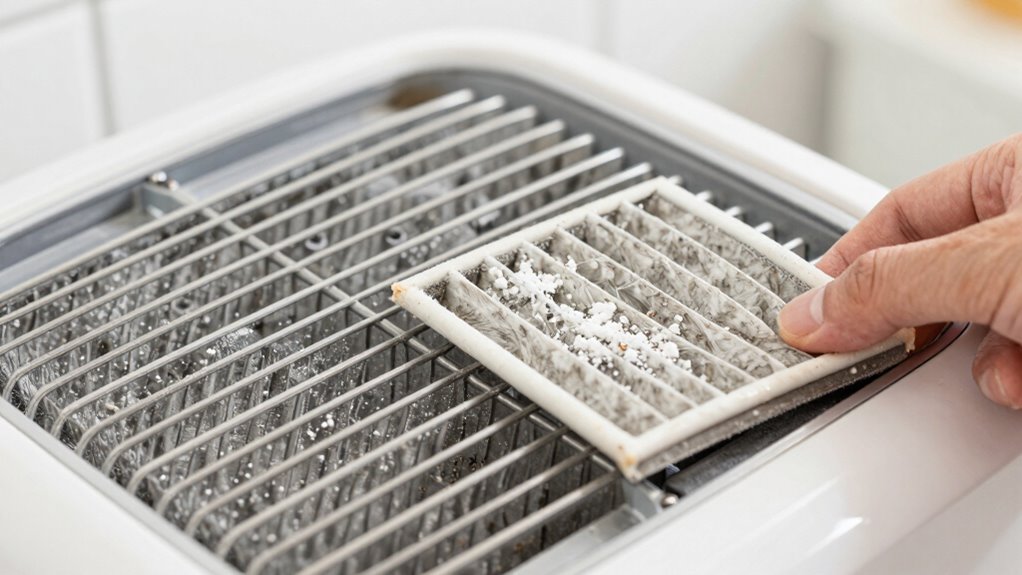

To prevent musty air from your dehumidifier, regularly clean and replace the filters and coils. Turn off and unplug the unit, then gently remove the filters for washing with mild soap and water or replace them if they’re too dirty. Check the coils every 1-2 months, gently brush away dust, and look for damage. Keeping these components clean guarantees better airflow and moisture removal, and more helpful tips are just a step away.

Get garden gear delivered free — and shop member deals
- Fast, free delivery on millions of items
- Access to Prime Big Deal Days deals on October 6–7
- Prime Video, Amazon Music and more included
Key Takeaways
- Regularly inspect and clean filters and coils every 1-2 months to prevent dirt buildup that causes musty odors.
- Turn off and unplug the unit before removing filters and coils to ensure safe cleaning.
- Use mild soap and water to clean filters and a soft brush to gently remove dust from coils.
- Check for visible dirt, mold, or damage; replace filters and schedule coil cleaning as needed.
- Consistent maintenance improves airflow, reduces mold growth, and eliminates musty smells effectively.
As an affiliate, we earn on qualifying purchases.
Why Dirty Filters and Coils Reduce Your Dehumidifier’s Effectiveness
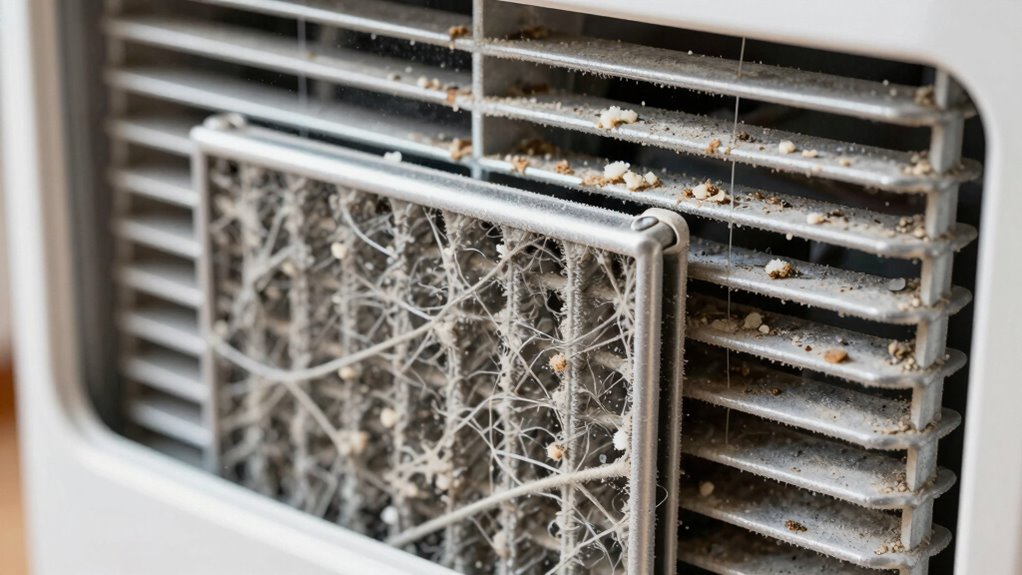
Dirty filters and coils can considerably reduce your dehumidifier’s efficiency because they block airflow and trap dust, preventing the unit from working properly. When airflow is restricted, your dehumidifier struggles to remove excess moisture, which can lead to poor air quality in your home. Inadequate moisture control creates a perfect environment for mold growth, risking health problems and structural damage. Additionally, dust buildup on filters and coils hampers the dehumidifier’s ability to operate at peak performance. Regular cleaning guarantees that air circulates freely, improving air quality and reducing the chances of mold developing. Understanding dehumidifier technology highlights how essential it is to keep components clean for optimal operation. Keeping filters and coils clean is a simple but essential step to maintain your dehumidifier’s effectiveness and safeguard your home’s health.
How to Safely Remove and Clean Your Dehumidifier Filter

To safely remove and clean your dehumidifier filter, start by unplugging the unit to prevent any electrical hazards. Carefully open the filter compartment, usually located at the back or side of the unit. Gently pull out the filter, avoiding force that could damage it. Inspect the filter for dirt buildup or damage; if it’s overly dirty, consider a filter replacement. Use a soft brush or vacuum to remove loose dust, then wash it with mild soap and water if applicable—check manufacturer instructions first. While the filter is out, take the opportunity to inspect the coil behind it for dirt or debris. Dry the filter thoroughly before reinstalling. Regular cleaning and inspection help maintain ideal airflow and extend your dehumidifier’s lifespan. Additionally, understanding Free Floating technology can help you better optimize your dehumidifier’s performance and efficiency.
Easy Tips for Cleaning Your Dehumidifier Coils
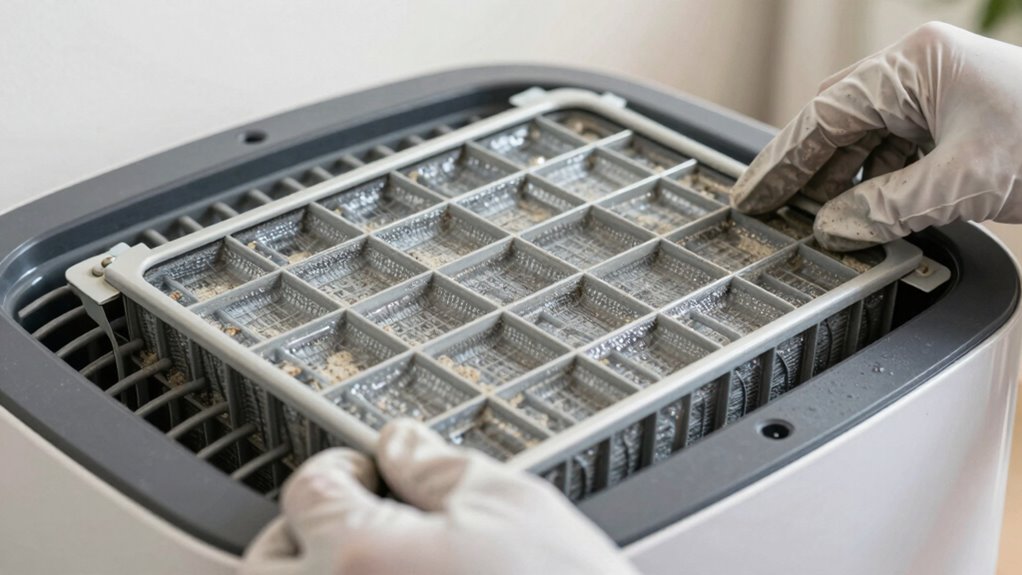
Start by turning off the power to your dehumidifier to stay safe. Next, remove the coils and inspect them for dirt or damage. Finally, use a soft brush to gently clean the coils and remove dust buildup. To ensure optimal performance and prevent musty odors, check your dehumidifier’s filtration system regularly and replace filters as needed.
Turn Off Power
Before you begin cleaning your dehumidifier coils, it’s essential to turn off the power. This step guarantees your safety and prevents accidental shocks. A powered dehumidifier can also circulate dust and debris, affecting your air quality and the device’s efficiency. Turning off the unit allows you to work safely and thoroughly without worry. Additionally, it helps maintain proper humidity levels while you clean, preventing further mold or musty odors. Once the power is off, unplug the unit to eliminate any risk of electrical hazards. Taking this simple step makes the entire cleaning process safer and more effective, giving you peace of mind as you improve your air quality and optimize dehumidifier performance. Proper maintenance ensures your device continues to operate efficiently and extends its lifespan.
Remove and Inspect Coils
Once the power is off and the unit is unplugged, you can safely remove the coils for inspection. Begin by locating the coil assembly, usually accessible after removing the front or side panel. Carefully perform coil removal, ensuring you don’t bend or damage the fins. Use inspection techniques like checking for dust, dirt, or corrosion on the coil surfaces. Look for signs of mold or mineral buildup, which can hinder airflow. Gently touch the fins to assess if they’re bent or damaged, as this can reduce efficiency. Take note of any debris or buildup that could affect heat exchange. Proper inspection helps you determine whether cleaning or further maintenance is necessary to keep your dehumidifier running smoothly. Understanding the importance of coil maintenance can extend the lifespan of your appliance and improve its performance.
Clean With Soft Brush
Using a soft brush is an effective way to remove dust and debris from your dehumidifier coils without damaging the delicate fins. This method works well regardless of your air filter types or coil materials, whether aluminum or copper. Gently brushing the coils helps maintain airflow and efficiency, preventing musty odors caused by dirt buildup. When cleaning, pay attention to the coil fins, which can be bent or damaged if you use too much force. Carefully work across the surface, ensuring you reach all areas. Regular brushing keeps your dehumidifier running smoothly and extends its lifespan. Remember, avoiding harsh tools or aggressive scrubbing preserves the integrity of the coil materials and guarantees superior performance over time. Additionally, filter maintenance plays a crucial role in overall dehumidifier efficiency and air quality.
Signs Your Dehumidifier’s Filter or Coils Need Cleaning
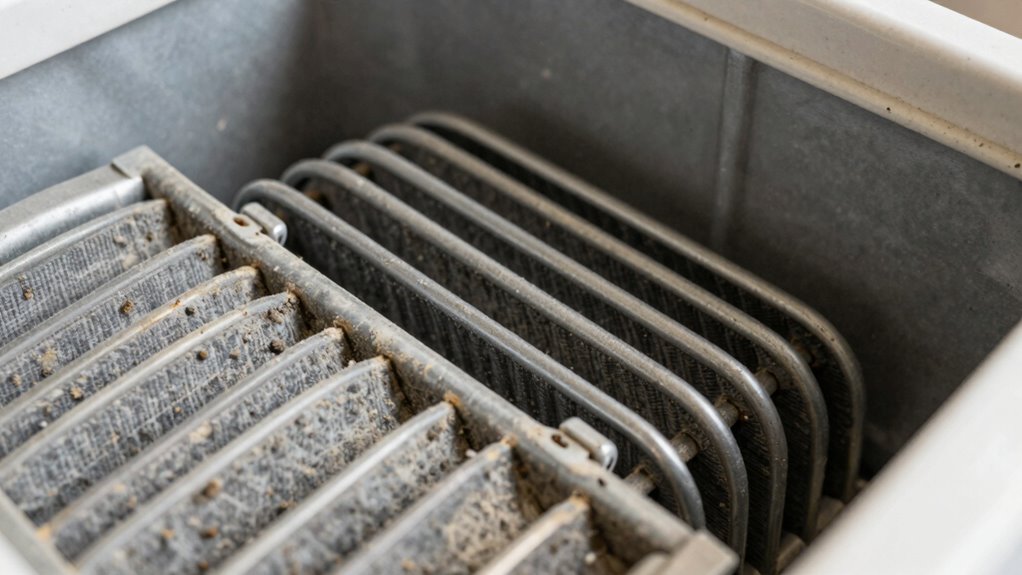
If you notice your dehumidifier isn’t pulling as much air as it used to, the filter or coils might need cleaning. Unpleasant odors or visible dirt are also signs that dirt has built up. Addressing these issues promptly keeps your dehumidifier running efficiently and extends its lifespan. Regular maintenance of the filter and coils ensures optimal performance and prevents issues related to poor air quality.
Reduced Airflow Indicators
Reduced airflow from your dehumidifier is a clear sign that your filter or coils may need cleaning. When airflow is restricted, it’s often due to airflow blockages caused by dust buildup or debris. You might notice:
- Longer cycles to achieve desired humidity levels
- The unit feeling less effective overall
- Audible strain or unusual noises during operation
- Warm air blowing from the vents instead of cool, dehumidified air
These indicators point to clogged filters or dirty coils impeding airflow. Dust buildup and airflow blockages reduce efficiency and strain your appliance. Regularly inspecting and cleaning these components ensures maximum airflow, keeping your dehumidifier running smoothly and preventing musty air caused by inadequate moisture removal. Routine maintenance can also help identify early signs of airflow issues before they become more serious.
Unpleasant Odor Signs
Unpleasant odors emanating from your dehumidifier often indicate that the filter or coils need cleaning. These smells can negatively affect your air quality and signal mold growth or buildup of mold spores. When the filter or coils are dirty, they trap moisture and debris, creating a breeding ground for mold and mildew. As a result, mold spores may be released into the air, causing musty odors and compromising your home’s air quality. Regular cleaning of the filter and coils helps prevent mold proliferation, ensuring cleaner, fresher air. If you notice a musty or sour smell coming from your dehumidifier, it’s a clear sign that you need to clean these components promptly to maintain good air quality and prevent mold growth.
Visible Dirt Accumulation
When you notice visible dirt or debris on your dehumidifier’s filter or coils, it’s a clear sign they need cleaning. Dust buildup can reduce air quality and hinder your unit’s efficiency. Keep an eye out for these signs:
- Dust or dirt visibly caked on the filter or coils
- Reduced airflow or performance
- Increased humidity levels
- Musty or stale smells
These issues indicate that dirt has accumulated, blocking airflow and decreasing dehumidifier effectiveness. Regularly inspecting for visible dirt helps prevent dust buildup, which can negatively impact air quality and promote mold growth. Cleaning your filter and coils when you see dirt not only improves air quality but also prolongs your unit’s lifespan. Proper maintenance and cleaning techniques are essential for optimal operation. Don’t ignore these signs—prompt cleaning keeps your dehumidifier running smoothly and your indoor air fresh.
How Often Should You Clean Your Filter and Coils for Best Results
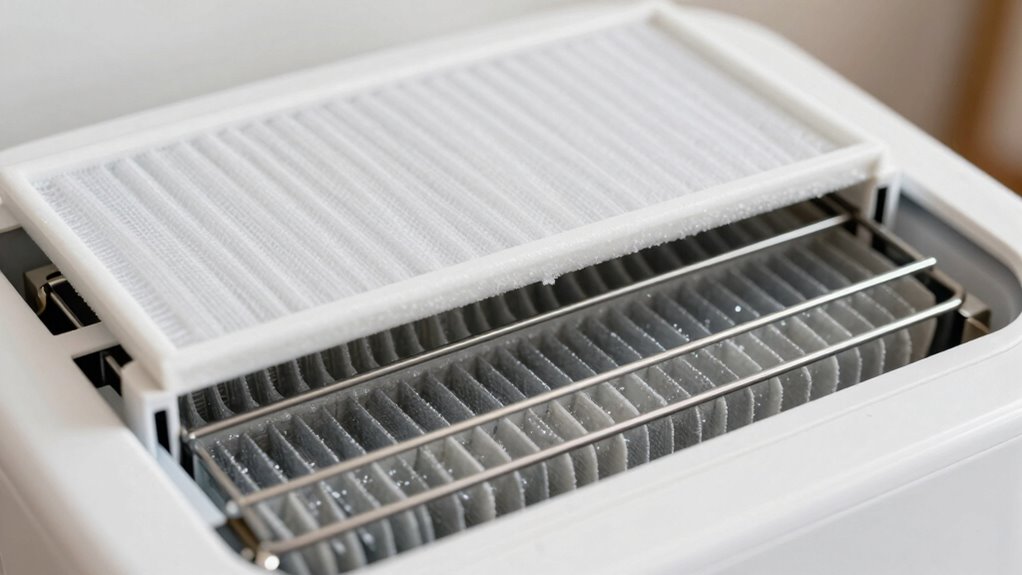
For ideal dehumidifier performance, you should clean the filter and coils regularly—typically every one to three months. Regular cleaning guarantees maximum filter replacement and coil maintenance, preventing mold and musty odors. If you notice reduced airflow or increased humidity, it’s time to clean. The frequency depends on usage and environment; in humid areas or with pets, more frequent cleaning is necessary. Use the table below as a guide:
| Frequency | Tasks |
|---|---|
| Every 1-2 months | Clean filter and coils |
| Every 3 months | Inspect for dirt buildup |
| When performance drops | Perform thorough coil maintenance |
Sticking to this schedule keeps your dehumidifier running efficiently and extends its lifespan. Regular maintenance also helps ensure the ventilation considerations are properly addressed, which is vital for optimal operation.
Troubleshooting Performance Problems Caused by Dirty Filters and Coils
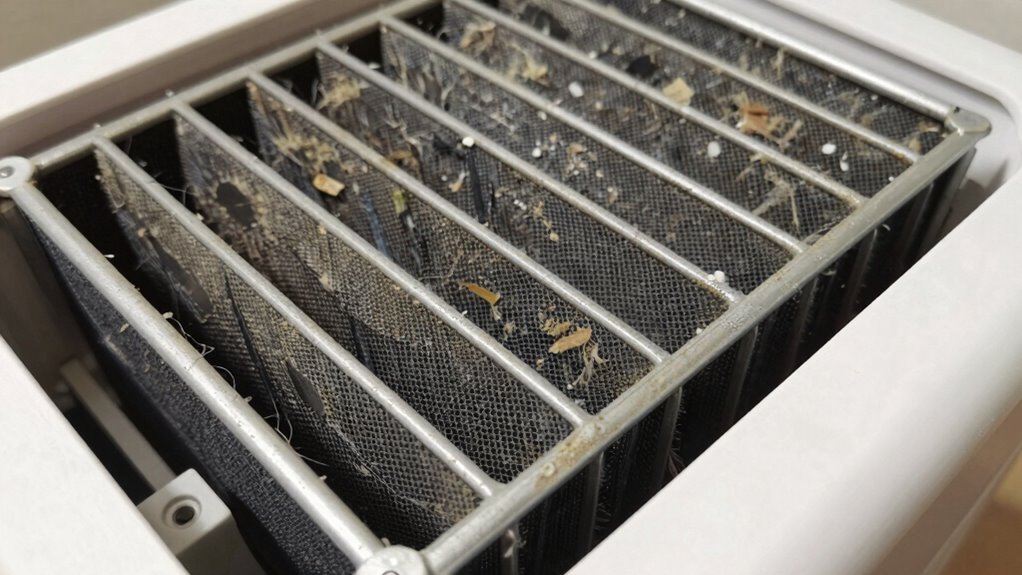
Dirty filters and coils can substantially impair your dehumidifier’s performance, leading to reduced airflow, higher humidity levels, and increased energy consumption. When filters and coils are clogged, airflow drops, causing the unit to work harder and struggle to maintain ideal air quality. To troubleshoot these issues:
- Check for visible dirt or dust buildup on filters and coils regularly.
- Replace or clean filters as needed to restore airflow.
- Inspect coils for ice formation or debris, cleaning them gently.
- Monitor humidity levels; persistent high readings may indicate airflow restrictions.
Neglecting these steps causes poor air quality and uneven humidity control. Keeping filters and coils clean ensures your dehumidifier runs efficiently, maintains healthy humidity levels, and improves overall air quality in your space.
Tips to Keep Your Dehumidifier Running Smoothly and Prevent Musty Air

To keep your dehumidifier running smoothly and prevent musty air, regular maintenance is essential. Start by checking the types of dehumidifier filters—fiberglass, pleated, or charcoal—and clean or replace them as needed. This prevents mold and odors from developing. Additionally, inspect the coils, which are often made of copper, aluminum, or sometimes stainless steel. Keeping coils clean helps maintain efficient moisture removal and reduces musty smells. Regularly wiping down the coils with a soft brush or cloth prevents dust buildup. Ensure the unit is placed in a well-ventilated area and avoid overloading its capacity. Consistent upkeep of filters and coils will keep your dehumidifier running efficiently, improve air quality, and prevent the musty odors that can develop over time.
Frequently Asked Questions
Can I Use Household Cleaning Products to Disinfect the Dehumidifier Coils?
You shouldn’t use household disinfectants for coil cleaning as they may damage your dehumidifier. Instead, opt for a coil cleaner specifically designed for appliances or a mild solution of water and vinegar. Proper coil cleaning helps prevent mold and musty odors, ensuring efficient operation. Always unplug your unit first, follow the manufacturer’s instructions, and avoid harsh chemicals to keep your dehumidifier in top shape.
What Are the Signs of Mold Growth on Dehumidifier Filters?
You’ll notice mold growth on your dehumidifier filters when you see dark spots, discoloration, or a musty odor. Regular filter inspection helps catch mold early, preventing it from spreading. To maintain mold prevention, clean or replace filters promptly if you spot any signs of mold. Keeping your dehumidifier dry and well-maintained reduces mold risk, ensuring healthier air quality and efficient operation.
Is It Necessary to Replace Filters Regularly Even if They Appear Clean?
You should prioritize regular filter replacement, even if it looks clean, because subtle build-up can escape inspection. Think of it as invigorating a worn-out shirt before it visibly stains; unseen particles can linger and cause odors or mold. Conduct routine filter inspections, but don’t rely solely on appearance. Replacing filters on schedule ensures your dehumidifier performs at its best and keeps your air revitalized, preventing issues before they become noticeable.
How Do Temperature and Humidity Levels Affect Coil Cleaning Frequency?
You should clean your dehumidifier coils more frequently during temperature fluctuations and when humidity levels are high. These conditions cause more moisture to build up, leading to dirt and mold accumulation. Proper humidity control guarantees your coils stay clean longer, but don’t skip routine cleaning, especially in changing weather. Regular coil maintenance keeps your dehumidifier running efficiently and prevents musty odors caused by mold and dirt buildup.
Are There Specific Tools Recommended for Deep Cleaning Dehumidifier Coils?
Think of your dehumidifier’s coils as a knight’s armor—needing a thorough polish to stay effective. You’ll want coil cleaning tools like deep cleaning brushes to reach tight spots, and a soft brush for delicate areas. Using these tools regularly keeps the coils free of dust and mold, ensuring peak performance. Remember, a well-maintained coil is your first line of defense against musty air and humidity issues.
Conclusion
Regularly cleaning your filter and coils keeps your dehumidifier efficient, prevents musty odors, and extends its lifespan. Stay attentive to signs of dirt, clean proactively, and troubleshoot issues promptly. By maintaining your dehumidifier consistently, you guarantee fresh air, ideal performance, and peace of mind. Keep your system clean, keep your air dry, and enjoy a healthier, more comfortable home every day. Consistency is key to a dehumidifier that works well, smells fresh, and lasts longer.
Fall Picks
fall essentials
As an affiliate, we earn on qualifying purchases.