
To properly maintain your greenhouse irrigation system, regularly inspect and clean drip emitters to prevent clogs, ensuring consistent watering. Calibrate valves to avoid over- or under-watering and check hoses and connectors for leaks or damage. Routine maintenance like soaking emitters in vinegar and keeping logs can extend system lifespan. Address issues promptly to prevent plant stress and costly repairs. Staying proactive on these tasks helps keep your system efficient—continue for more tips to optimize your watering system.
Key Takeaways
- Regularly inspect and clean drip emitters to prevent clogging and ensure consistent watering.
- Calibrate valves properly to control water flow and prevent over- or under-watering.
- Conduct routine checks of hoses, filters, and connections to detect and repair leaks early.
- Address system issues promptly, such as pressure drops or uneven watering, to avoid plant stress.
- Maintain a scheduled maintenance routine to improve system efficiency, longevity, and overall greenhouse productivity.
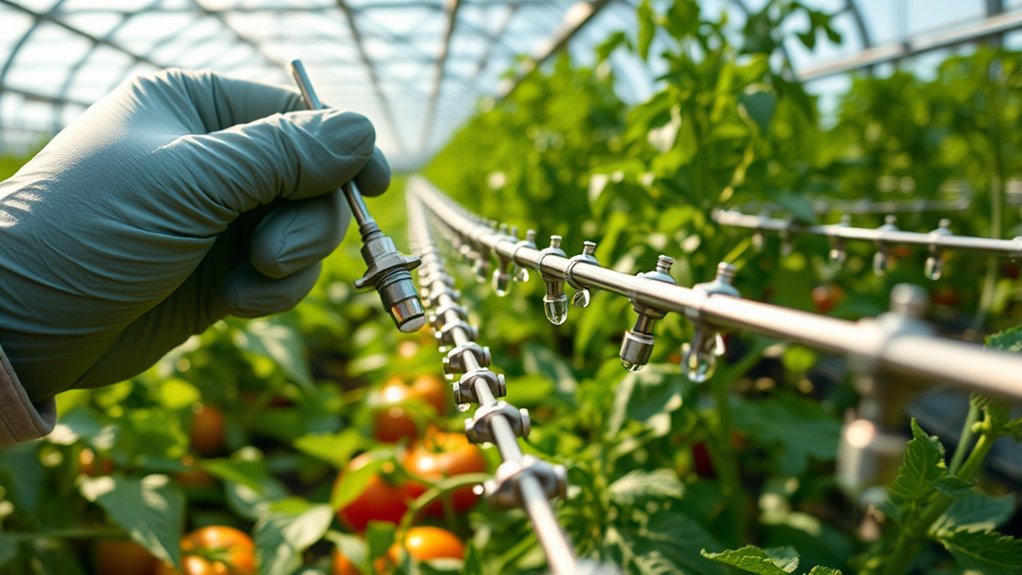
Are you guaranteeing your irrigation system stays in top shape? Regular maintenance is vital to keep your greenhouse thriving, and a key part of that is making sure your watering system operates efficiently. One important task is drip emitter cleaning. Over time, dirt, algae, and mineral deposits can clog the tiny emitters, restricting water flow and causing uneven watering. To prevent this, you should inspect your drip emitters regularly and clean them thoroughly. Use a soft brush or a gentle stream of water to clear out any buildup, or soak the emitters in a vinegar solution to dissolve mineral deposits. This simple step guarantees your plants receive a consistent moisture supply, promoting healthy growth and preventing over- or under-watering issues.
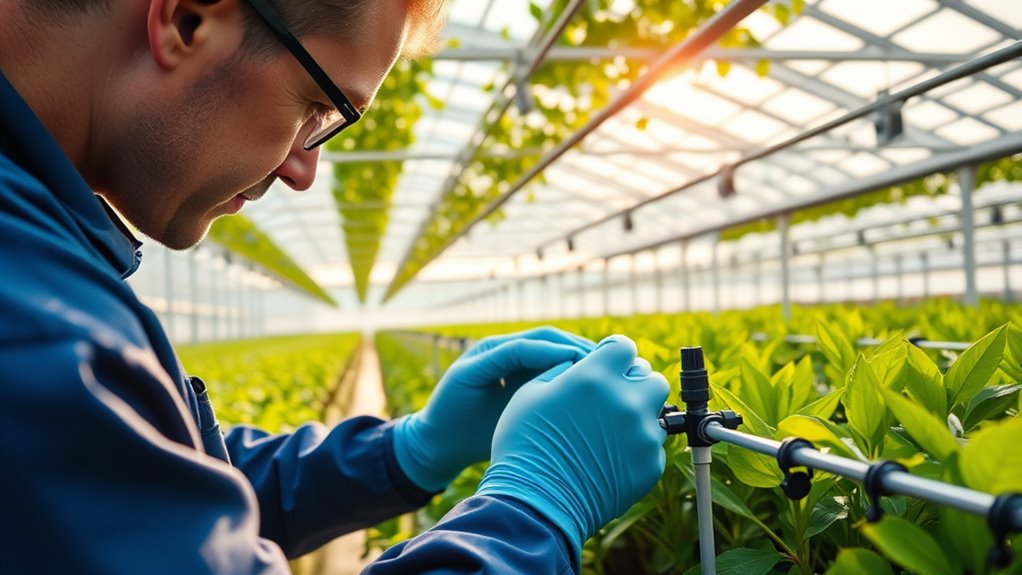
Alongside drip emitter cleaning, valve calibration plays an essential role in maintaining an efficient irrigation system. Valves control the flow of water to different zones in your greenhouse, and if they’re not calibrated correctly, some areas may receive too much water while others don’t get enough. To calibrate valves properly, start by turning on the system and observing the flow rate. Adjust the valve settings until the flow matches the desired volume for each zone. This process may involve turning a screw or adjusting a dial, depending on your valve model. Regular calibration helps guarantee uniform watering, conserving water, and preventing plant stress or disease caused by inconsistent moisture levels.
In addition, scheduling routine inspections and preventive maintenance can help catch potential issues early before they lead to costly repairs. Doing these tasks isn’t complicated, but neglecting them can lead to significant problems. Clogged drip emitters cause uneven watering, which can stunt plant growth or promote disease in overly moist spots. Uncalibrated valves waste water and energy, increasing your operational costs and risking damage to your plants. By dedicating a little time each month to drip emitter cleaning and valve calibration, you keep your irrigation system running smoothly. It also extends the lifespan of your equipment and reduces the need for costly repairs. Always keep a maintenance log to track your procedures and schedule regular checks, especially before peak growing seasons.
In addition to cleaning and calibration, regularly inspecting hoses, filters, and connections will help you spot leaks or damage early. If you notice a drop in water pressure or inconsistent watering patterns, these could be signs it’s time for a tune-up. Remember, a well-maintained irrigation system not only saves water and money but also ensures your greenhouse plants grow healthy and vigorous. Staying proactive with these maintenance tasks guarantees your irrigation system remains an effective, reliable tool for your greenhouse success. Incorporating scheduled maintenance into your routine can further enhance system longevity and efficiency.
Frequently Asked Questions
How Often Should I Replace Irrigation System Filters?
You should replace your irrigation system filters every 3 to 6 months, depending on your filter replacement schedule and the irrigation filter lifespan. Regularly check for clogs or buildup, especially if you’re using hard water or organic matter. Staying proactive guarantees peak water flow and prevents system damage. Keep an eye on your filters and replace them promptly to maintain healthy greenhouse plants and efficient irrigation performance.
What Are Signs of a Leaking Irrigation Line?
You’ll notice signs of a leaking irrigation line during routine system inspection. Look for soggy soil, pooling water, or unusually high water bills. Leak detection may reveal wet spots along the piping or dripping at joints. Act quickly to identify and repair leaks, as delayed detection can cause water waste and damage. Regular system inspections help catch leaks early, ensuring your greenhouse irrigation stays efficient and effective.
How Can I Prevent Clogging in Drip Emitters?
Think of your drip emitters as tiny valves struggling against a traffic jam; you need to keep the lanes clear. Regular drip emitter cleaning prevents buildup that causes clogs, while water pressure regulation guarantees a steady flow, like a gentle river rather than a wild torrent. By maintaining these, you keep your system running smoothly, ensuring your plants receive consistent hydration without blockages or interruptions, nurturing growth with precision and care.
Is It Necessary to Flush the System Regularly?
Yes, you should flush the system regularly to prevent clogging caused by system contamination. Flushing helps remove buildup and debris that can block emitters. Additionally, water quality testing identifies contaminants that might cause clogging or damage. By maintaining a routine flushing schedule and monitoring water quality, you guarantee your system runs smoothly, reducing maintenance costs and improving plant health in your greenhouse.
What Maintenance Tools Are Essential for System Upkeep?
You’ll want indispensable tools like a spray nozzle calibration kit and a pressure gauge for system upkeep. Think of these tools as your Swiss Army knife—versatile and crucial. Regularly check system pressure and calibrate nozzles to guarantee even watering. These simple steps help prevent clogs and uneven distribution, keeping your greenhouse thriving. With the right tools, you’re well on your way to smooth, efficient irrigation management.
Conclusion
Maintaining your greenhouse irrigation system is like tending a delicate garden—it requires regular care to thrive. I once watched a gardener find a clogged drip line, saving months of struggling plants. Just as a small leak can flood a room or dry out crops, neglecting maintenance can jeopardize your entire greenhouse. Regular checks keep your system flowing smoothly, ensuring healthy plants and a thriving environment. Stay vigilant, and your greenhouse will flourish like a well-tended oasis.