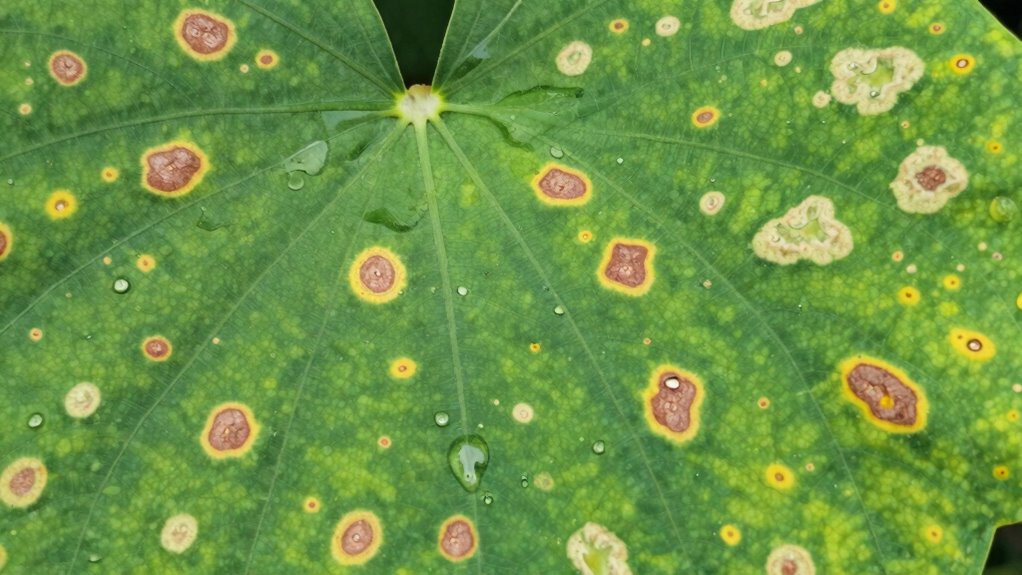

To tell if leaf spots are caused by disease or water damage, look closely at their appearance. Disease spots often have defined, fuzzy edges, and may change color or enlarge over time. Water damage usually causes dull, water-soaked patches with less defined edges, often appearing after overwatering or watering from above. Observing these signs can help you identify the real cause and take appropriate action—keep exploring to learn how to distinguish them more accurately.
Key Takeaways
- Fungal disease spots are often fuzzy, irregular, and may have halos, while water damage spots tend to be dull, water-soaked, and uniform.
- Water damage causes brown or black patches with a slimy or fuzzy texture, unlike the often textured fungal spots.
- Symptoms like rapid spread, fuzzy edges, and color variation suggest fungal infection, whereas water damage usually appears with dull, waterlogged patches.
- Check for persistent moisture or water on leaves, which indicates water damage, not disease; disease spots often occur without ongoing wetness.
- Proper diagnosis involves examining spot patterns, textures, and environmental conditions, and differentiating based on whether moisture or pathogen signs predominate.
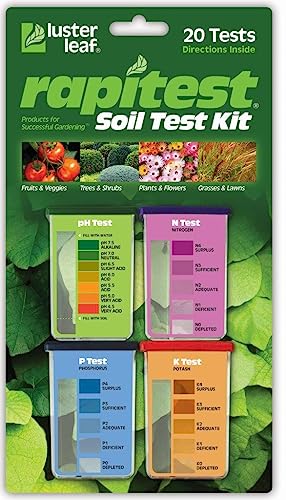
Rapitest Soil Test Kit for Gardens, Vegetables, Flowers and Lawns. USA designed and assembled soil tester completely, quickly and accurately measures/analyzes soil pH acidity and garden nutrients.
Quick, at home results for Soil pH, Nitrogen, Phosphorous and Potash Innovative and inexpensive soil test kit features…
As an affiliate, we earn on qualifying purchases.
As an affiliate, we earn on qualifying purchases.
What Are Leaf Spots, and How Do They Differ?
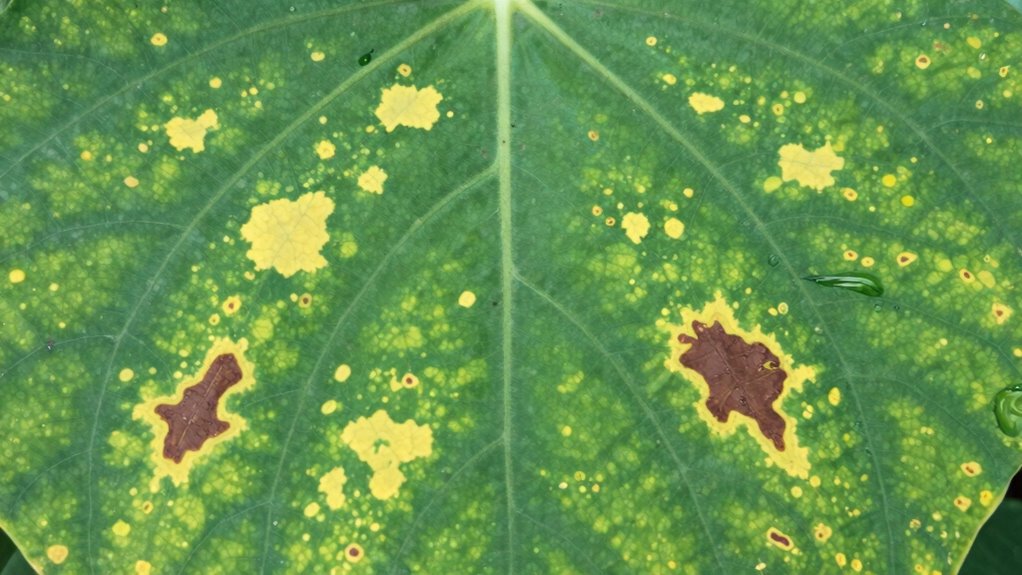
Have you ever noticed small, discolored spots on your plant’s leaves? These spots can result from different issues, mainly fungal infections or nutrient deficiencies. Fungal infections often cause irregular, sometimes fuzzy, spots with defined edges, and may spread quickly if not treated. Nutrient deficiencies, on the other hand, typically lead to more uniform, pale or yellowish spots, often appearing in specific patterns related to the missing nutrient. Recognizing the difference is key to proper care. Leaf spots caused by fungi tend to have a more localized, textured appearance, while deficiencies produce more subtle, color-related changes. Understanding what distinguishes these causes helps you act swiftly to restore your plant’s health, preventing further damage and promoting vigorous growth. Early detection of these issues is crucial for effective treatment and plant recovery.

Plant Disease Control Spray – Natural Fungicide with Thyme Oil – Prevents Powdery Mildew, Botrytis, Anthracnose & More – Safe for Indoor/Outdoor Use – Family & Pet Friendly – 16oz
🌿 Controls Common Fungal & Bacterial Diseases Defend your plants from powdery mildew, botrytis, anthracnose, and more. Works…
As an affiliate, we earn on qualifying purchases.
As an affiliate, we earn on qualifying purchases.
Common Signs of Plant Disease-Related Leaf Spots
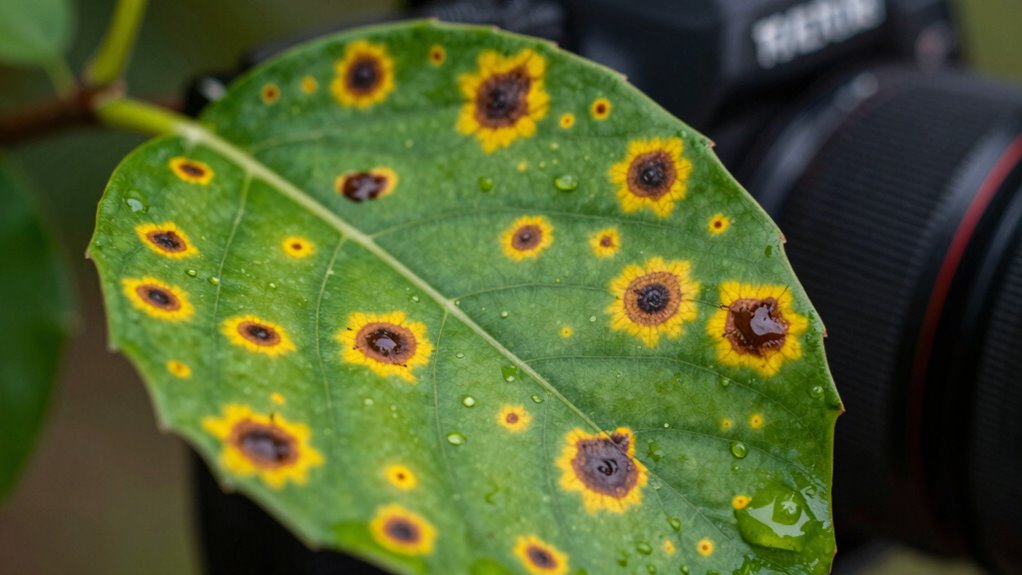
Recognizing the signs of plant disease-related leaf spots helps you catch problems early. Look for spots with distinct leaf spot color variations, such as yellow, brown, black, or rust shades. Fungus vs bacteria often show different patterns; fungal spots tend to be round with fuzzy edges, while bacterial spots may appear irregular with water-soaked centers. You might notice halos around the spots or a progression of color changes as the disease advances. Other signs include spots that enlarge over time or areas of leaf tissue that die back, leading to leaf die-off. Spot shapes and colors provide clues about the underlying cause, helping you determine whether it’s a fungal or bacterial issue. Understanding plant pathology can further aid in identifying specific diseases based on symptom patterns. Early detection allows you to take targeted action before the disease spreads extensively.
Chapin 47998 Watering Can, 2 Gallon, Indoor and Outdoor Plants, Lawn, Garden, Removable Nozzle, Drip-Free Sprinkler Head, Recycled Plastic, Black
100% recycled polymer: guilt free from environmental concerns, the tank is made from 100% recycled polymer, better for…
As an affiliate, we earn on qualifying purchases.
As an affiliate, we earn on qualifying purchases.
How Water Damage Causes Leaf Spots: And How to Spot It

Water damage can cause leaf spots by creating conditions that promote tissue decay and fungal or bacterial growth. When your plant experiences excess moisture, it weakens the leaf tissues, making them more vulnerable to infections. Fungal infections thrive in damp environments, leading to spots that may appear as dull, water-soaked patches initially. Over time, these spots can turn brown, black, or yellow, often with a fuzzy or slimy texture. Look for signs of persistent moisture on the leaf surface or around the stem base, which indicates ongoing water damage. Recognizing these early symptoms helps you distinguish water damage-induced leaf spots from those caused by other diseases, allowing for prompt action to dry out the plant and prevent further fungal infections. Additionally, understanding color accuracy in plant diagnosis can improve your ability to identify subtle changes in leaf coloration associated with different issues.
Censinda Soil Moisture Meter, Soil Moisture Monitor for House Plants, Soil Hygrometer Moisture Sensor for Indoor & Outdoor, Garden, Farm, Lawn Plant Care, No Battery Needed(White)
【SAVE YOUR PLANTS】: Over watering can cause problems with your plants or even kill them. This soil moisture…
As an affiliate, we earn on qualifying purchases.
As an affiliate, we earn on qualifying purchases.
How to Diagnose Leaf Spots: Step-by-Step Guide
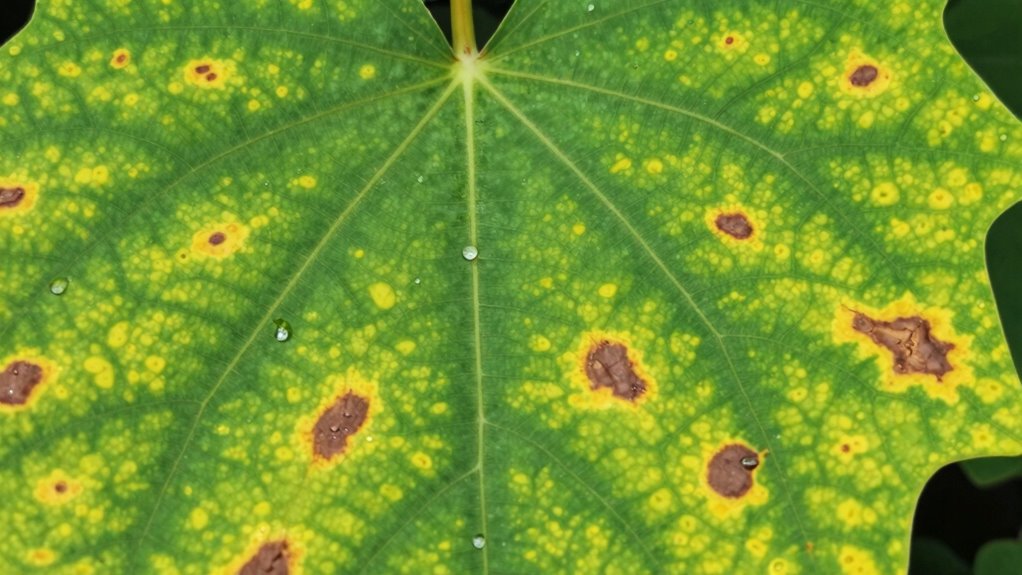
Diagnosing leaf spots begins with careful observation of your plant’s leaves. Look closely at the spots’ size, shape, color, and distribution. Note if the spots have a defined border or are spreading irregularly. Check for signs of pest identification, such as tiny insects or webbing nearby. Consider soil nutrition—poor soil may weaken your plant, making it more vulnerable to disease. Ascertain your plant isn’t showing other symptoms like yellowing or wilting, which can help narrow down causes. Compare the affected leaves to healthy ones to spot differences. Keep a record of any patterns or changes over time. This detailed observation is essential to distinguish between disease and environmental issues, guiding your next steps for effective treatment. Additionally, understanding plant health indicators can help you detect early signs of stress or disease.
Preventing Water Damage and Disease: Tips for Healthy Plants
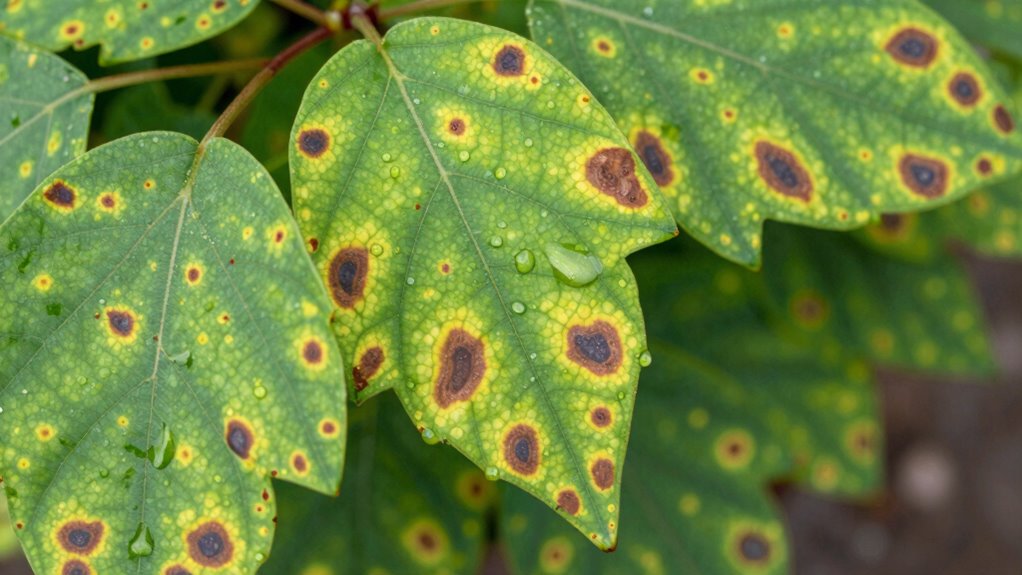
To keep your plants healthy and prevent leaf spots caused by water-related issues, it’s essential to manage watering practices carefully. Proper watering techniques help avoid overwatering and reduce the risk of disease. Ensure your plants aren’t sitting in excess water by implementing effective drainage solutions. This keeps roots aerated and prevents water from accumulating around the base. To improve plant health, consider these tips:
- Water early in the day to allow excess moisture to evaporate
- Use pots with drainage holes for better runoff
- Avoid overhead watering that wets leaves unnecessarily
- Check soil moisture before watering to prevent overwatering
- Adjust watering frequency based on plant needs and weather conditions
- Incorporating visual and auditory cues can help monitor plant responses and detect early signs of water stress or disease.
Following these practices promotes healthy growth and minimizes water-related leaf spots.
Frequently Asked Questions
Can Leaf Spots Be Harmful to Overall Plant Health?
Yes, leaf spots can be harmful to your plant’s overall health because they often indicate disease impact. If left unchecked, these spots can spread, weaken the plant, and reduce its ability to photosynthesize effectively. This stress can make your plant more vulnerable to other issues. To protect your plant, identify the cause early, remove affected leaves, and apply appropriate treatments to prevent further damage and support healthy growth.
Are Certain Plant Species More Prone to Water Damage Leaf Spots?
Think of your plants like a diverse garden mosaic—some pieces are more delicate, more susceptible to water damage leaf spots. Certain species variation makes them more prone, much like how some fabrics stain easily. Plants with thin leaves or those native to humid regions often show signs quicker. Recognizing plant susceptibility helps you care better, so you can protect your garden’s vibrant colors from water-related damage before it spreads.
How Long Does It Take for Leaf Spots to Appear After Water Damage?
You might notice leaf spots within a few days to a week after water damage occurs. The timing depends on factors like the plant’s health, humidity, and how much water exposure it received. Typically, water damage leaf spot timing is quicker than disease-related spots, which can take longer to develop. Keep an eye on your plant, and if spots appear suddenly after heavy watering, it’s likely water damage.
Can Environmental Factors Like Humidity Influence Leaf Spot Development?
Humidity effects definitely influence leaf spot development, as high humidity creates a conducive environment for fungal and bacterial growth. Environmental influence is significant; increased moisture promotes pathogen spread, making spots more prominent and persistent. You’ll notice that in humid conditions, spots appear quicker and worsen faster. So, controlling humidity levels and improving air circulation can help reduce the risk of leaf spot outbreaks, keeping your plants healthier and less prone to disease.
Are Organic Treatments Effective Against Disease-Related Leaf Spots?
Organic remedies can be effective against disease-related leaf spots, especially when you use natural suppressants like neem oil or copper-based solutions. These treatments help control fungal and bacterial infections without harmful chemicals. To maximize effectiveness, apply them early and follow the instructions carefully. While organic remedies can work well, combining them with proper cultural practices boosts your chances of keeping leaf spots under control and protecting your plants’ health.
Conclusion
Now that you know how to tell disease from water damage, you can spot trouble before it takes hold. By paying close attention, you prevent small issues from snowballing into big problems. Remember, early detection is your best ally—it’s like catching a leak before it sinks the ship. Stay vigilant, care for your plants, and they’ll thrive, turning your garden into a lush, healthy haven where problems stay at bay.