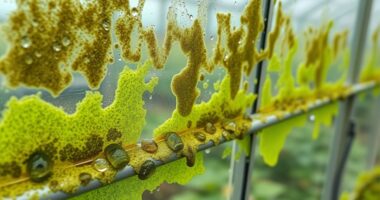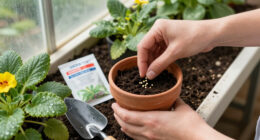
To stop fungus gnats from swarming, focus on a soil-surface fix that targets their breeding sites. Clear debris, loosen the soil surface, and sift out larvae or excess organic matter. Then, apply a treatment like diatomaceous earth or beneficial nematodes to disrupt their life cycle. Keep soil dry and improve drainage to prevent future infestations. If you want to learn more about effective strategies, you’ll find helpful tips as you continue exploring.

Get garden gear delivered free — and shop member deals
- Fast, free delivery on millions of items
- Access to Prime Big Deal Days deals on October 6–7
- Prime Video, Amazon Music and more included
Key Takeaways
- Apply a physical barrier like diatomaceous earth or sand on soil surface to prevent adult gnats from laying eggs.
- Introduce beneficial nematodes or predatory insects to target and reduce larvae in the soil.
- Reduce soil moisture and improve drainage to create less favorable breeding conditions for fungus gnats.
- Clear debris and loosen soil to enhance treatment penetration and remove organic matter that attracts gnats.
- Monitor regularly with sticky traps and inspect soil to catch early signs of infestation and prevent swarm buildup.
beneficial nematodes for fungus gnat control
As an affiliate, we earn on qualifying purchases.
As an affiliate, we earn on qualifying purchases.
How the Soil-Surface Fix Stops Fungus Gnats in Their Tracks
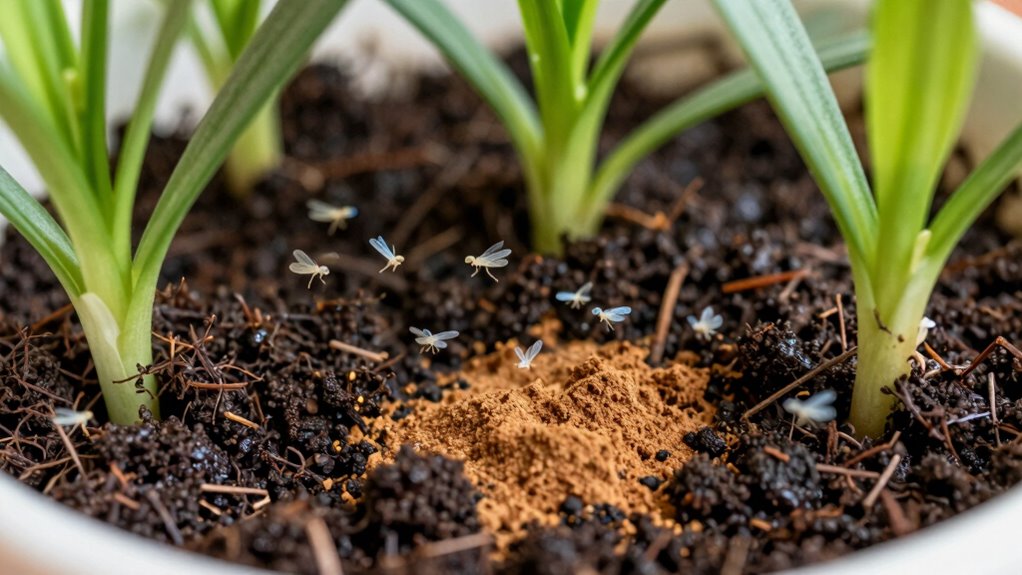
To effectively stop fungus gnats in their tracks, applying a soil-surface fix targets the adult gnats before they lay more eggs. One effective method involves biological control, such as introducing beneficial nematodes or predatory insects that attack gnat larvae and adults. Environmental modification also plays a key role; you can reduce moisture levels on the soil surface and improve drainage, making conditions less inviting for gnats. Covering the soil with a layer of sand or diatomaceous earth creates a physical barrier that prevents adult gnats from laying eggs. These strategies work together to disrupt the gnat life cycle at the surface level, reducing populations naturally and sustainably without harmful chemicals. Incorporating smart environmental controls can also optimize moisture and drainage levels automatically, further discouraging gnat development. This soil-surface fix effectively curbs the infestation right at its source.
Why Fungus Gnats Invade Houseplants and How They Develop
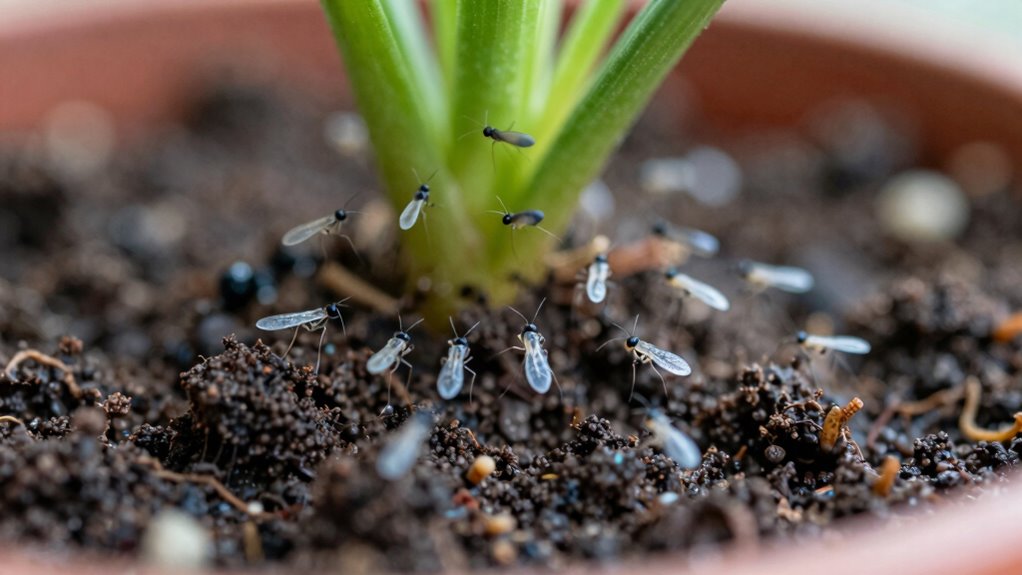
Fungus gnats are attracted to your houseplants because their larvae thrive in moist, organic soil. As they develop, the larvae feed on fungi and decaying matter, while the adult gnats are often seen flying around your plants. Understanding their habitat and behavior helps you target the infestation effectively. Additionally, knowing about pinball machines can inspire innovative ways to create a fun and engaging environment in your home.
Larval Habitat and Growth
Because they thrive in moist environments, fungus gnat larvae often invade the damp, organic-rich soil of houseplants. During their fungus gnat lifecycle, larvae develop just below the soil surface, feeding on fungi, decaying plant material, and roots. Their small, translucent bodies make them hard to spot, but their presence indicates overwatering or excess organic matter. To control these larvae, you can implement larval control methods like reducing watering frequency, allowing the soil to dry out between waterings, and applying biological controls such as beneficial nematodes or Bacillus thuringiensis israelensis (Bti). These measures disrupt the larval stage, preventing them from maturing into adult gnats and breaking the infestation cycle. Proper soil management is key to disrupting the habitat that favors larval growth. Additionally, maintaining the correct contrast ratio in your soil environment can help prevent overly damp conditions that favor fungus gnat development.
Adult Gnat Behavior
Adult fungus gnats are drawn to houseplants mainly because they’re attracted to moist, organic-rich soil where they can find breeding sites and food sources. During their gnat lifecycle, adults emerge to seek out ideal conditions, often hovering around the soil surface. They’re attracted to the scent of decaying organic matter, which signals a healthy soil environment. This behavior helps them locate mates and suitable spots for laying eggs. Their presence indicates compromised soil health, with excess moisture or decomposing organic material creating perfect breeding grounds. As adults, they don’t damage plants directly but contribute to the cycle of infestation. Understanding their behavior helps you recognize that improving soil health—reducing excess moisture and organic debris—can interrupt their lifecycle and prevent future invasions. Additionally, monitoring environmental factors such as soil moisture levels can help identify potential breeding sites before an infestation occurs.
Why Traditional Methods Like Traps and Sprays Often Fail
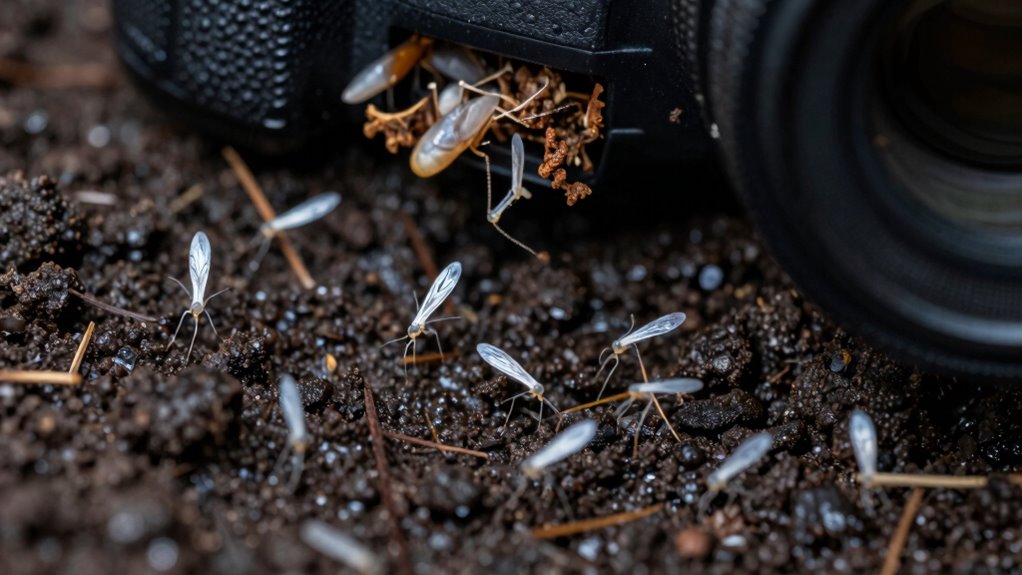
Traditional traps and sprays often miss the larvae hidden deep in the soil, making them less effective. You might catch adult gnats, but the pests continue to develop underground where treatments can’t reach. Plus, some gnats build resistance to chemicals, reducing spray effectiveness over time. Additionally, understanding art care and living with KellerKunst can help prevent infestations by maintaining healthy soil conditions.
Surface vs. Larvae
Surface traps and sprays often miss the true source of fungus gnats because they target only the adults or surface activity. The real problem lies beneath the soil surface, where larvae thrive and damage plant roots. These larvae are hidden from surface treatments, making traditional methods ineffective at controlling the infestation. When soil health is compromised, plants become more stressed and vulnerable to pest damage. By focusing only on adult gnats, you overlook the breeding ground that sustains the cycle. To break this cycle, you need to address the larvae directly within the soil. Improving soil conditions and targeting larvae ensures a more sustainable solution, reducing stress on your plants and preventing future outbreaks. Soil health plays a crucial role in controlling and preventing fungus gnat infestations. Surface measures alone rarely reach the core of the problem.
Limited Trap Effectiveness
While traps and sprays may seem effective at reducing fungus gnat numbers, they often fall short because they only target the insects on the surface. Trap limitations become clear because adult gnats exhibit behaviors that make them hard to catch—many fly just above the soil or hide in dense foliage, avoiding surface traps. Additionally, adult behavior means they can quickly re-infest even if some are caught. Sprays often fail to reach larvae deep in the soil, allowing the population to rebound. Relying solely on these methods ignores the gnats’ lifecycle and habits, so surface treatments don’t address the root problem. To truly control fungus gnats, you need strategies that penetrate beyond surface-level tricks, targeting both adults and larvae effectively. Innovative European Cloud Servers can serve as a metaphor for comprehensive solutions that go beyond surface treatments, emphasizing the importance of addressing the entire lifecycle for effective pest management.
Chemical Resistance Barriers
Chemical resistance barriers often undermine the effectiveness of traps and sprays because fungus gnats can develop defenses that reduce their susceptibility. Over time, they adapt, making surface treatments less effective. To combat this, consider these strategies:
- Use a soil barrier to block larvae from emerging, preventing reinfestation.
- Rotate chemical treatments to avoid resistance buildup.
- Combine surface treatment with biological controls for a multi-layered approach.
- Incorporate physical barriers like fine mesh screens to limit adult access.
Applying the Soil-Surface Treatment: Step-by-Step Guide

To effectively apply the soil-surface treatment for fungus gnats, start by thoroughly preparing the area. Remove any debris and gently loosen the soil surface to enhance soil sterilization and guarantee the treatment reaches the gnats’ breeding sites. Use a fine sieve or screen to sift the soil, removing larvae and organic matter that could harbor pests. Carefully sprinkle the treatment evenly across the soil surface, following label instructions for coverage and quantity. Maintain proper plant health by avoiding over-application, which can hinder root growth. Here’s a quick visual guide:
| Step | Action |
|---|---|
| 1 | Clear surface debris |
| 2 | Apply treatment evenly |
| 3 | Water lightly if needed |
This ensures effective pest control without harming your plants. Additionally, understanding the importance of soil health can help prevent future infestations by promoting a balanced and resilient growing environment.
Additional Tips to Prevent Fungus Gnat Infestations

Preventing fungus gnat infestations begins with maintaining ideal soil and environmental conditions. Healthy soil supports robust plant nutrition and discourages gnat breeding sites. To help prevent problems, consider these tips:
- Ensure proper watering—avoid overwatering, which keeps soil moist and attracts gnats.
- Use well-draining soil to promote soil health and reduce standing water.
- Incorporate organic matter wisely; too much can promote fungal growth, inviting gnats.
- Regularly inspect plants for signs of pests, adjusting watering and fertilization as needed.
How to Monitor and Maintain a Gnat-Free Indoor Garden
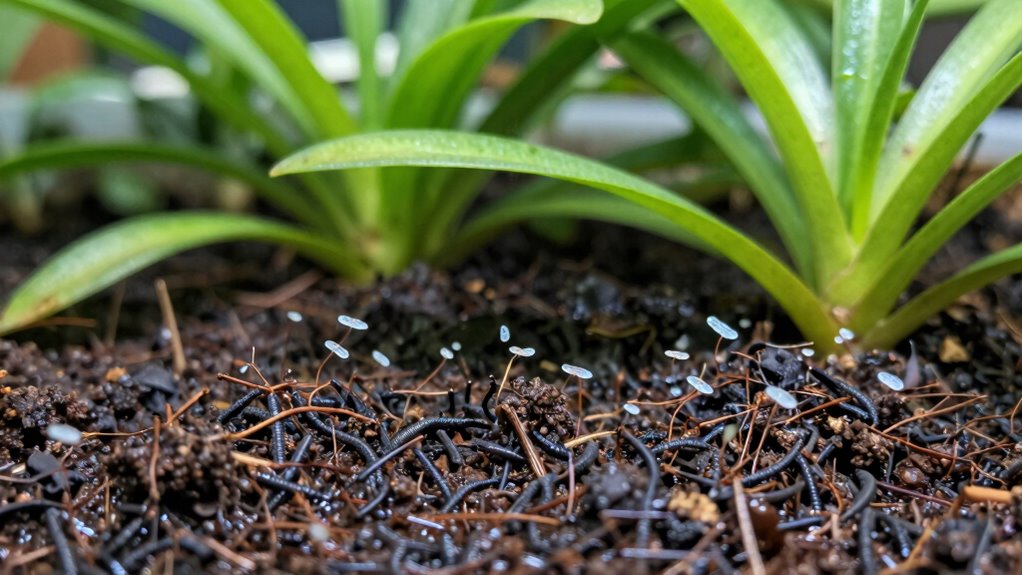
Keeping your indoor garden free of fungus gnats requires consistent monitoring and proactive maintenance. Regularly check your soil surface for tiny flying insects or larvae, especially after watering. Maintaining good soil health is essential; healthy soil drains well and isn’t overly moist, making it less attractive to gnats. Adjust your watering practices by allowing the top inch of soil to dry out between waterings, which disrupts the gnat life cycle. Use sticky traps near plants to catch adult gnats and observe their activity. Keep an eye on soil moisture levels and avoid overwatering, which creates ideal breeding conditions. Proper monitoring and diligent watering practices help prevent infestations and keep your indoor garden thriving without gnats. Understanding soil health and proper watering are key factors in disrupting the gnat’s preferred environment.
Troubleshooting Common Issues and When to Seek Help

Even with diligent monitoring and proper watering habits, you might still encounter issues with fungus gnats or other plant problems. When plant health declines, it’s often linked to soil moisture imbalances or hidden pests. Here’s when to troubleshoot and seek help:
Even with proper care, persistent plant issues may signal hidden pests or soil imbalances needing expert attention.
- Your plants are wilting despite regular watering—check if soil moisture is too high or too low.
- Leaves turn yellow or develop spots—possible nutrient deficiencies or overwatering.
- Persistent gnat activity despite treatment—consider deeper soil health issues or root rot.
- Stunted growth or slow recovery—consult a professional for pest or disease diagnosis.
Addressing these issues promptly helps maintain healthy plant growth. If problems persist, seek expert advice to prevent further damage and ensure your indoor garden thrives.
Frequently Asked Questions
Can Fungus Gnats Harm My Indoor Plants Beyond Nuisance?
Fungus gnats can harm your indoor plants beyond being just a nuisance. They disrupt soil health by damaging roots and seedlings, especially during their pest lifecycle when larvae feed on organic matter and roots. This can lead to stunted growth or even plant death if the infestation gets severe. Addressing soil conditions and managing larvae quickly helps protect your plants and keeps them healthy and thriving.
Are There Natural Alternatives to Chemical Soil Treatments?
Think of natural options as your garden’s gentle guardians. You can use biological controls like beneficial nematodes or predatory mites, which act like tiny warriors against fungus gnat larvae. Organic remedies such as cinnamon or neem oil also work like herbal shields, disrupting gnat life cycles without chemicals. These alternatives nurture your plants and environment, letting you fight pests with nature’s own arsenal, keeping your indoor garden healthy and thriving.
How Long Does It Typically Take to See Results After Applying the Fix?
You can usually expect to see visible improvements within a week after applying the soil-surface fix, but timing expectations vary depending on the severity of the infestation. Consistent application and proper maintenance help speed up results. Keep monitoring your plants, and if you stay diligent, you’ll notice fewer gnats and healthier soil in about 7 to 10 days. Patience and persistence are key to ending the gnat swarm.
Do Fungus Gnats Spread Plant Diseases or Pests?
Fungus gnats are like tiny messengers carrying trouble beneath the surface. They can spread plant disease risk through their fungus gnat transmission, especially when they feed on roots and soil. While they don’t directly infect plants, their activity increases susceptibility to disease. So, controlling these pests isn’t just about preventing swarms—it’s about safeguarding your plants from potential pests and diseases lurking beneath the soil.
Is the Soil-Surface Fix Safe for All Types of Houseplants?
The soil-surface fix is generally safe for most houseplants, but you should always check for plant compatibility and soil safety first. Some plants may react differently to certain treatments, so test a small area or research your specific plant’s needs. If used correctly, this method effectively controls fungus gnats without harming your plants, making it a safe, practical solution for maintaining healthy, pest-free houseplants.
Conclusion
Think of your indoor garden as a delicate dance floor—you want everything in harmony. When you apply the soil-surface fix, it’s like giving your plants a sturdy dance partner, blocking the gnats’ moves. I once watched a friend’s plants go from swarm to serenity in days, just by targeting the surface. With this simple step, you’ll keep your garden thriving, free of gnats, and ready to dance happily for years to come.
Fall yard work Picks
leaf blowers
As an affiliate, we earn on qualifying purchases.