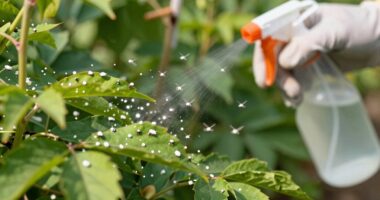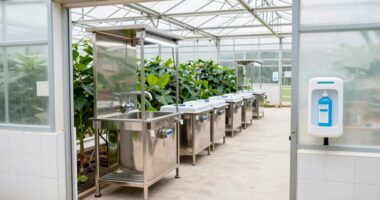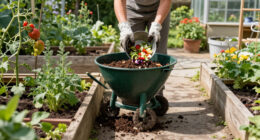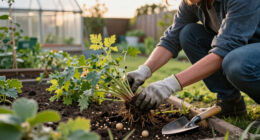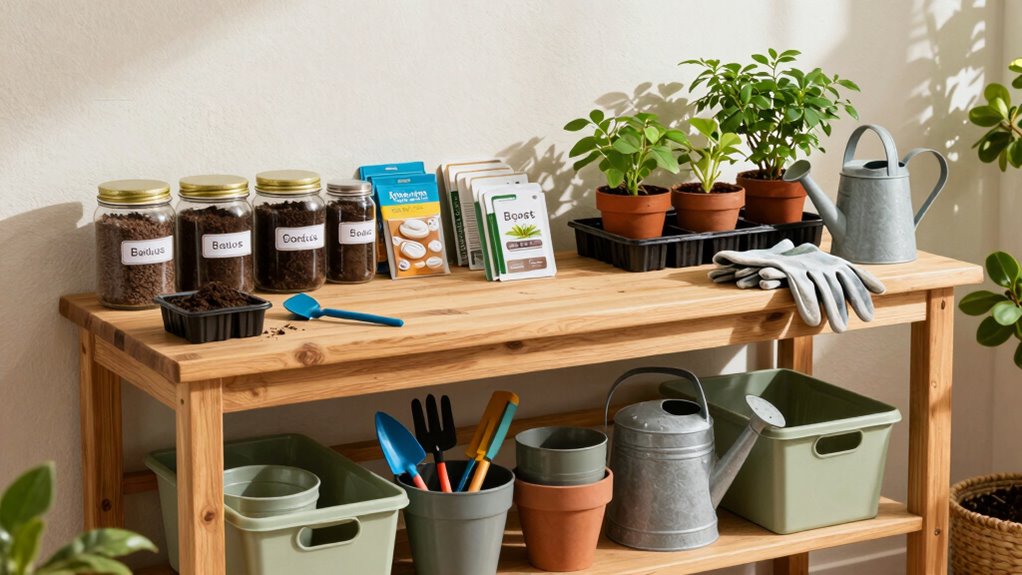

An organized potting area helps you work more efficiently and reduces mistakes, keeping pests and diseases in check. When tools, soils, and supplies are easy to find and clearly separated, you waste less time searching and avoid cross-contamination. This setup encourages regular hygiene and quick problem detection, which prevents larger issues later on. Keep your space tidy, and you’ll create a healthier environment for your plants—there’s more to discover on how organization can prevent common gardening problems.

Get garden gear delivered free with Prime
- Fast, free delivery on millions of items
- Prime Video, Amazon Music and more included
- Member-only deals all year
Key Takeaways
- Organized spaces enable quick access to tools and supplies, reducing errors and saving time during propagation.
- Clear separation of materials prevents cross-contamination, pests, and disease spread.
- Well-arranged areas make it easier to identify and address plant health issues early.
- Maintaining cleanliness and proper disposal routines minimizes pest infestations and mold growth.
- Overall organization fosters healthier plants, less stress, and more efficient gardening practices.
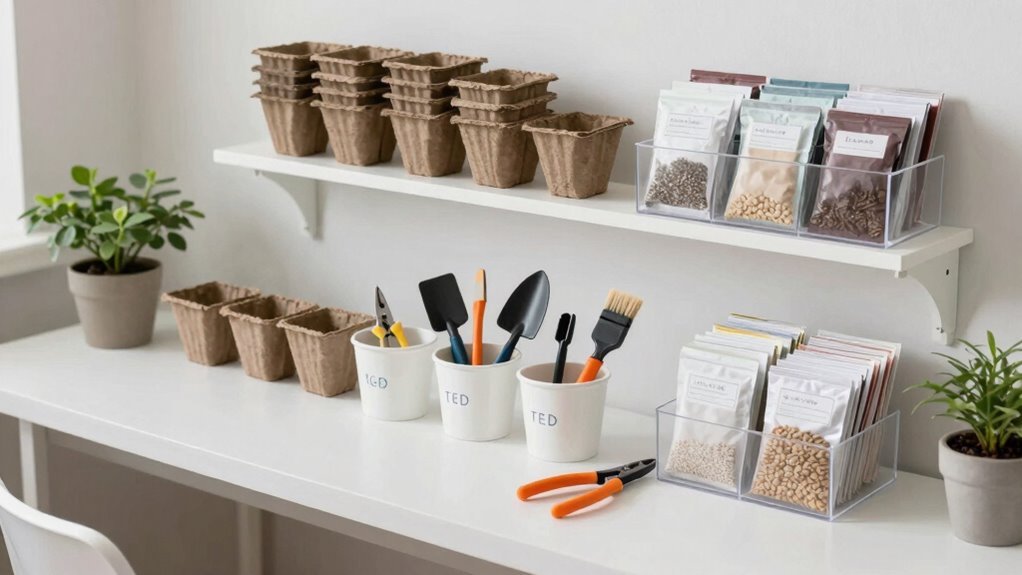
Have you ever struggled to find the right tools or supplies when potting new plants? It’s frustrating to search through clutter or dig through drawers only to realize you’re missing something vital. An organized potting area can change that experience entirely. When your space is tidy and well-arranged, you save time, reduce stress, and create a more efficient workflow. You’ll have everything you need within easy reach, which means you can focus more on the task at hand instead of hunting for supplies. Plus, an organized space minimizes the risk of mistakes, such as using the wrong tool or mixing up plant labels. This level of order helps guarantee that your plant propagation efforts are successful, with fewer setbacks or delays.
A clear, designated spot for each item keeps your tools, soils, fertilizers, and pots separated and easy to locate. When you’re preparing to propagate new plants, having everything at your fingertips makes the process smoother and more precise. You’re less likely to skip steps or use improper techniques because you’re not rushing to find equipment or materials. In turn, this enhances your ability to care for your plants during propagation, increasing the chances of healthy growth and root development. An organized potting area also helps prevent cross-contamination, which can be vital for plant health. Keeping tools and supplies clean and separate reduces the spread of pests and diseases, making pest prevention much easier. When you can quickly identify and address any signs of pests, you’re less likely to deal with larger infestations or plant failures.
Moreover, a tidy potting space encourages better hygiene, which is key to maintaining healthy plants. When your area is clutter-free, it’s easier to spot potential problems early—like soil pests, mold, or broken equipment—that could threaten your plants’ health. With everything orderly, you’re more likely to follow best practices for pest prevention, such as sterilizing tools or properly disposing of old soil. Proper tool organization and cleanliness can significantly reduce the chances of pests and diseases spreading. This proactive approach reduces the likelihood of pests taking hold and saves you time and effort later. Maintaining a clean and organized environment also supports sustainable gardening practices by reducing waste and unnecessary resource use. An organized potting area fosters a healthier environment for your plants and promotes efficient gardening routines. Overall, a well-organized potting area creates a more controlled environment, allowing you to focus on nurturing your plants rather than managing chaos. Proper workspace management and organization can lead to healthier plants and a more enjoyable gardening experience. It’s an investment that pays off in fewer problems, healthier plants, and a more enjoyable gardening experience.
Products Worth Considering
Greenworks 48V (24V x 2) 21-inch Self-Propelled Lawn Mower, Battery Kit

EGO POWER+ 21 Cordless Electric Lawn Mower Kit, Self-Propelled

Orbit B-hyve Smart Indoor/Outdoor 12-Zone Sprinkler Controller
As an affiliate, we earn on qualifying purchases.
Frequently Asked Questions
How Often Should I Clean My Potting Area?
You should clean your potting area at least once a week to maintain proper potting area maintenance. Regular cleaning helps prevent the buildup of dirt, debris, and pests, reducing potential problems. Implement a consistent cleaning schedule, including wiping down surfaces, disinfecting tools, and disposing of waste properly. Staying vigilant with your cleaning routine keeps your potting area organized, efficient, and safe for healthy plant growth.
What Are the Best Storage Solutions for Small Spaces?
Imagine squeezing all your gardening tools into a small corner. Using vertical shelving maximizes space, keeping tools accessible and off the floor. Pair this with clear storage bins for seeds, soil, and small accessories, making it easy to find everything quickly. This combo keeps your potting area tidy, prevents clutter, and makes gardening more enjoyable, even in limited spaces. It’s an efficient way to organize without sacrificing functionality.
How Can I Prevent Pests in My Potting Area?
To prevent pests in your potting area, focus on compost management by keeping compost bins sealed and away from plants. Incorporate pest-resistant plants like marigolds or basil around your workspace to deter unwanted bugs. Keep your area tidy, remove fallen debris promptly, and regularly inspect plants for signs of pests. An organized, clean space discourages pests, making your gardening easier and healthier.
What Tools Are Essential for a Well-Organized Potting Space?
You need essential tools like trowels, pruning shears, and gloves for your potting space. Keep them sharp and clean through tool maintenance, so they work smoothly. Use storage organization solutions like labeled bins or wall hooks to keep everything accessible and clutter-free. This way, you avoid wasting time searching and reduce damage to your tools. A well-organized setup makes potting easier, more efficient, and even a little enjoyable.
How Do I Plan for Seasonal Changes in My Potting Area?
You should plan for seasonal changes by organizing your potting area with climate considerations in mind. Keep seasonal planting supplies handy, like mulch and frost protection, and adjust your storage accordingly. Think ahead about temperature fluctuations and prepare for different watering needs. By scheduling regular cleanups and rotating plants based on the seasons, you guarantee your space stays functional year-round, minimizing problems and supporting healthy growth.
Conclusion
Keeping your potting area organized is like tending to a well-kept garden—everything falls into place and blooms with ease. When your supplies are neatly arranged, you save time, avoid frustration, and prevent mishaps. An orderly space acts as a sturdy backbone, supporting your gardening journey and helping your plants thrive. So, invest a little time into tidying up; your green thumb will thank you, and your gardening days will flow as smoothly as a gentle breeze.