
In your home greenhouse, establishing a quarantine system involves inspecting and isolating new plants for at least a week to catch pests or diseases early. Keep everything clean by disinfecting tools, pots, and surfaces regularly, and remove debris and dead plant material to prevent harboring pests. Monitor plants closely, keeping detailed records to spot recurring issues. Controlling humidity and airflow also helps prevent problems. If you want to learn about creating an effective greenhouse environment, continue exploring these essential steps.
Key Takeaways
- Implement a dedicated quarantine area for new plants, isolating them for at least one week to monitor for pests and diseases.
- Conduct thorough inspections of all new plants before integration into the main greenhouse.
- Regularly clean and disinfect tools, pots, and surfaces to prevent pathogen and pest transfer.
- Maintain detailed records of plant health, issues, and treatments to identify patterns and improve prevention.
- Control environmental conditions by removing debris, ensuring proper airflow, and maintaining optimal humidity levels.
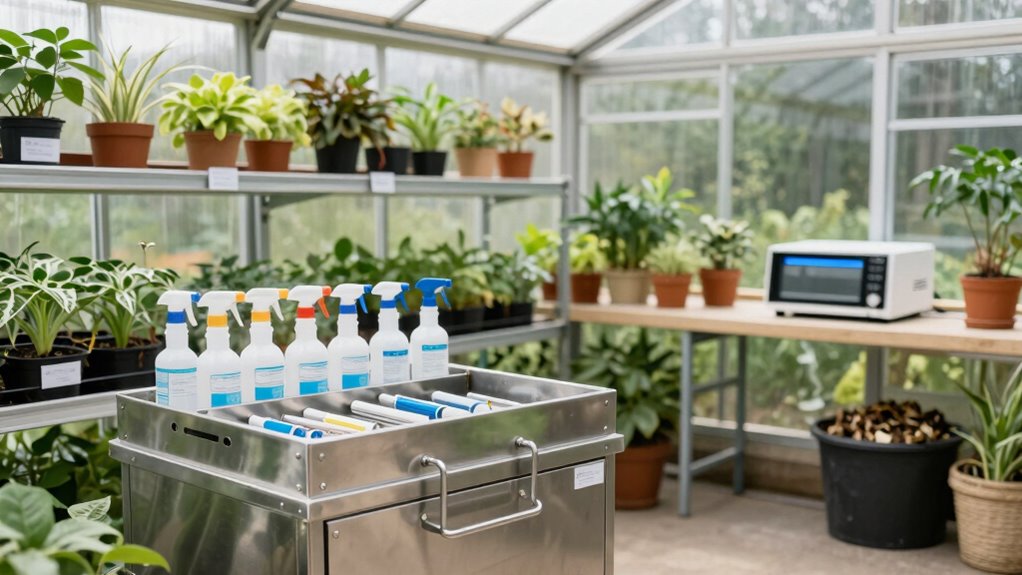
Have you ever wondered how to prevent pests and diseases from spreading in your home greenhouse? The key lies in establishing effective quarantine and cleanup systems. These systems act as your first line of defense, helping you maintain a healthy environment and ensuring that your plants thrive. Implementing a solid quarantine process means inspecting new plants thoroughly before introducing them to your existing setup. By doing this, you prevent potential pests and diseases from hitching a ride into your greenhouse. When you bring in new plants, isolate them in a separate area for at least a week. During this time, carefully observe them for signs of pest activity or disease symptoms. This practice is essential for early detection, allowing you to address any issues before they spread.
Inspect and isolate new plants for a week to prevent pests and diseases from spreading.
Pest prevention isn’t just about catching trouble early — it’s also about creating an environment that discourages pests from settling in. Regularly cleaning and disinfecting your tools, pots, and surfaces reduces the chances of transferring pests or pathogens. When you maintain a clean workspace, you eliminate hiding spots for pests and make it less inviting for troublemakers. Incorporate disease monitoring into your routine by inspecting plants closely and frequently. Look for discolored leaves, spots, or unusual growth patterns. Catching early signs of disease enables you to act swiftly, removing affected plants or treating them to prevent an outbreak. Keeping detailed records of plant health can help you identify patterns or recurring issues, giving you a better understanding of what to watch for.
Your cleanup system should involve more than just wiping down surfaces; it’s about establishing a habit of removing debris and dead plant material regularly. Fallen leaves, old stems, and discarded plant parts can harbor pests or diseases, so dispose of them properly. When you prune or harvest, sanitize your tools immediately afterward to prevent cross-contamination. Keeping your greenhouse tidy also involves controlling humidity and airflow, as damp, stagnant conditions foster pest and disease development. Additionally, understanding biodiversity principles can help foster a resilient environment that naturally suppresses pests and promotes healthy plant growth.
In short, a vigilant approach to quarantine and cleanup forms the foundation of pest prevention and disease monitoring in your home greenhouse. By isolating new plants, maintaining cleanliness, and inspecting regularly, you create a resilient environment that minimizes risks. These practices may require effort, but they pay off by protecting your plants and ensuring your greenhouse remains a healthy, productive space.
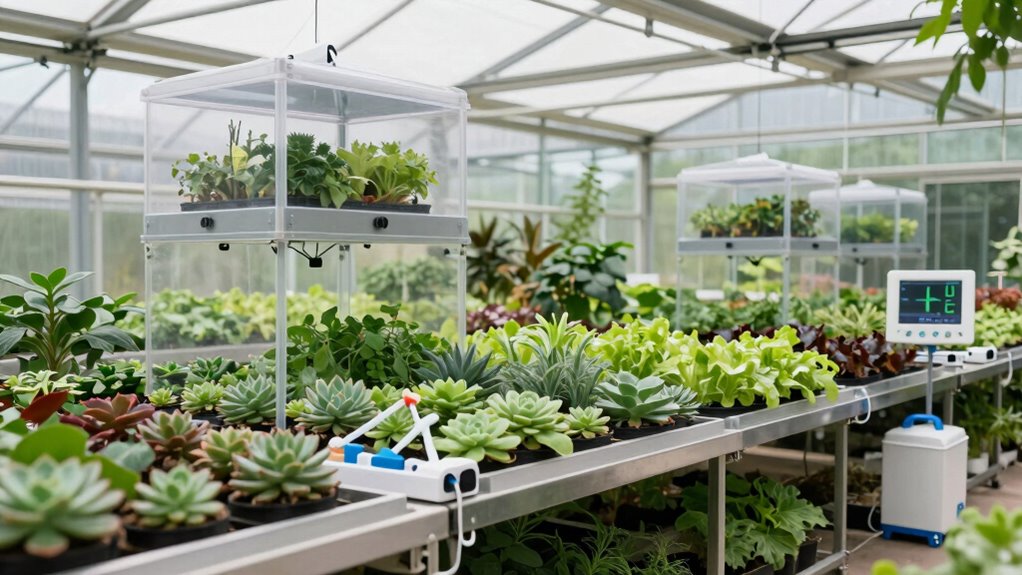
greenhouse plant quarantine station
As an affiliate, we earn on qualifying purchases.
As an affiliate, we earn on qualifying purchases.
Frequently Asked Questions
How Often Should Quarantine Procedures Be Reviewed and Updated?
You should review and update your quarantine protocols at least once a year to guarantee they stay effective. Additionally, anytime you introduce new plants or notice changes in plant health, update the procedures promptly. Regularly checking the update frequency of your quarantine system helps prevent pests and diseases from spreading. Staying proactive and flexible in adjusting your protocols keeps your greenhouse environment safe and healthy for all your plants.
What Are Cost-Effective Cleanup System Options for Small Greenhouses?
You can easily implement cost-effective cleanup options for your small greenhouse by combining plant pest prevention with soil sterilization techniques. Use simple methods like solarization—covering soil with clear plastic during hot days—to sterilize it naturally. Regularly inspect and remove diseased plants, and keep your greenhouse clean to prevent pests. These strategies are affordable, effective, and help maintain a healthy environment for your plants without breaking the bank.
Can Quarantine Systems Prevent All Plant Pests and Diseases?
Quarantine systems can’t prevent all pests and diseases, but they considerably reduce risks by allowing you to monitor for pest resistance and track disease patterns early. You can catch issues before they spread, but some resilient pests or hidden diseases might still slip through. Consistent inspection, combined with proper quarantine procedures, enhances your defenses, making it less likely that pests or diseases will take hold in your greenhouse.
How Do Quarantine and Cleanup Systems Integrate With Overall Greenhouse Management?
You can enhance your greenhouse management by seamlessly integrating quarantine and cleanup systems, which are essential for maintaining plant health. These systems support pest monitoring and help prevent disease spread, ensuring a healthier environment. Regularly isolating new plants and cleaning tools reduce risks. By aligning these practices with your overall management, you create a proactive approach that safeguards your greenhouse’s productivity and keeps pests and diseases at bay.
Are There Specific Regulations or Standards for Greenhouse Quarantine Systems?
Yes, there are specific regulations and standards for greenhouse quarantine systems focused on plant health and pest control. These regulations aim to prevent the introduction and spread of pests and diseases, ensuring healthy plants. You should follow local and national guidelines, such as those from agricultural agencies, which specify quarantine procedures, sanitation protocols, and inspection requirements. Adhering to these standards helps protect your greenhouse ecosystem and maintain compliant, pest-free environments.
Conclusion
By implementing effective quarantine and cleanup systems, you safeguard your home greenhouse from unexpected pests and diseases—just as a sudden rain can wash away your carefully planted seedlings. Staying vigilant and maintaining these routines not only protects your plants but also guarantees your green oasis thrives. Coincidentally, the same habits that keep pests at bay often lead to healthier, more vibrant plants, proving that a little extra care can make all the difference in your gardening success.