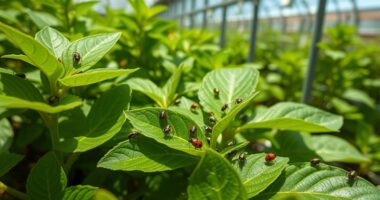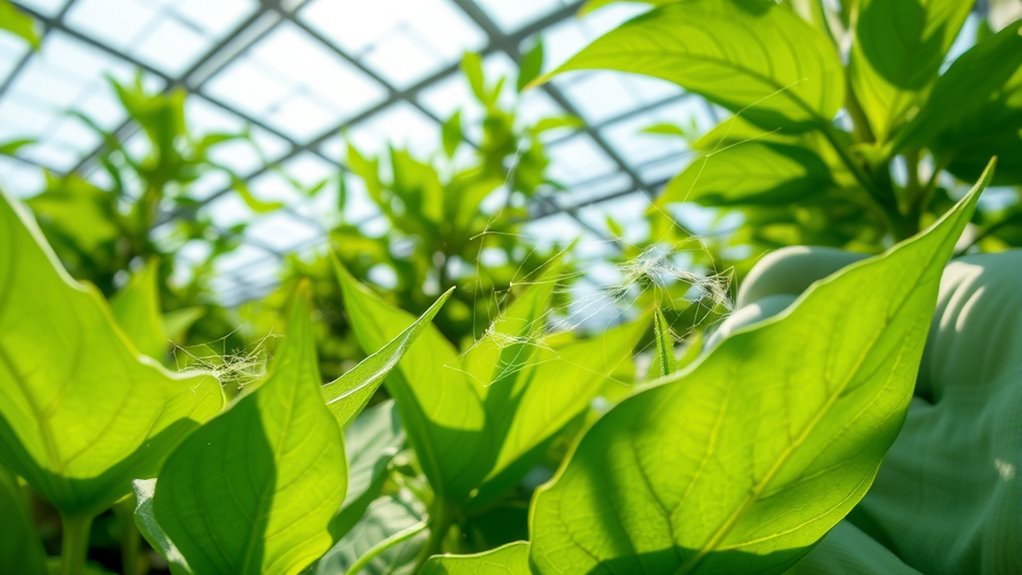

To manage spider mites in your greenhouse, combine biological control with natural predators like predatory mites, which target pests effectively. Enhance environmental conditions by increasing humidity and airflow to make it less inviting for mites. Regularly inspect plants for early signs, and use targeted chemical treatments such as insecticidal soaps or neem oil when needed. A layered, proactive approach helps keep mite populations in check, and exploring these strategies further will give you more ways to protect your plants.
Key Takeaways
- Implement early biological control by releasing predatory mites before infestations escalate.
- Regularly monitor plants for early signs like stippling and webbing for prompt intervention.
- Maintain proper humidity and airflow to create environmental conditions unfavorable for spider mites.
- Use chemical treatments such as insecticidal soaps or miticides strategically, avoiding overuse.
- Integrate biological control, environmental management, and chemical methods for sustainable pest suppression.
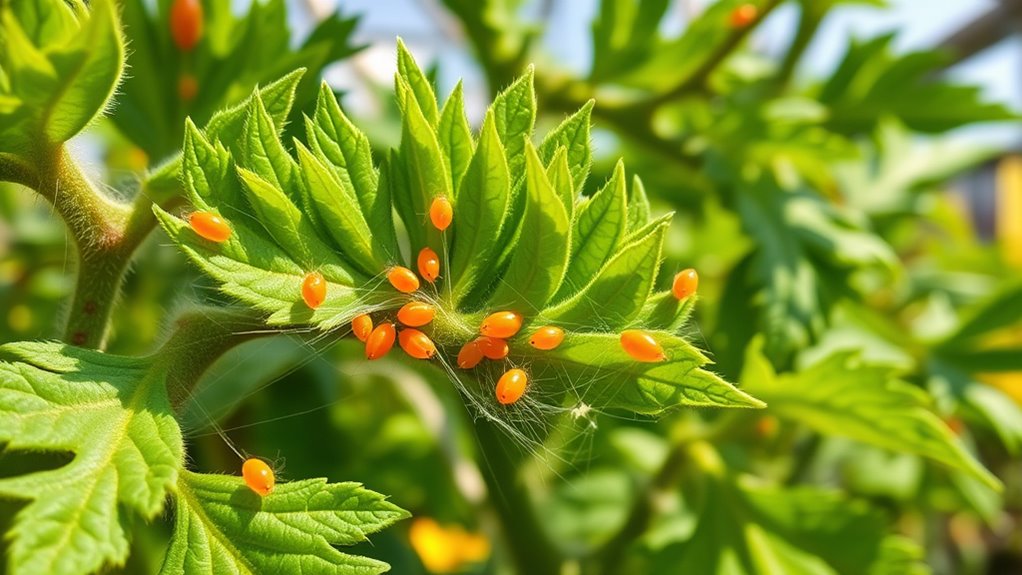
Spider mites are a common and persistent threat to greenhouse plants, but with proactive management, you can keep them under control. The key is to use a combination of strategies to prevent infestations from taking hold and to eliminate them quickly when they do occur. Biological control is an effective option that involves introducing natural predators, such as predatory mites, to keep spider mite populations in check. These beneficial insects target spider mites specifically, reducing the need for chemical interventions and minimizing harm to your other plants and beneficial insects. When deploying biological control, it’s important to ensure the predators are compatible with your greenhouse environment and to release them at the right time, typically before the mite population explodes.
Use biological control by releasing predatory mites early to keep spider mites in check.
Chemical treatments are another tool in your arsenal, but they should be used judiciously. Insecticidal soaps, neem oil, and miticides can be effective at killing spider mites on contact or through residual effects. However, over-reliance on chemicals can lead to resistance and may harm beneficial insects, so it’s best to integrate them with biological control measures. Always follow the manufacturer’s instructions for application rates and timing to maximize effectiveness and reduce the risk of phytotoxicity. Combining chemical treatments with biological control creates a layered approach that can rapidly suppress mite populations, especially during severe outbreaks.
To further prevent spider mite issues, maintain ideal humidity levels and ensure good air circulation within your greenhouse. Spider mites thrive in dry, dusty environments, so increasing humidity and regularly cleaning surfaces can make the environment less inviting for them. Additionally, monitor your plants closely and frequently for early signs of infestation, such as stippling on leaves or fine webbing. Early detection allows you to act swiftly with targeted treatments, whether biological or chemical, before the mites multiply and cause significant damage. Implementing proper environmental controls is essential for long-term management.
Ultimately, managing spider mites in your greenhouse requires vigilance and an integrated approach. Combining biological control methods with chemical treatments when necessary, along with environmental adjustments and regular inspections, will help you keep these pests at bay. With consistent effort and strategic intervention, you can protect your plants and maintain a healthy, thriving greenhouse environment.
Frequently Asked Questions
Can Natural Predators Effectively Control Spider Mites Indoors?
Yes, natural predators can effectively control spider mites indoors through biological control. You’ll find that predator effectiveness varies, but introducing predatory mites like Phytoseiulus persimilis often considerably reduces spider mite populations. Make sure to release predators early in the infestation and maintain ideal conditions for their survival. Properly managed, biological control offers an eco-friendly alternative to chemicals, helping you keep your greenhouse free of damaging spider mites.
What Are the Best Organic Methods to Prevent Infestations?
To prevent spider mite infestations organically, start with companion planting by using plants like marigolds or basil that repel mites. You can also apply botanical extracts, such as neem oil or rosemary oil, which act as natural repellents. Regularly inspect your plants, keep humidity high, and remove any infected leaves. These methods create a hostile environment for mites, helping you keep your greenhouse pest-free naturally.
How Often Should I Inspect My Plants for Spider Mites?
You should inspect your plants at least twice a week; otherwise, those tiny pests will throw a covert party. Stick to an inspection schedule and practice pest monitoring diligently to catch spider mites early. Regular checks help prevent an infestation from spiraling out of control. Don’t wait until you see damage—by then, it’s often too late. Stay vigilant, and you’ll keep your greenhouse thriving and pest-free.
Are Certain Plant Species More Susceptible to Spider Mites?
Some plant species are more susceptible to spider mites because of their leaf texture, nutrient levels, or moisture. Mite preferences often lean toward plants with fine, soft leaves like tomatoes, cucumbers, and roses. You should pay extra attention to these vulnerable plants, regularly inspecting for signs of mite activity, as their susceptibility can vary based on plant susceptibility factors. Being aware helps you prevent infestations early.
How Does Humidity Influence Spider Mite Populations?
Humidity control considerably impacts spider mite populations, as higher humidity levels tend to inhibit mite proliferation. You might find that maintaining elevated humidity creates an unfavorable environment for spider mites, slowing their spread. Conversely, low humidity often encourages their growth, making it essential to regulate humidity carefully. By managing humidity effectively, you can reduce mite infestations and protect your plants, ensuring a healthier greenhouse environment overall.
Conclusion
By staying vigilant and regularly inspecting your plants, you can keep spider mites at bay and protect your greenhouse. Using natural predators, maintaining proper humidity, and applying organic treatments make a big difference. Remember, prevention is key to avoiding widespread infestations. Are you ready to take proactive steps today to ensure your plants stay healthy and thriving? With consistent effort, you can successfully manage spider mites and enjoy a flourishing greenhouse.