To make sticky traps work effectively, place them along walls, near entry points, and high-traffic areas where pests are active. Keep traps in dark, sheltered spots like behind appliances or under sinks, avoiding direct sunlight or clutter. Reposition traps as pest activity shifts and regularly check and replace them to guarantee stickiness. For more tips on ideal placement and troubleshooting common issues, continue exploring proven strategies to catch pests efficiently.
Key Takeaways
- Place traps along walls, near entry points, and pest hotspots for maximum effectiveness.
- Position traps in dark, sheltered areas away from direct sunlight and extreme heat.
- Use bait suited to target pests and monitor traps regularly for activity.
- Avoid cluttered, high-traffic, or overly damp spots that deter pests from approaching.
- Reposition and replace traps periodically based on pest behavior and trap condition.
How to Find Pest Hotspots in Your Home and Garden
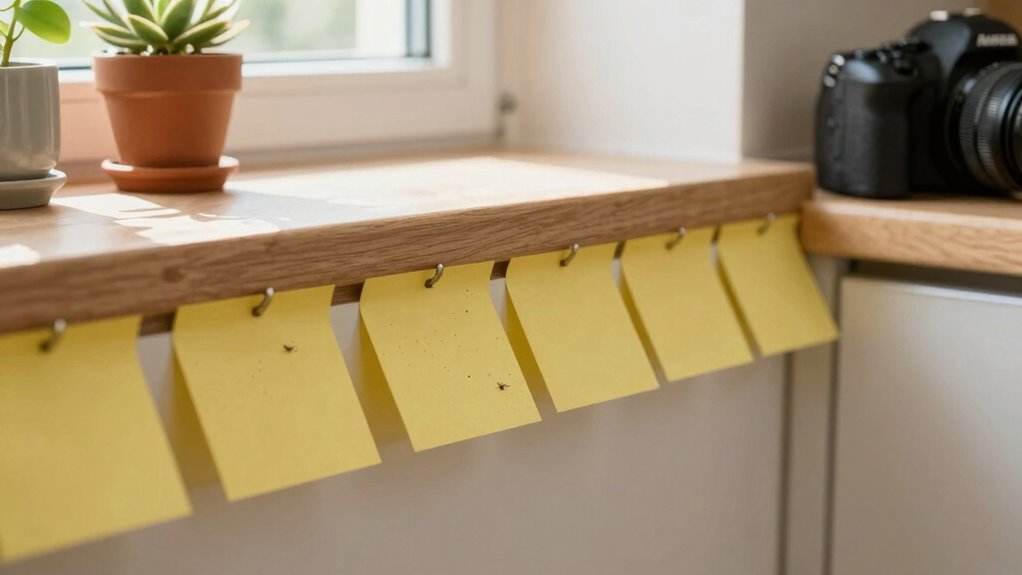
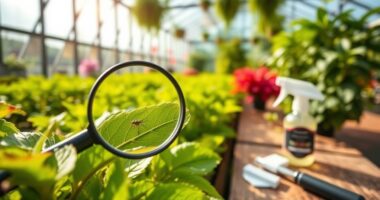
To effectively control pests, you first need to identify where they congregate. This is essential for successful DIY pest control. Look for signs like droppings, chewed wires, or damaged plants to spot hotspots. Pay attention to dark, undisturbed areas such as behind appliances, under sinks, or in garden corners. Regularly inspect these spots to track pest activity. Once you find high-traffic areas, set up your sticky traps nearby. Proper trap maintenance is key—check them frequently and replace them when full or dirty. Staying vigilant helps you catch pests early and prevents infestations from spreading. Knowing where pests gather allows you to focus your efforts and makes your pest control more effective. Incorporating natural pest deterrents can also enhance your efforts by making your environment less inviting to pests.
Where to Place Sticky Traps for Best Results
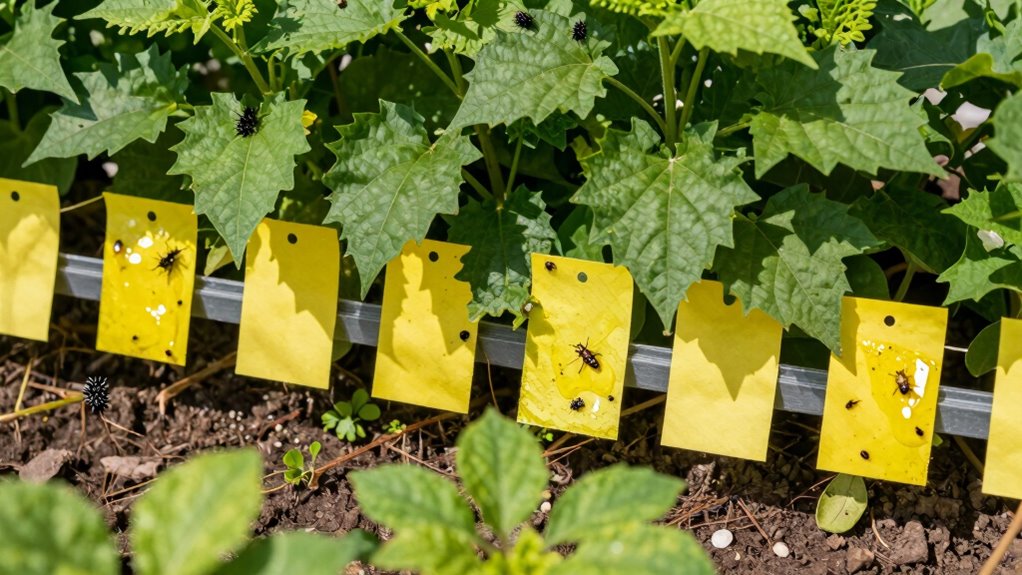
Placing sticky traps in the right spots can make a significant difference in controlling pests effectively. To maximize their impact, focus on high-traffic areas and pest hotspots identified through your DIY methods. Position traps along walls, near entry points, and close to food sources where pests are likely to travel. Consider placing traps in dark, sheltered spots for better results. For alternative solutions, avoid cluttered areas that may deter pests from approaching. Keep traps away from direct sunlight and extreme heat to prevent premature adhesive failure. Regularly check and replace traps to maintain their effectiveness. Remember, strategic placement helps you catch more pests, saving you time and effort while reducing the need for chemical treatments. Proper placement is key to pest control success. Proper trap placement ensures you maximize the traps’ effectiveness and effectively manage pest issues.
Expert Tips for Effective Trap Placement
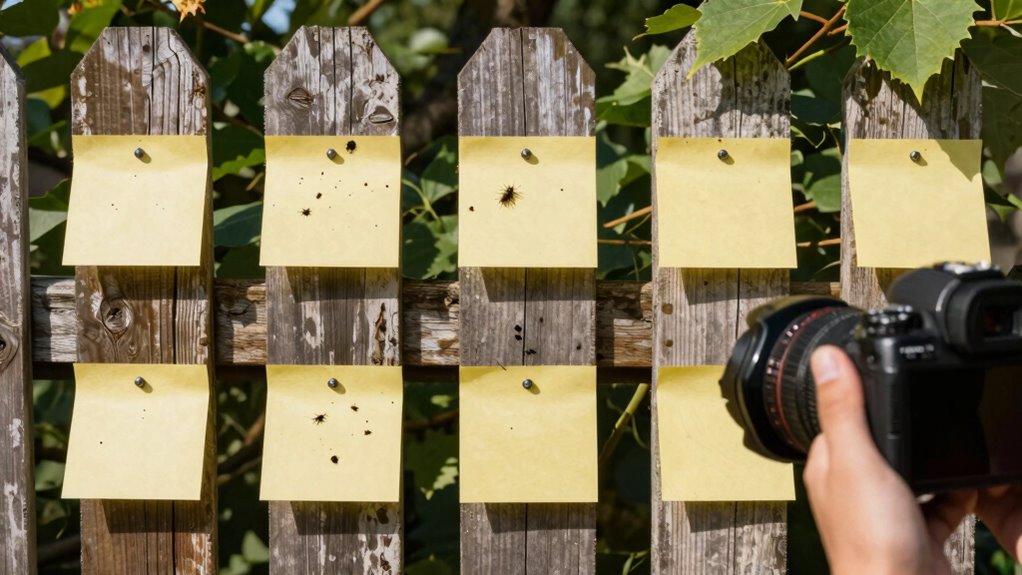
Expert trap placement can greatly improve your pest control efforts, but it requires strategic thinking. First, choose the right bait choices to attract your target pests effectively. For example, sweet bait works for fruit flies, while protein-based bait attracts ants and cockroaches. Once placed, monitor your traps regularly and perform trap maintenance to ensure they stay functional. Clean or replace traps as needed, especially if they become covered with debris or dust, which can reduce their effectiveness. Position traps where pests are most active, and avoid placing them in areas with strong airflow or direct sunlight, which can cause bait evaporation. Consistent trap maintenance and thoughtful bait choices will enhance your pest control results and help you stay ahead of the problem. Additionally, understanding wave and wind patterns can help you select optimal locations for trap placement, improving their chances of catching pests effectively.
Common Mistakes in Trap Placement and How to Fix Them
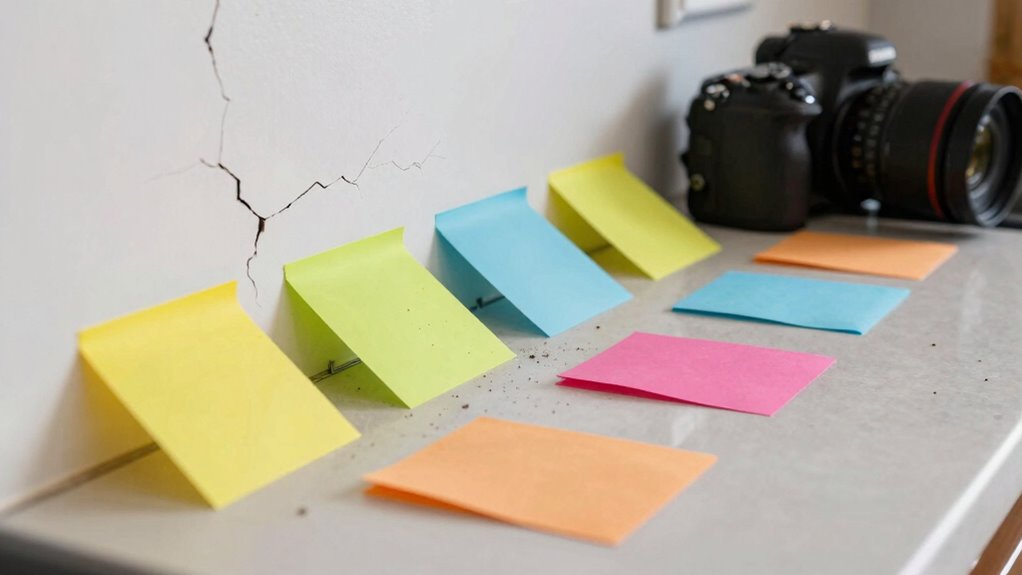
One common mistake is placing traps in areas where pests are unlikely to travel or where environmental conditions hinder their effectiveness. Poor trap placement ignores pest behavior, causing missed opportunities to catch pests. To improve your strategy, avoid these mistakes:
- Placing traps in high-traffic areas where pests rarely go
- Ignoring pest activity patterns and habits
- Using traps in overly sunny or damp spots that pests avoid
- Positioning traps too far from the pest’s typical pathways
- Forgetting to adjust placement as pest behavior changes
Troubleshooting Sticky Trap Placement Problems
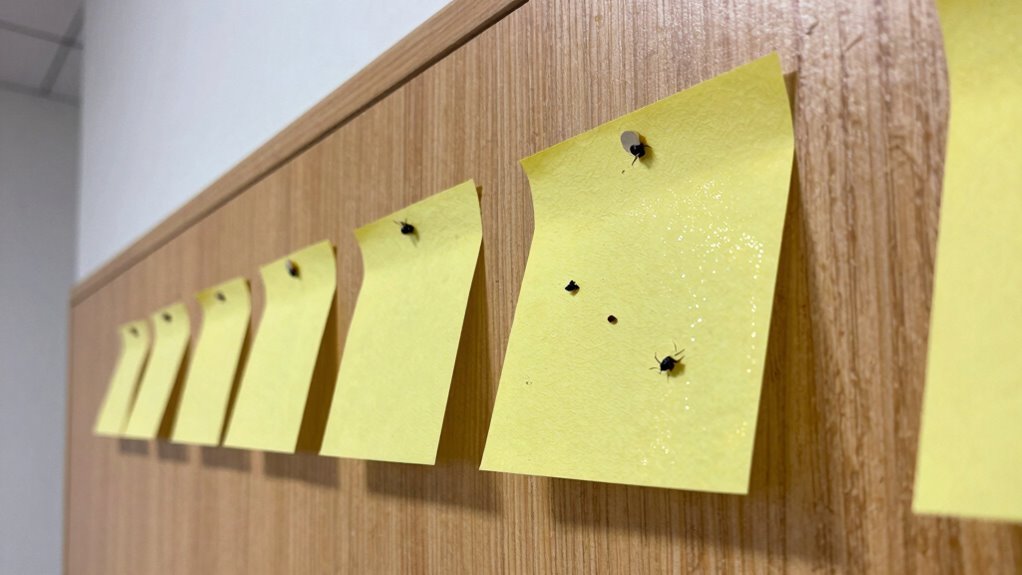
When sticky traps fail to catch pests, it’s often due to placement issues that prevent pests from encountering them. Check your bait placement—make sure it’s positioned where pests are most active, such as near entry points or along common travel paths. Poor bait placement can make traps ineffective, so adjust accordingly. Also, consider trap maintenance; dust, dirt, or debris can reduce adhesive effectiveness. Regularly clean and replace traps to ensure they remain sticky and attractive. If pests aren’t caught, reposition traps to areas with higher pest activity and verify that bait is fresh and properly placed. Additionally, understanding pest behavior and preferred habitats can help in trap placement for better results. By optimizing bait placement and maintaining your traps, you’ll increase your chances of catching pests and solving the problem efficiently.
Frequently Asked Questions
How Often Should I Replace Sticky Traps for Optimal Results?
You should replace sticky traps every 2 to 4 weeks for ideal results. Regular trap maintenance ensures they stay effective and captures remain visible. If you notice a trap is full or no longer sticky, swap it out sooner. Consistent replacement frequency helps monitor pest activity and prevents overcrowding, guaranteeing your traps continue to catch pests effectively. Keep an eye on them, and don’t wait too long to refresh.
Can Sticky Traps Attract Pests From Outside My Home?
Sticky traps can attract pests from outside your home if placed near entry points or outdoor areas. Outdoor pest attraction is common, so make certain you position traps away from strong sunlight and wind that can reduce effectiveness. Proper sticky trap placement, such as near garden beds or trash cans, helps catch pests before they enter. Regularly check and replace traps to keep outdoor pest attraction under control and prevent infestations indoors.
Are Sticky Traps Safe for Pets and Children?
Sticky traps are generally safe for pets and children if you focus on proper trap placement. Keep traps out of reach, such as high shelves or behind furniture, to guarantee pet safety and prevent accidental contact. Always read the product label for specific safety instructions. By placing traps carefully and out of your children’s and pets’ reach, you minimize risks while effectively controlling pests.
What Types of Pests Are Most Effectively Caught With Sticky Traps?
You’ll find sticky traps most effective for catching flying pests like fruit flies, fungus gnats, and some flying ants, as they’re attracted to certain insect preferences. To maximize trap success, choose the right trap selection based on the pest’s behavior. For example, bright colors attract certain insects, so use color-specific traps. Regularly check and replace traps to guarantee continued effectiveness in controlling your pest problem.
How Do Weather Conditions Affect the Effectiveness of Sticky Traps?
They say, “A stitch in time saves nine,” so don’t ignore weather’s role. Humidity impact can make sticky traps less effective, as moisture may cause the adhesive to lose stickiness. Temperature effects matter too; high heat can cause traps to become less sticky or even melt, while cold weather may slow pest activity. Keep these factors in mind to optimize trap placement and ensure they catch pests effectively.
Conclusion
By paying close attention to your home’s quiet corners and garden’s hidden nooks, you can guide pests into your sticky traps without fuss. Remember, a little patience and strategic placement turn small efforts into big wins. When you gently adjust your approach, those pesky visitors find themselves gently redirected. With mindful placement, you create a subtle barrier, helping your space stay peaceful and pest-free—sometimes, the tiniest changes make all the difference.