If whiteflies won’t leave, start by regularly inspecting your plants, focusing on undersides of leaves. Use organic treatments like neem oil or insecticidal soap combined with introducing natural predators such as ladybugs or parasitic wasps. Improve airflow and spacing to make plants less attractive, and keep your garden clean by removing debris. Consistent monitoring, early intervention, and supporting beneficial insects create a durable cycle break—keep going to discover more effective strategies.
Key Takeaways
- Initiate early detection and remove infested leaves to prevent whitefly reproduction.
- Introduce natural predators like ladybugs, lacewing larvae, or parasitic wasps to reduce whitefly populations.
- Apply organic treatments such as neem oil or insecticidal soap thoroughly, especially on leaf undersides.
- Enhance airflow through proper spacing, pruning, and garden sanitation to make conditions less favorable for whiteflies.
- Maintain a regular monitoring schedule and support beneficial insects to sustain eco-friendly, long-term control.
Learn Why Whiteflies Keep Coming Back and How Their Life Cycle Works

Whiteflies are persistent pests because their life cycle allows them to reproduce rapidly and survive in various conditions. Understanding whitefly biology helps explain why they keep returning. Their lifecycle stages include eggs, nymphs, pupae, and adults. Eggs are laid on the undersides of leaves, hatch quickly, and develop into nymphs, which feed on plant sap and cause damage. Nymphs then go through pupal stages, where they transform into adult whiteflies. Adults are highly mobile and reproduce frequently, laying hundreds of eggs during their lifespan. This quick progression through lifecycle stages enables whiteflies to multiply rapidly and adapt to different environments. Their ability to reproduce swiftly and survive in diverse conditions makes controlling them challenging without interrupting their lifecycle. Additionally, understanding the whitefly lifecycle can help gardeners develop targeted strategies to break the cycle and manage infestations more effectively.
Identify Signs of a Whitefly Infestation in Your Garden
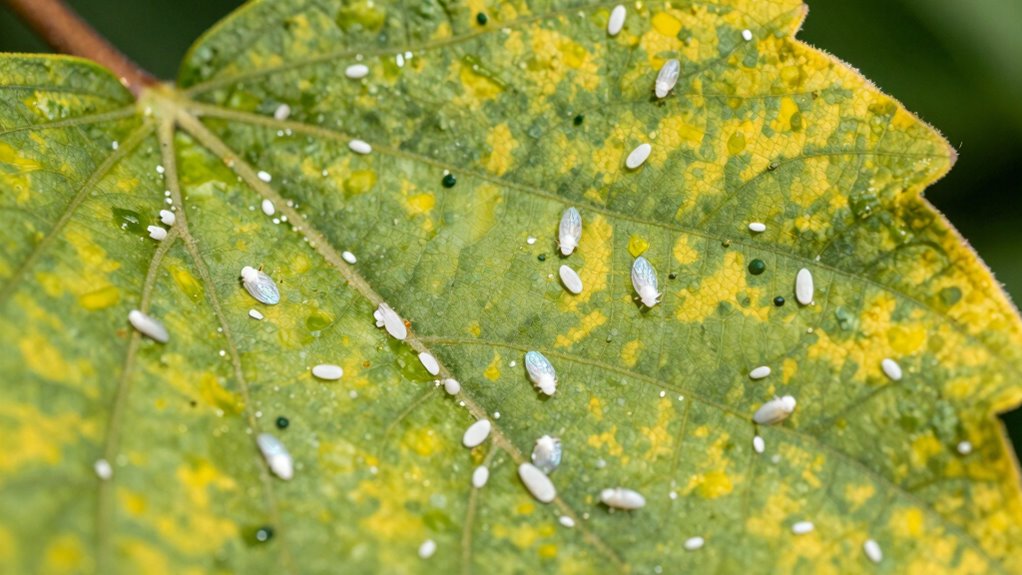
You’ll notice tiny white insects fluttering around your plants or gathering on the undersides of leaves. Look for sticky honeydew and black sooty mold, which signal whitefly activity. Additionally, keep an eye out for damaged or yellowing leaves that often result from their feeding.
Visible Whitefly Presence
To spot a whitefly infestation early, pay close attention to your plants for telltale signs. Look for tiny, white, moth-like insects fluttering around the undersides of leaves, which is a clear sign of their presence. Whitefly biology involves rapid reproduction, so even a few can quickly turn into a large colony. Their pest behavior includes clustering on new growth, especially on the undersides of leaves. You might also notice:
- Whitefly eggs that look like small, translucent dots
- Whitefly nymphs clinging to leaf surfaces
- Sticky residue or debris from their feeding activity
Spotting these signs early helps you understand their pest behavior and take swift action to prevent a full-blown infestation. Regular monitoring keeps your garden healthy and whitefly-free. Understanding whitefly behavior can help you develop more effective control strategies.
Honeydew and Sooty Mold
Ever notice sticky residue on your plant leaves or a dull, sooty coating? That’s a sign of honeydew issues caused by whiteflies feeding on your plants. The honeydew they produce creates a perfect environment for sooty mold, a black fungus that quickly covers leaves and stems. This mold blocks sunlight, hindering photosynthesis and weakening your plants. To prevent sooty mold, it’s essential to control the honeydew buildup early. Regularly check for whitefly activity and remove any visible honeydew with a gentle spray of water or a soft cloth. Keeping your garden clean and monitoring for pests helps break the cycle of honeydew and sooty mold formation, ensuring healthier plants and a more vibrant garden. Additionally, understanding the contrast ratio of your plants’ environment can help optimize conditions to reduce mold growth and promote healthier foliage.
Damaged or Yellowing Leaves
Whiteflies often leave behind telling signs on your plants, especially in the form of damaged or yellowing leaves. You might notice leaves turning yellow or showing clear signs of leaf damage, which indicates an infestation. Look for:
- Discolored, yellowing leaves that seem to wilt or droop
- Tiny specks or spots on the leaf surface from feeding activity
- Sticky residue or honeydew coating the leaves, encouraging mold growth
These symptoms point to whitefly activity, as their feeding weakens plant tissues and disrupts nutrient flow. The yellowing leaves become a clear visual cue that your plant is under attack. Catching these signs early allows you to act swiftly and implement control measures to break the whitefly cycle before the infestation worsens. Additionally, understanding the Free Floating nature of whiteflies can help you develop an effective management strategy.
Use Effective Organic and Chemical Treatments to Kill Whiteflies Fast
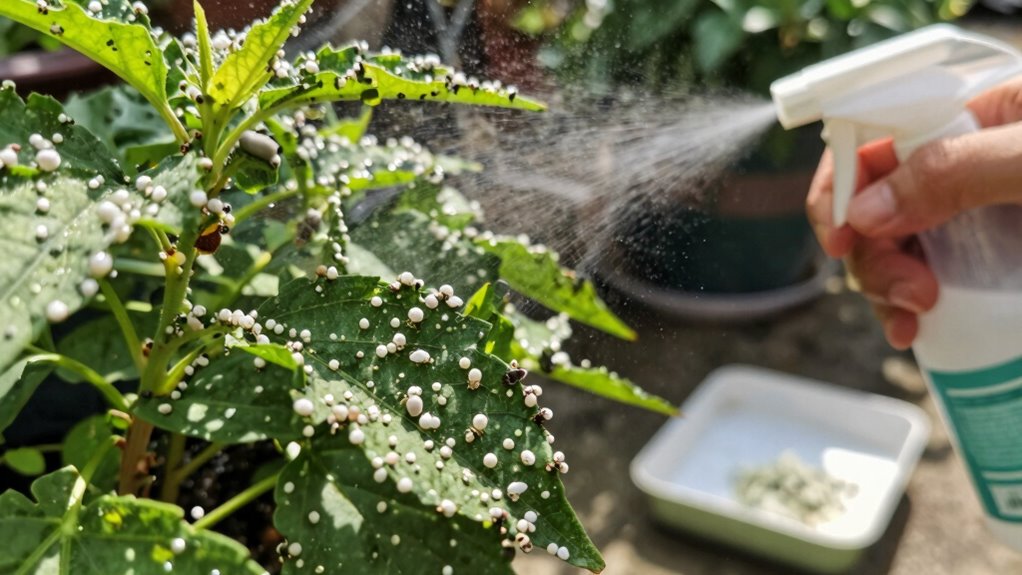
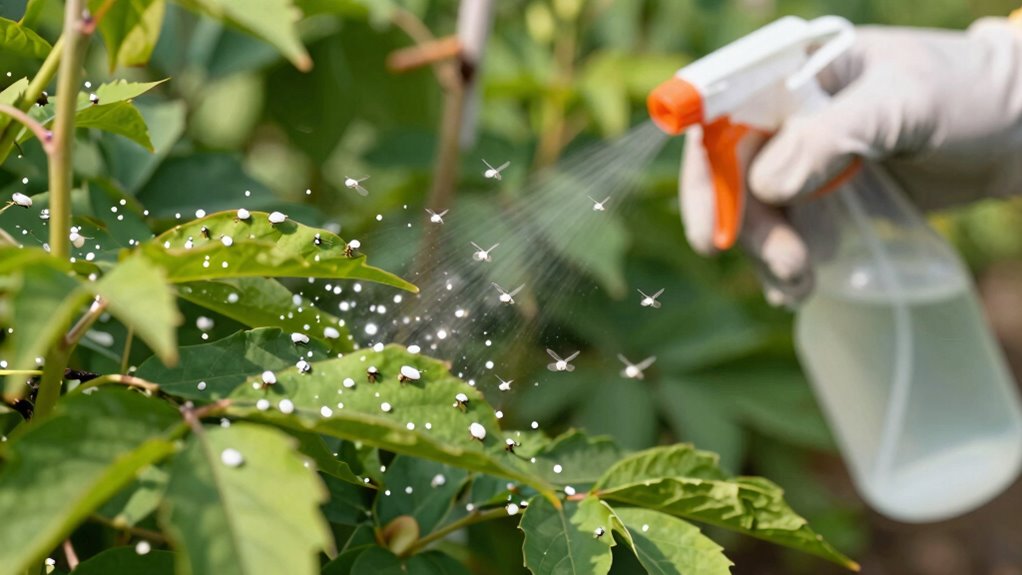
When whiteflies become a problem, applying the right organic and chemical treatments can quickly eliminate them. Start by introducing natural predators like ladybugs or parasitic wasps, which prey on whiteflies and help control their numbers naturally. For immediate results, use organic sprays such as neem oil or insecticidal soap, which target whiteflies on contact and disrupt their life cycle. These treatments are safe for most plants and environmentally friendly, making them ideal for quick intervention. Be sure to thoroughly cover the undersides of leaves where whiteflies often hide. Combining biological control with organic sprays gives you a fast, effective solution, preventing whiteflies from reproducing and spreading further. Using electric bikes as a sustainable transportation option can also reduce the need for chemical pest control by lowering overall environmental impact. Acting promptly with these treatments is key to breaking the whitefly cycle.
Apply Cultural Practices to Make Plants Less Attractive to Whiteflies

You can reduce whitefly problems by choosing resistant plant varieties that are less appealing to them. Making sure your plants are properly spaced improves air circulation and helps deter pests. These simple cultural practices make your plants less attractive and support your overall control efforts. Additionally, selecting plants with natural pest-repellent properties can further enhance your efforts to keep whiteflies at bay.
Choose Resistant Plant Varieties
Choosing resistant plant varieties is an effective cultural practice that can considerably reduce whitefly infestations. By selecting pest resistant cultivars, you make your plants less appealing to whiteflies and disrupt their life cycle. Look for resistant plant varieties suited to your climate and garden conditions. These cultivars often have natural defenses that deter pests, making them less attractive for whiteflies to settle on. Additionally, utilizing European cloud servers to monitor pest patterns can help optimize your integrated pest management strategies. Using resistant plant varieties helps create an inhospitable environment for whiteflies, reducing the need for chemical controls and promoting a healthier garden ecosystem.
Optimize Plant Spacing
Properly spacing your plants is a crucial cultural practice that can markedly reduce whitefly attraction. Adequate plant spacing ensures better airflow enhancement around your plants, which helps dry out excess moisture and creates an environment less favorable for whiteflies to settle and reproduce. When plants are too crowded, humidity rises, and airflow diminishes, making it easier for whiteflies to thrive. By increasing plant spacing, you improve air circulation, making your garden less inviting to these pests. This simple adjustment not only discourages whitefly colonization but also promotes healthier plant growth. Regularly monitor and adjust plant spacing as needed, especially during peak growing seasons, to maintain an environment that minimizes whitefly presence and supports overall garden health. Additionally, choosing appropriate plant types and incorporating natural predators can further enhance pest control efforts.
Introduce Beneficial Insects and Biological Controls for Long-Term Management

Integrating beneficial insects and biological controls offers an effective, eco-friendly approach to managing whitefly populations over the long term. You can introduce natural predators that target whiteflies directly, reducing their numbers without chemicals. Beneficial insects, such as lady beetles, lacewing larvae, and parasitic wasps, prey on whiteflies and help keep populations in check. Biological controls, like microbial insecticides, specifically target whiteflies without harming other beneficial insects or your plants. To succeed, consider:
Use beneficial insects and biological controls for eco-friendly, sustainable whitefly management over the long term.
- Releasing beneficial insects early in the infestation
- Maintaining a diverse garden to support these allies
- Avoiding broad-spectrum pesticides that could harm your biological controls
This method creates a balanced ecosystem, reducing reliance on chemical treatments and promoting sustainable whitefly management. Proper timing of releases can significantly improve their effectiveness and establish a natural control cycle.
Create a Regular Treatment and Monitoring Schedule
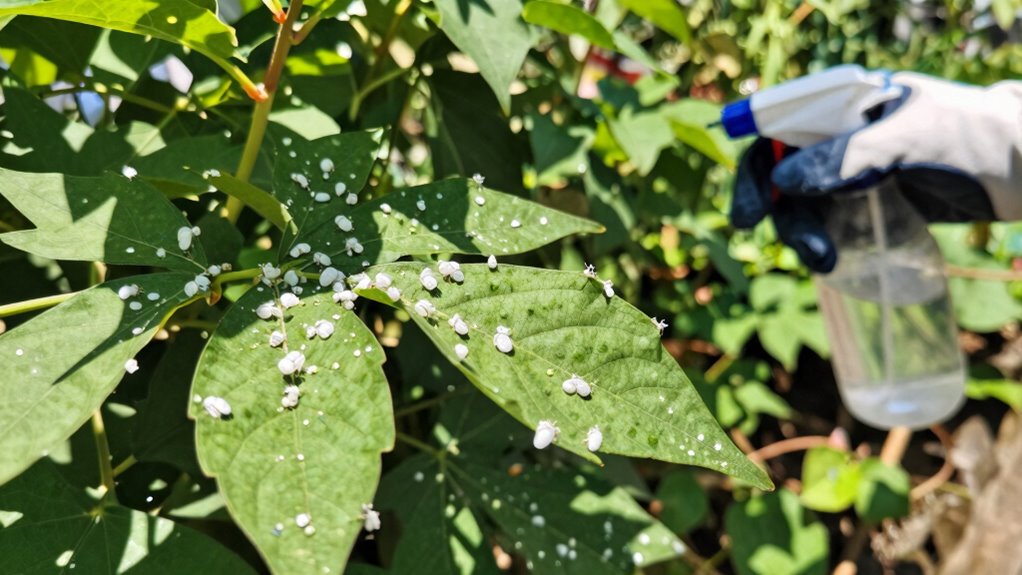
Establishing a regular treatment and monitoring schedule is essential for keeping whitefly populations under control. Consistent checks allow you to catch infestations early and prevent them from spreading. Incorporate biological control methods, such as releasing beneficial insects, into your routine to naturally suppress whiteflies. Using pest-resistant varieties can also reduce the frequency of treatments needed. Monitor plants weekly, inspecting the undersides of leaves where whiteflies often cluster. Apply targeted treatments promptly when you notice signs of infestation. By maintaining a steady schedule, you improve your chances of breaking the whitefly cycle before it becomes overwhelming. Combining biological control with resistant varieties ensures a sustainable, effective approach that minimizes chemical use and promotes a healthy garden environment. Regular monitoring practices help identify issues early and sustain long-term control.
Keep Your Garden Clean and Healthy to Prevent Whitefly Reinfestation
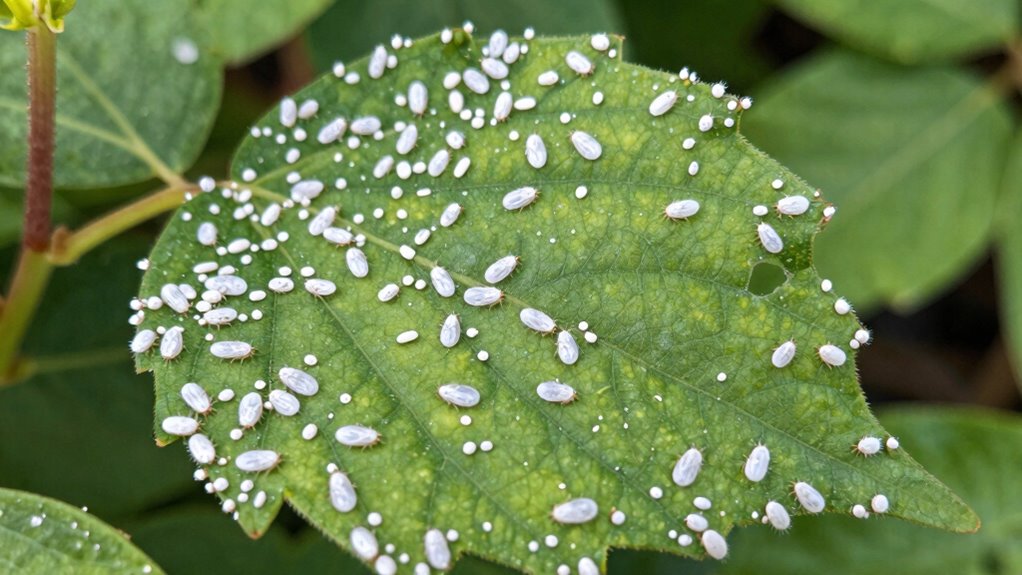
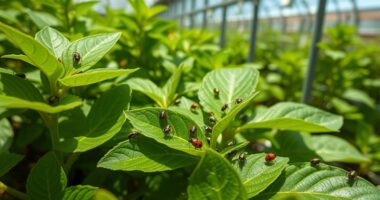
Keeping your garden clean and healthy is one of the most effective ways to prevent whitefly reinfestation. Good garden sanitation removes plant debris and weeds that can harbor pests, reducing whitefly hiding spots. Maintaining healthy plants makes them more resistant to pests, ensuring they grow strong and less attractive to whiteflies. Additionally, encouraging natural predators like ladybugs and lacewings helps keep whitefly populations in check. To do this effectively:
- Regularly clear fallen leaves and plant debris
- Prune and thin overcrowded plants
- Avoid over-fertilizing with nitrogen, which can attract whiteflies
Frequently Asked Questions
Can Whiteflies Transmit Plant Diseases to My Garden?
Yes, whiteflies can transmit plant diseases to your garden, spreading viruses and bacteria as they feed. To protect your plants, consider biological control methods like introducing natural predators to reduce whitefly populations. Be cautious with pesticides, though, because whiteflies can develop resistance over time. Combining biological control with proper pest management helps break their cycle and minimizes disease transmission, keeping your garden healthy and thriving.
Are There Specific Plants More Resistant to Whitefly Infestations?
A wise gardener knows that “an ounce of prevention is worth a pound of cure.” Some resistant plant varieties and pest resistant cultivars can help reduce whitefly problems. Plants like marigolds, nasturtiums, and certain herbs tend to be less attractive to whiteflies. By choosing these resistant options, you can create a less inviting environment for whiteflies and help protect your garden naturally.
How Long Does a Typical Whitefly Life Cycle Last?
A typical whitefly lifecycle lasts about 3 to 4 weeks, depending on temperature and environmental conditions. You should know that whitefly reproduction happens quickly, with females laying hundreds of eggs during their lifecycle stages. The eggs hatch into nymphs, which then develop through several stages before becoming adults. Understanding this cycle helps you time your control methods effectively, targeting the whiteflies at their most vulnerable points to break their reproduction cycle.
Do Homemade Remedies Effectively Control Whiteflies?
Homemade remedies can help, but they often aren’t enough alone. DIY solutions like insecticidal soap, neem oil, or garlic spray may reduce whiteflies temporarily, but persistent pests require consistent care. You need to combine these treatments with cultural controls like removing infested leaves and encouraging natural predators. While homemade remedies are a helpful start, for a lasting solution, consider integrating organic options with proper plant care to effectively control whiteflies.
When Is the Best Time to Start Treatment for Whiteflies?
You should start treatment for whiteflies as soon as you notice their presence, ideally in early spring or late winter when populations begin to emerge. Timing considerations are vital because early intervention prevents infestations from becoming severe. Pay attention to seasonal factors, such as warm weather and plant growth cycles, which can accelerate whitefly reproduction. Acting promptly helps break their cycle and keeps your plants healthier longer.
Conclusion
Think of your garden as a fortress, and whiteflies as stubborn invaders trying to breach your defenses. With a clear control sequence—identifying signs, applying treatments, and maintaining healthy plants—you become the vigilant guardian, keeping these pests at bay. Stay consistent and proactive, and you’ll turn your garden into a well-guarded castle where whiteflies can’t find a way back in. Your dedication is the key to keeping your oasis thriving and pest-free.