Root rot can happen in winter even if you barely water because cold, damp soil and poor drainage create ideal conditions for fungal growth and root decay. When soil stays soggy and temperatures drop, roots weaken and become more susceptible to pathogens like Phytophthora or Pythium. Plus, roots slow their metabolism during dormancy, reducing their ability to fight infections. To keep your plants healthy, it’s helpful to understand how these factors interact—and there’s more to explore here.
Key Takeaways
- Cold, wet soil creates an environment for fungal pathogens to thrive, leading to root rot even with minimal watering.
- Poor drainage causes waterlogged roots that decay, regardless of how little water is applied.
- Reduced soil aeration and freezing temperatures weaken roots, making them more susceptible to rot from fungal infections.
- Dormant roots have decreased resistance and healing ability, increasing vulnerability to fungal attacks during winter.
- Even minimal moisture can accumulate in poorly drained or organic-rich soil, fostering root decay in cold conditions.
Why Do Roots Sometimes Rot in Winter? Causes and Context
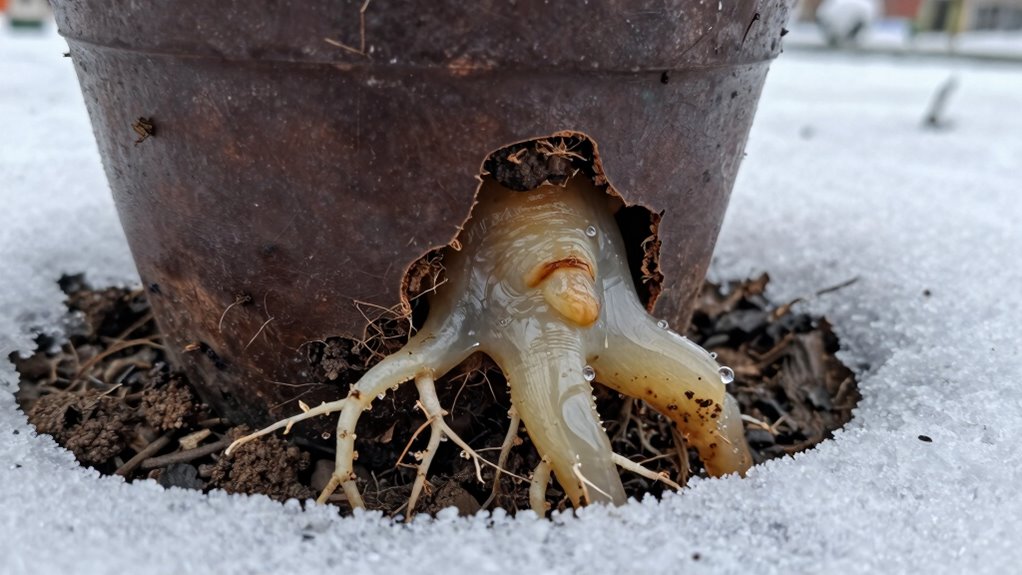
Roots can sometimes rot in winter because of overly wet soil conditions combined with cold temperatures. When soil stays too moist, it creates an environment where roots struggle to breathe, leading to increased root moisture levels. Cold soil temperatures slow down the natural processes that promote healthy root function, making roots more vulnerable to decay. If the soil remains saturated due to persistent rain or melting snow, moisture builds up around the roots, encouraging fungal growth that causes rot. Even if you’re not watering actively, the combination of high soil moisture and low temperatures makes roots susceptible to decay. This delicate balance between root moisture and soil temperature is essential in understanding why roots rot during winter, despite minimal watering. Additionally, poor drainage in the soil can exacerbate moisture retention, further increasing the risk of root rot in cold conditions. Proper soil aeration can help mitigate this issue by preventing excess moisture buildup and promoting healthier root environments. Incorporating soil amendments like sand or organic matter can also improve drainage and aeration, reducing rot risk. Recognizing the importance of soil health can help prevent root problems during colder months by maintaining optimal conditions for root vitality. Moreover, understanding how soil composition impacts moisture retention can aid in selecting the right amendments to safeguard roots during winter.
How Cold Temperatures and Soil Conditions Promote Root Decay
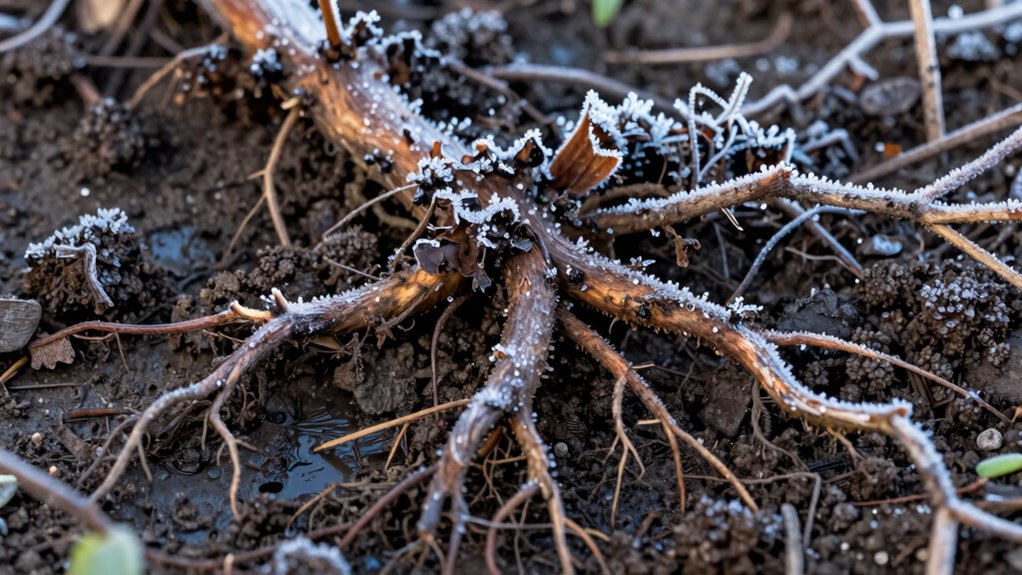
Cold temperatures directly influence the health of roots by slowing down their metabolic processes and weakening their defenses against decay. When soil is cold, it reduces soil aeration, limiting the oxygen available to roots, which hampers their ability to fight off pathogens. Poor soil aeration creates a damp, compact environment that encourages root decay. Additionally, inadequate root insulation allows cold to penetrate deeper into the soil, exposing roots to freezing temperatures and further stressing them. This combination of low temperatures and soil conditions creates an ideal environment for root rot to develop, even if you barely water your plants. The weakened roots become more susceptible to fungal pathogens, accelerating decay and risking plant health during winter months.
Does Soil Drainage Affect Root Health?
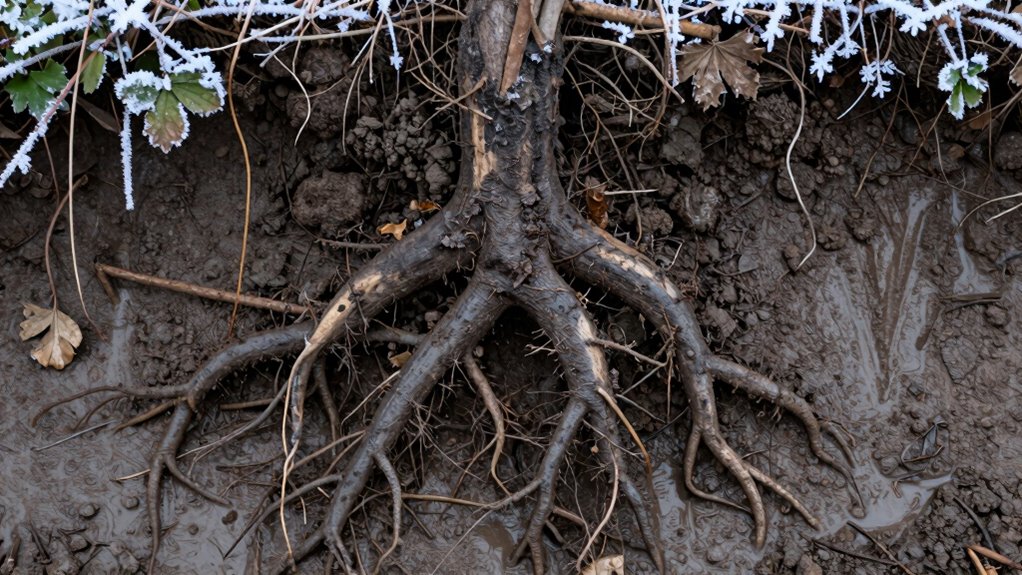
Poor soil drainage can lead to waterlogged roots, restricting their access to oxygen. When roots can’t breathe, they become weak and more vulnerable to rot. Understanding how soil composition influences drainage helps you keep your plants healthy through winter. Additionally, selecting the right soil filtration media can improve drainage and promote healthier root systems. Proper soil aeration techniques can further prevent root rot by ensuring excess water drains efficiently. Recognizing the importance of soil structure allows you to implement effective strategies for maintaining optimal moisture levels and root health, supported by attention to detail in soil management. Moreover, a well-designed drainage system can significantly reduce the risk of root damage caused by excess moisture.
Soil Composition and Drainage
Soil composition and drainage play an essential role in maintaining healthy root systems, especially during winter. Well-draining soil ensures excess water doesn’t pool around roots, preventing rot. Incorporating organic matter improves soil structure, increasing aeration and allowing roots to breathe. When soil has good aeration, roots get enough oxygen to stay healthy and resist disease. Organic matter also helps retain moisture without becoming waterlogged, balancing water availability and drainage. If your soil is too compact or lacks organic content, water may stagnate, creating the perfect environment for root rot. Proper soil composition supports strong roots by promoting drainage and aeration, which are critical for winter root health. Additionally, using appropriate soil amendments can further enhance soil drainage and structure. Regularly testing your soil’s pH and nutrient levels can help you identify and correct issues that may affect drainage and root health. Improving soil structure can also aid in maintaining optimal conditions for healthy roots. Ensuring optimal soil aeration helps maintain root vitality and prevents disease. Adjusting your soil to include organic matter, improve drainage, and optimize soil conditions can considerably reduce root rot risks.
Impact on Root Oxygen
When soil drains well, it allows oxygen to reach plant roots more effectively, which is essential for their health, especially during winter. Good soil aeration prevents oxygen deficiency, a common issue in poorly drained soil. Without enough oxygen, roots can suffocate, weakening the plant’s ability to absorb nutrients and water. This creates a perfect environment for root rot to develop, even in colder months. Excess moisture in poorly drained soil reduces air spaces, trapping water around roots and depriving them of crucial oxygen. As a result, your plants become more susceptible to disease. Ensuring proper soil drainage helps maintain ideal oxygen levels and promotes healthier roots, reducing the risk of root rot and keeping your plants resilient through winter. Additionally, understanding soil aeration can help you implement better practices for root health, such as amending soil or improving drainage systems. Proper soil management also plays a vital role in preventing excess moisture buildup that leads to root diseases.
How to Spot Root Rot in Your Winter Plants
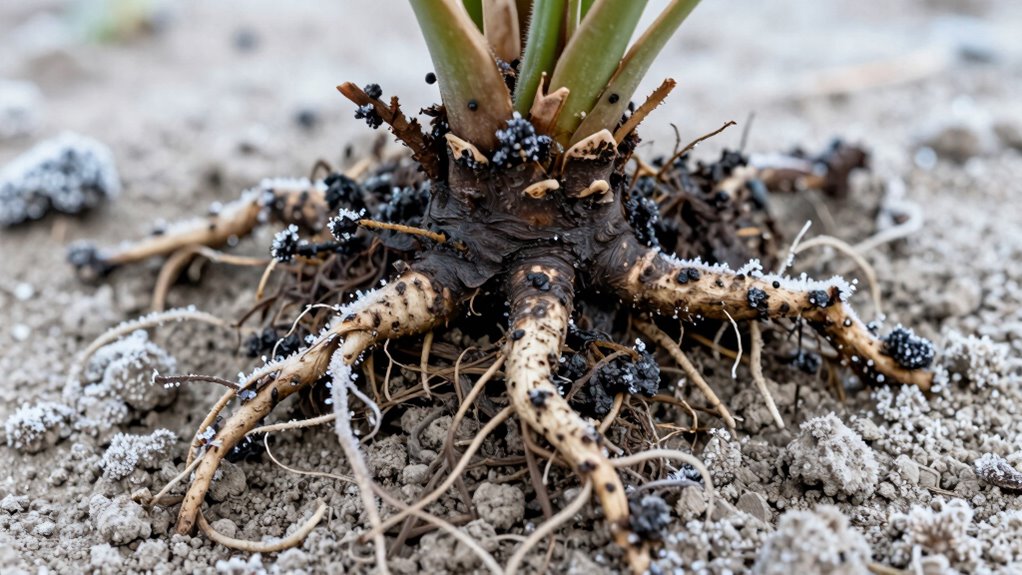
You can spot root rot early by watching for wilting or discolored leaves, which often signal underlying problems. Sometimes, the soil emits a foul odor, indicating decay below the surface. Paying attention to these signs helps you catch root rot before it worsens. Additionally, inspecting the roots directly for signs of decay can provide confirmation of the issue. Recognizing soil drainage issues is also crucial, as poor drainage creates a moist environment conducive to root rot. Proper watering techniques can prevent excess moisture from fostering decay, even during winter months. Understanding ventilation considerations in your plant setup can also help reduce excess humidity that encourages root rot development. Ensuring adequate air circulation around your plants can further minimize the risk of persistent moisture buildup.
Wilting or Discolored Leaves
Wilting or discolored leaves are often the first visible signs that your winter plants may be suffering from root rot. You might notice leaf discoloration, where leaves turn yellow or brown, and stem wilting, even when watering seems minimal. These symptoms indicate the roots are compromised, affecting the plant’s ability to absorb nutrients and water. To identify root rot through these signs, look for:
- Uneven leaf discoloration — patches of yellow or brown on the leaves.
- Persistent stem wilting — despite proper watering.
- Soft, limp leaves — that easily crumple or fall off.
- The presence of a foul smell around the plant’s base can also suggest waterlogged soil and decay in the roots. Additionally, monitoring soil moisture levels can help prevent overwatering, which is a common cause of root rot.
Pay close attention to these visual cues, as they often signal root health issues before more severe damage occurs. Recognizing these early signs can save your winter plants from further decline.
Foul Odor From Soil
Have you noticed a foul smell emanating from the soil around your winter plants? This odor is often a sign of root rot caused by poor soil aeration and nutrient imbalance. When soil remains too wet or compacted, it restricts oxygen flow to the roots, encouraging fungal growth that produces a rotten smell. An imbalance in nutrients can weaken plant defenses, making roots more vulnerable to decay. If you detect this foul odor, it’s a clear warning that your plant’s roots are suffering and that root rot may be developing. Check the soil’s moisture level and aeration. Improving soil drainage and ensuring proper nutrient balance can help prevent further damage and restore healthier roots.
Which Fungal Pathogens Attack Roots in Cold, Damp Soils?
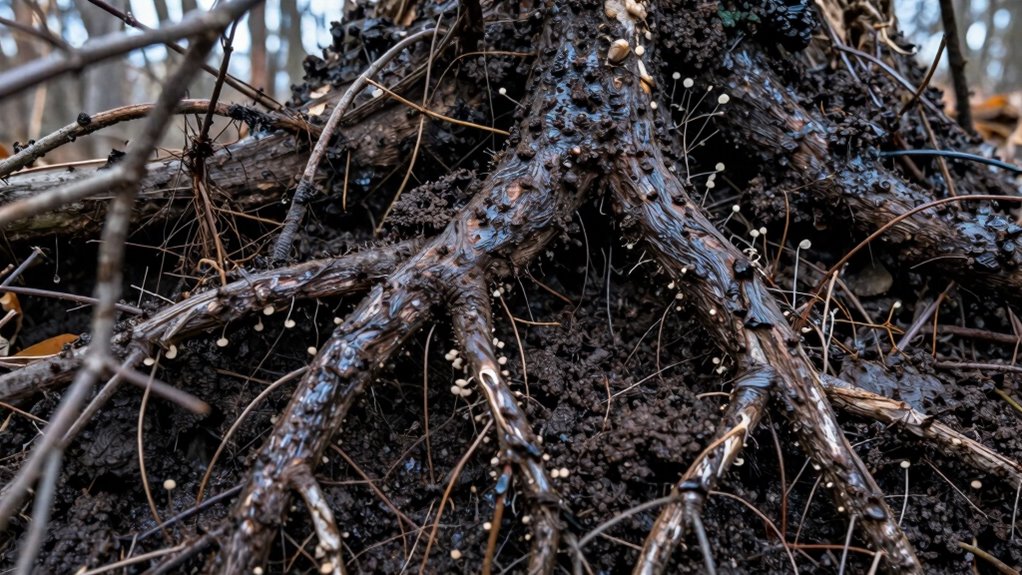
Cold, damp soils create the perfect environment for certain fungal pathogens to attack plant roots. These soil fungi thrive in cold stress conditions, especially when soils stay wet for extended periods. Three common fungal pathogens that target roots include:
- Phytophthora spp. – a water mold that causes root rot and damping-off, often spreading quickly in soggy soils.
- Pythium spp. – another water mold, known for infecting roots during cold, damp conditions, leading to decay.
- Fusarium spp. – soil fungi that can persist in cold, moist soils, causing wilting and root decline.
Understanding which pathogens are active helps you recognize the risks posed by cold, damp soils and take steps to protect your roots from these aggressive soil fungi during winter.
Why Are Roots More Vulnerable During Dormancy?
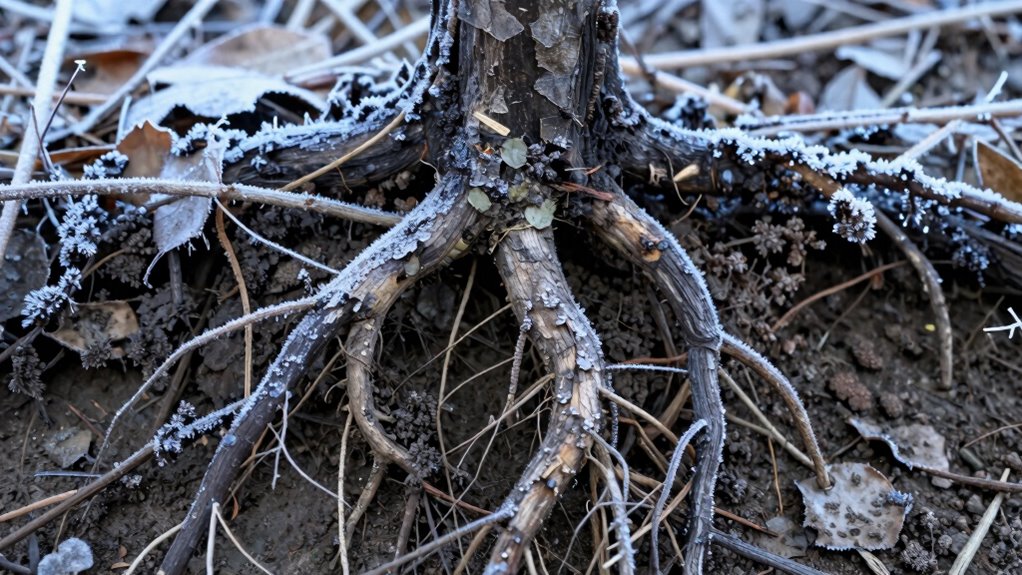
During dormancy, roots become more vulnerable because they lose the energy reserves and metabolic activity needed to defend against infections. When your plants enter root dormancy, their biological processes slow down, reducing their ability to repair damage or fight off pathogens. This lowered activity increases root vulnerability, making them less capable of resisting fungal attacks or bacterial invaders. Additionally, dormant roots have less moisture movement and reduced immune responses, creating an ideal environment for pathogens to establish themselves. Since the roots are less active, any infection that does occur can spread more easily and cause more damage before you notice. Understanding this vulnerability helps explain why roots are particularly susceptible to root rot during cold, damp months when dormancy is at its peak.
How Can I Prevent Root Rot During Cold Months?

To prevent root rot during cold months, it’s essential to improve drainage and avoid overwatering your plants. Proper soil aeration helps excess water escape, reducing sogginess that encourages rot. Adjust your watering frequency based on the plant’s needs and the season; less water is often needed in winter. Here are three ways to protect your plants:
- Use well-draining soil mixes to enhance aeration and drainage.
- Water sparingly, checking soil moisture before watering again.
- Elevate pots or beds to improve airflow around roots.
What Should You Do If You Find Root Rot in Winter? Diagnosis and Treatment
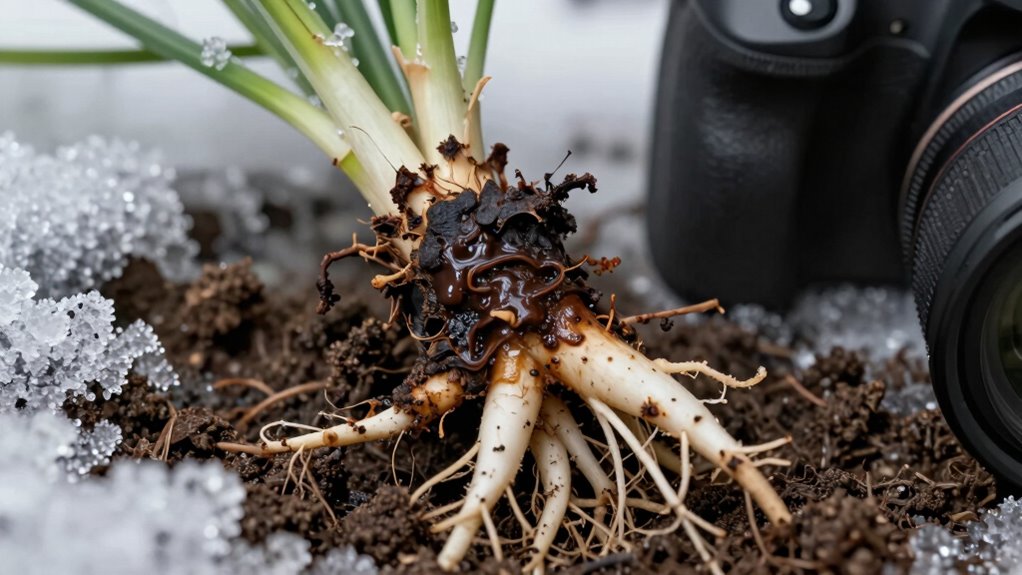
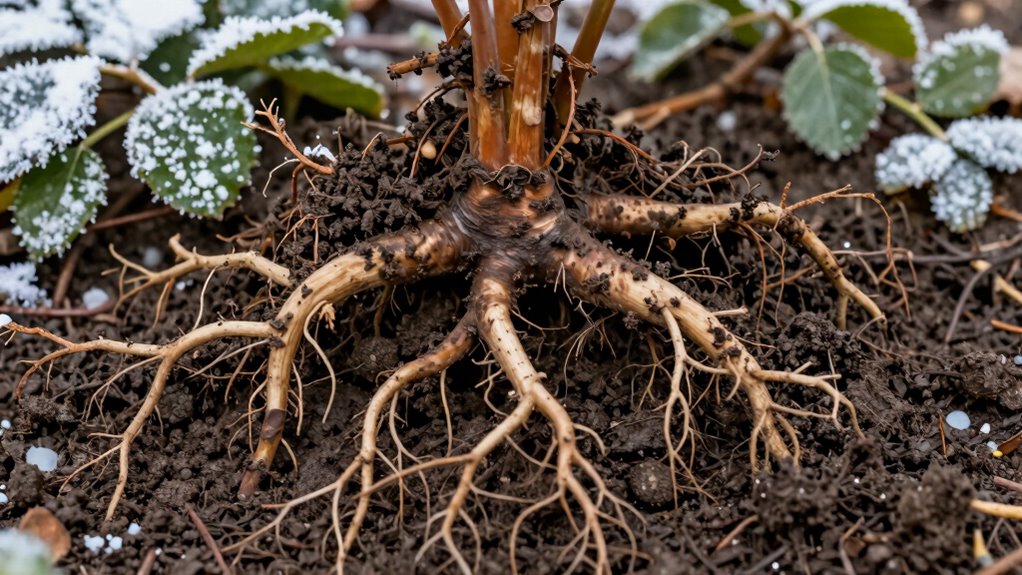
If you notice signs of root rot in winter, acting promptly can save your plant from further damage. First, gently remove the plant from the soil to inspect the roots. Look for dark, mushy roots and a foul smell. Adjust soil moisture levels by letting the soil dry slightly, but avoid letting it become completely dry, as soil temperature impacts root health. Use the following table to determine your next steps:
| Symptom | Action |
|---|---|
| Roots are dark and mushy | Trim affected roots with sterilized tools |
| Soil feels overly wet | Improve drainage and reduce watering |
| Roots are firm and healthy | Replant in well-draining soil, monitor soil moisture |
| Soil temperature is low | Move the plant to a warmer spot to promote root recovery |
This approach helps address root rot efficiently.
Tips for Keeping Roots Healthy Through the Winter
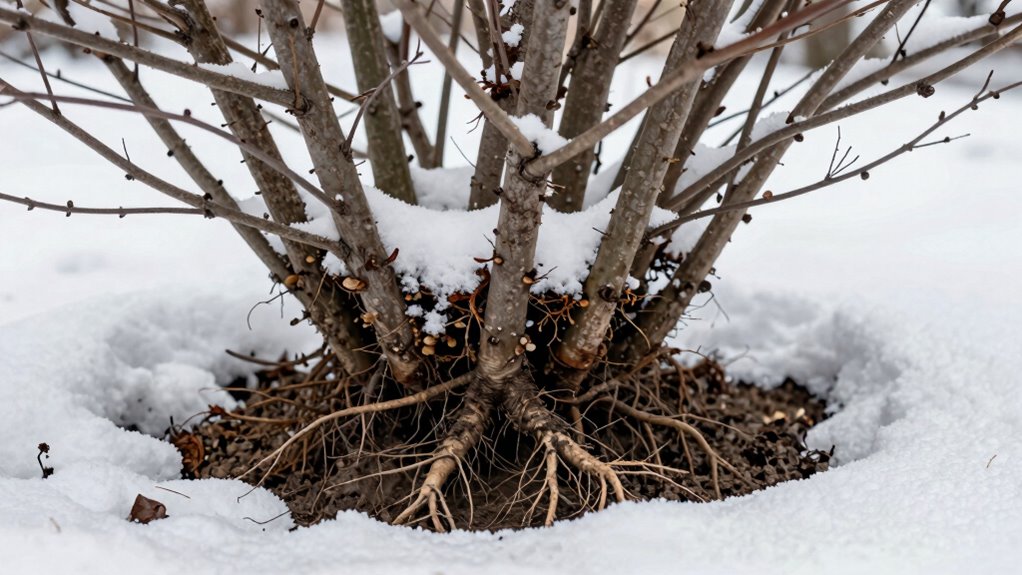
Keeping roots healthy through the winter requires paying close attention to soil conditions and environmental factors. To maintain ideal health, consider these tips:
- Use soil amendments like organic matter to improve drainage and aeration, preventing excess moisture that promotes root rot.
- Adjust your watering schedule; water sparingly but consistently, ensuring roots receive moisture without becoming waterlogged.
- Mulch around plants to insulate roots, regulate soil temperature, and reduce moisture fluctuations.
Frequently Asked Questions
Can Root Rot Occur in Indoor Winter Environments?
Yes, root rot can occur in indoor winter environments. Even with minimal watering, high indoor humidity combined with poor drainage can lead to root decay. Overly moist soil creates a perfect environment for fungi and bacteria that cause root rot. Make certain your plant has proper drainage, avoid overwatering, and maintain good air circulation to prevent these issues, especially during the dry winter months when indoor humidity tends to rise.
Does Root Rot Affect All Plant Types Equally During Winter?
Not all plants fall equally victim to root rot during winter. You see, species resistance varies, and environmental factors like soil drainage and moisture levels play a vital role. Some plants, hardy and resilient, fight off rot, while others, sensitive and delicate, succumb more easily. So, it’s essential to contemplate your plant’s specific needs and environment, adjusting care to prevent this silent threat from creeping in, no matter the season.
Are There Specific Signs of Root Rot That Appear Above Ground?
Yes, you can see signs of root rot above ground, like yellowing leaves, wilting, or stunted growth. Poor soil drainage and infrequent watering can still cause root rot, even in winter. When soil doesn’t drain well, moisture stays around roots, promoting rot. Keep an eye on watering frequency—overwatering or water sitting in the soil can lead to symptoms you notice above ground, indicating root issues below.
How Does Soil pH Influence Root Rot Susceptibility?
If your soil’s pH balance leans too acidic, like in a case where plants suffered root rot despite minimal watering, it increases their susceptibility. Soil acidity affects beneficial microbes that fight pathogens, making roots vulnerable. Maintaining a neutral pH balance helps prevent root rot, as it promotes healthy microbial activity. Regularly testing your soil’s pH and adjusting it guarantees ideal conditions, reducing the risk of root rot even during winter.
Can Root Rot Be Transmitted Between Neighboring Plants?
Yes, root rot can be transmitted between neighboring plants through fungal transmission. When soil becomes contaminated with pathogenic fungi, these spores can spread to nearby plants, especially if roots come into contact or share contaminated soil. To prevent this, avoid planting susceptible plants too close together, remove infected plants promptly, and sanitize tools and pots. Proper soil drainage and avoiding overwatering also help reduce soil contamination and fungal spread.
Conclusion
Even in winter, your plants can suffer root rot despite minimal watering. Cold, damp soils foster fungal growth, making roots vulnerable during dormancy. While you might think less water means less risk, neglecting drainage and soil health can still lead to decay. Stay vigilant, monitor your plants closely, and address issues promptly. Remember, preventing root rot isn’t just about watering less—it’s about creating the right environment. Sometimes, less water isn’t enough; proper care keeps roots healthy year-round.