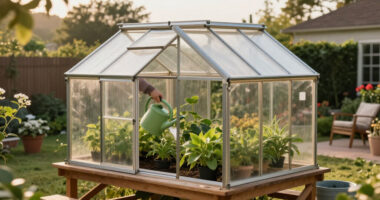
For most greenhouse growers, the EcoFoil Double Bubble Insulation Roll, 48″ x 75′ is the strongest overall pick because its thicker, double-bubble construction offers more insulation material than the single-bubble rolls. The USA Reflective Insulation Bubble Roll, 48″ x 125′ stands out for covering larger areas, while the FONUNO 23.6-inch x 10-foot roll is a manageable choice for small spaces and targeted panels. The main tradeoffs are thickness versus coverage, wide rolls versus easier handling, and buying a long roll versus limiting leftover material. Greenhouse bubble insulation can help reduce heat loss, but fit, installation, ventilation, and light needs matter too. Read on for the full comparison and guidance on matching a roll to your greenhouse.

Get garden gear delivered free with Prime
- Fast, free delivery on millions of items
- Prime Video, Amazon Music and more included
- Member-only deals all year
Complete the kit


Key Takeaways
EcoFoil Double Bubble leads for buyers prioritizing insulation material: its listed 6.35 mm thickness is twice the listed thickness of EcoFoil Single Bubble, though its 300 square feet of coverage is less than the single-bubble roll’s 500 square feet.
USA Reflective 48-inch x 125-foot is the high-coverage option in this lineup at 500 square feet, making it better suited to larger greenhouses than the short FONUNO and MRPAPA rolls.
Roll width shapes the job. The 48-inch rolls can cover broad areas with fewer seams, while the 12-inch and 24-inch USA rolls, plus the 23.6-inch FONUNO rolls, may be easier to handle around narrow panes or framing.
Short rolls limit commitment, not necessarily waste. FONUNO’s 10-foot roll and MRPAPA’s 10-foot roll suit small projects, but buyers insulating a whole structure may find their coverage restrictive.
Product names do not answer every greenhouse question. The listed details vary in specificity, so check the actual roll dimensions, material construction, light transmission, and installation guidance before choosing for a plant-growing space.
| FONUNO Bubble Insulation Sheet, Reflective Insulation Roll, 23.6in x 20ft |  | Best for Narrow Greenhouse Bays | Material: Aluminum and polyethylene (PE) | Width: 23.6 inches | Length: 20 feet | VIEW ON AMAZON | See Our Full Breakdown |
| USA Reflective Insulation Bubble Roll, 48″ x 125′ |  | Best for Large Greenhouse Coverage | Material: Polyethylene (PE) | Dimensions: 48 inches x 125 feet | Coverage: 6,000 square inches (as listed) | VIEW ON AMAZON | See Our Full Breakdown |
| EcoFoil Single Bubble Insulation Roll 48″ x 125′ (500 sq. ft.), 3.175mm Thick, White/Foil, Made in USA |  | Best for Reflective Heat Control | Width: 48 inches | Length: 125 feet | Area: 500 square feet | VIEW ON AMAZON | See Our Full Breakdown |
| FONUNO Bubble Insulation Sheet, Reflective Insulation Roll, 23.6 in x 10 ft | | Best for Small Repairs | Material: Polyethylene (PE) with aluminum foil | Width: 23.6 inches | Length: 10 feet | VIEW ON AMAZON | See Our Full Breakdown |
| LSGCQ Reflective Insulation Roll Double Reflective Bubble Insulation Sheet |  | Best for Convenient Installation | Material: Aluminum foil bubble wrap | Width: 47 inches | Length: 10 feet | VIEW ON AMAZON | See Our Full Breakdown |
| Reflectix BP24025 24-Inch by 25-Feet Bubble Pack Insulation |  | Best for Small Greenhouse Sections | Brand: Reflectix | Model: BP24025 | Dimensions: 24 inches x 25 feet | VIEW ON AMAZON | See Our Full Breakdown |
| EcoFoil Double Bubble Insulation Roll 48″ x 75′ (300 sq. ft.), 6.35mm Thick, White/Foil, Made in USA |  | Best for Broad Greenhouse Coverage | Width: 48 inches | Length: 75 feet | Coverage: 300 square feet | VIEW ON AMAZON | See Our Full Breakdown |
| MRPAPA Double Reflective Insulation Foam, 48″ x 10 Ft Reflective Window Radiant Barrier B2 Fireproof Bubble Insulation Roll |  | Best for Greenhouse Windows and Small Glazing Areas | Dimensions: 48 inches x 10 feet | Coverage: 47.2 inches wide x 10 feet | Material: Aluminum and polyethylene | VIEW ON AMAZON | See Our Full Breakdown |
| USA Reflective Bubble Insulation Roll, 24″ x 125′ |  | Best Value for Long, Narrow Greenhouse Runs | Size: 24 inches x 125 feet | Material: Polyethylene with foil outer layer | Bubble layer thickness: 3/16 inch | VIEW ON AMAZON | See Our Full Breakdown |
| USA Reflective Insulation Roll, 12″ x 125′ |  | Best for Narrow Framing and Tight Spaces | Size: 12 inches x 125 feet | Coverage: 125 square feet | Material: Polyethylene | VIEW ON AMAZON | See Our Full Breakdown |
| greenhouse bubble insulation | Material | Coverage | Thickness | Width |
|---|---|---|---|---|
| FONUNO Bubble Insulation Sheet | Aluminum and polyethylene (PE) | 23.6 inches x 20 feet | — | 23.6 inches |
| USA Reflective Insulation Bubb | Polyethylene (PE) | 6,000 square inches (as listed) | 0.19 inches | — |
| EcoFoil Single Bubble Insulati | — | — | 3.175 mm (1/8 inch) | 48 inches |
| FONUNO Bubble Insulation Sheet | Polyethylene (PE) with aluminum foil | 2,832 square inches | 3 millimeters | 23.6 inches |
| LSGCQ Reflective Insulation Ro | Aluminum foil bubble wrap | 120 inches x 47 inches (as listed) | — | 47 inches |
| Reflectix BP24025 24-Inch by 2 | Aluminum foil, polyethylene, and bubble pack | 7,200 square inches | 0.31 inches | — |
| EcoFoil Double Bubble Insulati | Polyethylene | 300 square feet | 6.35 mm (1/4 inch) | 48 inches |
| MRPAPA Double Reflective Insul | Aluminum and polyethylene | 47.2 inches wide x 10 feet | — | — |
| USA Reflective Bubble Insulati | Polyethylene with foil outer layer | — | — | — |
| USA Reflective Insulation Roll | Polyethylene | 125 square feet | 0.19 inches | — |
More Details on Our Top Picks
FONUNO Bubble Insulation Sheet, Reflective Insulation Roll, 23.6in x 20ft
The 23.6-inch width suits narrow greenhouse bays, individual glazing sections, and smaller repair jobs where a wide roll would create more offcuts. Its aluminum-and-PE bubble construction is described as waterproof and intended to reduce heat transfer, making it a flexible option for covering exposed surfaces. Compared with the wider USA Reflective Insulation Bubble Roll, this FONUNO roll is easier to handle in tight spaces but covers far less area, so it is a poor fit for lining a full greenhouse. The 20-foot length gives it more reach than the 10-foot FONUNO version, though installation still calls for measuring, cutting, and separate tape or another fastening method. Product data gives no R-value or long-term durability details, so I would treat it as a practical small-area barrier rather than a fully specified cold-climate solution.
Pros:- 23.6-inch width is manageable for narrow panels and tight installation areas
- 20-foot length provides more coverage than the 10-foot FONUNO roll
- Aluminum foil and PE bubble layers are described as waterproof
- Can be cut to fit different greenhouse sections
Cons:- Narrow width means more seams and less efficient coverage on broad walls or roofs
- No adhesive or mounting hardware is included
- No R-value or detailed long-term durability information is provided
Best for: Greenhouse owners insulating narrow bays, door panels, or a few small glazing sections who prefer a manageable roll.
Not ideal for: Growers covering a large greenhouse or seeking documented R-value and long-term outdoor performance; the roll is narrow and product data is limited.
- Material:Aluminum and polyethylene (PE)
- Width:23.6 inches
- Length:20 feet
- Coverage:23.6 inches x 20 feet
- Model number:geremo*0.6*6m
- Manufacturer:FONUNO
Our verdict“Choose this FONUNO roll for narrow greenhouse sections and small jobs, not for fast coverage of a large structure.”
USA Reflective Insulation Bubble Roll, 48″ x 125′
For a greenhouse with broad walls or a long roof span, the standout advantage here is 48-inch width and 125-foot length: fewer narrow strips can mean fewer joints to seal across a large project. The product lists a 3/16-inch bubble layer and an R-value range of 4.9 to 14.1, although the wide range makes the result dependent on installation conditions and should not be read as a guaranteed greenhouse rating. Compared with the compact LSGCQ 47-inch x 10-foot roll, this USA roll is far better suited to whole-structure work, but it is bulkier to store and handle. It can be cut with common tools, while seams may need extra sealing for a more complete barrier. I would favor it for sizeable DIY coverage where area and stated insulation data matter more than a small, convenient package.
Pros:- Wide 48-inch format can reduce the number of strips across broad surfaces
- 125-foot length is suited to large-area projects
- Lists a 3/16-inch bubble layer and an R-value range
- Can be cut with scissors or a knife
Cons:- Large roll can be awkward to store, handle, and position
- Seams may need additional sealing for better performance
- The stated R-value range is broad and does not specify greenhouse installation conditions
Best for: Growers insulating a large greenhouse or several structures who want a long, wide roll and product data that includes a stated R-value range.
Not ideal for: Owners doing a small patch or working in cramped spaces; the 125-foot roll is bulky and offers much more material than a small job needs.
- Material:Polyethylene (PE)
- Dimensions:48 inches x 125 feet
- Coverage:6,000 square inches (as listed)
- Thickness:0.19 inches
- Bubble layer:3/16 inch
- R-value:4.9 to 14.1
- Weight:5 pounds
Our verdict“Pick this roll for extensive greenhouse lining when broad coverage matters more than compact handling.”
EcoFoil Single Bubble Insulation Roll 48″ x 125′ (500 sq. ft.), 3.175mm Thick, White/Foil, Made in USA
EcoFoil’s clearest greenhouse advantage is its stated ability to reflect 96% of radiant heat, which makes it a more targeted choice for managing solar heat than the compact FONUNO rolls, whose listings do not provide a reflectivity figure. The white/foil surface and vapor-barrier function may suit growers trying to limit radiant heat and moisture movement, but the listing says it is best suited to warmer regions and less effective in cold climates. That distinction matters: this is not the pick I would choose as the sole answer to harsh winter temperatures. At 48 inches by 125 feet, it can cover a substantial area, though its listed 500-square-foot area should be checked against the greenhouse layout before ordering. Compared with the thicker double-bubble EcoFoil roll elsewhere in the roundup, this single-bubble version is thinner and may be less suited to buyers prioritizing added bubble-layer thickness.
Pros:- States 96% radiant-heat reflection
- White/foil finish is suited to a reflective heat-control approach
- Listed as a vapor barrier when properly sealed
- 48-inch width and 125-foot length support substantial coverage
Cons:- Product information says it is less effective in cold climates
- Vapor-barrier performance depends on properly taped seams
- Thin single-bubble construction may not suit buyers seeking a thicker barrier
Best for: Warm-climate greenhouse growers prioritizing radiant-heat reflection and a listed vapor-barrier function across a large area.
Not ideal for: Growers in cold regions seeking a stand-alone winter insulation layer, or anyone unable to seal seams carefully.
- Width:48 inches
- Length:125 feet
- Area:500 square feet
- Thickness:3.175 mm (1/8 inch)
- Color:White/foil
- Radiant heat reflection:96% (as stated in product data)
- Construction:Single-bubble insulation
Our verdict“Choose this EcoFoil roll for large, warm-climate greenhouses where radiant-heat reflection is the main goal.”
FONUNO Bubble Insulation Sheet, Reflective Insulation Roll, 23.6 in x 10 ft
This is the more compact FONUNO choice for a greenhouse door, a single glazing panel, or a small section that needs a reflective layer without storing a long roll. Its 3-millimeter thickness and waterproof, cut-to-fit construction make it straightforward to adapt, but the 10-foot length limits how much of a greenhouse it can cover. Compared with the 20-foot FONUNO roll, this version is easier to keep on hand for small repairs but runs out sooner; against the 48-inch USA roll, it is far easier to maneuver yet much less efficient for broad walls. The listing mentions double-sided tape as an installation method but does not specify included mounting hardware, so I would plan for separate adhesive or fasteners. It is a focused patching option, not a sensible choice for lining an entire greenhouse.
Pros:- Compact 23.6-inch width is practical for small panels and repairs
- 3-millimeter thickness is specified
- Waterproof construction is listed
- Can be cut to fit a target area
Cons:- 10-foot length limits coverage and can require multiple rolls for larger projects
- No R-value or quantified heat-reflection figure is provided
- Mounting supplies may need to be purchased separately
Best for: Greenhouse owners who need to insulate one small panel, door, or localized problem area and want a short roll that is easy to handle.
Not ideal for: Anyone covering multiple large greenhouse walls or seeking quantified thermal performance; its coverage is limited and no R-value is listed.
- Material:Polyethylene (PE) with aluminum foil
- Width:23.6 inches
- Length:10 feet
- Coverage:2,832 square inches
- Thickness:3 millimeters
- Color:Silver/reflective
- Listed features:Waterproof, heat blocker, easy to cut and install
Our verdict“Use this short FONUNO roll for isolated greenhouse repairs, not for whole-structure insulation.”
LSGCQ Reflective Insulation Roll Double Reflective Bubble Insulation Sheet
For a greenhouse owner who values a ready-to-mount small roll, the LSGCQ stands apart because the listing says double-sided tape is included. That can simplify positioning compared with both FONUNO rolls, which require cutting and separate mounting supplies, though reliable adhesion still depends on a clean surface and careful fitting. Its 47-inch width spans more area per strip than the narrow FONUNO sheets, while the 10-foot length keeps the roll more manageable than the 125-foot USA option. The tradeoff is limited reach: larger greenhouses will need several strips and careful seam work. The product is described as waterproof, foldable, and scratch-resistant, but it provides no thickness, R-value, or quantified reflectivity data. I would choose it for a modest greenhouse project where broad strips and included tape matter more than documented thermal performance.
Pros:- 47-inch width covers more area per strip than the narrow FONUNO rolls
- Included double-sided tape can simplify initial placement
- Waterproof and foldable features are listed
- Scratch-resistant material is described in the product data
Cons:- 10-foot length is limited for whole-greenhouse coverage
- Product data gives no thickness, R-value, or reflectivity percentage
- Adhesion and insulation performance may suffer if installation is not precise
Best for: DIY growers lining a small greenhouse or a few broad panels who want a wide roll and included tape for positioning.
Not ideal for: Owners insulating a large structure or needing documented R-value, thickness, or reflectivity; the roll is short and those figures are not supplied.
- Material:Aluminum foil bubble wrap
- Width:47 inches
- Length:10 feet
- Coverage:120 inches x 47 inches (as listed)
- Uses:RVs, residential and commercial buildings, vehicles
- Listed features:Waterproof, thermal insulation, sunshade, foldable
- Installation accessory:Double-sided tape included (as described)
Our verdict“Choose LSGCQ for a modest greenhouse project where wide strips and included tape outweigh limited coverage and sparse performance data.”
Reflectix BP24025 24-Inch by 25-Feet Bubble Pack Insulation
For a greenhouse with a few narrow bays, the 24-inch width is easier to fit around framing than the wider EcoFoil 48-inch roll. Its seven-layer construction combines reflective foil with bubble layers, giving growers a lightweight radiant barrier that can be cut to suit small sections. The listed 97% radiant heat reflectivity is a useful feature where the foil surface can face an air space; it should not be treated as a standalone guarantee of greenhouse warmth. The main compromise is coverage: at 25 feet long, this roll covers far less area than the EcoFoil 300-square-foot roll. It may also take extra layers or careful installation to meet needs in colder conditions, and the supplied data does not specify greenhouse-specific fastening or weather exposure guidance.
Pros:- Seven-layer foil-and-bubble construction provides a reflective barrier with added resistance to heat flow.
- 24-inch width can fit narrower greenhouse framing with less trimming than a 48-inch roll.
- Lightweight material is easier to lift and cut during installation.
- Fiber-free construction avoids handling loose insulation fibers.
Cons:- 25-foot length offers much less coverage than the EcoFoil 48-inch by 75-foot roll.
- Additional layers may be needed for colder conditions, increasing installation work and material use.
- The listed thickness and size options may not suit larger greenhouse layouts.
Best for: Greenhouse owners insulating a few narrow wall bays, doors, or smaller framed sections who want a lightweight roll that is easier to handle than a wide commercial-size roll.
Not ideal for: Growers covering a large greenhouse or seeking a specified insulation level for severe winter conditions; the roll has limited coverage and may require additional layers.
- Brand:Reflectix
- Model:BP24025
- Dimensions:24 inches x 25 feet
- Coverage:7,200 square inches
- Thickness:0.31 inches
- Material:Aluminum foil, polyethylene, and bubble pack
- Weight:16 ounces
- Radiant heat reflectivity:97%
Our verdict“Choose this Reflectix roll for modest greenhouse sections where a narrow, lightweight format matters more than covering a large area in one purchase.”
EcoFoil Double Bubble Insulation Roll 48″ x 75′ (300 sq. ft.), 6.35mm Thick, White/Foil, Made in USA
The EcoFoil’s strongest greenhouse advantage is its 48-inch width and 300-square-foot coverage: fewer joins can mean faster coverage across broad, regular wall or roof sections than with the narrower Reflectix BP24025. Its 6.35 mm double-bubble build is suited to buyers who want a substantial reflective layer without handling a very long, full-size roll. The white/foil finish also gives the greenhouse a different interior appearance from an all-reflective surface, though the supplied details do not specify which side should face the growing space. This roll is heavier than the small Reflectix option at 21 pounds, so positioning it overhead may take more effort. It may also need added layers in very cold conditions, and the description does not provide a greenhouse-specific R-value.
Pros:- 300 square feet of coverage can reduce the number of roll changes and seams on larger sections.
- 48-inch width covers more area per pass than the 24-inch Reflectix BP24025.
- Double-bubble construction is 6.35 mm thick.
- Designed for cutting and installation without special equipment.
Cons:- The 21-pound roll can be harder to position overhead than smaller, lighter options.
- Multiple layers may be needed for insulation in very cold conditions.
- No greenhouse-specific R-value or installation orientation is provided in the supplied specifications.
Best for: Greenhouse owners lining broad, fairly regular wall or roof sections who want fewer seams and enough material for a medium-sized insulation project.
Not ideal for: People insulating only a small patch or working alone overhead; its 48-inch width and 21-pound roll are less convenient for tight spaces and solo handling.
- Width:48 inches
- Length:75 feet
- Coverage:300 square feet
- Thickness:6.35 mm (1/4 inch)
- Material:Polyethylene
- Color:White/foil
- Weight:21 pounds
- Origin:Made in USA
Our verdict“Pick EcoFoil when broad greenhouse coverage and fewer seams matter more than a lightweight roll or a compact format.”
MRPAPA Double Reflective Insulation Foam, 48″ x 10 Ft Reflective Window Radiant Barrier B2 Fireproof Bubble Insulation Roll
MRPAPA is the most targeted choice here for small glazed areas, not whole-greenhouse coverage. Its 48-inch by 10-foot format is much shorter than the USA Reflective Bubble Insulation Roll, 24″ x 125′, making it easier to reserve for a door panel or selected window bays rather than manage excess material. The listing describes double aluminum foil and claims 95% radiant-energy reflection, while the 70 adhesive pads offer a quick option for mounting on suitable smooth surfaces. That convenience has limits in a greenhouse: the pads are not described as suitable for textured framing, and the listing notes folded-packaging creases that may need time to flatten. Coverage is also modest, so this is a poor fit for growers aiming to line every wall and roof panel.
Pros:- Double reflective foil surfaces are designed to reflect radiant energy.
- Compact 48-inch by 10-foot size suits targeted glazing or door projects.
- Includes 70 self-adhesive pads for mounting on suitable smooth surfaces.
- Material is described as easy to cut and clean.
Cons:- Short length provides much less coverage than the EcoFoil 300-square-foot roll.
- Adhesive pads may not hold appropriately on textured or uneven greenhouse framing.
- Folded packaging can leave creases that take time to flatten.
Best for: Greenhouse growers who want to cover a few window panels, a door, or another small, smooth surface and value included adhesive pads.
Not ideal for: Anyone insulating a full greenhouse or attaching material to rough, damp, or uneven framing; coverage is limited and the pads are intended for flat, smooth surfaces.
- Dimensions:48 inches x 10 feet
- Coverage:47.2 inches wide x 10 feet
- Material:Aluminum and polyethylene
- Reflective-energy claim:95%
- Included mounting pads:70 self-adhesive pads
- Application format:Reflective bubble insulation roll
Our verdict“Choose MRPAPA for a small, smooth greenhouse window or door project, not as the main insulation roll for a large structure.”
USA Reflective Bubble Insulation Roll, 24″ x 125′
For long greenhouse walls, base runs, or repeated narrow bays, this USA roll offers 125 feet of length in a manageable 24-inch width. That makes it a more practical match for extended narrow sections than the 10-foot MRPAPA roll, while the EcoFoil’s 48-inch width is better suited to broad panels. The listed 3/16-inch bubble layer and reflective foil surface are intended to help regulate temperature, but the stated R-value range of 4.9 to 14.1 is broad and does not explain the installation conditions behind each figure. Buyers should plan for secure fastening, since the product description says extra fastening may be needed. A 125-foot roll can also be cumbersome to store and maneuver, even though its 24-inch width is less unwieldy than a wider roll.
Pros:- 125-foot length suits extended runs and repeated narrow sections.
- 24-inch width is narrower and easier to position than a 48-inch roll in tight bays.
- Reflective foil surface is intended to help regulate temperatures in both winter and summer.
- Material is described as easy to cut and install.
Cons:- Additional fastening may be needed for secure greenhouse installation.
- The long roll can be cumbersome to handle and store for small projects.
- The broad stated R-value range does not specify the conditions required to reach each figure.
Best for: Growers insulating long, narrow greenhouse sections who prefer one extended roll and can fasten the material securely to the structure.
Not ideal for: Small greenhouse owners with short repair areas or growers covering wide panels quickly; the long roll may be awkward, and its 24-inch width requires more passes than EcoFoil.
- Size:24 inches x 125 feet
- Material:Polyethylene with foil outer layer
- Bubble layer thickness:3/16 inch
- Stated R-value range:4.9 to 14.1
- Weight:5 pounds
- Origin:Made in USA
- Model:ThermoBub24x125
Our verdict“This roll makes sense for long, narrow greenhouse runs when you can manage the bulk and provide dependable fastening.”
USA Reflective Insulation Roll, 12″ x 125′
With a 12-inch width and 125-foot length, this USA roll suits narrow greenhouse framing, edges, and other areas where a wider sheet would need substantial trimming. Compared with the 24-inch USA Reflective Bubble Insulation Roll, it covers half as much width per pass, but may be easier to fit into tight runs. Its 3/16-inch bubble layer and foil backing provide a compact reflective barrier, and the listing states up to 96% radiant-heat reflection. The tradeoff is labor: wider wall sections will take more strips and create more seams than they would with the EcoFoil 48-inch roll. The product also calls for additional sealing for best insulation, and its listed R-value range depends on conditions that are not specified in the supplied details.
Pros:- 12-inch width can fit narrow greenhouse sections with less trimming.
- 125-foot length supports repeated runs from one roll.
- 3/16-inch bubble layer with foil backing is designed to provide a radiant barrier.
- Listed radiant-heat reflection is up to 96%.
Cons:- Narrow width creates more seams and takes longer to cover broad surfaces than the EcoFoil roll.
- Additional sealing may be needed for better insulation performance.
- The stated R-value range does not specify the installation conditions behind its figures.
Best for: Greenhouse owners insulating narrow framing, perimeter edges, or tight spaces where a 24- or 48-inch roll would be difficult to fit neatly.
Not ideal for: Growers covering broad greenhouse walls or roofs; the 12-inch width means more passes, seams, and installation time than wider rolls.
- Size:12 inches x 125 feet
- Coverage:125 square feet
- Material:Polyethylene
- Thickness:0.19 inches
- Bubble layer:3/16 inch
- Stated R-value range:4.9 to 14.1
- Radiant heat reflection:Up to 96%
Our verdict“Choose this narrow USA roll for greenhouse edges and tight framing, but use a wider option for large uninterrupted surfaces.”

How We Picked
I compared these ten products by the details most likely to affect greenhouse use: roll dimensions and stated area, listed bubble construction and thickness, practical handling, and suitability for covering either broad surfaces or smaller sections. I gave more weight to products with clearly stated specifications and a useful balance of coverage and insulation material; a large roll can reduce seams and interruptions, while thicker construction may appeal to growers focused on reducing heat loss.
The ranking reflects those tradeoffs rather than treating every roll as interchangeable. Long, wide rolls rank well for whole-greenhouse projects, while narrower or shorter rolls fit targeted repairs and smaller structures. Where a listing does not provide a specific measurement or performance detail, I avoid assuming it matches another product with a similar name; readers should confirm greenhouse suitability, light transmission, and installation requirements before purchase.
Factors to Consider When Choosing Greenhouse Bubble Insulation
Choosing greenhouse bubble insulation is not just a question of buying the thickest or longest roll. I would first match the material to the structure, growing conditions, and amount of light the plants need, then work out how it will be fitted and maintained.
Match Coverage to the Greenhouse, Not Just the Roll Length
Measure each surface you plan to insulate, including roof sections if the material is appropriate for that location, and add allowance for overlaps and trimming. A roll’s advertised area is a useful starting point, but frame layout and awkward corners can increase the amount needed. Wider rolls can reduce seams across broad panels, while narrow rolls may be simpler to fit between existing supports. A common mistake is buying by greenhouse floor area rather than the surface area of the walls and roof. For a small structure or a trial installation, a short roll can limit unused material; for a complete enclosure, calculate coverage before committing to one.
Balance Thickness Against Light and Seasonal Needs
Thicker bubble construction can provide more material between the greenhouse interior and outdoor air, but it may also be bulkier to handle and could affect incoming light depending on the product. That tradeoff matters most when plants rely on winter daylight or the greenhouse is already shaded. Rather than assuming thicker is always better, decide whether your main aim is reducing overnight heat loss, protecting a cold-sensitive growing area, or improving comfort in a work space. Check manufacturer information for light transmission and intended use; the product names alone do not establish those properties. You may also choose to insulate only the sections where the heat-loss benefit matters most.
Choose Width for Your Frame and Installation Method
Roll width affects how many cuts, joins, and awkward stretches an installation will require. A wide roll can cover larger panes quickly, but it may be harder to position alone or around small openings. Narrow rolls are easier to manage in tight spaces and can suit individual panels, though more seams may mean more time sealing edges. Before ordering, compare the roll width with the greenhouse’s glazing bays and identify where vents, doors, and braces interrupt the surface. Avoid covering openings or moving parts without a plan, since insulation should not obstruct ventilation or access.
Plan for Attachment, Condensation, and Reuse
Insulation only helps as intended when it stays in place and its edges are handled appropriately for the greenhouse. Check the product’s installation instructions and confirm that your chosen clips, tape, or fixings are compatible with the frame and covering. Greenhouses naturally face humidity and condensation, so plan how you will keep air moving and inspect the material and structure during use. Do not assume a reflective roll is made for permanent outdoor exposure or direct contact with every glazing type. If you hope to reuse it between seasons, choose a fitting method that allows removal without tearing the material.
Check the Product Details Before Buying for Plants
Reflective bubble insulation can be sold for several applications, and a general insulation label does not confirm its performance in a greenhouse. Look for clear details on material layers, thickness, dimensions, intended installation location, and any stated fire or exposure guidance. Ask whether the surface is meant to face inward or outward, and whether the manufacturer gives instructions for use around glazing. Where those details are missing, do not infer them from another product in the lineup. This extra check is especially useful when the greenhouse houses light-sensitive plants or when the insulation will be near heating equipment.
Frequently Asked Questions
Should I choose a thicker double-bubble roll or a larger single-bubble roll?
Choose based on the job rather than thickness alone. A thicker double-bubble product such as the listed EcoFoil roll may suit a grower prioritizing insulation material, while the 500-square-foot EcoFoil single-bubble roll covers more area. If you need to insulate a large greenhouse, coverage and seam planning may matter more than the extra thickness. If you are targeting a smaller cold-sensitive section, a thicker roll may be a better fit. Check product guidance on light transmission and greenhouse use before deciding.
Can I use a 12-inch or 24-inch roll to insulate a whole greenhouse?
Yes, but narrow rolls can take more time because they usually require more strips and joins across broad surfaces. The USA 12-inch and 24-inch rolls may be easier to fit around narrow framing or use for repairs, while the 48-inch options can cover wide areas with fewer seams. Measure the greenhouse’s actual wall and roof surfaces, then account for overlap and trimming. A narrow roll can still be the sensible choice if your frame has small bays or a wide sheet would be difficult to position.
Is a short roll a good way to try greenhouse bubble insulation?
A short roll can be a sensible trial for one wall, a small greenhouse, or a section where you want to evaluate installation and light effects before covering more area. FONUNO’s 10-foot roll and MRPAPA’s 10-foot roll are compact choices compared with the long USA and EcoFoil rolls. Confirm that the usable coverage matches your planned section; roll length by itself does not tell you the full area without width. A small trial can reveal whether the material fits your frame and growing setup, but it may not represent the effort or seam count of a full installation.
Will reflective bubble insulation block too much light for my plants?
That depends on the material and where it is installed, and the listed product names do not provide enough information to compare light transmission across all ten rolls. Before covering a large growing area, check the manufacturer’s specifications and consider testing a small section. Plants with high light needs may be affected more than crops grown during low-light seasons or in a separate insulated zone. You can also focus insulation on selected walls rather than applying it across every glazed surface. Keep vents and doors usable so insulation does not compromise airflow.
How much extra material should I buy for seams and trimming?
There is no single allowance that fits every greenhouse because framing, corners, vents, and installation style change the amount of waste. Measure the surfaces individually and sketch how each roll will run across them, including overlaps at joins and material needed around edges. Broad, simple panes may use a roll efficiently, while many small bays can require extra cuts. Do not use the roll’s stated area as an exact guarantee of finished coverage. If the project is close to the roll’s limit, allowing additional material is safer than planning for a perfectly waste-free fit.
Conclusion
Best overall: I would start with the EcoFoil Double Bubble 48-inch x 75-foot roll for buyers who prioritize thicker listed construction and can work with 300 square feet of coverage. Best value for broad coverage: the USA Reflective 48-inch x 125-foot roll offers 500 square feet for larger projects, while EcoFoil Single Bubble is another high-coverage choice with clearly stated thickness. Best premium-style pick: EcoFoil Double Bubble is the lineup’s clearest thicker-construction option. Best for beginners: the FONUNO 23.6-inch x 10-foot roll is a manageable starting point for a small area or test fit. For narrow panels or targeted repairs, compare the USA 12-inch and 24-inch rolls; for a broad installation, choose a wide roll and verify the coverage, light, and mounting details before ordering.
Fall Picks
fall essentials
As an affiliate, we earn on qualifying purchases.