
TL;DR

Get garden gear delivered free with Prime
- Fast, free delivery on millions of items
- Prime Video, Amazon Music and more included
- Member-only deals all year
Hosta leaves can be cut back after a killing frost, when they turn yellow, collapse and become slimy. Chicago Botanic Garden horticulturist Heather Sherwood says removing matted foliage can reduce overwintering cover for pests and fungi; gardeners can also wait until spring if fall cleanup is delayed.
Gardeners can cut back hostas after a killing frost, when the leaves yellow, collapse and become matted, according to Chicago Botanic Garden senior horticulturist Heather Sherwood. In a Country Living report, Sherwood said removing the dead foliage can clear away cover for pests and fungal diseases, particularly in beds where slugs have been a problem.
Sherwood said hosta foliage may turn yellow attractively in fall, but after a killing frost—described in the report as around 30 degrees or colder—the leaves can fall over and stick together. The resulting slimy, flattened material can be unappealing and may hold water rather than allow it to pass through.
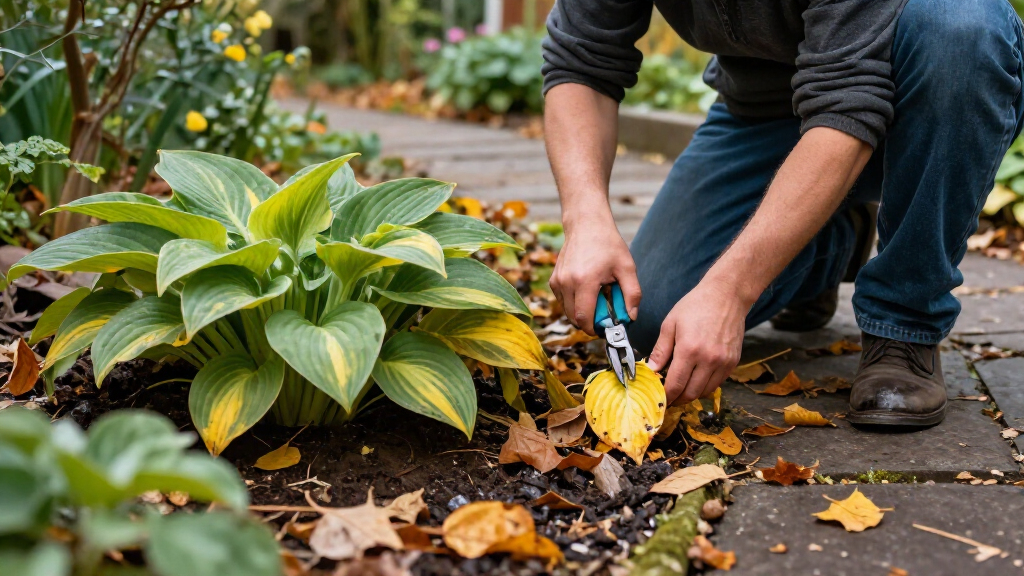
Large hostas, especially varieties with leaves 18 inches or larger, are more likely to lie down after frost, Sherwood said. She advised removing foliage once it has yellowed and fallen over. To do so, gather the leaves together and cut them with a garden knife about an inch from the ground. The plant’s eyes are deep within it, making hostas difficult to damage through this pruning, according to Sherwood.
Cut foliage can be chopped and composted, the report says. Gardeners who have other fall chores and do not get to the task can leave the cleanup until spring; the advice is not presented as a requirement to prune every hosta immediately in autumn.
Clearing Foliage Can Limit Pest Cover
Removing collapsed leaves is a practical cleanup step, with added relevance for gardeners whose hostas have had slug damage. Sherwood said slugs lay eggs in the soil beneath hostas. Clearing dead foliage and leaf litter removes habitat and can allow eggs to dry out, offering a way to reduce slug numbers in the next growing season.
Matted leaves may also provide winter cover for fungal diseases, mice and voles, Sherwood said. The report does not quantify how much fall cleanup reduces those problems, so it should be understood as preventive garden advice rather than a guarantee that pests or disease will be eliminated. For gardeners deciding whether to tackle the job now or in spring, the key consideration is the condition of the foliage and whether slug issues were present during the season.
garden knife for cutting back hostas
As an affiliate, we earn on qualifying purchases.
As an affiliate, we earn on qualifying purchases.
Frost Marks the Cleanup Point
Hostas are shade-loving perennials valued for foliage that varies in size, shape and color. Their leaves can provide garden interest through the growing season, but Sherwood said that appeal changes after a killing frost, when foliage collapses and becomes slimy as it decomposes.
The report frames pruning as one of several seasonal garden chores, alongside tasks such as raking leaves and dividing perennials. It recommends waiting for leaves to yellow and fall over rather than cutting healthy, upright foliage earlier. The guidance focuses on removing spent leaves; it does not call for digging up or dividing the hosta.
“Hostas do have a pretty yellow color in the fall, but once we have a killing frost—around 30 degrees or colder—they fall over and get matted down.”
— Heather Sherwood, senior horticulturist at the Chicago Botanic Garden, as quoted by Country Living
Cleanup Benefits Are Not Quantified
The report does not specify how many days after frost gardeners should prune, or quantify the effect of removing leaf litter on slug populations, fungal disease or rodents. It also does not establish that all hostas must be cut back in fall: it notes that some gardeners postpone perennial cleanup until spring. The advice is attributed to Sherwood and is not accompanied by a formal study or a comparison of fall and spring pruning outcomes.
Local frost timing and the condition of individual plants will vary. The report’s guidance is to wait until foliage has yellowed and fallen over; it does not give a calendar date that applies to every garden.
Prune After Leaves Collapse
Gardeners can watch for a killing frost and check whether hosta leaves have turned yellow and fallen over. Once foliage is matted or slimy, Sherwood’s advice is to gather it and cut it roughly one inch above the ground, then compost the trimmings if appropriate. Those who cannot fit the chore into fall cleanup can address the dead foliage in spring, while paying particular attention to leaf litter if slugs were a problem.
Key Questions
When should hostas be cut back?
Wait until after a killing frost, when the leaves have turned yellow and fallen over. Sherwood describes a killing frost as around 30 degrees or colder.
How far down should I cut hosta leaves?
Gather the leaves together and cut them about an inch from the ground with a garden knife, following Sherwood’s guidance.
Do hostas have to be pruned in fall?
No. The report says the cleanup can be delayed until spring if fall chores get in the way. Removing collapsed foliage in fall may be especially useful where slugs have been a problem.
Why remove dead hosta leaves?
According to Sherwood, matted leaves can provide winter cover for fungal diseases, mice and voles. Clearing leaf litter may also remove slug habitat and expose overwintering eggs to drying.
Source: rss
Halloween Picks
halloween
As an affiliate, we earn on qualifying purchases.