
TL;DR

Get garden gear delivered free with Prime
- Fast, free delivery on millions of items
- Prime Video, Amazon Music and more included
- Member-only deals all year
A Grow Organic guide says the best pluot tree depends on local winter chill, compatible pollination, harvest timing and the fruit flavors you prefer. Cultivar descriptions can help narrow choices, but ripening dates and fruit characteristics vary by location and season.
Grow Organic has published a guide to choosing a pluot tree, comparing popular varieties by flavor and fruit appearance and advising gardeners to check winter chill requirements, pollination compatibility and local harvest timing before buying. The guidance matters because a variety’s taste alone does not establish whether it will flower and fruit reliably in a particular garden.
The guide describes pluots as plum-apricot hybrids that generally show more plum traits than apricot traits. It says modern varieties differ in flavor, texture, skin and flesh color. Among the examples, Flavor Grenade is described as sweet and crisp, while Flavor King has a sweet, spicy flavor and Flavor Supreme is described as richly flavored with firm flesh. These are cultivar descriptions, not guarantees of how fruit will taste in every growing location.
Other varieties offer different combinations of appearance and flavor. Dapple Dandy has mottled green-and-yellow skin with red markings and flesh that combines creamy white and red; Flavor Queen is described as very sweet, with greenish-yellow skin and amber-orange flesh. The guide also lists Splash and Dapple Supreme. It reports that Splash and Dapple Dandy received high ratings in Dave Wilson Nursery fruit tastings, but gives no scores, dates or tasting methodology.
For a small garden, the report says a multi-grafted tree can carry several cultivars and offer different flavors or harvest windows. It is not a separate variety: the supplied cultivars may differ, so buyers are advised to check graft labels and verify each cultivar’s chill needs and pollination compatibility.
Match the Tree to Your Garden
The selection criteria affect whether a tree is a practical choice, not just which fruit a gardener prefers. The report says pluot chill requirements vary by cultivar and advises checking local conditions before purchase. It also says many pluots need pollen from a compatible pluot or certain Japanese plums whose bloom periods overlap. Similar harvest dates do not establish pollination compatibility, so gardeners should verify the pairing rather than assume two trees will pollinate one another.
Harvest planning also requires local information. Pluots generally ripen during summer, with some cultivars extending later, but timing varies with cultivar, region, weather and crop load. Nursery calendars are regional guides rather than fixed nationwide schedules. Choosing early-, midseason- or late-ripening trees may help spread a home harvest, but local timing should be confirmed before planting.
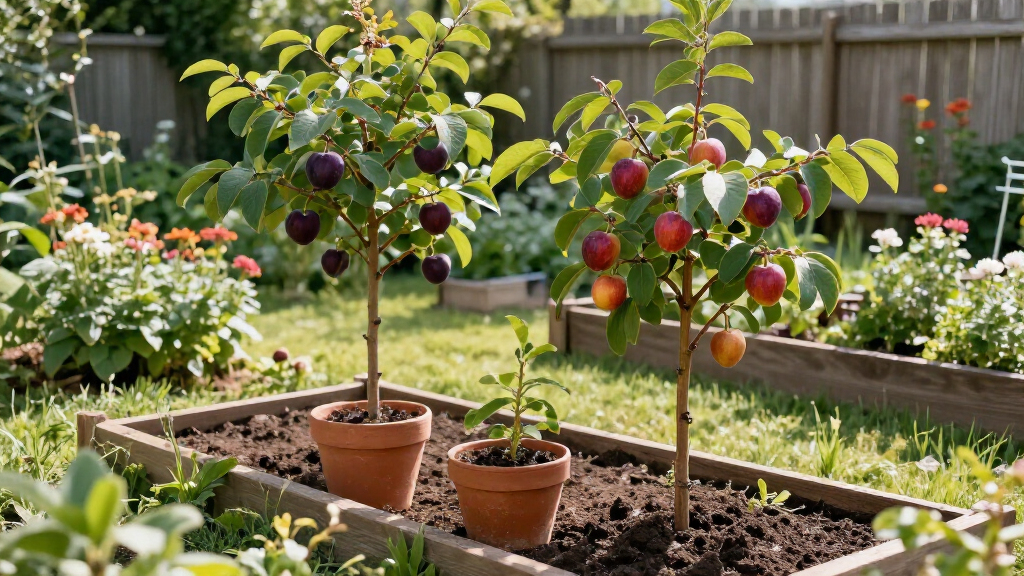
pluot fruit tree Flavor King Flavor Grenade nursery tree
As an affiliate, we earn on qualifying purchases.
As an affiliate, we earn on qualifying purchases.
Pluot Traits and Growing Background
The guide traces early plumcot work to Luther Burbank and says breeder Floyd Zaiger and Zaiger Genetics later developed many modern pluot types. It distinguishes pluots from apriums by saying pluots tend to show stronger plum traits, while apriums show more apricot character. These terms describe different plum-apricot hybrids; they do not by themselves indicate which tree will suit a particular site.
For tree selection, the report points gardeners toward cultivar-specific winter chill information and general pollination guidance from Oregon State University Extension. It also advises checking product details for rootstock, bloom compatibility and current availability. Beyond those points, site conditions such as sunlight, well-drained soil and irrigation are part of the basic growing needs listed in the guide, though requirements can vary by cultivar and location.
“The right pluot tree is one that fits your climate and has a compatible pollinizer.”
— Grow Organic guide
What Buyers Still Need to Verify
The supplied report does not provide a cultivar-by-cultivar table of chill-hour requirements, bloom dates or confirmed pollinizer pairings. It also gives no single harvest calendar that applies across regions. Gardeners should consult locally relevant nursery or extension information and the current product listing before ordering. Exact ripening dates, fruit quality and flavor can vary with location, weather, crop load and growing conditions; the report’s taste descriptions should be treated as general guidance.
The source also does not give verified pluot-specific nutrition figures. Its FAQ says calorie and nutrient values depend on fruit size and composition and advises consulting a suitable food-composition database rather than assuming ordinary plum data apply precisely.
Checks Before You Plant
Before selecting a tree, compare the desired fruit characteristics with the cultivar’s chill requirement, expected local harvest window and pollination partner. Confirm that the partner is compatible and flowers at the same time; if considering a multi-grafted tree, check which cultivars are actually included. Review rootstock and current availability with the seller, then assess the planting site for sunlight, drainage and irrigation needs. The source provides no announcement of a new cultivar or planting deadline; the next step for readers is to verify these details with regional guidance and the nursery selling the tree.
Key Questions
What should I check before choosing a pluot variety?
Compare winter chill needs, pollination compatibility and local harvest timing, as well as the flavor and texture you prefer. Check cultivar-specific details with a regional nursery or extension resource.
Do pluot trees need a pollinizer?
The guide says many pluots need pollen from a compatible pluot or certain Japanese plums. The varieties must be compatible and have overlapping bloom periods; similar harvest dates alone are not enough to confirm a match.
Which pluot varieties are described as crisp?
Flavor Grenade is described in the Grow Organic guide as sweet and crisp, and as retaining crunch when ripe. Results can vary with growing conditions.
Can a multi-grafted tree help in a small garden?
It can carry several cultivars on one tree and may offer different flavors or harvest windows. Check the graft labels, chill requirements and pollination compatibility of the cultivars included.
When are pluots in season?
Pluots generally ripen during summer, with some varieties ripening later. The timing depends on cultivar, region, weather and crop load, so nursery calendars should be treated as regional guides.
Source: rss
Halloween Picks
halloween
As an affiliate, we earn on qualifying purchases.